Executive Overview
In the sprawling, decentralized ecosystem of internet culture, few literary artifacts achieve the legendary status of the modern "copypasta"—a block of text copied and pasted across various online forums, social media networks, and messaging applications. Among the myriad iterations of satirical text-based humor that have emerged over the last two decades, "Own a Musket for Home Defense" (frequently recognized by its quintessential concluding refrain, "Just as the founding fathers intended") stands as a masterclass in absurdist historical parody.
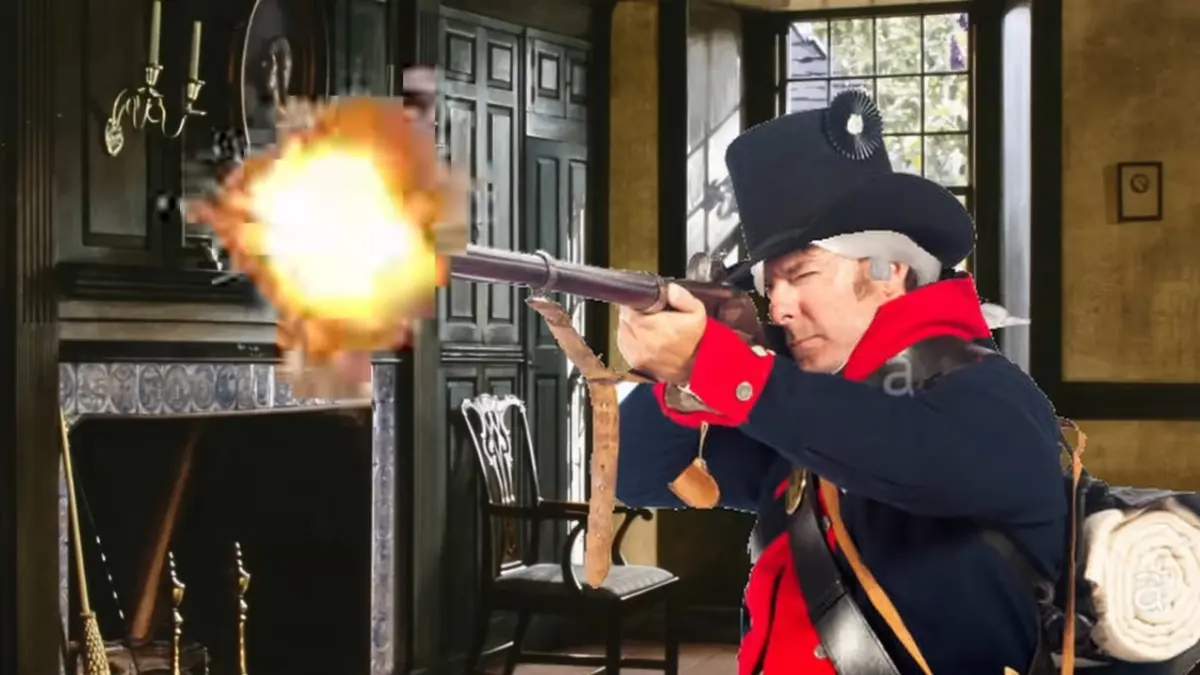
Originating in the depths of an anonymous imageboard in late 2014, the copypasta chronicles an escalating, wildly disproportionate domestic defense scenario. In this narrative, a homeowner systematically repels a quartet of intruders utilizing an increasingly baroque arsenal of 18th-century weaponry: a powder-wigged Kentucky rifle, a notoriously inaccurate smoothbore flintlock pistol, a staircase-mounted cannon loaded with grapeshot, and finally, a triangular bayonet.
What began as a throwaway satirical riff on contemporary American debates surrounding the Second Amendment has metastasized into a cross-platform multimedia phenomenon. Over the past decade, the text has transcended its text-based origins to inspire viral Reddit threads, meticulously crafted YouTube animations, audio-visual adaptations, and a permanent fixture in the lexicon of internet irony. This report provides an exhaustive investigation into the origin, chronological evolution, cultural impact, and enduring legacy of one of the internet’s most enduring pieces of user-generated digital folklore.
Detailed Chronology
The Genesis: 4chan and the Birth of the Narrative (November 2014)
The historical timeline of the "Own a Musket for Home Defense" copypasta traces back to November 14, 2014. On that day, an anonymous user navigating 4chan’s notorious /k/ board—a community dedicated to weapons, tactical gear, and military history—submitted a deceptively earnest prompt: "Serious question: how good is a musket for home defense?"
While /k/ boards frequently host genuine debates regarding ballistics, caliber effectiveness, and modern tactical theory, they are equally prone to deep-seated satire and hyper-fixation on archaic military technology. In response to the query, another anonymous contributor drafted a rudimentary greentext story. This early iteration sketched the comedic framework that would soon capture the internet’s imagination: a homeowner donning period-specific attire to confront burglars, dispatching one with an exaggerated ballistic payload, and pursuing the other with a bayonet.
Within hours, this rough draft was refined, polished, and expanded into the definitive narrative arc that circulates today. The revised text introduced iconic comedic beats:
- The initial confusion ("What the devil?") upon hearing intruders.
- The catastrophic inaccuracy of smoothbore flintlock pistols resulting in collateral damage to neighborhood pets.
- The escalation to a staircase-mounted cannon deploying grapeshot alongside the iconic battle cry, "Tally ho lads!"
- The grim tactical reality of triangular bayonet wounds being medically impossible to suture.
Early Social Media Diffusion and Reddit Adoption (2014–2018)
While the text originated within the insular ecosystem of 4chan, its breakthrough into mainstream digital consciousness occurred on December 8, 2014. A Reddit user operating under the handle iBleeedorange captured a screenshot of the nascent copypasta and shared it within the /r/4chan subreddit. The post struck a chord with the broader Reddit demographic, rapidly accumulating over 14,000 upvotes and solidifying the text’s portability across different digital platforms.
Throughout 2016, the narrative underwent organic mutations. On June 27, 2016, a /k/ user posted a rewritten variation featuring enhanced escalation—notably involving collateral damage that mistakenly incapacitates responding law enforcement officers due to the blinding, smoke-filled chaos of black powder weaponry. Concurrently, screenshots of the text migrated to Facebook, where it achieved viral status among millennial and Gen Z meme circles.
On October 29, 2018, the copypasta found its permanent archival home when Redditor Green272 submitted the text to the dedicated community /r/copypasta. Over the subsequent four years, this single Reddit post amassed upwards of 30,400 upvotes, serving as a standardized reference library for users seeking to copy and deploy the text in unrelated comment threads across the platform.
Multimedia Adaptations: YouTube, Animation, and Audio Engineering (2019–Present)
As text-based copypastas saturate digital spaces, their longevity often depends on their ability to transition into dynamic, multimedia formats. The "Musket for Home Defense" narrative achieved this transition with remarkable success, inspiring a wave of high-production-value video adaptations.

- February 10, 2019: Independent creator Mousey Poo published a humorous, early-stage audio-visual reading of the copypasta on YouTube, capturing tens of thousands of views and establishing a template for dramatic voice-acting interpretations.
- November 5, 2020: Animator and content creator Gearhead released a fully realized, kinetic animated adaptation of the copypasta on YouTube. The video brought the chaotic narrative to vivid life—visualizing the powdered wig, the golf ball-sized wounds, the smoke-choked staircase cannon blast, and the final desperate bayonet charge. The animation resonated deeply with internet audiences, ultimately garnering over 2 million views and cementing the copypasta’s visual iconography.
- The 2020s and Beyond: The text continued to inspire a secondary wave of high-effort parodies, including historical reenactment spoofs, video game machinima adaptations (utilizing engines ranging from Garry’s Mod to Fallout), and AI-generated text-to-speech voiceovers.
Supporting Context & Metrics
To fully grasp the cultural footprint of the "Own a Musket for Home Defense" copypasta, it is necessary to examine the socio-cultural mechanics of internet copypastas and analyze the quantitative metrics underpinning its spread.
The Mechanics of the Modern Copypasta
A copypasta is defined as a block of text that is copied and pasted by individuals across the internet, typically via internet forums and social networking sites. Functioning as a form of digital folklore, copypastas rely on communal authorship, hyperbole, and repetitive structural motifs.
The "Musket" copypasta succeeds by blending three distinct comedic traditions:
- Faux-Historical Anachronism: Juxtaposing 18th-century gentility and revolutionary-era pageantry (powdered wigs, formal declarations) with brutal, exaggerated home invasion violence.
- Escalation Humor: Starting with a conventional firearm (a musket) and exponentially escalating through increasingly absurd ordnance (smoothbore pistols, cannon fire, naval grapeshot, and triangular bayonets).
- Bureaucratic and Tactical Absurdism: Highlighting hyper-specific historical misconceptions or tactical myths—such as the medical mythos surrounding triangular bayonet wounds—delivered with deadpan tactical authority.
Quantitative Engagement Metrics
| Platform / Community | Date of Introduction | Peak Metric / Milestone | Significance |
|---|---|---|---|
| 4chan (/k/) | November 14, 2014 | Original thread creation & subsequent rewrites | Incubator of the narrative structure and satirical tone. |
| Reddit (/r/4chan) | December 8, 2014 | 14,000+ upvotes | First major cross-platform migration to a mainstream aggregator. |
| Reddit (/r/copypasta) | October 29, 2018 | 30,400+ upvotes | Establishment as an officially archived, canonical copypasta text. |
| YouTube (Gearhead Animation) | November 5, 2020 | 2,000,000+ views | Definitive visual translation that expanded the audience beyond text-readers. |
| Facebook & Twitter | 2016–Present | Tens of thousands of shares and screenshot reposts | Broad cultural saturation across disparate social media ecosystems. |
Official Statements and Creator Perspectives
In the decentralized world of anonymous imageboards and viral internet culture, formal press releases and attribution statements are exceedingly rare. The original author of the November 14, 2014, 4chan post remains anonymous, operating under the institutional pseudonymity characteristic of the platform.
However, cultural commentators, digital sociologists, and content creators who have engaged with the meme have offered significant insight into its persistent appeal. In retrospective analyses shared across creator forums and video essay platforms, animators and internet historians have highlighted the text’s unique literary construction:
"What makes the text work so brilliantly is its commitment to the bit. It reads like an 18th-century naval captain who has been dropped directly into a modern suburban home invasion, processing a terrifying security breach through the lens of Revolutionary War tactical manuals. The transition from polite aristocratic confusion (‘What the devil?’) straight into military devastation ("Blow a golf ball-sized hole through the first man") creates a comedic whiplash that few modern writers could script better."
Furthermore, legal and historical enthusiasts have frequently engaged in tongue-in-cheek debates analyzing the hypothetical legality and ballistics described in the text—specifically dissecting the historical accuracy of smoothbore flintlock dispersion patterns and the Geneva-adjacent folklore surrounding triangular bayonets. This meta-commentary has served to extend the lifespan of the meme far beyond the standard trajectory of ephemeral internet jokes.
Future Outlook
As internet culture accelerates toward increasingly surreal, post-ironic, and algorithmically driven content, the "Own a Musket for Home Defense" copypasta has achieved a rare designation: it has transitioned from a transient viral meme into permanent digital folklore.
Several factors guarantee the continued relevance and circulation of the copypasta in the coming years:
- Generational Onboarding: As new cohorts of internet users discover classic meme formats via archives, video essays, and algorithmic recommendations, foundational texts like the musket copypasta are continually reintroduced to fresh audiences.
- Adaptability to New Media: The rise of generative AI video tools, neural text-to-speech generators, and interactive gaming engines provides fertile ground for new interpretations. Creators are already utilizing AI voice clones of historical figures, cartoon characters, and politicians to dramaticize the text, ensuring its persistence across emerging platforms like TikTok, Instagram Reels, and YouTube Shorts.
- Linguistic Permanence: Phrases such as "Just as the founding fathers intended," "Tally ho lads," and references to triangular bayonet wounds have entered the standard lexicon of online discourse, functioning as shorthand cultural signifiers understood by millions.
In conclusion, the "Own a Musket for Home Defense" copypasta stands as a testament to the creative potential of anonymous digital collaboration. What began as a singular, whimsical query on a niche tactical message board has evolved into a multi-platform comedic institution—one that will undoubtedly continue to amuse, baffle, and entertain internet denizens for generations to come.