Executive Overview
In the bustling urban landscape of Berlin, where the relentless rhythm of metropolitan life often collides with the pursuit of personal wellness, redefining the archetype of the endurance athlete has become a cultural movement. Meet Hong: a Berlin-based graphic designer, a long-haul flight attendant, and, remarkably, a veteran marathoner currently in peak training for her seventh 42.2-kilometer race.
Yet, Hong’s narrative defies the conventional, often austere stereotype of the hyper-competitive distance runner. She is not the prototypical athlete who bounds out of bed at 4:30 AM with unbridled enthusiasm, immune to the gravitational pull of a warm duvet. Like millions of working professionals, Hong confesses an unapologetic affection for the snooze button, readily admits her cognitive dependency on a morning cup of coffee, and values comfort just as much as she values cadence.
This comprehensive feature explores Hong’s weekly training regimen, dissecting how she balances a high-demanding dual-career lifestyle with an intense athletic schedule. By fusing professional journalistic insight with a deep dive into modern endurance culture, this article examines how contemporary runners are shattering old paradigms—proving that high-level athletic performance, mental well-being, and a relaxed, community-driven lifestyle can coexist harmoniously. Through her journey, we uncover the physiological balance of strength training, the psychology of motivation, the importance of gear selection (such as her preferred Nike Invincible 3), and the indispensable role of a supportive running collective.
Detailed Chronology: A Week in the Life of a Marathon-Training Globetrotter
To truly understand how an individual manages the grueling demands of marathon training alongside an unpredictable aviation career and design deadlines, one must look at the micro-level: the weekly calendar. Hong’s schedule is a masterclass in time management, injury prevention, and mental resilience.
Monday: Combating Fatigue with Rhythms and Canines
The week begins with the friction familiar to many remote workers and commuters alike: Monday morning lethargy. Balancing design projects with international flights means Hong’s margins for error are razor-thin. If she loses her passion for running, the entire training structure collapses.
- The Psychological Lifeline: On days when motivation wanes, Hong turns to her curated running playlist—a dynamic mix of disco, house, and techno designed to elevate her heart rate before her foot even hits the pavement.
- Vocal Breathwork: Interestingly, Hong employs a unique physiological hack when she feels out of breath during a run. Rather than abruptly stopping, she drops her pace and begins to sing. This forces her to regulate her respiratory rate, transforming a potential struggle into a joyful, lighthearted moment that routinely elicits smiles from bewildered passersby.
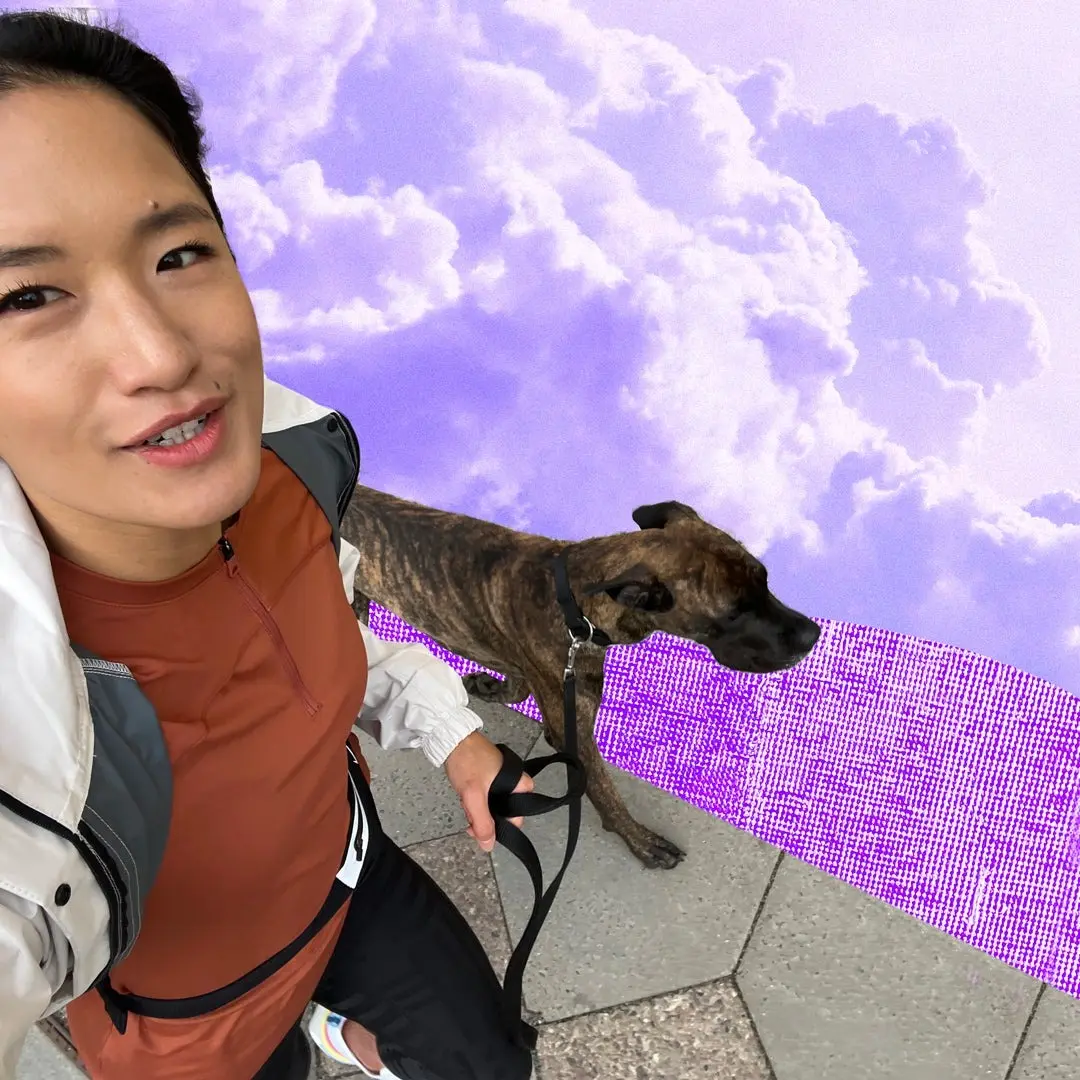
- Four-Legged Pacing: Mondays also frequently feature canine companionship. By borrowing a friend’s high-energy dog, Mia, Hong injects an element of playful competition into her route. While Mia acts as an enthusiastic engine at the start, Hong’s seasoned endurance takes over in the latter half, turning the outing into a cooperative test of stamina.
Tuesday: Cross-Training and Injury Mitigation
Marathon training is rarely just about logging miles; longevity in the sport requires structural integrity. Tuesday is intentionally designated as a non-running day, pivoting instead toward a holistic cross-training regimen.
- Yoga and Mobility: Hong dedicates her Tuesday to dynamic yoga sessions, focusing on hip mobility, hamstring flexibility, and core stability.
- Strength and Rehabilitation: Recognizing that repetitive impact can lead to chronic injuries, she integrates targeted strength training and scheduled physiotherapy into her weekly routine. This triad of yoga, strength work, and clinical maintenance forms the foundational armor that allows her to push her comfort zone later in the week without facing debilitating burnout or severe muscular tears.
Wednesday: Mid-Week Socialization and Cultural Recovery
Recovery is not merely physical; it is deeply social and mental. As a flight attendant traversing time zones, Hong’s time in Berlin is precious.
- Protecting the Social Battery: Rather than forcing a mid-week speed workout when her energy levels are depleted from jet lag, Wednesday serves as a buffer. Hong prioritizes her social circle, often visiting local art exhibitions or meeting friends for coffee. This mental decompression ensures that her passion for physical training remains a privilege rather than a chore.
Thursday: Pushing Limits with High-Intensity Track Workouts
With her body adequately rested and her mind refreshed, Thursday marks the escalation of physical intensity.
- The Science of Speed: Training for a marathon requires structural adaptation to race-pace efforts. Hong heads to the local athletic track to test her anaerobic thresholds, experimenting with sustained velocities and interval repetitions.
- Gear Optimization: On high-intensity days, equipment choice is critical. Hong relies heavily on footwear engineered for high-mileage comfort and energy return, specifically citing the Nike Invincible 3. The shoe’s signature "bouncy" foam cushioning and stable platform across varied urban surfaces provide the psychological safety net needed to attack aggressive track splits with confidence.
Friday: Intentional Rest and Urban Exploration
Following Thursday’s grueling track session, Friday is characterized by structural recovery.
- Active vs. Passive Rest: Aside from a restorative, gentle yoga flow, Friday is dedicated to unwinding. Hong continues her exploration of Berlin’s vibrant cultural scene, reinforcing the philosophy that an endurance athlete’s identity should never be entirely single-dimensional.
Saturday: The Long Urban Solo Run
Saturday morning belongs to the ritual of the long run—an essential physiological stimulus for marathon runners.
- The Landwehrkanal Route: Hong’s standard training artery follows the picturesque paths of the Landwehrkanal. The terrain presents a diverse sensory experience: alternating patches of asphalt, damp grass, and earthen trails.
- Sensory Modulation: Depending on her mental bandwidth, Hong either immerses herself in an engaging narrative podcast or runs entirely in silence, absorbing the ambient acoustic backdrop of Berlin.
- The Post-Run Reward: No Saturday run is complete without a culturally anchored ritual. Hong concludes her route at a local market stall in Kreuzberg, rewarding her efforts with an artisanal coffee and a carefully chosen post-run snack.
Sunday: Community, Long-Distance Endurance, and Dumplings
Sunday is defined by collective endurance and social integration, anchoring her within Berlin’s vibrant running ecosystem.
- The Joy Run Collective: Hong is a proud member of the Joy Run Collective, a local running community that turns solitary training into a shared cultural experience.
- The Tiergarten Long Run: Together with her run club, she tackles extended mileage through the historic expanses of the Tiergarten. Navigating colder weather and prolonged exertion requires careful tactical preparation, from thermal layering to route planning.
- Culinary Fellowship: The ultimate incentive for Sunday’s grueling long run is communal dining. This week, the club gathers for a post-run brunch featuring handmade dumplings—a culinary reward that Hong admits serves as a powerful psychological motivator throughout her final miles.
Supporting Context & Metrics: The Evolution of Modern Running Culture
To contextualize Hong’s journey, one must examine the broader sociological shifts currently transforming the global running landscape. Over the past decade, running has transitioned from an esoteric, hyper-competitive pursuit dominated by elite time-trialists to an inclusive, lifestyle-oriented subculture.
The Rise of the "Comfort-First" Athlete
Historically, distance running was marketed through a lens of stoic suffering—the "no pain, no gain" dogma that alienated casual participants. However, industry data and fitness trends indicate a massive surge in participation among demographics that prioritize holistic well-being over rigid split times.
- Mental Health and Longevity: Studies consistently show that running serves as a potent neurobiological stabilizer, reducing cortisol levels and stimulating the release of endocannabinoids. For working professionals like Hong—who entered the sport in her late twenties and notes that she is significantly healthier and fitter in her thirties than she was previously—running acts as an anchor for holistic self-efficacy.
- The Economic Impact of Community: The proliferation of independent running collectives (such as the Joy Run Collective in Berlin, similar to groups found in London, New York, and Tokyo) has fundamentally altered consumer behavior. Runners today do not just buy shoes; they buy into communities, aesthetics, and shared experiences. Brands have responded by engineering footwear like the Nike Invincible series—focusing intensely on maximal cushioning, high energy return, and everyday wearability to cater to runners who refuse to sacrifice comfort for performance.
Official Statements and Expert Perspectives
To validate the athletic philosophies demonstrated in Hong’s routine, we look to sports scientists, physical therapists, and community leaders who study modern endurance training.
"The traditional narrative that high-performance training must be miserable is scientifically obsolete," notes Dr. Marcus Lindner, a sports physiologist based in Munich. "Athletes who successfully sustain high training volumes over years—such as multi-marathoners—are those who manage autonomic nervous system stress effectively. Incorporating social connection, prioritizing sleep, utilizing high-cushion footwear to reduce micro-trauma, and allowing psychological outlets like listening to music or singing are not ‘weaknesses’; they are sophisticated behavioral pacing strategies that prevent mental burnout."
Furthermore, industry analysts tracking running culture emphasize the democratization of the sport:
"We are witnessing the death of the gatekeeper in endurance sports," states Elena Rostova, an active lifestyle trends researcher. "Runners no longer feel pressured to conform to an elite template. They are designing customized regimens that integrate seamlessly with demanding professional careers, artistic pursuits, and social lives. Hong’s routine—balancing flight attendant shifts, graphic design, art exhibitions, and marathon training—is the blueprint for the 21st-century urban athlete."
Future Outlook: The Road to the 7th Marathon and Beyond
As Hong laces up for the final phases of her preparation cycle, her trajectory points toward a broader evolution within her personal athletic philosophy. Reaching a milestone like a seventh marathon is not merely a numerical accumulation of medals; it represents a deep maturation of self-awareness.
Redefining Personal Limits
When asked what keeps her moving forward, Hong reflects on the psychological transformation she has undergone over the past four years. Running has taught her that discipline and comfort are not mutually exclusive constructs. An athlete can demand peak physical output from their body while simultaneously honoring their mental need for joy, community, and relaxation.
What’s Next?
- The 7th Marathon Countdown: With her training peaking through structured track sessions, long-run club meetups in the Tiergarten, and rigorous recovery protocols, Hong is strategically positioned on the start line of her next major endurance test.
- Advocating for Balance: Beyond her personal race goals, Hong aims to inspire individuals who currently perceive themselves as "non-runners" to reconsider their boundaries. Her message is clear: you do not need to wake up at dawn hating your alarm to be a serious runner. You simply need to find your rhythm, invest in supportive gear, surround yourself with a welcoming community, and remember to enjoy the journey—even if it means singing your way through a difficult mile.
Hong’s 3 Golden Rules for a Joyful and Sustainable Run
For readers looking to infuse more enjoyment, longevity, and consistency into their personal running routines, Hong distills her philosophy into three actionable takeaways:
- Prioritize Footwear and Comfort: Never underestimate the psychological and physical value of supportive gear. Investing in well-cushioned, reliable running shoes (such as those equipped with advanced impact-absorption technology) transforms your stride and protects your joints across varied urban surfaces.
- Curate Your Soundtrack: Music is a powerful performance enhancer. Build a dynamic playlist—spanning high-energy genres like disco, house, and techno—to combat fatigue and elevate your mood when motivation dips.
- Combine Aesthetics with Reward: Design a running route that engages your senses—whether through scenic nature trails, urban architecture, or vibrant local neighborhoods—and always couple your training session with a meaningful post-run reward, such as a favorite snack, artisanal coffee, or time spent with friends.