Executive Overview
If you have found yourself staring blankly at a screen for hours, plagued by the sinking sensation that your cognitive faculties are dissolving into digital mush, you are far from alone. Across the globe, modern society is experiencing a collective crisis of concentration. Contemporary research underscores a stark reality: human attention spans are shrinking at an alarming rate. Coupled with declining literacy levels and the cultural malaise of the "doomscroll," theorists and psychologists alike have begun warning that our hyper-connected lifestyles are dragging us toward a new kind of Dark Ages.
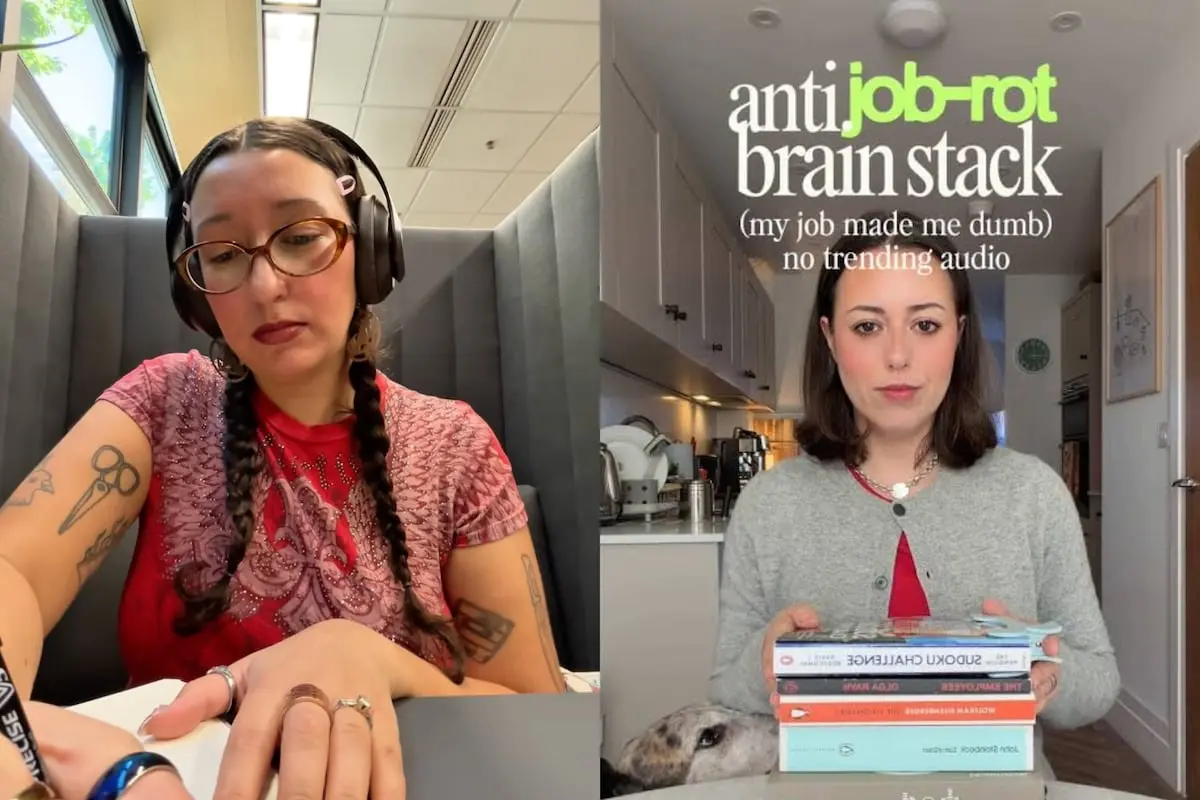
Enter brainstacking—the latest viral phenomenon sweeping through Instagram, TikTok, and YouTube. Positioned as a direct antidote to endless algorithmic scrolling and perpetual "brainrot," brainstacking encourages users to put down their phones and engage in a curated sequence of analog activities, such as reading, journaling, and solving puzzles, completed one after another within a dedicated time block.
While the premise is disarmingly simple, the movement has captured the cultural imagination, accumulating tens of thousands of views under tags like "#brainstackwithme" and "#antibrainrotroutine." But as digital creators champion this offline rebellion, experts urge caution. Is brainstacking a genuine cognitive reset, or is it merely old-fashioned downtime repackaged for the attention economy? This investigation explores the origins of the trend, the psychological debate surrounding it, the challenges of commercialization, and what this craving for analog spaces reveals about our relationship with technology.
Detailed Chronology: How "Brainstacking" Conquered the Internet
The trajectory of brainstacking mirrors the hyper-accelerated lifecycle of modern internet trends, moving from niche hobbyist corner to mainstream phenomenon in a matter of weeks.
- Early 2024: Mandy Rulez, a 28-year-old content creator based in Indiana, begins posting cozy, aesthetic videos celebrating her lifelong passions for crafts, creative writing, and logic puzzles. Known within the "LibraryTok" community, Rulez initially titles her content benignly, using phrases like "slow Monday at the library" or "quiet afternoon at the library."
- Late Summer 2024: As public fatigue regarding relentless screen time grows, Rulez notices that her followers respond intensely to videos where she transitions smoothly from one analog task to another—such as drafting a journal entry before moving directly into a crossword puzzle.
- October 2024: Rulez coins the explicit umbrella term "brainstacking" in a video caption. The concept instantly strikes a chord with an exhausted digital populace. The video goes viral, serving as a catalyst for explosive growth. Within the single month of October, Rulez’s multi-platform footprint across Instagram, TikTok, and YouTube expands by more than 150,000 combined followers.
- Late 2024 to Present: The hashtag explodes. Other prominent creators—such as 32-year-old full-time creator Jaye Rockett—adopt the terminology, sharing their own personalized "evening stacks." Content shifts from simple hobby-sharing to tactical guides on how to enter a "flow state" and break free from severe smartphone addiction.
Supporting Context & Metrics: The Anatomy of a Digital Malady
To understand why brainstacking resonated so deeply, one must examine the staggering statistics of modern screen saturation. Recent data from psychological institutions and media analysts highlights a profound crisis in human cognitive endurance:
- Shrinking Attention Spans: Psychological research published by organizations like the American Psychological Association (APA) points to a measurable decline in sustained human focus, heavily exacerbated by the rapid-fire, micro-content delivery systems of short-form video platforms.
Extreme Screen Time: Heavy internet users routinely report daily screen averages exceeding 10, 12, or even 14 hours. For creators like Jaye Rockett, adopting structured analog routines has served as a desperate intervention, cutting her daily device usage in half, from 14 hours down to 7 hours.
- The Rise of "Hobbymaxxing": Brainstacking does not exist in a vacuum. It sits squarely within a broader cultural zeitgeist characterized by a frantic pivot toward analog hobbies—spanning "BookTok," "StudyTok," birdwatching, needlepoint, and record collecting. Society is actively searching for ways to reclaim physical reality.
Yet, this craving for offline spaces runs headfirst into a paradox: the very platforms that make us sick are being used to advertise the cure. Creators who film their "offline" routines are frequently accused of performative hypocrisy.
Rulez, however, remains unapologetic about this contradiction. "Even if this trend is ‘performative,’ I don’t think that negates all the positives brainstacking brings: no doomscrolling, library usage, and bringing back joy for puzzle books," she argues. "In a world where everything exists in the digital sphere, enjoying analog hobbies is so important, even if you’re recording it."
Official Statements: The Psychological Perspective
While influencers celebrate brainstacking as a cognitive panacea, mental health professionals advise a more measured, critical approach.
Amy Baglietto, a psychotherapist specializing in ADHD, anxiety, and burnout, acknowledges the benign nature of the activities involved, but questions the necessity of the framework:
"Reading and puzzles can be enjoyable, absorbing activities. If giving them a new name encourages people to try them, fair enough. But that doesn’t mean doing them in a particular order is a proven way to improve concentration or literacy."
Baglietto raises a deeper psychological concern regarding the hyper-productive mindset infiltrating our rest periods. In an era where every minute is optimized, even relaxation risks becoming a chore:
"My concern is that someone who already feels unproductive now has a checklist for their downtime. You’re allowed to enjoy a crossword puzzle without making it a treatment plan."
Instead of strict schedules, Baglietto advocates for organic, low-pressure adjustments. She suggests making simple, friction-based changes to environment and behavior:
- Turn off non-essential digital notifications.
- Physically remove the phone from arm’s reach during relaxation periods.
- Leave a physical book in places where one would habitually sit and scroll.
- Cultivate spaces for unstructured boredom. "Allow yourself a few unfilled moments. Every spare minute doesn’t need to improve you."
Furthermore, critics have warned that brainstacking videos can easily morph into engines of overconsumption—pushing viewers to buy endless hauls of specialized journals, aesthetic highlighters, and imported puzzle books. Jaye Rockett acknowledges this danger, emphasizing that the movement must reject commercial exploitation: "These trends are great when the encouragement is to seek out wellness, less so when it becomes another capitalist push to buy more, more, more. We’ve all got plenty of offline tasks to hand."
Despite these warnings, practitioners like Rockett report profound personal benefits. Describing her experience with her evening stack—which incorporates journaling, sudoku, reading, and sketchbook doodling—she notes:
“There are certainly days where my busy brain needs that quick dopamine fix of a task jump, but the more I carve out time for brainstacking, the more I find I’m sitting with each task longer.”
Future Outlook: Where Do We Go From Here?
As the digital landscape continues to evolve, trends like brainstacking highlight a profound societal yearning: humanity is suffering from technological indigestion, and it is frantically searching for ways to purge the noise.
Whether brainstacking proves to be a fleeting internet fad or the precursor to lasting behavioral change remains to be seen. Psychologists may be right that labeling a crossword puzzle a "brain stack" does not magically rewrite neural pathways, and critics are valid in pointing out the irony of filming one’s digital detox for TikTok clout.
However, the underlying impulse—the desperate, human desire to sit quietly with a book, hold a pen, and quiet the relentless buzzing of an algorithmic notification bell—is entirely real. Mandy Rulez, for her part, has no intention of stopping. She views the movement not as a rigid productivity hack, but as a gateway back to simple, lifelong joys.
In a world increasingly dominated by invisible code, infinite feeds, and synthetic media, the simple act of turning off the screen and picking up a physical book may be the most radical act remaining. Whether we call it brainstacking, a hobby, or simply taking a breather, finding ways to step off the digital treadmill is no longer just a lifestyle choice—it is a matter of cognitive survival.