Executive Overview
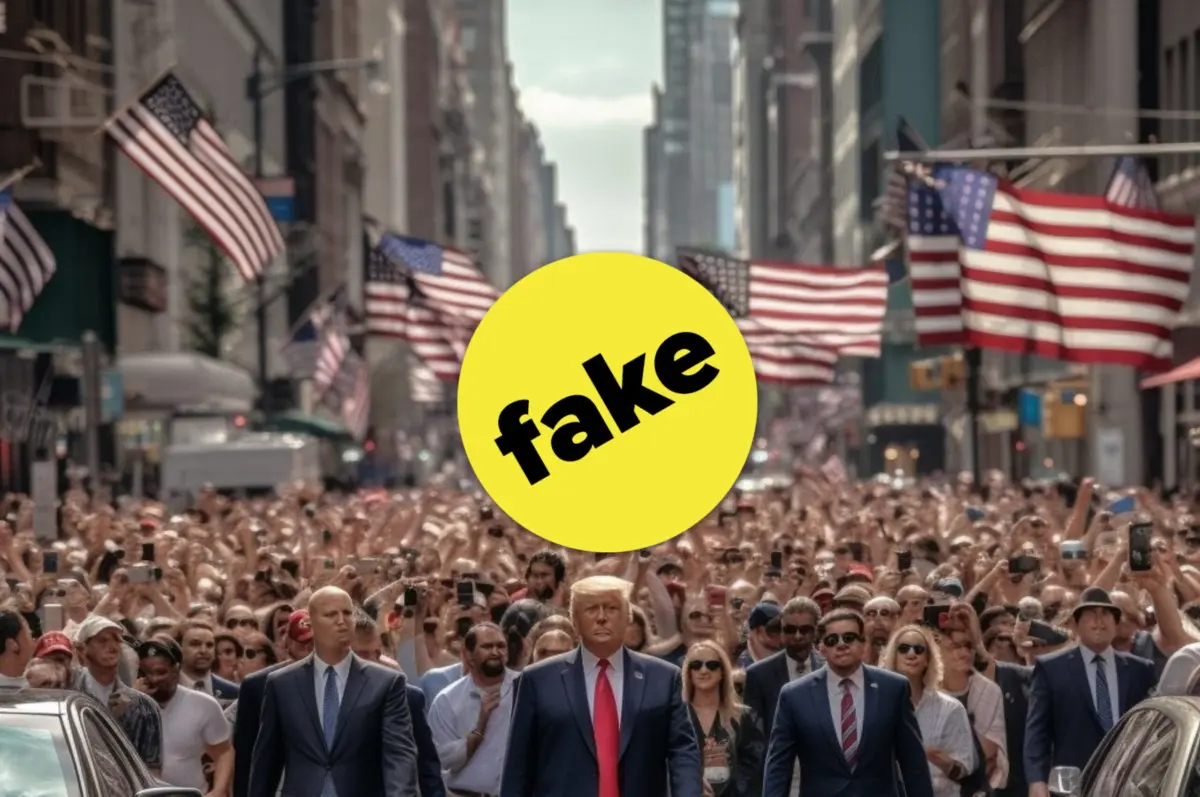
The rapid democratization of generative artificial intelligence has fundamentally altered the visual landscape of the internet, plunging society into an era where seeing is no longer believing. Within a remarkably brief window, text-to-image models have evolved from experimental novelties into sophisticated engines capable of producing hyper-realistic photographs, deepfakes, and synthetic media that are virtually indistinguishable from reality. This technological leap has triggered a profound crisis of authenticity. As synthetic imagery floods digital platforms, it creates fertile ground for misinformation campaigns, corporate espionage, reputational destruction, and the intentional manipulation of public discourse.
The implications for democratic societies are severe. Visual media has historically served as a foundational anchor for shared objective reality; photographs are trusted as primary historical evidence of events, conflicts, and political actions. When the veracity of this evidence can be systematically undermined, public trust in foundational institutions—including journalism, the judiciary, and electoral processes—erodes.
[Generative AI Models] ---> (Mass Production of Synthetic Media) ---> [Social Media Platforms]
                                                                        |
[Erosion of Public Trust] <--- [Inconsistent Content Moderation] <-------+
Compounding this crisis is the stark inadequacy of the current technological and regulatory defense mechanisms. While a new ecosystem of AI-detection startups has emerged to help consumers verify image origins, these tools remain imperfect, locked in a perpetual technological arms race against increasingly sophisticated generative algorithms. Meanwhile, major social media platforms—struggling with gutted trust-and-safety teams, shifting verification models, and inconsistent enforcement of manipulated media policies—have proven largely unprepared to stem the tide.
This investigative report examines the multifaceted challenges posed by the proliferation of AI-generated imagery. Through a detailed chronology of technological milestones, expert analyses, metrics on platform vulnerabilities, and an outlook on future defensive paradigms, we explore how the collapse of visual truth threatens the global information ecosystem and what measures are urgently required to restore public trust.
Detailed Chronology: The Evolution of Synthetic Media and Detection
To understand the current crisis of authenticity, one must trace the rapid technological trajectory that brought generative artificial intelligence from academic laboratories into the hands of millions of everyday internet users.
Phase One: The Genesis of Deepfakes and GANs (2014–2018)
The foundation of modern generative imagery was laid with the introduction of Generative Adversarial Networks (GANs) in 2014 by Ian Goodfellow and his colleagues. GANs pit two neural networks against each other: a generator that creates fake data and a discriminator that evaluates it. This adversarial process allowed machines to learn how to synthesize realistic human faces, though early outputs were characterized by blurry textures, uncanny valley facial expressions, and obvious artifacts. By 2017 and 2018, open-source communities began adapting these techniques to swap faces in video media, giving birth to the colloquial term "deepfakes." Initially confined to niche forums, these tools quickly demonstrated the potential for malicious exploitation, primarily targeting public figures and non-consensual pornography.
Phase Two: Commercialization and Diffusion Models (2020–2022)
The paradigm shifted definitively with the advent of diffusion models. Unlike GANs, diffusion models generate images by starting with random noise and gradually refining it based on textual prompts, guided by massive neural networks trained on billions of parameters.
- Midjourney (July 2022): Released via Discord, Midjourney captured the public imagination with its painterly, highly polished aesthetic, proving that users without artistic training could produce striking visuals via simple text prompts.
- Stable Diffusion (August 2022): Stability AI released Stable Diffusion as an open-source model. This was a watershed moment: because the model could be run locally on consumer-grade computer hardware, it stripped away corporate guardrails, enabling unrestricted generation of any conceivable subject matter.
- OpenAI’s DALL-E 2 (2022): Refined text-to-image capabilities with unprecedented semantic understanding, allowing for complex object interactions, lighting effects, and stylistic control.
Phase Three: The Mainstreaming and Verification Arms Race (2023–Present)
By 2023, synthetic imagery achieved mainstream saturation. High-profile fake images—ranging from the Pope in a Balenciaga puffer jacket to fabricated scenes of the Pentagon burning—went viral on social networks, frequently bypassing human critical evaluation and automated content filters alike.
In response, a cottage industry of detection startups emerged. Platforms such as Optic.xyz, Hive Moderation, and Truepic launched tools designed to scan uploaded JPEGs and PNGs for the statistical and pixel-level signatures of AI generation. Simultaneously, tech giants began exploring cryptographic watermarking initiatives, spearheaded by coalitions like the Coalition for Content Provenance and Authenticity (C2PA). However, these defensive measures have consistently lagged behind the generative capabilities of newer models, which continuously adapt to eliminate traditional algorithmic tells.
Supporting Context & Metrics: The Vulnerability of the Information Ecosystem
The proliferation of synthetic media does not occur in a vacuum; it exploits structural vulnerabilities deeply embedded in the modern digital attention economy.
The Psychology of Visual Credibility
Human cognitive processing is heavily biased toward visual confirmation. Evolutionary psychology predisposes humans to trust visual stimuli more readily than abstract text or numerical data. When an individual scrolls through a social media feed, their brain processes images in fractions of a second—long before conscious, critical analytical faculties can engage.
[Social Media Scroll] ---> [Instant Visual Processing (High Trust Bias)] ---> [Emotional Reaction]
                                                                                      |
[Analytical Fact-Checking] <--------------------------------------------- [Viral Spread (Misinformation)]
Generative AI weaponizes this cognitive shortcut. By producing images that evoke immediate emotional responses—anger, sympathy, awe, or fear—bad actors can short-circuit rational skepticism. By the time a fact-checking organization or detection tool debunks an image, the viral momentum has already carried the falsehood to millions of feeds.
Platform Unpreparedness and Moderation Failures
Independent watchdogs and media researchers have repeatedly highlighted the systemic unpreparedness of social media companies to handle the deluge of synthetic media. According to data from media monitoring organizations, platforms exhibit wildly inconsistent enforcement of their own manipulated media policies.
- The Content Moderation Deficit: Following significant corporate restructuring and workforce reductions across major technology firms—most notably at Twitter (now X), Meta, and Alphabet—trust-and-safety divisions have faced severe downsizing. Experienced content moderators specializing in disinformation, state-sponsored influence operations, and synthetic media have been laid off or reassigned.
- The Verification Collapse: The dismantling of legacy verification systems (such as the traditional blue checkmark on X) has further degraded the digital information ecosystem. When accounts impersonating reputable news organizations, public officials, or verification bodies can purchase verified status, users lose their primary heuristic for determining account and content credibility. This structural vulnerability makes it exponentially easier for bad actors to seed AI-generated images into the mainstream news cycle under the guise of authoritative reporting.
Official Statements and Industry Perspectives
The escalating tension between generative AI innovation and democratic security has drawn sharp commentary from industry leaders, researchers, and policy analysts.
Andrey Doronichev, CEO and co-founder of Optic.xyz, underscored the gravity of the technical challenge and its societal implications during a recent industry briefing:
“It has become increasingly challenging for the average human eye to distinguish between AI-generated and real photos,” Doronichev explained. “This has the potential to manipulate public opinion, undermine the credibility of news sources, and ultimately threaten the democratic process by promoting disinformation.”
Doronichev’s assessment highlights the core paradox facing modern internet users: while manual inspection was once an effective filter against amateur manipulation, the sheer fidelity of contemporary models renders ocular inspection obsolete.
Kayla Gogarty, deputy research director at Media Matters for America, emphasized that the danger lies not merely in the technology itself, but in the institutional failure of platforms to manage it:
“As there has been a recent rise of AI-generated media, it has become clear that platforms are unprepared for this moment in which fake images and misinformation could lead to real-world harm,” Gogarty stated in an interview. “ particolarmente concerning is Twitter, as Elon Musk has abandoned much of the platform’s content moderation and it has become difficult to determine account credibility under the new checkmark policy.”
These perspectives converge on a single, sobering conclusion: the defense against generative disinformation cannot rely on user vigilance alone. It requires systemic intervention, robust platform accountability, and standardized technological guardrails.
Future Outlook: Navigating the Post-Truth Digital Frontier
As generative artificial intelligence continues its relentless advancement—expanding rapidly into text-to-video, real-time voice cloning, and interactive synthetic avatars—the imperative to adapt becomes urgent. What does the future hold for the information ecosystem, and how can society fortify itself against the erosion of objective reality?
1. The Limitations of Detection Tools
While platforms like Optic, C2PA watermarking frameworks, and forensic software provide critical stopgap measures, experts agree that detection alone will never be a silver bullet. AI models are evolving faster than detection algorithms can adapt. When a detector is trained to spot specific artifacts (such as malformed hands, asymmetric eyes, or unnatural background warping), generative developers simply update their models to eliminate those specific flaws. The future of authentication must pivot away from retroactive detection and toward proactive provenance.
2. Cryptographic Content Provenance
The most promising long-term solution lies in cryptographic watermarking and tamper-evident metadata standards. Organizations like the C2PA are working to embed unalterable metadata into images at the point of capture (in professional digital cameras) or at the point of creation (in certified AI generation tools).
- If an image is captured by a photojournalist, its cryptographic signature certifies its real-world origin.
- If an image is generated by an AI model, its signature explicitly tags it as synthetic.
Web browsers, operating systems, and social media platforms will eventually need to natively display these provenance badges, allowing users to verify an image’s lineage at a glance. However, achieving universal adoption across open-source communities and malicious actor networks remains a formidable hurdle.
3. Media Literacy and Institutional Resilience
Ultimately, technology alone cannot save society from the crisis of synthetic media. A multi-pronged approach is required:
- Educational Curriculum: Media literacy must be overhauled to educate students and adults alike on the mechanics of generative AI, teaching them to question the provenance of provocative media.
- Journalistic Rigor: Legitimate news organizations must double down on rigorous verification protocols, resisting the urge to chase viral social media scoops without thorough multi-source authentication.
- Regulatory Frameworks: Governments worldwide are beginning to debate legislation targeting unlabelled deepfakes, particularly in electoral contexts. Striking the right balance between free expression and protection against deceptive disinformation will be one of the defining legal battles of the decade.
Until these systemic defenses are fully realized, the digital public square remains vulnerable. As internet users navigate this post-truth frontier, the golden rule of the modern media diet remains unchanged: if an image looks too extraordinary, too perfectly tailored to confirm a bias, or too explosive to be true, it almost certainly is. Running suspicious visuals through verification tools or relying exclusively on trusted, verified news sources is no longer just good digital hygiene—it is an essential civic duty in defense of shared reality.