Executive Overview
For generations, the cactus has stood as a universal symbol of absolute resilience. Rooted in scorching, arid landscapes where searing suns bake the earth and rainfall is an intermittent luxury, these botanical endurance artists do far more than merely survive—they thrive. They serve as critical architectural pillars of desert ecosystems, carving out vital habitats for western screech owls, providing essential nectar and floral structures for bats, and sustaining a vast array of desert pollinators. Yet, a startling consensus is emerging from the scientific community: this iconic resilience has its limits.
According to a landmark study published in the journal Nature, the world’s cacti are facing an unprecedented existential crisis. While habitat destruction, illegal poaching for private collections, and land-use changes have long plagued these plants, a far more pervasive and insidious threat is accelerating their decline: worsening, multi-year droughts driven by global climate change.
Researchers modeling the trajectory of nearly 1,000 cactus species over the coming decades have painted a grim portrait of the future. The data reveals that the majority of these species will face staggering habitat loss as global temperatures climb and dry spells intensify. Most alarmingly, more than a quarter of all cactus species could see at least 80 percent of their native range effectively vanish by the year 2100.
This comprehensive report examines the mounting pressures bearing down on these desert dwellers. By exploring the complex ecological vulnerabilities of cacti, the hidden mechanics of sublethal climate stress, and the intersection of policy, conservation, and citizen science, we reveal how the slow-motion unraveling of desert flora threatens to reshape the American Southwest and arid landscapes across the globe.
Detailed Chronology: Unraveling the Science of Cactus Vulnerability
To understand how the climate crisis is encroaching upon the cactus, scientists have had to re-examine fundamental assumptions about how these plants interact with their environment.
The Myth of Invulnerability
For decades, public perception and even early ecological models cast cacti as virtually indestructible. Endowed with thick, waxy outer layers designed to lock in moisture, and specialized photosynthetic pathways that minimize water loss, they appeared impervious to the elements. However, conservation ecologist Michiel Pillet of the University of South Florida—lead author of the recent Nature study—argues that this romanticized view has obscured their true fragility.
"The public perception of cacti tends to be of these organisms that are extremely drought-adapted and are just resilient, can handle anything that you throw at them," Pillet notes. "In reality, cacti are absolutely amazing… but they’re not that different from other plants."
The Monsoon Dependency
Like any other flora, cacti evolved under precise environmental conditions. In the deserts of the southwestern United States and northern Mexico, these plants are intricately synchronized with seasonal weather patterns, most notably the North American monsoon. Typically peaking in July and August, these torrential seasonal rains are the lifeblood of the region, providing the massive, singular pulses of moisture that cacti rely upon to sustain themselves through the searing dry months.
When climate change disrupts these seasonal rhythms—either by delaying rains, reducing precipitation volume, or supercharging evaporation rates—cacti are pushed far outside their evolutionary comfort zones.
The Hospital Patient Analogy: Visualizing Climate Stress
To accurately communicate the physiological state of modern cacti, researchers often draw a parallel to human medicine. Imagine a patient admitted to a hospital emergency room suffering from heat-related exhaustion because their body can no longer regulate its internal temperature. Simultaneously, that same patient is suffering from severe, acute dehydration.
Cacti are enduring an identical compound crisis on a global scale. As atmospheric temperatures shatter records and relentless dry spells stretch across months and years, the plants are forced to expend precious energy just to stay cool, all while lacking the hydration necessary to fuel cellular repair.
"When we consider drought conditions, then it turns out that they’re much, much sicker than we previously thought," Pillet explains. "These results really do change the outlook of cacti, and most likely plants more broadly under climate change."
Leveraging Big Data and Citizen Science
Historically, tracking the health and distribution of thousands of wild plant species over vast, inhospitable desert landscapes was a logistical nightmare. To overcome this hurdle, the research team behind the Nature study turned to modern technology, harnessing the power of the citizen science platform iNaturalist.
By analyzing approximately 650,000 verified photographic observations submitted by naturalists, hikers, and scientists worldwide, the researchers constructed a high-resolution, empirical baseline of wild cactus populations. This massive influx of crowd-sourced data allowed modeling software to simulate shifting habitats with unprecedented accuracy, revealing that localized population declines are far more widespread than previously documented.
Supporting Context & Metrics: The Anatomy of a Hidden Crisis
The threat facing cacti is not simply a dramatic, cinematic wither-and-die scenario. Rather, it is a complex, multi-tiered ecological squeeze that targets specific life stages and biological processes.
Sublethal Effects: When Survival is Not Enough
One of the most profound insights emerging from recent ecological research is the prevalence of "sublethal effects." Prolonged drought does not always kill an adult cactus outright. Instead, it subtly sabotages the plant’s ability to complete its life cycle.
Ecologists are now probing deeper questions: Which life stages bear the brunt of climate stress—the resilient, deeply-rooted adults, or the delicate, shallow-rooted seedlings? Which physiological mechanisms are breaking down first? Is the primary symptom reduced cellular growth, accelerated mortality, or a complete failure to flower?
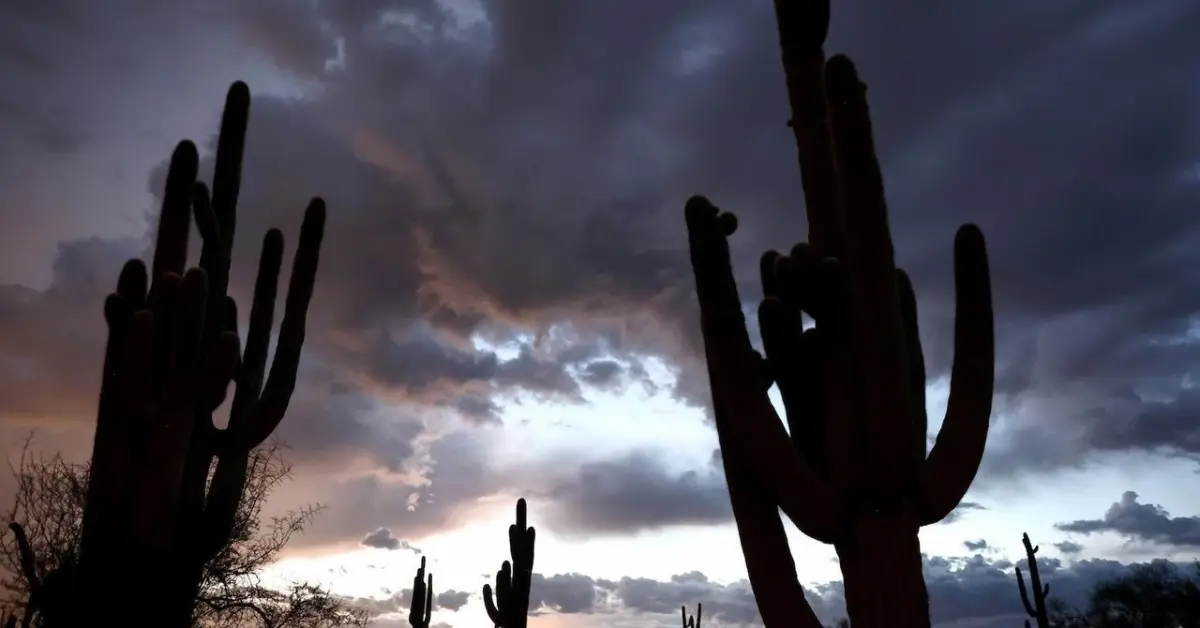
The data points overwhelmingly toward reproductive failure. Without adequate water, many cactus species simply lack the metabolic surplus required to produce blossoms. In the Sonoran Desert, for example, the iconic, towering saguaro (Carnegiea gigantea) has demonstrated a noticeable decline in reproductive frequency during prolonged drought epochs because the plants fail to initiate flowering cycles. When flowers fail to bloom, pollinators go unfed, seeds are not set, and the recruitment of the next generation grinds to a halt.
The Fragility of Arid Ecosystems
There is a widespread misconception that because deserts are harsh, brutal environments, the organisms living within them must be inherently tough against all forms of disturbance. Marcos Robles, lead scientist for The Nature Conservancy in Arizona—who was not involved in the Nature study—points out the dangerous flaw in this logic.
"They don’t recover quickly once they are disturbed, or once they are degraded, just because there’s so little water and such higher temperatures," Robles warns. "It takes multiple decades to recover, and in some cases, they don’t recover."
A Multi-Pronged Assault
Cacti are currently being squeezed by a converging matrix of environmental stressors:
- Habitat Loss & Fragmentation: Urban expansion, agricultural conversion, and energy infrastructure projects continue to carve up native desert ranges.
- Poaching: A lucrative black market for rare, slow-growing succulent species drives illegal harvesting from public and private lands, stripping wild populations of their genetic diversity.
- Sea-Level Rise: At the opposite geographical extreme, rising seas and saltwater intrusion have triggered dramatic local extinctions, such as the catastrophic loss of the Key Largo tree cactus in Florida.
- Nighttime Temperature Spikes: Perhaps most insidiously, nighttime temperatures are rising faster than daytime highs in many desert regions. Cacti utilize a specialized form of photosynthesis (Crassulacean Acid Metabolism, or CAM) that requires them to open their stomata and respire at night to minimize water loss.
"If the nighttime temperatures are very high, they can’t do it," explains Rod Haenni, president of the nonprofit Cactus and Succulent Society of America. "Then if you water on top of that, the plants just rot."
Official Statements & Expert Perspectives
The publication of the Nature study has galvanized conversation among botanists, conservationists, and non-profit leaders who view the findings as a critical wake-up call for global biodiversity frameworks.
"The public perception of cacti tends to be of these organisms that are extremely drought-adapted and are just resilient… In reality, cacti are absolutely amazing—and they’re my favorite plant group, clearly—but they’re not that different from other plants."
— Michiel Pillet, Conservation Ecologist, University of South Florida"They don’t recover quickly once they are disturbed, or once they are degraded, just because there’s so little water and such higher temperatures. It takes multiple decades to recover, and in some cases, they don’t recover."
— Marcos Robles, Lead Scientist, The Nature Conservancy (Arizona)"If the nighttime temperatures are very high, they can’t do it. Then if you water on top of that, the plants just rot."
— Rod Haenni, President, Cactus and Succulent Society of America"Hopefully, it’ll wake people up. But the problem is that a lot of the governments involved are indifferent to this. There are a lot of people in the countries who are not indifferent, but they’re not running the governments."
— Rod Haenni, on the political hurdles facing desert conservation
Future Outlook: Mitigation, Migration, and the Road Ahead
As the impacts of climate change accelerate, the future of the world’s cacti will depend heavily on a mix of natural adaptation, proactive conservation intervention, and governmental policy reform.
The Great Migration: Can Plants Outrun the Heat?
Just as terrestrial animals are shifting their ranges toward the poles or higher elevations to escape warming lowlands, some plant populations are attempting to "march" across the landscape. Similar to the well-documented "greening of the Arctic," where tundra flora is expanding northward into thawing perpetual frost, certain resilient plant populations are naturally creeping into microclimates that mimic the historical temperature and moisture regimes they evolved to handle.
However, unlike mobile fauna or wind-dispersed annual weeds, cacti have notoriously slow seed dispersal mechanisms. Natural migration cannot keep pace with the hyper-accelerated rate of modern anthropogenic climate change.
The Role of Modern Conservation
Conservation professionals are utilizing predictive modeling to recalibrate their strategies, shifting focus toward triage and proactive preservation. While field biologists cannot command the clouds to drop rain over parched desert basins, they can intervene directly on the ground:
- Botanical Arks: Conservationists are increasingly evacuating threatened wild specimens to establish secure, genetically diverse populations within botanical gardens and specialized conservatories. These living gene banks act as vital insurance policies against complete extinction in the wild.
- Assisted Colonization: In select cases, mature plants and propagated seedlings are being reintroduced into protected wilderness zones where future climatic conditions are projected to remain hospitable.
- Habitat Protection: Legislative frameworks must be strengthened to secure large, contiguous blocks of public land from industrial encroachment, mining, and illegal poaching.
A Call for Political Will
Ultimately, protecting the silent sentinels of the desert requires a fusion of rigorous ecological science and decisive political action. Experts emphasize that while public awareness is higher than ever, government bodies in key cactus-rich nations often lag behind in enacting meaningful protective legislation.
Until policymakers match the urgency expressed by the scientific community, the iconic silhouette of the cactus—long standing tall against a burning horizon—may become a fading monument to an era when our planet’s most extreme environments were still capable of sustaining life in all its resilient glory.
This story originally appeared on Grist and is part of the Climate Desk collaboration.