Executive Overview
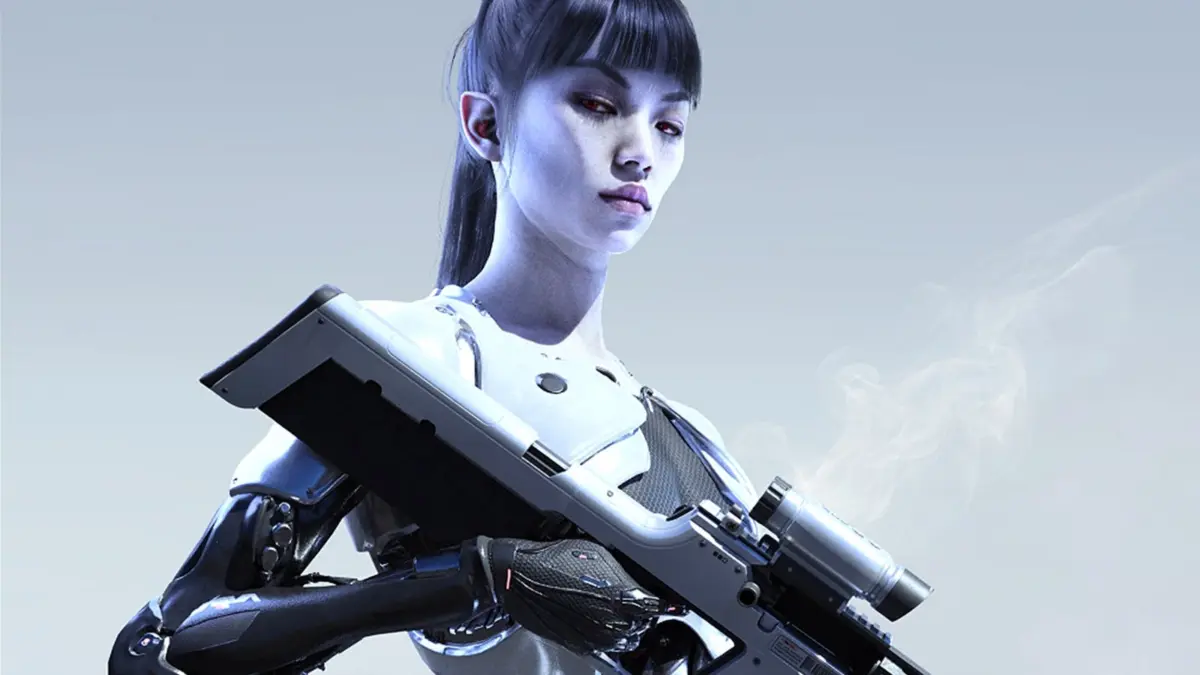
The intersection of generative artificial intelligence and the video game industry has crossed a contentious new threshold. Embark Studios, the developer behind the fast-paced first-person shooter The Finals, has found itself at the epicenter of a severe global backlash. The controversy erupted after the studio released a now-deleted highlight reel for The Grand Major’s APAC Closed Qualifiers, in which human esports commentators were entirely replaced by the game’s fictional in-world AI hosts, Scotty and June.
While generative AI tools have increasingly found a home in procedural level design, background non-player character (NPC) dialogue, and temporary prototyping, their deployment as a direct substitute for human creative talent has ignited a firestorm. The decision has drawn sharp condemnation from prominent esports personalities across various competitive circuits, including Marvel Rivals and the fighting game community. Affected casters—who spent months pouring time, emotion, and deep strategic analysis into regional broadcasts—have spoken out against what they view as a dangerous corporate precedent.
In response to the overwhelming global outcry, Embark Studios removed the video and canceled plans for similar AI-driven recaps in the AMER and EMEA regions. Both the studio and key personnel have issued public apologies, admitting that sidelining human talent was a misstep. However, for many within the competitive gaming ecosystem, the apology rings hollow. The incident has laid bare a profound philosophical and economic rift between game developers eager to streamline production costs through automated tools and the human professionals whose livelihoods and expertise form the cultural bedrock of esports.
Detailed Chronology: How the AI Commentary Crisis Unfolded
The Spark: The APAC Closed Qualifier Reel
The controversy began with the publication of a promotional highlight reel designed to recap the APAC Closed Qualifiers for The Grand Major, an official tournament circuit for The Finals. Fans and community members clicking on the official social media channels expecting to hear the familiar voices of the human casters who had commentated the matches instead encountered Scotty and June—the game’s automated, text-to-speech commentators.
Worse still, viewers and the casters themselves quickly noticed that the AI-generated dialogue was not merely descriptive; it closely mirrored and even directly quoted the phrasing, cadences, and analytical points that human casters had organically produced during the live broadcasts.
Immediate Community Outrage
The reaction from the affected commentators was swift, personal, and deeply critical. Proto (Kai), a caster who worked through four rigorous cycles of open and closed qualifiers, took to Twitter/X to voice his profound disappointment:
"After 4 cycles, open/closed quals, the time, effort, passion and emotion myself @TheeHyperactive and @bluepanda_casts put in. We get replaced by two AI casters who even quote us :/ I get they are apart of the game but yikes. Thanks @reachthefinals."
Fellow caster Bluepanda echoed these sentiments, expressing deep alienation after years of dedication to the competitive scene:
"For nearly seven years I’ve been repeatedly told that my work is valued and appreciated, only to then have the same people saying those things turn around and either completely ghost me or tell me they’re going in a different direction with talent and that my services aren’t needed. GG."
Cross-Community Condemnation
As the story gained traction, the backlash quickly transcended The Finals community, drawing fierce rebukes from casters across the broader competitive gaming landscape.
Marvel Rivals caster LemonKiwi did not mince words in her viral critique:
"Oh! Esports has AI casters now! Haha! I am appalled. These REAL casters deserve better, and stealing their quotes is disgusting. Y’know what’s worse? THE CASTING IS TERRIBLE. Everyone involved in making this should be embarrassed."
The fighting game community similarly rallied behind the affected talent. Prominent commentator Damascus tweeted:
"AI casters trained on the actual casters is devious, damn. Every day we keep moving towards the absolute slop era."
Supporting Context & Metrics: The Mechanics Behind the AI
To understand how this situation developed, industry observers point to Embark Studios’ aggressive integration of generative AI across its catalog.
Dynamic Commentary and Voice Acting Origins
In October, Embark announced a new feature for The Finals called Dynamic Commentary. This system leverages Scotty and June—characters voiced by professional human voice actors who were contracted and compensated for their initial work. Driven by text-to-speech programs and underlying artificial intelligence models trained on those vocal performances, the system can theoretically pull player screen names and dynamically react to specific in-game events.
However, critics argue that the writing was on the wall. While the voices of Scotty and June originated from consenting human actors, utilizing those synthetic personas to usurp the roles of live tournament casters crossed an ethical boundary.
Expanding AI Footprint: The Case of Arc Raiders
This philosophy is not isolated to The Finals. Embark’s upcoming extraction shooter, Arc Raiders, also relies heavily on artificial intelligence for procedural voice lines. In a November 2025 interview with PCGamesN, design director Virgil Watkins defended the studio’s use of generative AI:

"We hire and contract voice actors for it… It’s part of their contract that we use [AI] for this purpose, and that allows us to do things like our ping system, where it’s capable of saying every single item name, every single location name, and compass directions. That’s how we can get that without needing to have someone come in every time we create a new item for the game."
While using AI to handle infrastructural audio elements like object pings is viewed by some as an efficient technical workaround, applying that same logic to human creative analysis, storytelling, and tournament broadcasting has proven entirely unacceptable to the esports community.
Official Statements and Corporate Responses
Faced with a rapidly escalating PR crisis, Embark Studios capitulated quickly, removing the offensive video and halting future rollouts.
Embark Studios’ Corporate Statement
In an official statement provided to media outlets, Embark acknowledged the failure in judgment:
"Yesterday, we released a recap video of THE FINALS APAC Closed Qualifier, narrated by Scotty and June, using familiar characters to introduce more players to THE FINALS esports ahead of The Grand Major. The video was a highlight recap, and our team selected clips from the broadcast, wrote an original script and produced new commentary for Scotty and June. However, leaving out the casters and talent who made that broadcast wasn’t the right call. We’ve taken the video down, and the AMER and EMEA recaps in the same format will no longer be released. We’re grateful to our talent for their candid feedback."
Oscar Lundberg’s Personal Apology
Oscar Lundberg, who handles Competitive Experience and Community at Embark Studios, issued a personal statement via Twitter/X, detailing how the decision was made:
"Yesterday we released a recap of the APAC Closed Qualifier that left out the casters and talent who made that event. That was a mistake, and I’m sorry. We intended for Scotty and June to help bring more casual interest into THE FINALS esports ahead of TGM. That was the goal, but the work of our talent deserved to be included and highlighted, and it wasn’t. The video is down and won’t return in this form. The AMER and EMEA recaps planned in the same format won’t go out as planned either, and we’re rethinking all three."
Despite these apologies, impacted commentators remain skeptical about the sincerity and long-term implications of the studio’s remorse.
Future Outlook: Pandora’s Box and the Call for Industry-Wide Protection
In interviews following the fallout, caster Bluepanda expressed deep disillusionment with both the developer and the industry at large:
*"Embark saw no issue with this until they received overwhelming global backlash and even then their response was essentially, ‘Whoopsie, we didn’t think people would mind.’ It says to me that they’re not really sorry at all. I’m done with the game and esports as a whole at this stage, the effort we put in and the amount of bulls*t we have to deal with, especially in OCE, just isn’t worth it anymore."
The Workflow Breakdown
Detailing the mechanics of how the video was produced, Proto revealed that while the raw audio of the VODs wasn’t directly fed into a neural network as training data, the creative process still leaned heavily on the emotional and structural labor of the human casters:
"They had an idea of the story that they wanted to tell for the teams and the qualifier. They looked through the VOD, found clips and moments that told that story, then wrote a script of what they roughly wanted Scotty and June to say… and they didn’t feed the VOD itself into the AI, but essentially they still ripped parts of the VOD of things that we said, which is why they copy things we said."
The Threat to Esports Infrastructure
Proto warns that this incident acts as a canary in the coal mine for the entire competitive gaming industry. Much like automated ordering kiosks or AI-generated restaurant menus, corporate entities may increasingly view human creative labor as an unnecessary overhead expense when an algorithm can produce a passable imitation.
"Opening that door is almost like Pandora’s Box," Proto stated. "As soon as it opens and people think that this is something that can be done, it creates problems for the talent who are pouring their heart and soul into these broadcasts. It just essentially takes away any kind of relevance from us… Why would you throw [decent money] away to dub us over with AI? It just didn’t make any sense."
Calls for Unionization and Structural Reform
In response to the growing vulnerability of digital media workers, Proto advocates for aggressive protective measures across the entire esports ecosystem. He emphasizes that the threat extends beyond on-air talent to backend production staff, observers, and camera operators whose roles are increasingly targeted by automated tooling (such as automated third-person observer cameras seen in titles like Counter-Strike 2).
"I think industry wide, we definitely need to implement some kind of protection for commentary teams as well as production teams," Proto urged. "There has to be some kind of something set up, whether it’s a union, whether it’s a global talent hiatus. We’ll turn around and say, ‘We’re not doing this until people send us contracts that essentially ban the use of our voices in generative AI.’"
As The Finals prepares for the remainder of The Grand Major, Embark Studios faces a long road toward rebuilding trust with the competitive community. The controversy serves as a stark warning to the broader gaming industry: while generative AI offers seductive efficiencies in game development, attempting to automate the human heart and voice of esports risks alienating the very community that keeps these competitive ecosystems alive.