If you have ever endured the unique, low-grade psychological torture known as a "situationship," you understand it as a profoundly out-of-body experience. It is a modern romantic purgatory characterized by a lack of labels, an abundance of mixed signals, and an exhausting erosion of your self-conception. This contemporary phenomenon forces normally rational adults into states of hyper-vigilance. A previously casual texter finds themselves drafting and redrafting a single message four times in their Notes app; a social media user who posts infrequently takes thirty near-identical selfies, viewing each frame strictly through the imagined lens of their avoidant crush. In this digital landscape, Instagram story views, the activation of the "Do Not Disturb" feature, and the dreaded read receipts take on a sadistic, outsized importance—becoming the fragile yardsticks by which modern daters measure their fundamental self-worth.
There is a profound, isolating loneliness inherent to this state. Caught in the web of an emotionally unavailable partner, you inevitably trick yourself into believing that your specific brand of humiliation is entirely unprecedented—that no one else has ever been brought to the absolute brink by someone who refuses to commit yet refuses to leave.
This is precisely where the timeless wisdom of James Baldwin offers a lifeline: “You think your pain and your heartbreak are unprecedented in the history of the world, but then you read.”
Reading remains the most accessible, humbling, and effective antidote to the delusion of uniqueness. When applied to the agonizing landscape of modern heartbreak, realizing that your suffering is part of a grand, shared human tradition can provide immense relief. Will a novel make an avoidant partner text you back faster? Will it completely extinguish those late-night fantasies of them finally offering the clarity and closure you deserve? Likely not. But at the very least, it will shatter your isolation, quiet the internal voice telling you that you are losing your mind, and reframe your yearning as an enduring, albeit painful, facet of the human condition.
Below, we examine five contemporary novels that serve as essential reading when you find yourself hopelessly, stubbornly trapped in the aftermath of a situationship.
Detailed Chronology: The Lifecycle of Modern Indecision
To understand why literature resonates so deeply with the modern dater, one must examine the evolutionary trajectory of the situationship. Unlike traditional courting or clearly defined relationships, the modern un-relationship follows a distinct, volatile chronology—one that mirrors the narrative arcs of our finest contemporary fiction.
Phase One: The Accidental Intimacy
It begins without fanfare. A chance meeting at a university mixer, a cross-country move, a shared summer job, or a mutual obsession with music. There are no grand declarations, only a slow slide into domestic-style intimacy without the legal or emotional framework to support it. Boundaries are blurred early, establishing a dangerous precedent: you share beds, bodily fluids, playlists, and deep vulnerabilities, all under the comforting, deceptive banner of "keeping things casual."
Phase Two: The Cognitive Dissonance
As the weeks bleed into months, the structural rot of the arrangement reveals itself. One party begins to crave clarity—a simple conversation about trajectory, status, or exclusivity. The other party retreats into emotional architecture designed to evade accountability. This is where the chronology of the situationship stagnates. It loops endlessly. You experience micro-highs (a late-night text, an unexpected compliment, a weekend getaway) followed by macro-lows (days of ghosting, evasive planning, and the sickening realization that you are an option rather than a priority).
Phase Three: The Algorithmic Obsession
When direct communication fails, the dater turns to digital divination. The timeline of the heartbreak shifts entirely online. You begin analyzing typing indicators like a cryptographer trying to break an enemy code. You monitor story views not for engagement, but for hierarchy—noting who watched first, who watched last, and who conspicuously skipped. This middle phase is marked by profound self-doubt; you gaslight yourself into believing that wanting basic emotional reassurance is somehow a breach of the unspoken "chill" contract you never actually signed.
Phase Four: The Lingering Ghost
The final phase is rarely a clean break. Situationships rarely end with a dramatic cinematic confrontation; more often, they dissolve into a slow fizzle or an abrupt fade, leaving behind a lingering phantom limb. You are left grieving a relationship that official documentation would suggest never even existed. This lack of a socially sanctioned grieving process is precisely what makes the recovery so excruciating—and why turning to literature is not merely a pastime, but a psychological necessity.
Supporting Context & Metrics: The Modern Dating Landscape
The rise of the situationship is not merely a cultural talking point; it is a structural reality documented by sociologists, psychologists, and dating platforms alike. In the post-app era of modern romance, commitment has increasingly been framed as a liability, and emotional detachment has been commodified as cool.
Metric / Trend Indicator
Context in Modern Dating
Psychological Impact
The "App Fatigue" Phenomenon
Over 60% of long-term app users report feeling emotionally exhausted by endless swiping and low-intent interactions.
Fosters a scarcity mindset, making daters cling tighter to ambiguous connections out of fear of starting over.
Rise of Situational Labels
Terms like "talking," "hanging out," and "seeing each other" now dominate pre-relationship stages.
Deliberately obscures intentions, allowing partners to reap the benefits of a relationship without assuming its duties.
Digital Hyper-Vigilance
Studies link excessive monitoring of read receipts and social media metrics to elevated baseline cortisol levels.
Transforms normal human affection into an addictive, intermittent-reinforcement cycle identical to a slot machine.
Psychologists note that the intermittent reinforcement inherent to the situationship—where affection is doled out unpredictably—creates a neurological bond far stronger and more addictive than stable, consistent affection. This scientific reality explains why intelligent, self-respecting individuals find themselves utterly debilitated by someone who treats them as an afterthought.
The Literature of Yearning: Five Essential Novels
1. Normal People by Sally Rooney
If this list were forced to condense its thesis into a single volume, it could start and end with Sally Rooney’s 2018 cultural touchstone, Normal People. The novel, which subsequently launched a generation of memes, a critically acclaimed Hulu limited series, and Paul Mescal’s international stardom, tracks the sprawling, decades-long orbit between Marianne Sheridan and Connell Waldron.
Growing up in the same small Irish town—yet separated by an invisible, rigid chasm of social class—the pair cycle through an endless loop of missed connections, unspoken truths, and agonizing proximity. Their dynamic is the ultimate literary blueprint for the modern situationship: they understand each other on a cellular level, yet repeatedly fail to offer one another the security of a defined bond due to pride, miscommunication, and profound insecurity. Rooney writes with a clinical yet deeply tender empathy, proving that intellectual compatibility and intense physical chemistry are rarely enough to sustain a partnership without courage.
2. Deep Cuts by Percy Marks & Joe Morrow
What happens when your romantic obsession is tangled up with your creative identity? In Percy Marks, we find a protagonist who is fiercely, paralyzingly opinionated about music yet deeply plagued by imposter syndrome when it comes to her own creative output. Enter Joe Morrow: the quintessential, brooding artist who serves as the object of Percy’s intense, unreciprocated fixation.
Meeting as students at UC Berkeley, the pair ignite a partnership that explores the toxic intersections of ego, creative collaboration, and unrequited longing. If you have ever agonizingly curated a Spotify Blend with your crush, searching the song choices for hidden messages about your standing in their life, this novel will feel like an exposing mirror. It captures the specific humiliation of pouring your artistic and emotional soul into someone who views you merely as a convenient collaborator in their own self-actualization story.
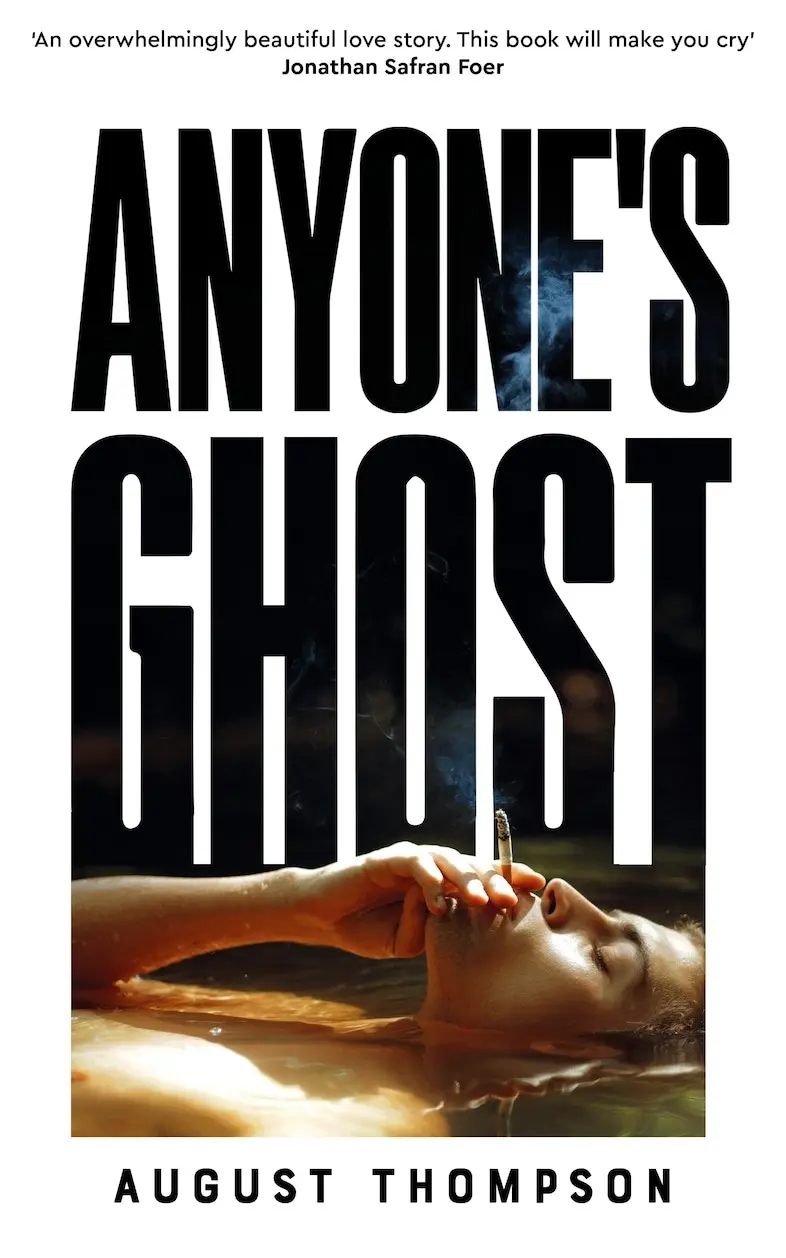
3. Anyone’s Ghost by Phuc Tran
Set against the humid backdrop of a New England summer, Anyone’s Ghost introduces us to Theron David Alden—fifteen years old, deeply
insecure, and nursing a profound resentment toward the hardware store job his father forced him to take. But boredom gives way to obsession when he meets Jake: a brooding, effortlessly sarcastic seventeen-year-old who embodies everything Theron longs to be and desperately wants to possess.
Tracing the evolution of this intense adolescent bond well into their early adulthoods, Phuc Tran crafts a masterclass on the anatomy of male intimacy, self-destructive fixation, and the heavy, lingering collateral damage of things left unsaid. It reminds the reader that our most formative heartbreaks often occur long before we ever enter the adult dating market, rooted instead in the terrifying vulnerability of wanting someone who occupies a world entirely separate from our own.
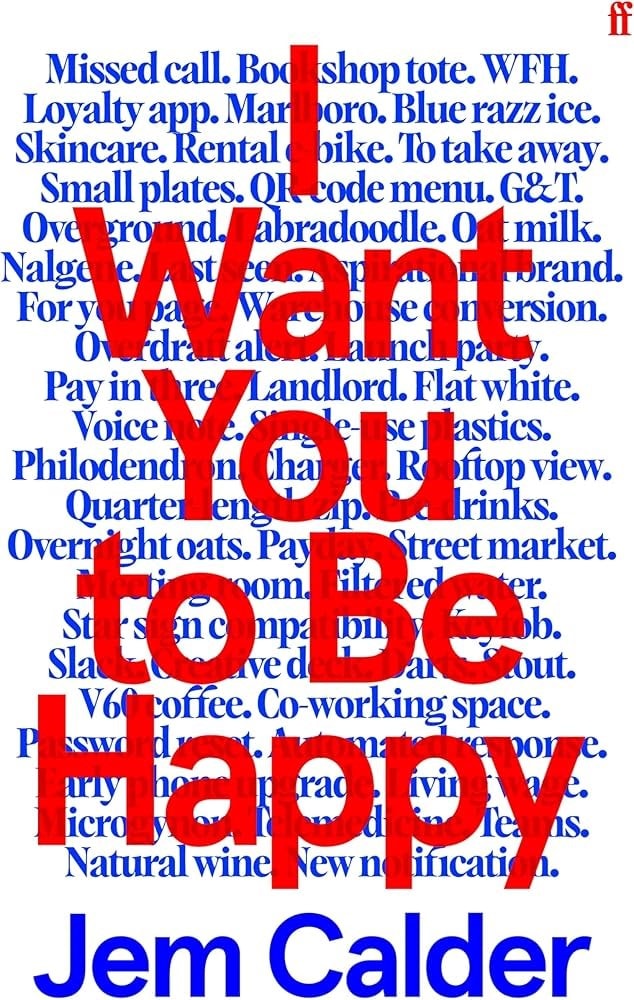
4. I Want You to Be Happy by Jem Calder
A fundamental component of falling into a situationship is the quiet, often unconscious erasure of your own identity in favor of an idealized version designed to please someone else. Jem Calder’s razor-sharp, London-set novel I Want You to Be Happy dissects this impulse with forensic precision.
The book follows Chucky, a thirty-something copywriter navigating professional and existential malaise, and Joey, a twenty-something barista and aspiring poet whose lifestyle exists in stark, aspirational contrast to Chucky’s routine. The vast chasms between their respective worlds, socioeconomic realities, and ambitions form the basis of a relationship that brilliantly exposes how modern class anxiety and economic precarity warp our romantic choices. Calder explores the desperate urge to mold oneself to fit into the margins of an indifferent partner’s life—a struggle deeply familiar to anyone who has ever tried to play it cool while secretly unraveling on the inside.
5. Sunburn by Chloe Michelle Howarth
Love—or the intoxicating, manic simulation of it—has a terrifying capacity to reduce our world to microscopic, obsessive details. It makes us hyper-aware of the exact curve of someone’s spine, the precise smell of the skin behind their ears, or the sunlight hitting their lower back. These sensory details saturate Chloe Michelle Howarth’s Sunburn, a poignant and devastating chronicle of forbidden first love between two young girls growing up in rural 1990s Ireland.
The relationship between Lucy and Susannah is defined by an all-consuming, world-altering infatuation. Howarth captures the physical agony of longing with devastating prose—noting lines like, “My heart lurches, as if it wants to leave my awful body and go make a home in her.” Tender, uncompromisingly honest, and fiercely nostalgic, Sunburn is the ultimate curative text for anyone who has ever suffered through a psyche-altering, identity-fracturing crush from which recovery feels permanently out of reach.
Official Statements & Expert Perspectives
To contextualize the psychological toll of ambiguous relationships, contemporary psychologists and cultural critics have increasingly weighed in on the intersection of modern romance and literary therapy.
"When clients present with the symptoms of situationship trauma—hyper-vigilance, rumination, and a destabilized sense of self—they are often suffering from disenfranchised grief. Society doesn’t offer a funeral for a relationship that never officially started. Turning to narratives, whether through fiction or memoir, provides a vital container for that grief. It validates the reality of the pain when external structures refuse to."
— Dr. Elena Vance, Relational Psychotherapist and Author of The Architecture of Attachment
"We are living through an era where emotional availability has been pathologized as weakness, and detachment has been weaponized as cool. Literature acts as a counter-narrative. It reminds us that yearning, vulnerability, and caring deeply—even when unreciprocated—are not character flaws, but the very essence of being human."
— Marcus Sterling, Cultural Critic and Literary Theorist
Future Outlook: Reclaiming Agency in the Age of Ambiguity
As the digital infrastructure of modern dating continues to evolve, the cultural prevalence of the situationship is unlikely to vanish overnight. Apps will continue to prioritize optionality over longevity, and algorithms will continue to monetize our deep-seated fear of missing out.
However, the antidote to this modern malaise lies in reclaiming our narratives. Just as the protagonists in Rooney, Calder, Howarth, Tran, and Marks’ novels must ultimately confront the hollow architecture of their unfulfilled desires, today’s daters must transition from passive consumers of mixed signals to active authors of their own emotional boundaries.
Reading about heartbreak does not magically absolve the ache, nor does it rewrite the texts left unreturned. But it achieves something far more enduring: it strips away the shame of caring too much. It teaches us that to yearn is not a sign of weakness or delusion, but proof of a living, beating heart capable of profound connection. And in a world designed to keep us numb, safely detached, and scrolling endlessly through the gray areas of romance, holding onto that capacity is the most radical act of all.