Executive Overview
In an era defined by shifting media landscapes, digital saturation, and an increasingly precarious job market for young creatives, the imperative for transparent, unvarnished career guidance has never been more urgent. Enter How I Became, the flagship live-event and conversation series from Dazed Club, which returned on Monday, November 9, with an evening that fundamentally challenged the polished, often opaque mythologies surrounding success in the creative industries.
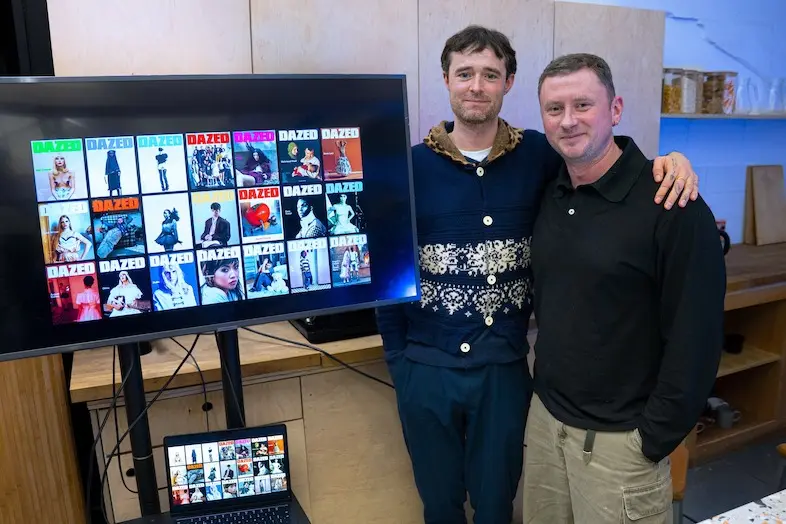
Hosted at the publication’s central London headquarters, the kickoff event featured an intimate, no-holds-barred conversation between Dazed Executive Editor Jack Sunnucks and Editor-in-Chief Ted Stansfield. Tracing Stansfield’s trajectory from a freelance fashion writer navigating the precarious waters of early-career journalism to the helm of one of the world’s most influential independent culture and fashion magazines, the discussion offered an invaluable masterclass for the next generation of cultural producers.
The evening was designed for an exclusive cohort of 40 Dazed Club members, who were granted behind-the-scenes access to the inner workings of the magazine. Attendees were treated to a granular breakdown of the creation of the publication’s sold-out Autumn 2026 issue, New Idols, alongside tantalizing, exclusive previews of the forthcoming Winter 2026 edition. Supplemented by refreshments courtesy of Ghost Labs and documented through the lens of Dazed Club photographer Mia Walton, the event served as a physical manifestation of Dazed’s ongoing Antisyllabus campaign—an initiative dedicated to dismantling outdated educational paradigms and replacing them with realistic, street-smart advice for emerging talent.
As How I Became rolls out its broader season of digital and physical programming—featuring industry heavyweights such as stylist Nell Kalonji, designer Louis-Gabriel Nouchi, casting director Emma Matell, nightlife pioneer Nadine Noor, and hair artist Taiba Akhuetie—the series positions itself as an indispensable resource. This comprehensive report unpacks the events of November 9, examines the broader contextual metrics of the creative industries, analyzes the official philosophies driving Dazed Club, and projects the trajectory of this vital conversational series.
Detailed Chronology: An Evening at Dazed HQ
Setting the Scene: Central London, November 9
The atmosphere inside Dazed’s central London headquarters on the evening of November 9 was a unique blend of high-fashion curation and community-driven intimacy. Eschewing the sterile environments typical of corporate panel discussions, the venue was purposefully arranged to foster proximity. Forty hand-selected Dazed Club members—young creatives, aspiring journalists, photographers, and stylists ranging in age from 19 to 25—gathered in the workspace, surrounded by mood boards, archival issues, and the tangible debris of a working publication house.
The evening commenced with an introductory networking hour. Attendees mingled over bespoke drinks provided by Ghost Labs, dissecting the visual language of the recently released Autumn 2026 issue. Capturing the energy of the room was Dazed Clubber and photographer Mia Walton, whose documentation of the evening captured candid moments of connection between established industry veterans and the rising generation.
The Conversation: Jack Sunnucks in Dialogue with Ted Stansfield
As the room settled, Dazed Executive Editor Jack Sunnucks took the floor to introduce the evening’s primary programming. Steering away from standard biographical questions, Sunnucks immediately dove into the granular, unglamorous realities of Stansfield’s ascent.
Stansfield’s journey was framed not as a linear march of triumphs, but as a series of calculated risks, persistent pitching, resilience in the face of rejection, and the slow, deliberate cultivation of a distinct editorial voice. Rather than offering platitudes about "following your passion," the Editor-in-Chief spoke candidly about the financial anxieties of early freelance life, the psychological toll of creative burnout, and the vital importance of developing thick skin in an industry undergoing rapid structural transformation.
Key segments of the conversation focused on:
- The Freelance Hustle: Navigating the unpredictable ecosystem of arts and culture journalism before securing a permanent staff position.
- Editorial Vision: The responsibilities and pressures of steering an iconic brand like Dazed into a new era without losing its foundational counter-cultural ethos.
- Navigating Failure: How missed opportunities and spiked pitches ultimately served as essential pedagogical tools in shaping his professional resilience.
Behind the Scenes of New Idols
A major highlight of the evening was an exclusive, deep-dive presentation into the making of Dazed’s Autumn 2026 issue, New Idols. Stansfield walked the audience through the conceptual genesis of the sold-out edition, deconstructing everything from commissioning cover stars to the collaborative layout processes that define the magazine’s physical aesthetic.
For the 40 Dazed Club members in attendance, this was an unprecedented masterclass in magazine production. By stripping away the final glossy finish of the printed page, Stansfield revealed the messy, iterative reality of publishing: the last-minute text changes, the logistical nightmares of international shoots, and the fierce editorial debates required to push contemporary cultural boundaries.
The evening concluded with a high-energy Q&A session, where audience members interrogated the panel on topics ranging from the future of print media to advice on portfolio building, followed by an exclusive teaser drop regarding the closely guarded Winter 2026 issue.
Supporting Context & Metrics: The State of Creative Careers
The Creative Industries Landscape in 2026
To fully appreciate the significance of How I Became and the Antisyllabus campaign, one must examine the broader socio-economic realities confronting young creatives today. According to recent labor market analyses by cultural economy think tanks, entry-level employment in the arts, fashion, and media sectors has grown increasingly competitive and precarious.
| Metric Indicator | Industry Average / Estimate | Dazed Club / Antisyllabus Approach |
|---|---|---|
| Unpaid Internships | Historically prevalent, creating economic barriers for lower-income youth. | Strict advocacy for transparent, paid opportunities and fair compensation. |
| Traditional Education ROI | Rising university tuition paired with decreasing alignment to modern digital media needs. | Practical, industry-led skill-sharing via direct access to working professionals. |
| Freelance Precarity | Over 60% of early-career creatives report financial instability in their first three years. | Direct mentorship, budgeting advice, and practical pitching masterclasses. |
The disconnect between traditional academic training and the demands of contemporary creative fields has created an "experience paradox"—young people are expected to possess years of industry knowledge before securing an entry-level position. This systemic bottleneck is precisely what Dazed’s Antisyllabus campaign seeks to dismantle.
The Rise of Community-Led Media Initiatives
In response to institutional gatekeeping, platforms like Dazed Club have emerged as vital infrastructural alternatives. By decentralizing knowledge and offering direct access to industry leaders, these initiatives democratize the pathways to success. The success of the Autumn 2026 New Idols issue—which sold out across multiple global markets—proves that audiences still crave tangible, deeply researched, and culturally resonant physical media, provided they feel a genuine connection to its creators.
Official Statements & Industry Insights
While the event was structured as an intimate, conversational dialogue rather than a formal press conference, several key programmatic philosophies and direct insights emerged from the evening:
On the Core Mission of How I Became:
"The creative industries have long relied on an unspoken, often exclusionary set of rules. How I Became was conceived to pull back the curtain. We wanted to create a space where the people shaping contemporary culture could speak honestly about what it actually takes to succeed—the mistakes, the rejections, and the relentless labor behind the glamour." — Excerpt from Dazed Club programming briefs.
On the Philosophy of the Antisyllabus Campaign:
"Young creatives do not need more abstract theories or idealized career paths that bear no resemblance to the modern economic landscape. They need realistic, actionable strategies. The Antisyllabus is our commitment to providing a ground-level view of the industry, equipping the next generation with the tools to navigate, disrupt, and ultimately reshape it." — Editorial direction outlined during the November 9 kickoff.
Future Outlook: The Road Ahead for How I Became
The kickoff event on November 9 was merely the opening salvo for an expansive season of programming. While the live-in-person sessions offer intimate deep-dives for London-based Dazed Club members, the broader conversation series is designed to reach a global audience through digital expansions, video content, and editorial features.
Upcoming Season Highlights
Following Ted Stansfield’s inaugural talk, the How I Became digital and live series will feature an extraordinary roster of multidisciplinary talent throughout the season:
- Nell Kalonji: One of the industry’s most sought-after stylists, offering insights into the complex mechanics of fashion direction and editorial storytelling.
- Louis-Gabriel Nouchi: The visionary designer breaking traditional luxury codes, discussing the business and creative realities of running an independent fashion house.
- Emma Matell: A leading casting director exploring how the faces of fashion are chosen and how representation continues to evolve on the runway and in print.
- Nadine Noor: A nightlife pioneer sharing lessons on community building, cultural curation, and the intersections of nightlife and high fashion.
- Taiba Akhuetie: An innovative hair artist deconstructing the artistry, technical skill, and cultural significance of hair design in contemporary image-making.
Conclusion: A Blueprint for the Future
As How I Became continues its run, its impact extends far beyond standard media networking. By fostering a culture of radical transparency, Dazed is actively redefining the relationship between legacy media brands and their audiences. For the 40 club members who packed into the central London headquarters on November 9—and for the thousands more engaging with the Antisyllabus campaign online—the message was clear: the creative industries are evolving, and the keys to the kingdom are finally being handed over.
Stay tuned to Dazed Club for further announcements regarding the Winter 2026 issue and upcoming installments of the How I Became series.