Executive Overview
The aftermath of this month’s midterm elections has brought about more than just a shifting congressional map; it has sparked a profound cultural and ideological reckoning across the American left. Powered by a formidable Democratic "blue tsunami," social media feeds have become flooded with an aesthetic revival that many thought was lost to history: unadulterated, earnest millennial optimism.
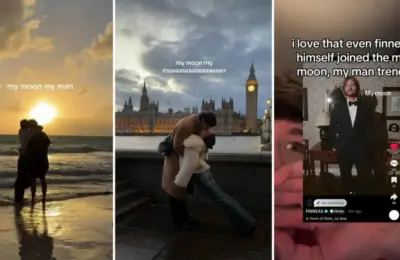
Across TikTok, Instagram, and Reddit, users are posting high-energy video
edits, indie-pop soundtracks, and nostalgic nods to the 2008 Barack Obama era, Hamilton matinees, and the "girlboss" corporate ethos of the early 2010s. Yet, this digital resurrection has laid bare a fascinating generational divide. While left-leaning millennials celebrate the return of their cultural dominance—viewing the sweeping congressional victories as a restoration of institutional faith—Gen Z voters and political operatives are drawing a sharp, cynical line in the sand.
Rather than adopting the utopian, rule-following optimism of their predecessors, Gen Z has branded this moment with a distinct ethos of their own: “WhimZ.” Characterized by dark humor, profound institutional skepticism, and a hyper-awareness of political volatility, WhimZ represents a defensive, ironic coping mechanism forged in the fires of the Trump era. While both generations are currently reveling in the taste of legislative and electoral victory, the friction between millennial earnestness and Gen Z pragmatism offers a compelling window into the future of American progressive politics.
Detailed Chronology: From Obama’s Hope to the 2026 Midterm Wave
To understand the cultural clash playing out on social media today, one must trace the timeline of political maturation for both generations.
The Millennial Epoch: The Audacity of Hope (2008–2012)
Millennial political consciousness was forged during the apex of Barack Obama’s 2008 presidential campaign. For millions of young Americans stepping into adulthood, the feeling of sweeping the first Black president into office—paired with major legislative victories like the Affordable Care Act—created an indelible political touchstone. The underlying social contract for millennials was simple: work hard, play by the rules, trust institutional guardrails, and systemic progress will inevitably follow.
Even when political setbacks occurred, such as the 2010 midterms, the overarching millennial framework remained intact: politics was a linear path toward a more inclusive, progressive society. This worldview birthed the infamous "millennial cringe"—a blend of earnestness, community theater energy, and deep faith in systemic reform that later generations would view as hopelessly naive.
The Gen Z Crucible: The Trump Era and Perpetual Instability (2016–2024)
By contrast, the formative political memories of Generation Z were built on chaos and institutional failure. First-time voters casting ballots in the current cycle were born the year Obama was elected and were only eight years old when Donald Trump captured the White House in 2016.
For Gen Z, the political landscape has never been stable. Their formative milestones were defined not by electoral landslides, but by defensive mobilization: the March for Our Lives, Black Lives Matter demonstrations, climate walkouts, and grassroots mutual aid networks. When these youth marched, protested, and organized, the outcomes were rarely guaranteed victories; instead, they faced entrenched resistance, judicial rollbacks, and deep polarization. Consequently, Gen Z learned early that systemic change does not happen automatically just because you "vote blue and follow the rules."
The 2026 Midterm Surge and the Collision of Eras
When the recent midterm elections delivered a sweeping wave of Democratic victories, it forced these two distinct political generations into a shared cultural space. Millennials saw the results as validation of their historic worldview—proof that the institutional machine still works if you believe in it.
Gen Z, while deeply relieved by the electoral outcomes, viewed the celebrations through a vastly different lens. They joined in the digital celebrations, but transformed them, wrapping the classic stomp-clap indie anthems and nostalgic imagery in heavy layers of irony, satire, and self-awareness.
Supporting Context & Metrics: A Statistical Look at the Generational Rift
The philosophical divide between millennials and Gen Z is backed by a mounting body of sociological and political data.
The Independent Shift
While millennials have largely integrated into traditional partisan structures, Generation Z remains fiercely unaligned. According to recent data from Gallup, 56% of Gen Z adults identify as political independents, rejecting the traditional binary party labels that defined previous generations. Even among Zoomers who lean left, there is a distinct comfort with anti-establishment rhetoric, including the rising democratic socialist movement, which far exceeds the appetite of their millennial elders.
Institutional Distrust
The root of "WhimZ" lies in an unprecedented erosion of trust in American institutions. Data compiled by organizations like the Center for Information & Research on Civic Learning and Engagement (CIRCLE) highlights that Gen Z’s trust in local government, the judiciary, and federal bodies sits at historic lows.
Unlike millennials, who enjoyed the safety net of the Affordable Care Act allowing them to stay on their parents’ insurance while navigating early adulthood, Gen Z enters the workforce under crushing economic inequality, runaway housing costs, and looming environmental crises. Their political wins have historically been defensive—stopping disastrous legislation or blocking authoritarian policies—rather than offensive sweeps of inspiring visionary leaders.
Official Statements & Perspectives: Inside the Generational Dialogue
Prominent political figures and digital strategists have increasingly addressed this cultural dichotomy, attempting to bridge the gap between millennial earnestness and Gen Z pragmatism.
Alexandria Ocasio-Cortez on "Millennial Cringe"
Reflecting on the emotional resonance of the midterm results, 37-year-old Representative Alexandria Ocasio-Cortez (D-NY) took to Instagram to explain the psychological roots of millennial optimism to her younger followers.
"Imagine all the seats we flipped last night, that feeling, plus on top of it, electing the first Black president ever. And on top of that, you did it the first time you ever voted? That hits generationally," Ocasio-Cortez remarked. "Like, you are chasing that feeling ever since. And because you did it the first time you ever voted, you’re like, ‘Yeah, we can change the world. Yeah, why not. We did it the first time. Why not just do it again?’"
Digital Strategists on the Birth of "WhimZ"
Gen Z political operatives argue that while Ocasio-Cortez’s analysis rings true for millennials, it completely bypasses the lived reality of younger voters.
Lauren Kapp, co-founder of the Democratic digital strategy firm Luminary Strategies, vividly recalls walking into her AP Government classroom the morning after the 2016 election to find her teacher in tears.
"Political instability has left Gen Z burned," Kapp noted. "We’ve had to cope through our humor as a matter of processing. To me, WhimZ is less about believing things will get better and more about finding moments of joy despite the uncertainty."
Echoing this sentiment, Democratic strategist and content creator Olivia Julianna contrasted the systemic security of the Obama years with Gen Z’s starkly different environment:
"Millennial optimism exists because Obama won elections so decisively that they had time to hit the club afterward. Then they could go to urgent care for IV fluids on their parents’ health insurance the next morning," Julianna said. "WhimZ comes from a place that’s a little more vengeful. Our greatest victories have largely come from stopping the worst shit from happening instead of witnessing massive moments of inspiration from people in power."
TikTok creator @bearclawharley distilled the generational philosophy even more succinctly in a viral video:
"Gen Z’s ‘WhimZ’ is very different than millennial optimism and the reason why is us as Gen Z know that we still have to fight… You guys were just carefree; we are ironically doing this."
Future Outlook: Beyond Nihilism and the "Politics of Love"
Despite the stylistic differences—the earnest, hopeful signifiers of the millennial playbook versus the ironic, battle-hardened resilience of Gen Z’s WhimZ—the two generations are ultimately converging on a critical realization: anger, apathy, and nihilism are dead ends.
As the political cycle has progressed, qualitative focus groups reveal that young voters across the board are thoroughly exhausted by endless culture wars. They are actively seeking candidates who bypass identity-based division and partisan bickering, pivoting instead toward substantive, forward-looking solutions for tangible crises: the economy, international conflict, government corruption, and the ethical regulation of artificial intelligence.
In places like Texas, where progressive populist voices like James Talarico have championed what he calls a "politics of love," a cultural shift is quietly underway. For a generation raised in an ecosystem of political bullying and digital toxicity, radical empathy and open optimism can initially feel jarringly cheesy. Yet, as the novelty of cynicism wears thin, both millennials and Gen Z are recognizing that hate, fear, and institutional despair have ultimately failed to secure a stable future.
Whether it is packaged as the unyielding hope of the Obama era or the defensive, satirical resilience of WhimZ, the rising progressive coalition has proven one thing conclusively: they are done sitting on the sidelines. As these two generational forces continue to negotiate their shared political footprint, their unlikely alliance may well define the trajectory of American democracy for decades to come.