
Executive Overview
The cinematic landscape of Panem has always been defined by systemic cruelty, high-stakes political rebellion, and the agonizing spectacle of the titular tournaments. However, with the theatrical release of The Hunger Games: Sunrise on the Reaping, franchise veteran director Francis Lawrence has pushed the multi-billion-dollar YA juggernaut into unprecedented territory. Adapting Suzanne Collins’ latest prequel—which traces the tragic, formative history of Katniss Everdeen’s future mentor, Haymitch Abernathy (portrayed here by Joseph Zada)—Lawrence has infused the familiar dystopian formula with an unmistakable, palpable dread.
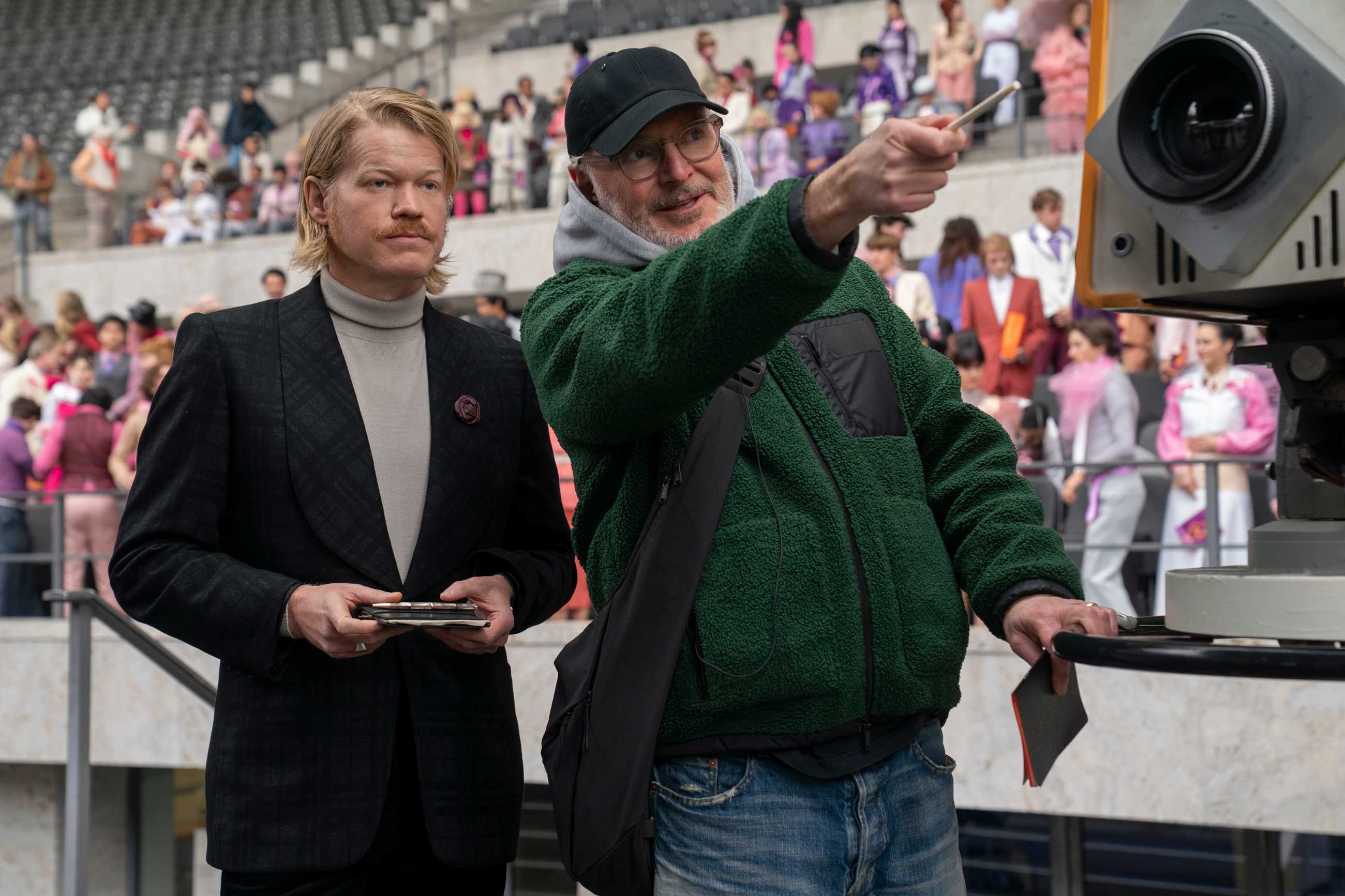
Speaking exclusively with outlet Polygon, Lawrence, alongside supporting star Kelvin Harrison Jr., pulled back the curtain on the creative risks that shaped the production. By intentionally blending a late-1960s counterculture aesthetic with the atmospheric psychological terror inspired by modern horror staples like Ari Aster’s Midsommar, Sunrise on the Reaping delivers the franchise’s most intense arena-action since Catching Fire (2013). Yet, balancing this visceral brutality with a PG-13 rating required a masterclass in psychological framing, emotional resonance, and subversive visual storytelling. As the final frontier of Collins’ literary universe hits the silver screen, this installment stands as an ambitious exploration of the psychological costs of rebellion and the suffocating grip of an authoritarian state.
Detailed Chronology: From Counterculture Inspiration to Arena Terror
To understand how Sunrise on the Reaping achieved its unique tonal shift, one must trace the unconventional creative process that steered its production. Lawrence, who has helmed every entry in the cinematic franchise except the inaugural 2012 film directed by Gary Ross, relies on a deeply personal method to establish a film’s atmosphere on set: a curated, immersive playlist listened to through a single earbud, leaving his other ear open to the chaos of active filmmaking.
For this prequel, Lawrence’s musical inclinations took a decidedly dark turn.
"I found myself playing music that is a lot scarier," Lawrence revealed to Polygon. "Some of what I was listening to is actually some tracks from that movie [Midsommar]."
This sonic foundation of modern folk-horror dread naturally bled into the director’s broader world-building philosophy. Looking to bridge the stylistic gap between the immediate precursor, The Ballad of Songbirds & Snakes, and the sleek, high-tech terror of the original Hunger Games timeline, Lawrence found himself anchored to a late-1960s aesthetic. He noted that the classic counterculture anthem "’White Rabbit’ by Jefferson Airplane" served as a primary gateway, transporting the production design, costume departments, and narrative pacing into a distinct, turbulent era of institutional distrust and psychedelic unease.
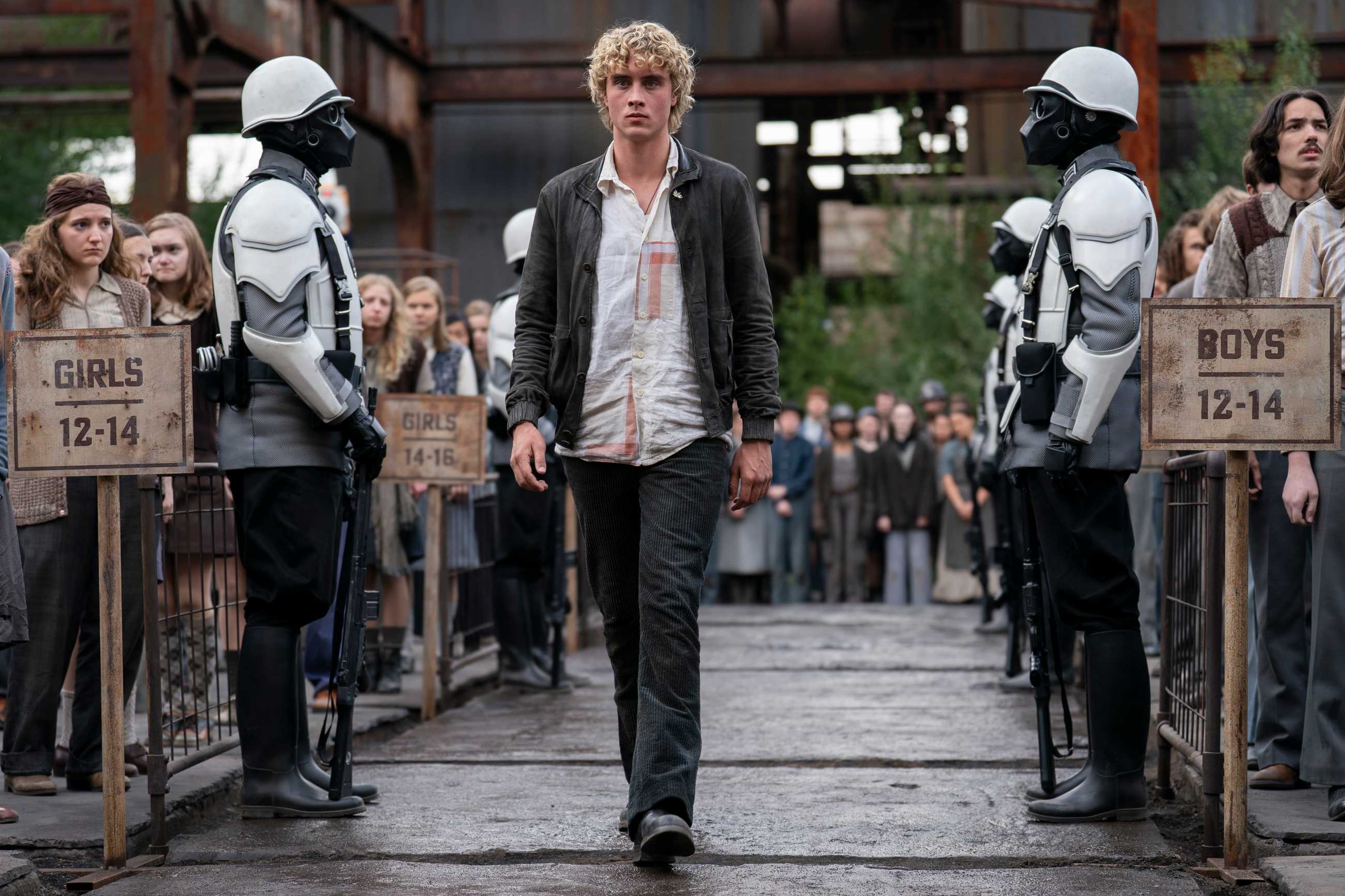
The narrative architecture of Sunrise on the Reaping mirrors this transition. Chronicling Haymitch’s doomed efforts to dismantle the Capitol’s oppressive infrastructure prior to his tenure as a broken mentor, the story unfolds as a devastating chronicle of governmental retaliation. The Capitol’s response—systematically stripping away the young tribute’s friends and family—establishes a pervasive sense of tragedy.

When the action shifts to the arena itself, Lawrence abandons standard action-movie tropes in favor of environmental psychological warfare. The arena is initially presented as a deceptively lush, idyllic green landscape—a tranquil sanctuary where desperate tributes attempt to blend into the canopy. However, this idyllic facade quickly curdles into a nightmare: water sources run lethally poisoned, local wildlife transforms into predatory executioners, and children are picked off by the environment itself. By weaponizing natural beauty against the viewer, Sunrise on the Reaping transforms the familiar death-match formula into a fairy-tale folk horror.
Supporting Context & Metrics: Navigating the PG-13 Boundaries of Grief
Adapting Suzanne Collins’ written work has always presented a distinct challenge for filmmakers due to the unflinching, visceral nature of the source material. Sunrise on the Reaping is arguably the darkest book in the entire literary canon, featuring imagery that pushes the absolute limits of commercial studio moviemaking.
For Lawrence, translating these horrific elements into a studio-mandated PG-13 rating required ingenuity, particularly when handling scenes of explicit physical violence. The director recounted a moment of comedic exasperation regarding Collins’ prose:
"In the book there’s a scene of one character holding the head of a child. And I’m just thinking to myself, ‘Suzanne, what are you doing to me? This is never gonna be in the movie.’" Lawrence laughed, contrasting the experience with his past R-rated work, such as The Long Walk. "If this was my last movie… that was rated R, we could do that kind of thing."
Faced with these structural restrictions, Lawrence bypassed physical gore by leaning heavily into emotional and psychological violence. Rather than showing a decapitation or a gruesome fatality directly on screen, the camera aggressively lingers on Haymitch’s face. The horror is derived not from the act of death itself, but from the absolute powerlessness of the surviving characters who are forced to witness their loved ones perish while remaining utterly helpless against the state.
"It’s never really, ‘It’s emotionally too much.’ I want to push the emotion as much as possible as long as it feels authentic and honest," Lawrence emphasized.
This thematic dedication to the psychological toll of authoritarian oppression extends far beyond the arena competitors. The film deepens its world-building by examining the multi-generational cost of dissent, notably through the expanded role of Beetee Latier—portrayed in this installment by Kelvin Harrison Jr., taking over the mantle from Jeffrey Wright.
Official Statements: Expanding the Lore and the Burden of Dissent
In Sunrise on the Reaping, the Capitol’s authoritarian retaliation targets anyone who dares voice ideological opposition. Beetee, introduced here as a veteran of a prior Hunger Games who attempted to subvert the government’s communications grid, faces a uniquely devastating punishment: the state selects his son for the reaping as retribution for his past brilliance.
For Kelvin Harrison Jr., this dynamic provided an immediate, grounded entry point into the psychology of a character previously defined by his brilliant, mild-mannered technical prowess.
"It was really locking in on Beetee as a father," Harrison Jr. shared with Polygon. "That’s a really hard thing to navigate—knowing that you were so brilliant and you were able to survive this really unfortunate system and come out alive, but yet here you are being punished for being brilliant and not being able to save your own son."
Though Harrison Jr.’s screen time is intentionally limited, his performance anchors the narrative’s exploration of systemic cruelty. It cements Haymitch’s ideological awakening by framing rebellion not as a glorious, triumphant crusade, but as an exercise in agonizing calculation and quiet survival.
"It’s choosing and picking your battles," Harrison Jr. explained regarding
Beetee’s quiet defiance. "It’s almost surrendering to the situation while also still being in control of what you can control."
Stepping into a role previously immortalized by Jeffrey Wright carried significant weight for Harrison Jr., who maintains a close professional and personal relationship with the veteran actor. The two had recently collaborated on the film Monster and an upcoming biographical project about artist Jean-Michel Basquiat.
Recalling a fortuitous encounter just prior to filming, Harrison Jr. noted the uncanny alignment between the actor and his iconic character:
"I was actually on set with him a week before I came to shoot Hunger Games, working on a different project. I talked to him about it, and he shared his excitement for Beetee. It was so funny because he was doing it while he was on his laptop, doing some coding, so I was like, ‘This is so Beetee of him.’"
Curiously, Harrison Jr. found thematic bridges connecting this intellectual, understated freedom fighter to another major franchise villain he recently voiced: Scar in Disney’s Mufasa: The Lion King. Despite their disparate tonal origins, the actor views both figures through the lens of institutional disruption.
"I kind of feel like they’re one and the same. They’re here to disrupt circumstances and systems that may not necessarily make sense," he noted, summarizing his affinity for complex character motivations with a simple ethos: "I love a disruptor."
Future Outlook: The End of an Era and the Legacy of Panem
With Sunrise on the Reaping currently playing in theaters worldwide, the cinematic future of The Hunger Games faces an unprecedented milestone. Because author Suzanne Collins has no remaining published novels left in the primary canon to adapt—at least for the foreseeable future—this prequel represents a potential punctuation mark on a cinematic franchise that has defined dystopian YA cinema for over a decade.
By steering away from safe, formulaic nostalgia and leaning aggressively into the unyielding dread of folk horror, Francis Lawrence and his creative ensemble have ensured that the franchise does not quietly fade away. Instead, Sunrise on the Reaping serves as a sobering reminder of why the universe of Panem resonated so profoundly with audiences in the first place. It proves that within the glossy, hyper-stylized confines of studio blockbusters, there remains ample room to explore the profound grief, systemic traps, and psychological scars left in the wake of totalitarian rule. As the curtain falls on the Reaping once more, it leaves behind an enduring cinematic legacy defined not just by how its heroes fight back, but by how much of their humanity they must sacrifice to survive the machine.