Executive Overview
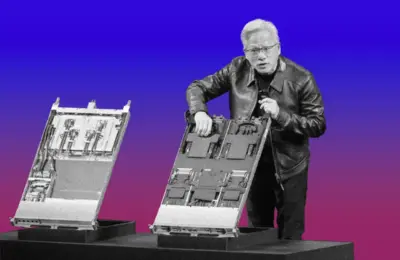
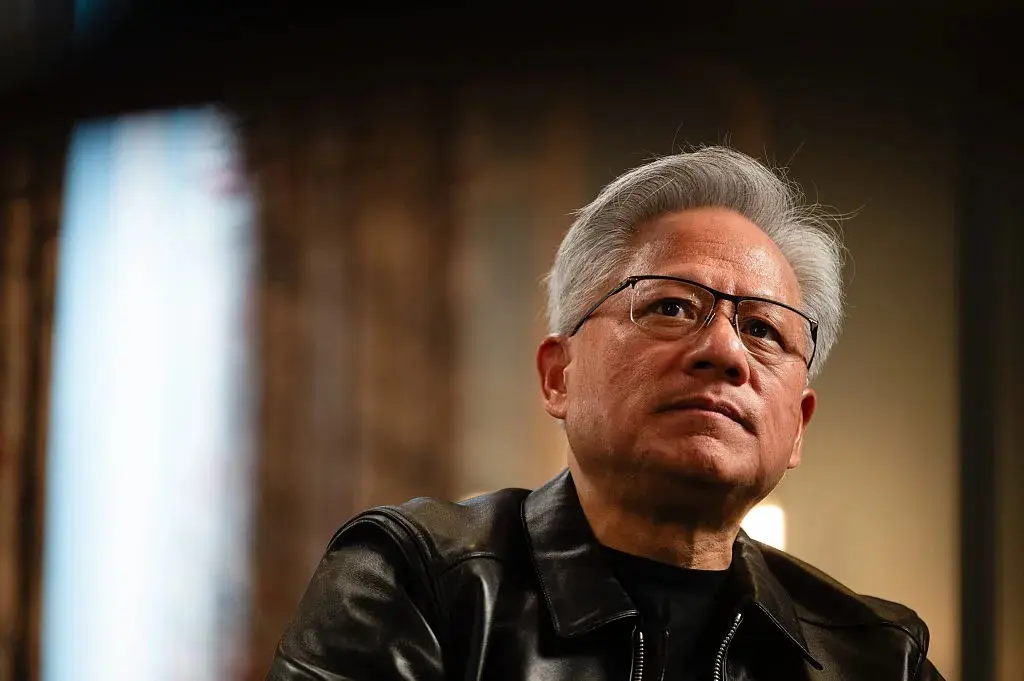
The global semiconductor and artificial intelligence landscape has entered an unprecedented period of structural transformation. In a week marked by corporate drama, geopolitical recalibration, and financial scrutiny, Nvidia delivered a quarterly earnings report that underscored both its dominant market position and its deep internal turmoil. Coming in the immediate wake of the board’s sudden ouster of co-founder and long-time Chief Executive Officer Jensen Huang, the results revealed robust revenue growth and an optimistic forward guidance, even as the company moves to dismantle key international revenue streams.
Simultaneously, Nvidia formally confirmed two major strategic shifts: the complete cessation of sales of its flagship H200 artificial intelligence chips into the Chinese market and an unyielding refusal to consider calls from institutional investors and industry insiders to reinstate Huang. The decision to abandon China—a critical market for legacy and tailored accelerator hardware—signals a decisive pivot toward aligning completely with tightening Western trade restrictions and sovereign infrastructure demands.
+-------------------------------------------------------------------------------+
|                        THE DUAL REALITY OF NVIDIA                             |
+--------------------------------------------------+----------------------------+
|                FINANCIAL HIGHLIGHTS              |     GOVERNANCE & TRADE     |
+--------------------------------------------------+----------------------------+
| • Healthy revenue growth across Data Center      | • Jensen Huang ousted as   |
| • Sustained demand for enterprise hardware       |   CEO; board refuses recall|
| • Bullish forward-looking sales guidance         | • Complete halt of H200    |
| • High cash reserves despite macro volatility    |   chip exports to China    |
+--------------------------------------------------+----------------------------+
As Nvidia navigates this governance vacuum, the broader AI ecosystem faces its own existential evaluation. Anthropic’s impending Initial Public Offering (IPO) has emerged as the definitive stress test for the industry’s "circular financing model"—a hyper-leveraged investment framework where cloud giants, chipmakers, and AI research labs fund one another’s growth in a continuous capital loop. On the latest episode of TechCrunch’s Equity podcast, hosts Kirsten Korosec, Anthony Ha, and Tim De Chant unpacked the ramifications of Nvidia’s post-Huang strategy, the structural decoupling from China, and whether public equity markets will tolerate the speculative economics underpinning the current generative AI boom.
Detailed Chronology: A Week That Reshaped Silicon Valley
The events unfolding across the semiconductor and machine learning sectors represent a convergence of corporate friction, regulatory compliance, and market maturity.
                                  CHRONOLOGY OF EVENTS

   [ Jensen Huang Ousted ] ───> [ Board Rejects Reinstatement ] ───> [ Q3 Earnings Released ]
                                                                             │
   [ Anthropic Files IPO ] <─── [ Halting H200 Exports to China ] <──────────┘
The Ouster and Board Refusal
The catalyst for the week’s volatility was the sudden removal of Jensen Huang from the CEO post—a role he held for over three decades, during which he guided Nvidia from an obscure graphics card vendor to the world’s most valuable chip manufacturer. Despite fierce pushback from retail traders and key silicon partners demanding his return, the board of directors released a definitive statement shutting down any possibility of a reinstatement. The leadership transition, executed amid disagreements over long-term strategic diversification and geopolitical risk management, leaves the chipmaker operating under an interim management committee during one of the most critical product execution windows in tech history.
The Q3 Earnings Announcement
Days after confirming Huang’s permanent departure, Nvidia posted its latest quarterly financial results. The figures muted fears of an immediate operational collapse:
- Data Center Revenue: Showed sustained double-digit sequential growth, driven by hyper-scaler buildouts across North America and Europe.
- Forward Guidance: Management offered a bullish forecast for the upcoming quarters, reassuring Wall Street that enterprise demand for high-performance computing (HPC) hardware remains resilient.
- Gross Margins: Kept pace with historical highs, reflecting pricing power across core GPU clusters.
The Geopolitical Severance: Halting China H200 Exports
Embedded within the earnings disclosures was a significant geopolitical concession: Nvidia is officially halting all shipments of its high-performance H200 accelerators to China.
              NVIDIA GLOBAL CHIP DISTRIBUTION (POST-POLICY DECISION)

   North America & Europe              China & Select Export Control Regions
  +------------------------+          +--------------------------------------+
  | • Enterprise GPU Clusters|          | • H200 Exports: HALTED               |
  | • H200 / Blackwell     |          | • Legacy Hardware: Phase-Out          |
  | • Unrestricted Access   |          | • Market Access: Terminated          |
  +------------------------+          +--------------------------------------+
This decision marks the end of Nvidia’s multi-year effort to develop region-specific, compliance-adjusted silicon (such as the H20, L20, and tailored H200 variants) meant to navigate U.S. Commerce Department restrictions. By cutting off access to the H200, Nvidia voluntarily surrenders billions in potential revenue from Chinese tech conglomerates, choosing instead to insulate its global supply chain from escalating trade actions and potential federal sanctions.
The Anthropic IPO Filing
As Nvidia attempted to stabilize its leadership narrative, Anthropic—the AI research safety lab behind the Claude model family—officially advanced its plans to go public. The filing marks the first time a primary competitor to OpenAI will expose its operational balance sheet, customer acquisition costs, and infrastructure expenditures to public market scrutiny.
Supporting Context & Metrics: Structural Shift and Circular Financing
To understand the broader implications of these developments, one must analyze the interplay between chip supply, capital allocation, and geopolitical policy.
The Mechanics of AI’s Circular Financing Loop
The rapid rise of generative AI valuations has relied heavily on a closed-loop capital structure. In this framework, large cap tech firms and venture funds inject billions into AI startups. A significant portion of those funds is immediately recycled back into the tech ecosystem through long-term cloud compute contracts, which in turn fuels massive purchase orders for Nvidia hardware.
                         THE CIRCULAR FINANCING LOOP

                    +----------------------------------+
                    | Hyper-scalers & VC Capital Pools |
                    +-----------------+----------------+
                                      |
                                      | Direct Investment / Equity
                                      v
                    +----------------------------------+
                    |    Frontier AI Labs (Anthropic)  |
                    +-----------------+----------------+
                                      |
                                      | Cloud Compute / Infrastructure Spend
                                      v
                    +----------------------------------+
                    |  Cloud Providers & Compute Hubs  |
                    +-----------------+----------------+
                                      |
                                      | GPU Hardware Procurements
                                      v
                    +----------------------------------+
                    |      Nvidia Silicon Supply       |
                    +----------------------------------+
While this system expanded compute capacity quickly over the past three years, Anthropic’s public listing will force a reality check on key financial metrics:
| Metric / Structural Risk | Description | Market Implication |
|---|---|---|
| Capital Recycling Rate | Percentage of venture funding returned to strategic backers via infrastructure spending. | High rates raise concerns about artificially inflated top-line growth. |
| Compute Margin Pressure | High cost of GPU inferencing relative to real end-user software subscription revenue. | Public markets may demand clear paths to software-like software margins. |
| Depreciation Horizon | Accelerated obsolescence of AI accelerator hardware clusters (18–24 month cycles). | High capital expenditure cycles compress long-term free cash flow. |
The Impact of China’s Decoupling
The termination of H200 sales to China represents a major strategic pivot. Historically, mainland China accounted for 20% to 25% of Nvidia’s data center segment revenues. While domestic U.S. demand and sovereign AI initiatives across Europe and the Middle East have temporarily absorbed surplus supply, the long-term strategic loss leaves an opening for domestic Chinese semiconductor fabricators.
NVIDIA REGIONAL DATA CENTER REVENUE TRENDS (ESTIMATED IMPACT)
-----------------------------------------------------------------
Pre-Restriction:    [US/EU: 75%]  [China: 25%]
Current Policy:     [US/EU: 92%]  [China:  8%]  <-- Rapid Contraction
Post-H200 Exit:     [US/EU: 98%]  [China:  0%]  <-- Total Decoupling
-----------------------------------------------------------------
Nvidia’s departure creates an immediate void for Chinese tech giants—such as Tencent, Alibaba, and Baidu—accelerating their reliance on domestic AI silicon providers. While these local alternatives face yield challenges at lower nanometer nodes, Nvidia’s retreat guarantees that the global AI landscape will split into two distinct hardware ecosystems: Western-designed architectures optimized for cutting-edge nodes, and isolated domestic stacks built for local compliance.
Official Statements and Industry Insights
The convergence of Nvidia’s leadership changes, market strategy, and Anthropic’s public market debut was analyzed in detail on the latest episode of TechCrunch’s flagship podcast, Equity.
Equity Hosts Weigh In
+-------------------------------------------------------------------------------+
|                       TECHCRUNCH EQUITY PANEL PERSPECTIVES                    |
+-------------------+-----------------------------------------------------------+
| PANEL HOST        | KEY TAKEAWAY & ANALYSIS                                   |
+-------------------+-----------------------------------------------------------+
| Kirsten Korosec   | Focuses on the leadership crisis, highlighting the risk of |
|                   | replacing a visionary founder during a major product shift|
|                   | like the Blackwell rollout.                               |
+-------------------+-----------------------------------------------------------+
| Anthony Ha        | Analyzes Wall Street's skepticism toward circular venture  |
|                   | models and how Anthropic's S-1 will reveal real margins.   |
+-------------------+-----------------------------------------------------------+
| Tim De Chant      | Examines the geopolitical side, arguing that abandoning   |
|                   | China sacrifices short-term revenue for supply certainty.  |
+-------------------+-----------------------------------------------------------+-
Kirsten Korosec, TechCrunch Transportation Editor and Equity Co-host:
"Nvidia’s financial engine is running at full capacity, but the governance picture is fractured. Removing Jensen Huang at the peak of the AI super-cycle is unprecedented. The board’s refusal to engage on bringing him back shows a clear rupture over long-term strategic control. The question now is whether executive leadership without a founder’s vision can maintain the pace of innovation required for next-generation hardware launches."
-
Anthony Ha, TechCrunch Weekend Editor:
"The public market doesn’t evaluate technology in a vacuum; it evaluates unit economics. Anthropic’s IPO will force a reckoning on circular financing. For years, strategic investors have funneled capital into AI startups, only for those funds to bounce right back into high-margin cloud infrastructure and hardware sales. When Anthropic lays its S-1 on the table, institutional investors will see exactly how much real customer demand exists outside of investor-funded compute subsidies."
-
Tim De Chant, Senior Climate Reporter & Equity Panelist:
"Abandoning the H200 in China isn’t just about regulatory compliance—it’s a total strategic pivot. Nvidia is effectively cutting its losses in a region where geopolitical headwinds make long-term planning almost impossible. By writing off that addressable market today, they are focusing their manufacturing supply entirely on Western customers and sovereign data centers desperate for compute capacity."
Corporate & Board Stance
While Nvidia’s board has declined to publicly disclose the detailed internal friction that led to Jensen Huang’s exit, executive statements issued alongside the quarterly earnings release emphasized governance stability and operational continuity:
"Nvidia remains fully committed to executing its product roadmap and delivering value to our global customer base. The strategic decision to discontinue H200 deliveries to the Chinese market aligns our operational risk footprint with structural geopolitical realities. Our leadership team, supported by our engineering talent, is entirely focused on driving performance for the enterprise software and data center markets."
Future Outlook: The AI Industry at a Crossroads
As the tech sector adjusts to a post-Huang Nvidia and prepares for Anthropic’s market debut, three major shifts will define the coming fiscal year.
                            FUTURE INDUSTRY TRAJECTORY

      GOVERNANCE                     GEOPOLITICS                     FINANCIALS
  +----------------+             +----------------+             +------------------+
  | Execution without |          | Bi-furcated    |             | Valuation Shift  |
  | Founder Influence| ------->  | Global AI      | ------->    | from Growth to   |
  |                |             | Hardware Stacks|             | Unit-Economics   |
  +----------------+             +----------------+             +------------------+
1. Execution Risk in a Post-Huang Enterprise
Jensen Huang’s legacy at Nvidia went far beyond corporate management; he was the primary architect of the CUDA ecosystem, the developer platform that locked enterprise software into Nvidia hardware for decades. The new management team must prove it can preserve this software moat while shipping complex, next-generation architectures like Blackwell on schedule. Without Huang’s unifying product vision, Nvidia risks bureaucratic delays that could give agile rivals like AMD and custom ASIC efforts from Amazon Web Services and Google Cloud an opening to capture market share.
2. The Bi-furcated Global Hardware Market
Nvidia’s complete withdrawal of the H200 from China marks the official split of global AI infrastructure into two distinct ecosystems:
- The Western Ecosystem: Reliant on high-density silicon architectures (Nvidia, AMD, custom ASICs), tied closely to U.S.-aligned data privacy and regulatory frameworks.
- The Eastern Ecosystem: Focused on domestic Chinese fabricators and software stacks, optimized to work around hardware constraints through specialized networking and parallel computing software.
This split limits Nvidia’s ultimate addressable market, but it also gives the company a simpler regulatory path forward in Western markets.
3. The Public Market Reckoning for AI Business Models
Anthropic’s IPO will serve as a definitive valuation benchmark for generative AI platforms. If public equity markets reward Anthropic’s top-line revenue growth despite high compute overhead, it will spark a wave of additional public filings from AI infrastructure and model developers.
However, if public investors demand standard software-as-a-service (SaaS) profit margins and penalize the circular recycling of capital between chip makers, cloud providers, and startups, the entire venture capital pricing structure for early-stage AI companies will adjust downward.
Conclusion
Nvidia’s latest earnings prove its current financial engine remains incredibly strong, yet the company stands at a pivotal junction. Stripped of its iconic CEO and locked out of one of the world’s largest hardware markets, the semiconductor giant must navigate an evolving AI landscape where hyper-growth will no longer be taken for granted, and financial durability will be tested in the public markets.
For in-depth discussion and ongoing analysis of Nvidia, Anthropic, and the enterprise tech ecosystem, subscribe to TechCrunch’s Equity podcast on Apple Podcasts, Spotify, YouTube, or your preferred podcast platform.