Executive Overview
For over a decade, social media platforms have promised to connect the world, bring communities closer together, and foster authentic digital relationships. Yet, as we navigate the mid-2020s, the reality of our feeds looks remarkably different. Platforms like Instagram have steadily transformed into sanitized, hyper-curated digital shopping malls—commercialized troughs of sponsored content, undisclosed brand partnerships, and algorithm-optimized short-form video loops.
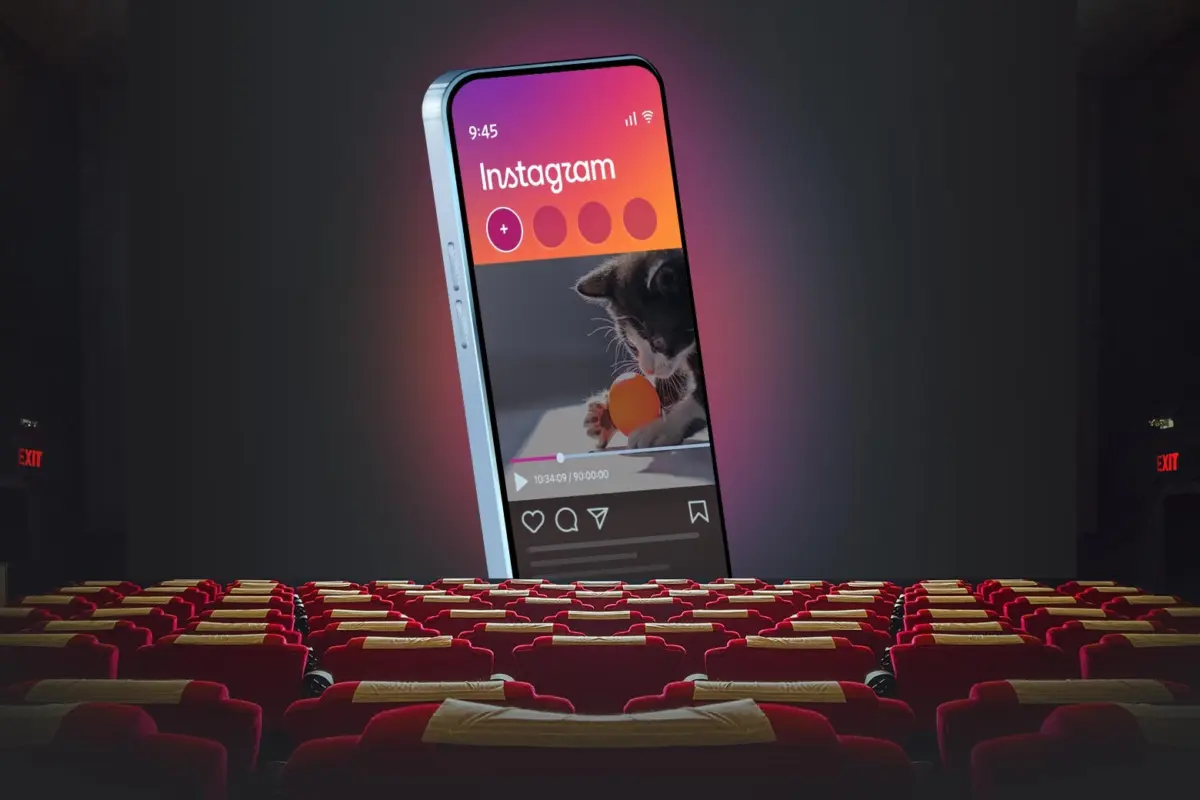
The latest development in this ongoing evolution is a striking admission of defeat regarding peer-to-peer connection. Meta announced that Instagram is piloting 90-minute horizontal "feature" videos within the app, shifting its sights toward becoming a primary destination for full-length shows, creator content, and podcasts. No longer pretending to be a digital scrapbook for real-life friends to share vacation photos and casual updates, Instagram is officially leaning into entertainment slop.
This pivot marks a cultural turning point. As users retreated from public vulnerability—fearing the permanent panopticon of the internet, where every misstep is archived and scrutinized—feeds became sterile and predictable. Breakups are meticulously soft-launched, life updates are market-tested, and authentic human interaction has been replaced by passive consumption of endless video loops.
However, media critics and cultural analysts argue that this corporate sanitization is killing the soul of the internet. To save social media from devolving into a digital equivalent of a bargain-bin dollar store with Judge Judy playing in the background, users need to embrace chaos. It is time to bring back the messy, uncurated human drama that once defined internet culture.
Detailed Chronology: From Scrapbook to Streaming Platform
To understand how Instagram arrived at its current crossroads, it is necessary to examine the platform’s architectural and strategic shifts over the past several years.
The Early Era: Peer-to-Peer Community (2010–2018)
In its infancy, Instagram was built on a simple premise: square photos, heavy vintage filters, and genuine peer-to-peer interactions. Users followed their actual friends, family members, and acquaintances. The timeline was chronological, the stakes were low, and the digital footprint felt ephemeral. It was a space for casual documentation rather than personal branding.
The Algorithmic Pivot and the Rise of "Sponcon" (2019–2023)
As parent company Meta sought to maximize ad revenue and user retention, the chronological feed was replaced by an aggressive, engagement-driven algorithm. Slowly, personal posts from friends were drowned out by influencer content, targeted advertisements, and shoppable product placements. Users realized that their digital footprints were permanent, leading to a culture of hyper-curation. People began sanitizing their profiles to appeal to invisible, judging crowds.
The Short-Form Boom and Reels Domination (2024–2025)
Challenged by the explosive growth of TikTok, Instagram heavily prioritized short-form video through Reels. By 2025, data showed that Reels accounted for an astounding 46 percent of all time spent on the Instagram app. This format proved immensely lucrative for ads, yet it further accelerated the erosion of genuine community engagement. Users were no longer interacting with one another; they were consuming passive content farmed from external platforms like TikTok and YouTube.
The 90-Minute Pivot (Early 2026)
In a move that surprised many digital media analysts, Instagram announced a pilot program for 90-minute horizontal feature videos. This feature allows creators to link short Reels clips directly to full-length podcasts, shows, and long-form video content. Rather than fighting to keep users connected to their social circles, Instagram officially surrendered to the entertainment model, transforming the app into a full-scale video streaming destination.
Supporting Context & Metrics: The Death of the Social Graph
The transition from a social network to a media streaming platform is backed by hard economic and behavioral data.
- The Reels Monopoly: Internal data from 2025 highlights that short-form video has cannibalized traditional in-feed photo posts and text updates. Nearly half of all user sessions on Instagram are now dedicated entirely to watching Reels.
- The Rise of Clip-Farming: A massive ecosystem of third-party accounts has emerged, mining popular podcasts (such as those hosted by cultural commentators like Caleb Hearon) for provocative 30-second clips. These clips are cross-posted across platforms, often degrading in video and audio quality with each iteration—a digital phenomenon akin to a witness protection interview.
- The Panopticon Effect: Criminological and sociological concepts of the "panopticon"—where individuals alter their behavior because they believe they are under constant surveillance—have become the baseline for modern internet usage. Because the internet is perceived as permanent, users have self-censored. The fear of being canceled, mocked, or socially penalized has driven organic human messiness underground.
As a result, users have gravitated toward bizarre, frictionless forms of passive entertainment—such as watching hundreds of consecutive ASMR horse-hoof-cleaning videos—simply because no one dares to post anything genuinely petty, messy, or vulnerable on their main feeds anymore.
Official Statements and Industry Reactions
The decision to incorporate long-form video represents a notable internal philosophical shift for Meta’s leadership.
When announcing the pilot program, Instagram Vice President of Product Tessa Lyons emphasized the seamless user journey for media consumers:
"What you’re now going to be able to do is, you see a clip of a podcast that you love, you can just click and continue watching or watch the full video, and you’ll be able to dive in and see the whole thing because creators are going to be able to link these Reels to their overall feature."
However, this strategy stands in stark contrast to previous statements made by Instagram head Adam Mosseri. In the initial announcement rolling out the feature, Mosseri admitted that he had resisted incorporating long-form video for "a long time." His primary concern was that forcing users to sit through 90-minute videos would inherently reduce the frequency of interactions with short-form Reels and decrease the volume of content shared directly between friends via direct messages.
Industry observers, however, point out that Mosseri’s initial hesitation was fighting a losing battle. With genuine friend-to-friend engagement on the platform hitting historic lows, Instagram had little choice but to monetize the attention economy by leaning fully into media consumption.
Future Outlook: The Prescription for Digital Salvation
If Instagram is destined to become a digital broadcasting network akin to a streaming service, what happens to the human element of social media?
Cultural critics argue that the solution does not lie in further algorithmic optimization or higher-resolution video codecs. Instead, it requires a radical cultural reset among users: we need to get extraordinarily messy on main.
For years, society has policed itself out of genuine public expression. We shamed each other for posting long breakup paragraphs, sharing unvarnished relationship updates, or engaging in public disputes. Yet, history proves that authentic human messiness is the lifeblood of internet culture. When celebrities in the early eras of social media exchanged unfiltered, chaotic tweets and status updates, it galvanized online communities, birthed enduring memes, and forged genuine digital friendships.
Public vulnerability works when individuals are brave enough to embrace it. High-profile examples—such as Megan Thee Stallion publicly calling out public figures on Instagram Stories to millions of followers—prove that audiences are hungry for raw, unfiltered human narratives rather than corporate perfection.
What the Future Demands of Users
To rescue Instagram from its impending fate as an algorithmically saturated wasteland of infomercials and syndicated clips, users must reclaim their feeds. This means:
- Ditching the Curation: Posting photos and life updates that haven’t been meticulously market-tested or polished for maximum aesthetic approval.
- Embracing the Drama: Sharing the confusing eras of a relationship, the messy "talking stages," and the chaotic realities of everyday life without fear of looking uncool.
- Active Engagement: Returning to the comments sections not just as passive consumers of slop, but as active participants willing to vote on polls, debate questionable life choices, and genuinely invest in the human stories of the people they follow.
The future of social media does not depend on 90-minute corporate podcasts. It depends on human beings dropping their armor, embracing their vulnerabilities, and bringing the mess back to the mainstream. The audience is waiting.