Executive Overview
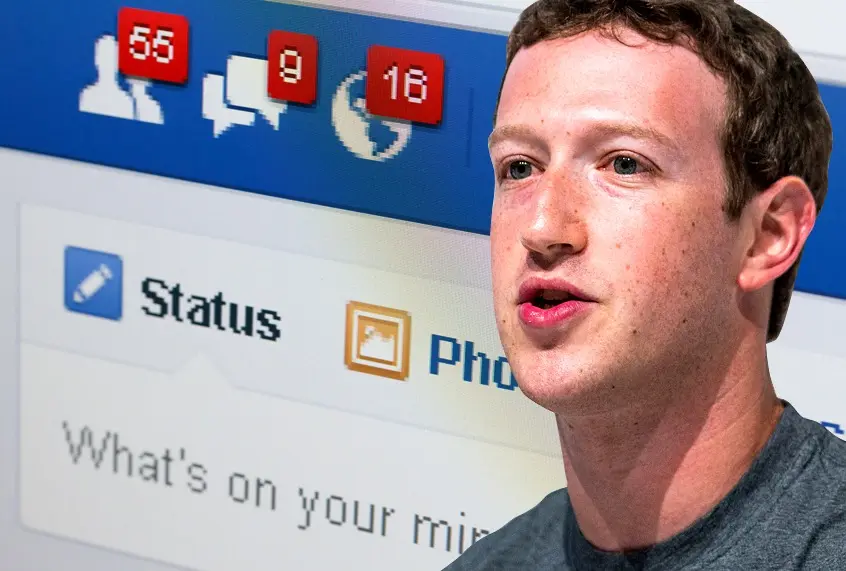
In a sweeping overhaul that sent shockwaves through the global media ecosystem, Facebook CEO Mark Zuckerberg announced a fundamental restructuring of the platform’s core architectural engine: the News Feed. Promising to "fix" the social network in the wake of mounting scrutiny over political polarization, election interference, and the mental health toll of mindless scrolling, Zuckerberg declared that 2018 would be a transitional year focused on prioritizing human connection over commercial content.
Under the new algorithmic regime, "public content"—including breaking news reports, investigative pieces, and viral videos produced by brands, nonprofits, and professional media outlets—was systematically deprioritized. In its place, Facebook elevated updates, photos, and life milestones shared by users’ friends and family. According to Zuckerberg, the platform had a moral imperative to ensure its services promoted psychological well-being rather than inducing the feelings of isolation, inadequacy, and information overload documented by academic literature.
Yet, as the dust settled on the announcement, a stark and deeply troubling paradox emerged. While legacy newspapers, digital-native publishers, and broadcasters braced for a catastrophic collapse in referral traffic and advertising revenue, purveyors of sensationalized clickbait and weaponized disinformation appeared uniquely positioned to weather the storm.
Far from crippling the fake news industry, Facebook’s algorithmic pivot exposed the platform’s enduring structural flaws. By failing to curb the lucrative advertising privileges enjoyed by junk websites—and by introducing a flawed, crowd-sourced "trust survey" prone to partisan exploitation—Zuckerberg’s grand reform initiative threatened to penalize meticulous, professional journalism while leaving the machinery of digital misinformation virtually unscathed.
Detailed Chronology: The Evolution of the 2018 Facebook Algorithm Shift
The path to Facebook’s watershed policy shift was paved by a series of escalating public relations crises, regulatory pressures, and internal strategy pivots throughout late 2017 and early 2018.
The New Year’s Declaration
On January 4, 2018, Mark Zuckerberg published a reflective manifesto on his official Facebook profile. Declaring his annual personal challenge for the year, he announced his intention to focus on fixing the foundational structural integrity of his creation. Zuckerberg pointed to the weaponization of the platform, the proliferation of state-sponsored disinformation campaigns, and the degradation of public discourse as existential threats to the community.
The News Feed Overhaul Announcement
Just one week later, on January 11, 2018, Zuckerberg followed up with the operational details of his vision. He revealed that the platform would fundamentally alter the News Feed algorithm. Content from publishers and businesses would take a back seat to posts designed to "spark conversations and meaningful interactions" among friends and family.
In subsequent interviews with media outlets like Wired, Adam Mosseri, the Facebook vice president overseeing the News Feed, elaborated on the mechanics of the change. Mosseri explained that passive consumption—such as watching publisher-produced videos or scrolling through headlines—would be systematically downgraded. Furthermore, posts generating long-form, substantive comment threads would receive greater visibility than those accumulating superficial "likes."
Industry Panic and the Initial Fallout
Online publishers reacted with immediate alarm. Trade publications like Digiday captured the grim mood with headlines declaring "The end is nigh," while anonymous media executives lamented the betrayal of trust. For years, platforms like Facebook had enticed publishers to invest millions of dollars into building native audiences on their networks, only to pull the rug out from under them overnight.
Zuckerberg acknowledged in his January 11 announcement that these changes would likely cause overall time spent on Facebook, alongside short-term user engagement metrics, to drop precipitously. However, he maintained that the resulting interactions would be qualitatively superior, ensuring the long-term health of both the user base and the platform’s commercial enterprise.
The Pivot to User-Sourced Credibility Surveys
Recognizing the glaring omission of the fake news crisis in his initial remarks, Zuckerberg offered a follow-up announcement on Friday, January 12. Acknowledging the ambient tide of "sensationalism, misinformation and polarization," he unveiled a novel initiative: a crowd-sourced survey mechanism designed to let everyday users determine the credibility of news outlets.
By outsourcing editorial value judgments to the crowd, Facebook hoped to sidestep the minefield of consulting partisan "outside experts." However, this mechanism immediately triggered concerns regarding how the algorithm would handle niche or ideologically insular news ecosystems, setting the stage for renewed controversy over political bias and content quality.
Supporting Context & Metrics: The Asymmetry of Digital Publishing
To understand the profound impact of Facebook’s algorithmic shift, one must examine the broader media landscape and the stark economic realities governing both legitimate journalism and spam syndicates.
The Psychological Toll of Social Media
Zuckerberg’s justification for the shift was heavily grounded in psychological research. Multiple academic studies published in peer-reviewed journals have demonstrated a direct correlation between passive social media consumption and declining mental health. Prolonged scrolling through idealized, manicured narratives posted by peers routinely induces depressive symptoms, driven by three primary psychological mechanisms:
- Time Dissipation: Users frequently experience profound regret over hours lost to passive scrolling.
- Information Overload: The relentless firehose of fragmented news and updates overwhelms cognitive processing capacity.
- Upward Social Comparison: Users unconsciously measure their mundane, everyday realities against the curated, triumphant highlights of their peers’ lives.
By shifting priority toward active, conversational engagement, Facebook aimed to mitigate these mental health hazards—at least in theory.
The Economic Vulnerability of Legitimate News
For professional news organizations, the dependency on Facebook had become absolute. According to data compiled by the Pew Research Center, roughly 47 percent of American adults relied on Facebook as a primary news source, with half of that demographic using no other social media platform for news consumption.
When Facebook chose to suppress public content, the downstream financial effects were devastating. Referral traffic plummeted, forcing digital publishers to rethink monetization strategies reliant on massive programmatic ad impressions. Yet, because these sweeping changes did not apply to paid advertising, industry veterans argued that Zuckerberg’s primary motive was not altruism, but leverage. As one anonymous digital publishing executive remarked to Salon:
"The goal of Facebook for a very long time has been to keep users on its pages as long as humanly possible. These changes are really about forcing publishers to pony up."
The Resilient Economics of Fake News
While legacy media outlets struggled with overhead, reporting staffs, and editorial standards, purveyors of junk news operated under an entirely different economic model. These sites—frequently engineered to maximize outrage, stoke partisan grievance, and generate high-octane clickbait—incurred minimal operational overhead.
Studies conducted during the 2016 U.S. Presidential Election by organizations like Media Cloud revealed that low-quality, right-wing "fake news" networks wielded greater reach and engagement on Facebook than traditional industry flagships like Fox News. Despite half-hearted partnerships with underfunded third-party fact-checking groups, Facebook failed to dismantle the financial pipelines of these spam networks.
Crucially, while Google successfully targeted the programmatic ad revenue streams of fake news sites, Facebook maintained permissive advertising policies. As long as a specific promoted article had not been explicitly debunked, junk web publishers could seamlessly purchase ad space to drive traffic to their wider ecosystems. Because these clickbait mills generated millions of dollars annually, paying a modest fee to Facebook to boost content was a negligible business expense.
Official Statements and Industry Perspectives
The announcement drew sharp contrasts between corporate optimism and systemic skepticism from media watchdogs, platform executives, and publishing alliances.
-
Mark Zuckerberg (Facebook CEO):
Defending the pivot toward meaningful social interactions, Zuckerberg emphasized the platform’s social responsibility: "We feel a responsibility to make sure our services aren’t just fun to use, but also good for people’s well-being… By making these changes, I expect the time people spend on Facebook and some measures of engagement will go down. But I also expect the time you do spend on Facebook will be more valuable." -
Adam Mosseri (VP of News Feed):
Detailing the algorithmic weighting during a Wired interview, Mosseri noted: "Watching a video is a passive activity… We are going to give lower priority to published videos, and elevate content that generates deep, substantive comment discussions rather than superficial likes." -
Campbell Brown (Head of News Partnerships):
In a private messaging briefing to publishers on January 12, the former NBC anchor conceded that the path forward remained nebulous: "This change will take some time to figure out." While assuring legitimate outlets they still had a voice, the company offered few actionable specifics regarding algorithmic inclusion. -
David Chavern (CEO, News Media Alliance):
Speaking to Poynter, Chavern highlighted the immense, unchecked authority wielded by the tech titan: "I think that news is going to remain highly popular on Facebook because people will always want to know about the world and their communities. This change does highlight, however, the power of Facebook to decide (and alter) the kinds of information that people are exposed to. It is an incredible power that carries incredible responsibilities."
Future Outlook: The Crisis of Name Recognition and Partisan Isolation
As Facebook rolled out its user-sourced "trust surveys," industry observers immediately flagged a profound structural flaw tied to cultural and political isolation in the United States.
Zuckerberg’s survey model aimed to gauge whether a news source was "broadly trusted across society" by discounting the opinions of users who had never heard of the publication in question. However, comprehensive polling data from organizations like the Pew Research Center demonstrates that conservative media consumers routinely rely on niche outlets with remarkably low national name recognition.
For instance, historical polling data indicated that only 45 percent of Americans recognized the name Sean Hannity—despite two decades hosting a prime-time news program on Fox News. The conservative news aggregator Drudge Report registered a 35 percent name recognition rate, while Breitbart News hovered at a mere 15 percent among the general population.
This deep insularity created a severe dilemma for Facebook’s new credibility metric. If the algorithm relied on broad societal recognition to validate news quality, hyper-partisan conservative outlets heavily consumed within isolated digital bubbles would inevitably fail the test. This outcome would either flood user feeds with unverified, hyper-partisan fabrications or trigger intense political blowback accusing the tech monopoly of systemic censorship against conservative viewpoints.
Ultimately, Facebook’s 2018 News Feed transformation underscored an uncomfortable truth: while Mark Zuckerberg possessed the engineering power to instantly reshape the information diet of billions of people, the complex socio-political realities of media consumption could not be easily solved by algorithmic sleight of hand. Legitimate journalism was left to grapple with declining reach and uncertain futures, while the underground ecosystem of digital misinformation smoothly adapted, proving that profit margins and clickbait click-throughs would continue to thrive in the shadows of the world’s largest social network.