
Executive Overview
Few video game franchises can claim a lineage as foundational or enduring as Square Enix’s Dragon Quest. Since its 1986 debut—a release that fundamentally birthed and shaped the Japanese Role-Playing Game (JRPG) genre—the series has remained a cultural touchstone. In its native Japan, the launch of a new mainline Dragon Quest entry has historically been treated as a monumental societal event, with devoted fans famously skipping school or taking personal leave to secure their copies.
Yet, the franchise’s trajectory in Western markets has been far more tumultuous. Among its most polarizing chapters is Dragon Quest VII: Warriors of Eden (initially localized as Dragon Quest VII: Fragments of the Forgotten Past). First released for the original PlayStation in late 2000 in Japan and late 2001 in North America, the game arrived carrying immense expectations. Instead of a triumphant celebration, early Western adopters were met with a notoriously glacial pacing, dated visuals, and archaic design choices that felt out of step with an industry rapidly marching toward a 3D future.
However, the history of Dragon Quest VII is not merely one of initial disappointment; it is a fascinating case study in iterative game design and developer persistence. Over the span of a quarter-century, Square Enix has systematically revisited, deconstructed, and rebuilt the experience across multiple hardware generations. From its sluggish, puzzle-heavy 2001 debut on the PS1 to its streamlined, portable renaissance on the Nintendo 3DS in 2016, and culminating in the breathtaking Dragon Quest VII Reimagained across modern platforms in February 2026, the game has undergone one of the most remarkable, comprehensive "glow-ups" in gaming history. This retrospective explores how patience, modernization, and a willingness to discard outdated conventions transformed a flawed classic into an essential modern JRPG masterpiece.
Detailed Chronology: A 25-Year Journey Across Platforms
The life cycle of Dragon Quest VII spans nearly three decades, reflecting both the shifting paradigms of game development and Square Enix’s evolving philosophy regarding player accessibility.
The 2001 PlayStation Original: A Relic Out of Time
Development on Dragon Quest VII was famously protracted, stretching deep into the lifespan of the original PlayStation. By the time it finally launched in North America on November 1, 2001—bearing the legacy name Dragon Warrior VII—the industry had dramatically evolved. While the move to 3D graphics and a rotatable camera was a technical milestone for the series, the game struggled to justify its presence alongside contemporaries like Final Fantasy IX, which boasted hyper-detailed, pre-rendered environments and brisk narratives.

Compounding these aesthetic hurdles was an infamous design choice: the opening hours. Players routinely reported sinking up to three hours into the prologue without encountering a single combat encounter. Instead of engaging in the classic, rapid-fire monster battles that defined earlier entries, players were subjected to dense, tedious puzzle-solving and elaborate introductory quests. For a Western audience already lukewarm on a series that had skipped two previous installments (Dragon Quest V and VI), the barrier to entry proved insurmountable for many.
The 2016 Nintendo 3DS Renaissance: Trimming the Fat
Fifteen years later, Square Enix made its first major attempt to rectify the game’s historical shortcomings. Released on September 16, 2016, Dragon Quest VII: Fragments of the Forgotten Past for the Nintendo 3DS arrived as a ground-up remake tailored for portable play.
The 3DS iteration directly targeted the pacing issues that plagued the original. The infamous introductory dungeon—chock-full of laborious lever-pulling and exhausting backtracking—was streamlined significantly. Furthermore, the hardware’s dual-screen architecture was leveraged brilliantly. The bottom screen acted as a radar for elusive stone tablet shards (the core collectible driving the narrative), eliminating a massive source of pointless wandering and guesswork. Coupled with an in-game chronological log to recap the sprawling story and on-screen visible enemy encounters, the 3DS version transformed a cumbersome chore into a deeply rewarding, pocket-sized epic.
The 2026 Definitive Evolution: Dragon Quest VII Reimagained
Despite the success of the 3DS version, a decade brought new standards for user experience and visual fidelity. Released in February 2026, Dragon Quest VII Reimagained brought the classic adventure to contemporary hardware, including the Nintendo Switch, Nintendo Switch 2, PlayStation 5, Windows PC, and Xbox Series X.
This latest iteration introduced a stunning, diorama-inspired art style that captured the whimsical, timeless character designs of the late Akira Toriyama with unprecedented clarity. More importantly, it overhauled core mechanical systems. Players could now equip and master two vocations simultaneously, entirely bypassing the tedious pilgrimages to Alltrades Abbey previously required for class changes. Combined with automated field victories against weaker mobs, shared inventories, and flexible difficulty presets, the 2026 release effectively solved every lingering structural complaint of its predecessors.

Supporting Context & Metrics: Analyzing the Transition
To fully grasp the magnitude of Dragon Quest VII’s evolution, one must examine the shifting metrics of player retention, development time, and quality-of-life integrations across its three distinct eras.
| Feature / Metric | PlayStation 1 (2001) | Nintendo 3DS (2016) | Modern Reimagining (2026) |
|---|---|---|---|
| Introductory Pacing | 2–3 hours of puzzle-solving before first combat | Streamlined prologue; combat introduced much earlier | Rapid integration into core gameplay loops |
| Encounter Style | Random encounters | Visible field monsters | Visible field monsters + Auto-defeat for weak mobs |
| Class/Vocation System | Single vocation; mandatory trips to Alltrades Abbey | Single vocation; traditional progression | Dual vocations; remote class switching |
| Navigation & Tracking | Complete guesswork for stone tablet fragments | Bottom-screen radar and glowing hint prompts | Comprehensive quest-log and waypoint systems |
| Save Architecture | Limited to churches and specific save points | Quick saves introduced for portability | Modern auto-save + quick-save capabilities |
The data illustrates a clear trajectory: Square Enix systematically removed friction points that served no purpose other than artificial padding. By addressing the notorious multi-hour prologue and introducing telemetry tools like the tablet radar and automated minor battles, the developers respected the player’s time—a critical consideration in the modern gaming landscape.
Official Statements & Developer Insights
Reflecting on the long and winding road of bringing Dragon Quest VII to modern audiences, key figures within Square Enix have frequently spoken about the challenges of balancing reverence for franchise tradition with the demands of contemporary design.
In retrospective interviews surrounding the 2016 localization, production teams noted that the sheer scale of Dragon Quest VII made it a daunting project to touch. With a script length that exceeded most novels and a narrative structure spanning dozens of distinct island communities, altering the game required a delicate touch to avoid alienating series purists.
However, approaching the 2026 Reimagained release, development leads emphasized a shift toward radical modernization. Speaking on the integration of quality-of-life adjustments—such as simultaneous dual vocations and auto-revive mechanics—design representatives noted:
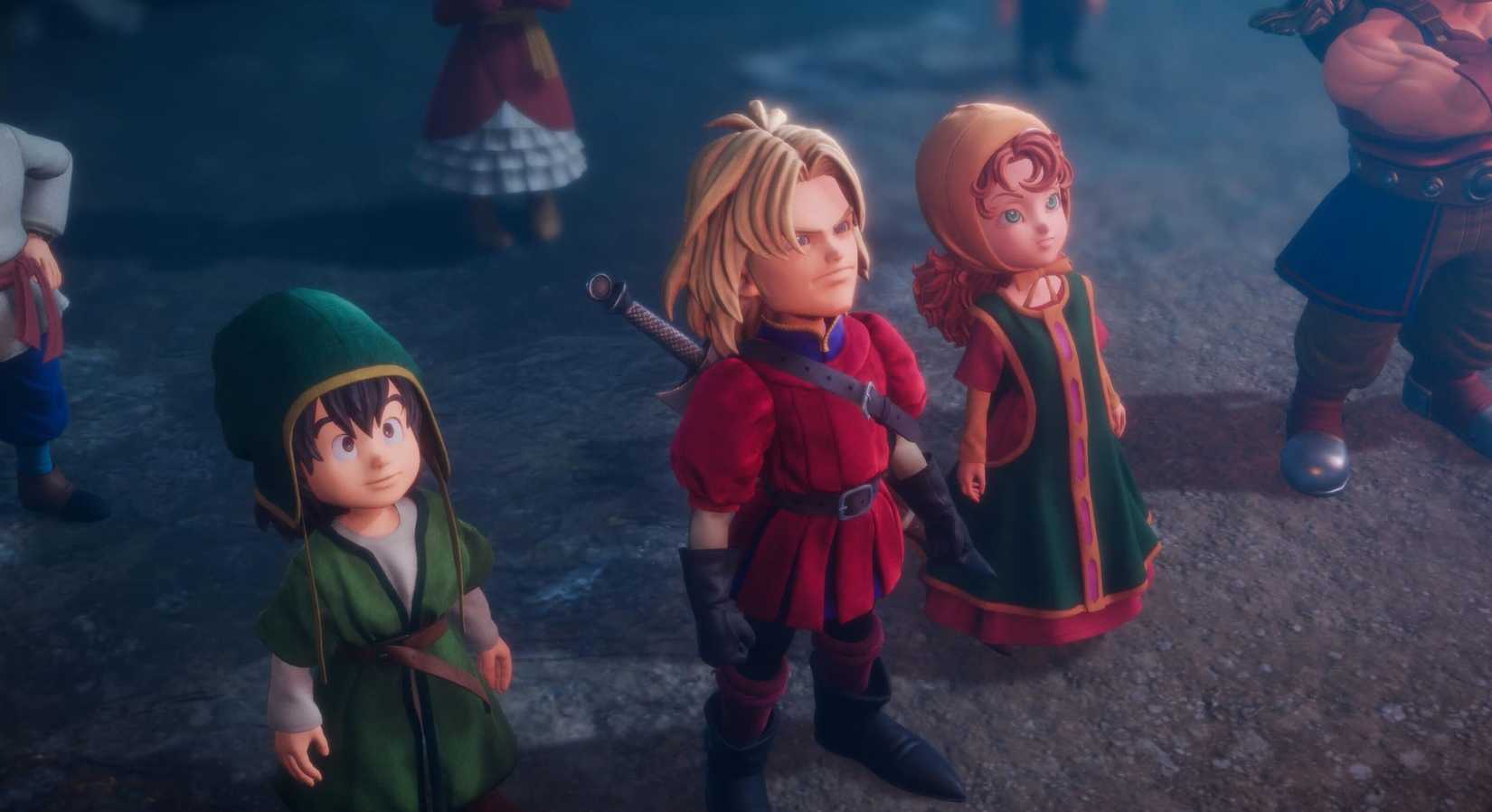
"Our goal with the modern iterations of classic titles is not merely to preserve them in amber, but to realize the emotional impact the creators originally intended. If archaic design elements actively prevent modern players from experiencing a brilliant story, those elements are barriers we have a responsibility to dismantle."
This philosophy underscores why each successive version of Dragon Quest VII has managed to eclipse its predecessor, turning what was once a contentious entry into a masterclass in retrospective design.
Future Outlook: The Legacy of Iterative Remakes
As the video game industry increasingly grapples with rising development costs, lengthy production cycles, and the preservation of its historical catalog, the lifecycle of Dragon Quest VII offers a compelling blueprint for the future.
The strategy of iterative refinement proves that a game’s underlying narrative and world-building can outlive its mechanical shortcomings if developers remain willing to listen, adapt, and innovate. By stripping away redundant busywork while preserving the heart of Akira Toriyama’s artistic vision and Yuji Horii’s sprawling narrative framework, Square Enix has ensured that Dragon Quest VII will no longer be remembered merely as a difficult-to-track-down relic of the early 2000s.
Looking ahead, as subsequent generations of gamers dive into Dragon Quest VII Reimagained across powerful modern hardware, the title stands as a shining testament to an industry maxim: If at first you don’t succeed, try, try again. For Dragon Quest VII, that persistence has ultimately culminated in timeless greatness.