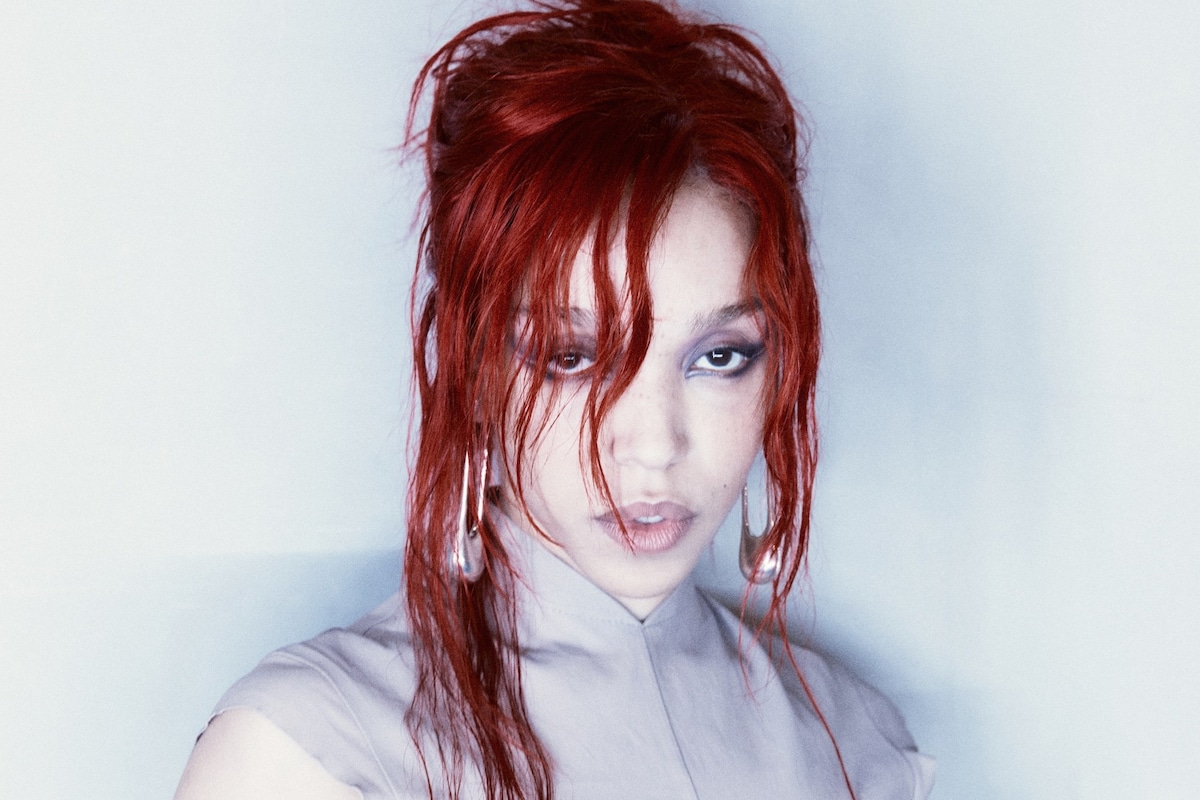
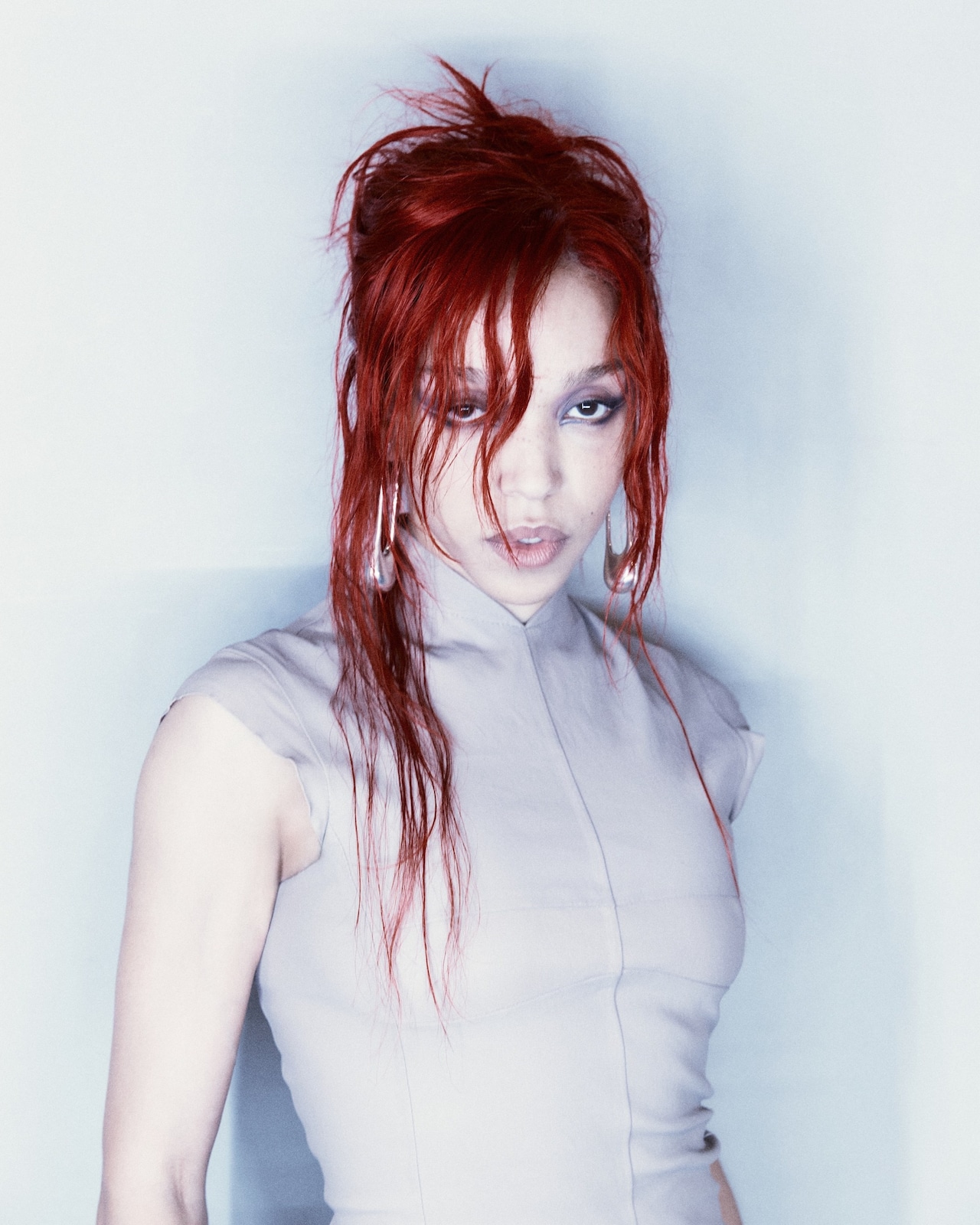
On Tuesday, August 11, 2026, the futuristic architecture of Seoul’s Dongdaemun Design Plaza transformed into a crucible for global counter-culture. Seoul Community Radio (SCR)—the foundational pulse of South Korea’s independent electronic underground—celebrated its tenth anniversary with a landmark rave that tore down the ideological and sonic walls separating major-label pop from the avant-garde.
Headlined by British iconoclast FKA twigs and featuring blistering sets from local trailblazers Yves and The Deep, alongside international EDM-pop architect Mechatok, the night delivered a historic cultural collision. The defining moment arrived when K-pop royalty The8 and Vernon of the boyband Seventeen crashed the stage during an unannounced performance of their left-field collaboration "singasong." As FKA twigs executed a fierce pole dance beside them, the underlying message became unmistakable: the glossy, hyper-manufactured walls of the K-pop machine are crumbling, and a raw, DIY counter-culture is rising from the rubble.
This retrospective report investigates the tenth-anniversary milestone, chronicling a seismic coming-of-age moment for Seoul’s underground scene, the convergence of pop stardom and nocturnal experimentalism, and what this tectonic shift means for the future of global music.
Detailed Chronology: A Night of Subversion and Sonic Chaos
The Spark: Stepping into the Spaceship
Just 24 hours after touching down in South Korea’s sprawling capital, the sensory overload of the city’s nightlife became immediately apparent. The venue itself—the Dongdaemun Design Plaza, designed by the late Zaha Hadid—provided a fittingly interstellar backdrop. Resembling a grounded metallic spacecraft, its sweeping, curvaceous concrete corridors set a tone of structural defiance.
For a decade, Seoul Community Radio has acted as the pirate-radio-meets-cultural-incubator for South Korea’s disenfranchised youth. This anniversary rave was designed not merely as a retrospective pat on the back, but as a bold declaration of intent for the next ten years. The lineup boasted a cross-pollination of sonic ideologies: K-pop revolutionaries like The Deep and Yves stood shoulder-to-shoulder with European club producers and global headliners.
The Inciting Incident: The V8 Interruption
The night’s trajectory flipped on its axis midway through German-born producer Mechatok’s set. Known for shaping hyperpop’s hyper-caffeinated contours, Mechatok was deep into a masterclass of digital maximalism when he suddenly teased the turbocharged, unmistakable opening beats of "singasong"—his celebrated, left-field collaboration with Seventeen members The8 and Vernon (collectively known in experimental circles as V8).
Without warning, The8 and Vernon materialized on stage, plunging the packed room into instant pandemonium. In a fraction of a second, every smartphone screen in the venue ignited, casting an eerie, blue-white glow over the surging crowd. Simultaneously, night headliner FKA twigs glided onto the side of the stage, catching the energy of the room before dropping into a fluid, commanding pole dance.
The immediate cognitive dissonance for industry observers was palpable: This isn’t the K-pop I’m familiar with. But that exact realization was the masterstroke of the evening. It wasn’t K-pop as exported to Western stadium tours; it was K-pop weaponized, deconstructed, and dragged into the sweat-soaked reality of the underground.
The Clash of Subcultures on the Dancefloor
As the night progressed, the crowd itself became an anthropological study in genre-blending. Traditional K-pop-style light sticks pulsed rhythmically to the menacing basslines of Skepta’s "Shutdown" during a relentless set by cult Madrid DJs Josef and Diego Armando. Elsewhere, all-black-clad techno purists—evoking the gothic, industrial aesthetic of twigs’ Eusexua era—vogued fiercely to a distorted, high-tempo donk remix of A$AP Ferg’s "It Ain’t Safe."
In the outdoor smoking area—a cordoned-off patch of asphalt next to a roaring central Seoul thoroughfare—the generational sentiment was clear. A local raver named Ha-joon (name changed for privacy) offered a candid appraisal of the cultural landscape:
"It’s like the counter-culture—people got bored of K-pop, so this is the new thing. No traditional K-pop artist would ever play here."
Ha-joon’s assertion felt absolute at the time, yet it was brilliantly undermined just hours later by the very presence of K-pop’s elite sharing the stage with DIY pioneers.
The Climax: FKA twigs Chrestens the Underground
Long before she took over the turntables, FKA twigs made her presence felt. Following a series of rapid-fire, avant-garde outfit changes, she reclaimed the stage as her DJ spun a barrage of techno-infused, relentless dance rhythms.
In a gesture of ultimate solidarity, twigs began pulling every performing artist onto the stage one by one. Yves rubbed shoulders with Vernon; The8 locked eyes with The Deep; event crew members and dancers began to gyrate on the stage’s strip pole as all structural boundaries dissolved. Soon, the barrier between artist and audience evaporated entirely. K-pop stans, techno troopers, and local ravers alike flooded the stage, creating a chaotic, democratic mob of unbridled euphoria.
While sound engineers and insiders later whispered that a sudden sore throat prevented twigs from delivering her traditional vocal performance, nobody on that floor cared. Through curation, presence, and physical abandon, she had achieved something far more potent: she had officially christened the new Korean underground, signaling to the world that everyone was invited to the reckoning.
Supporting Context & Metrics: The Anatomy of a Movement
To understand the weight of the SCR anniversary rave, one must examine the socio-musical ecosystem that birthed it. For decades, South Korea’s music industry has been dominated by massive entertainment conglomerates (the "Big Four" labels), operating under intensely rigorous, highly polished, and risk-averse formulas. While this apparatus conquered the global charts, it alienated a subset of domestic youth hungry for unpolished expression.
The Rise of the Korean Avant-Garde
Artists like The Deep, Yves, Effie, and kimj represent a burgeoning underground front characterized by:
Maximalist Sonics: Blending bubblegum pop structures with harsh industrial noise, ambient soundscapes, and European club rhythms.
DIY Ethos: Rejecting sterile studio perfection in favor of raw audio fidelity, impromptu club spaces, and anti-establishment fashion.
Genre Fluidity: Operating comfortably between the worlds of high fashion, contemporary art, and aggressive club culture.
According to cultural analysts tracking Seoul’s nightlife economy, independent spaces like SCR have seen a 140% surge in underground club night attendance over the past three years. This boom reflects a broader generational fatigue with corporate pop formulas, running parallel to similar underground youth movements in London, Berlin, and New York.
The Bridge Between Corporate Pop and Underground Cred
The unexpected involvement of Seventeen’s The8 and Vernon is not an isolated anomaly; it is a calculated evolutionary step. Vernon, in particular, has long signaled an affinity for Western alternative scenes, indie rock, and hyperpop aesthetics. Their collaborative work—featuring production from underground stalwarts like kimj and creative alignment with global figures like Mechatok (who famously inspired the lyric "I feel like Mechatok" in the duo’s catalog)—proves that contemporary K-pop stars are increasingly looking to the underground for creative oxygen.
Artist / Collective
Primary Genre / Affiliation
Role in the New Wave
Seoul Community Radio (SCR)
Pirate Radio / Club Movement
Institutional anchor and foundational platform celebrating its 10th year.
FKA twigs
Experimental R&B / Electronic
International headliner and high-art instigator bridging pop and avant-garde.
The Deep & Yves
Korean Alternative Pop / Club
Local rising stars redefining the boundaries of domestic mainstream sounds.
Mechatok
Hyperpop / EDM-Pop (Germany)
International bridge-builder connecting European club sounds with Asian markets.
The8 & Vernon (V8)
K-Pop / Seventeen Sub-unit
Mainstream outliers embracing digital maximalism and underground production.
Official Statements & Industry Perspectives
Reflecting on the cultural climate leading up to the event, Seoul Community Radio founder Rich drew a direct historical parallel to illustrate the current shift in South Korea’s musical hierarchy:
"It’s like what grime was to garage," Rich noted in an interview a week prior to the event. "This new generation of Korean artists are starting to repackage the flashy excesses of K-pop in a less-polished, more-DIY box."
This sentiment echoes through the artistic community. The mainstream infrastructure built K-pop into a global powerhouse, but the underground is currently shaping its soul. By inviting international icons like FKA twigs to headline alongside domestic rule-breakers, SCR has proven that Seoul is no longer just a destination for manufactured perfection—it is an epicenter of forward-thinking electronic exploration.
Future Outlook: Where Goes the Korean Underground?
The success of Seoul Community Radio’s tenth-anniversary celebrations marks a definitive turning point. The old narrative—that South Korea is strictly divided between untouchable corporate pop idols and an isolated, sub-rosa electronic scene—is officially obsolete.
As major label artists continue to seek out underground producers, and as international avant-garde figures like FKA twigs actively integrate themselves into Seoul’s club architecture, the lines will continue to blur. The "new Korean underground" is no longer a hidden subcurrent fighting for scraps of visibility; it is a magnetic force drawing the biggest names in the industry into its orbit.
Moving forward, the challenge for platforms like SCR will be maintaining their raw, counter-cultural edge amidst growing international spotlight and commercial co-optation. Yet, if the scenes witnessed at Dongdaemun Design Plaza are any indication, this generation of creators possesses the resilience, ingenuity, and stylistic audacity to keep the K-pop machine on its toes for another decade to come.