In an unprecedented escalation of federal cybercrime investigations, U.S. and European law enforcement agencies have uncovered a dark web ecosystem where the boundaries between corporate cybersecurity defense and criminal extortion have dissolved entirely. Federal investigators pursuing the notorious ShinyHunters hacking group—which recently humiliated national security apparatuses by breaching the FBI’s recruitment portal—have turned their attention to the high-stakes, opaque world of ransomware negotiation and incident response firms.
According to sources close to the sprawling international investigation, federal authorities have identified executives at multiple prominent ransomware negotiation firms who maintained disturbingly close ties with the extortion syndicate. Most shockingly, evidence suggests that a U.S.-based corporate executive actively helped operate a public-facing pressure site designed to coerce victims into paying ransoms.
This widening probe exposes systemic vulnerabilities in the multi-billion-dollar cyber extortion remediation industry. With ShinyHunters alone having extorted upwards of $70 million from corporate and government victims in a single year, the revelation that trusted advisors may be acting as double agents marks a watershed moment in global cybersecurity law enforcement. As courts seal indictments and international authorities execute dawn raids, the entire architecture of how organizations handle ransomware is facing an existential reckoning.
Detailed Chronology: From Dutch Raids to FBI Arrests
The unravelling of the ShinyHunters syndicate and its corporate enablers reads like a geopolitical crime thriller, moving swiftly from digital drop-boxes in the Middle East to suburban arrests in North America.
The Fall of Pepijn van der Stap and the Rise of "Rey"
For years, ShinyHunters operated as a decentralized menace, responsible for dozens of high-profile data breaches since 2019. Control of the brand eventually concentrated in the hands of "Rey," identified as a teenage hacker based in Amman, Jordan. However, Rey’s ability to command the syndicate relied heavily on a trusted cadre of senior operational lieutenants in Europe.
That structure fractured on the evening of September 15, 2026. In a high-risk operation, Dutch police deployed flash-bang grenades to stun and apprehend Pepijn van der Stap, a convicted hacker and core ShinyHunters suspect. Authorities caught Van der Stap actively logged into his Signal instant messaging account, granting investigators real-time access to his communications with ransomware negotiators across Canada and the United States.
Crucially, sources indicate that Van der Stap’s unencrypted chats contained digital breadcrumbs pointing toward a foiled murder-for-hire plot orchestrated abroad (though no attacks were ultimately carried out). More immediately, his devices revealed an intimate, illicit dialogue with elite cyber executives who possessed inside knowledge of data breaches long before the victims themselves discovered them.
Following Van der Stap’s capture, the vacuum at the top of the group was briefly filled by Rey. Yet, the FBI moved with uncommon velocity. By October 3, 2026, Reuters reported that Jordanian authorities had detained Rey, who immediately began cooperating with federal investigators.
The FBI Breach and the Arrest of Edward Dubrovsky
The pressure on federal law enforcement reached a boiling point in late September 2026, when ShinyHunters compromised the FBI’s recruitment website, fbijobs.gov. The hackers taunted the bureau, threatening to publish deeply sensitive personnel files containing medical and psychological records, home addresses, Social Security numbers, and unit specializations.
Rather than cowering, the FBI weaponized its investigative apparatus. On October 9, 2026, the bureau arrested Edward Dubrovsky, a 54-year-old Canadian cybersecurity executive and author of a recently published book on handling cyber extortion. According to court records in the U.S. District Court, Dubrovsky was charged with threatening to disclose stolen data and interfering with interstate commerce through extortion. Prosecutors quickly moved to keep Dubrovsky behind bars pending trial, sealing the case documents to protect the ongoing investigation.
Investigators reviewing Van der Stap’s recovered Signal logs discovered a damning reality: Dubrovsky was fully aware that ShinyHunters had exfiltrated highly sensitive records from FBI servers. Despite this, he allegedly never warned the bureau, allowing the extortionist syndicate to use the threat of publication as leverage.
Supporting Context & Metrics: The Mechanics of Extortion
The intersection of ransomware negotiation and corporate consulting has long operated in a regulatory gray zone. To understand how executives could allegedly cross the line from remediation to extortion, one must examine the operational mechanics of the modern cyber-underworld.
The Rise and Fall of "Shinywire"
Federal investigators believe that at least one executive at a prestigious U.S. consulting firm—employing over 1,000 associates—played a direct operational role in running shinywire[.]com. Active from May 3, 2026, until its seizure or takedown in mid-October, the site cataloged nearly 100 organizations breached by ShinyHunters.
Each listing served as a digital pillory. The site featured samples of stolen data, aggressive countdown timers, and direct calls to action urging victims to engage with the criminals. If a company refused to negotiate within seven days, the syndicate executed its final threat: publishing the entirety of the stolen archive on a dark-web shaming blog accessible only via the Tor anonymity network.
High-profile targets included American medical technology giant Intuitive Surgical, which was breached in March 2026 via a targeted phishing attack that compromised an employee’s credentials.
The "Ghostbyte" Connection and Industry Feuds
The corporate turf wars surrounding these negotiations have occasionally spilled into civil litigation. Earlier this year, Edward Dubrovsky filed a lawsuit in Ontario against Daniel Tobok, the former CEO of Cypfer, a prominent cybersecurity firm with global offices. Dubrovsky alleged he was being targeted in a campaign to "destroy" him after a bitter falling out between former business partners. Tobok denied the allegations and filed a counterclaim alleging unfair competition.
However, historical intelligence paints a murkier picture of the ecosystem’s origins. Former colleagues revealed that years prior, Tobok was known within ransomware circles by the alias Ghostbyte. In a 2018 extortion incident involving the Dharma ransomware group, a victim seeking negotiation guarantees was directed by Russian-speaking affiliates to contact an IT professional using the email address [email protected].
Threat intelligence platform Constella Intelligence subsequently linked an email address frequently used by Tobok ([email protected]) to online accounts bearing the "ghostbyte" moniker, including Snapchat. Furthermore, blockchain analysis of the Dharma affiliate’s wallet linked to the referral revealed transactions totaling roughly 43 Bitcoin (valued at approximately $3.5 million today).
Official Statements and Industry Fallout
The corporate entities caught in the crossfire have moved quickly to distance themselves from the unfolding criminal probes.
In a public statement, Cypfer firmly asserted that its business model does not involve making or facilitating ransomware payments.
"We had no prior knowledge of Mr. Dubrovsky’s arrest," a Cypfer spokesperson stated via email. "CYPFER has not received any outreach from law enforcement and, to our knowledge, is not the target of any law enforcement investigation."
Cypfer further clarified that it operates entirely independently of CyberSteward Inc. (the firm associated with Dubrovsky’s later work) and noted its recent acquisition by the Apros Group, a holding company led by former FBI special agent Jason Hogg.
The Inherent Conflict of Interest
Industry veterans argue that the structural financial models of many ransomware remediation firms create dangerous, misaligned incentives. Mark Camillo, Chief Executive of CyberAcuView—an industry group founded by major cyber insurers—highlighted the inherent peril of negotiators taking a percentage of the ransom payout.
"It has come to the industry’s attention that many of the ransomware payers charge a percentage of the final payment which may or may not be disclosed," Camillo explained. "This makes no sense if they are also the negotiator. There needs to be more transparency in the process as no one in the ecosystem should be profiting purely on the size of the ransomware transaction."
This conflict is compounded by empirical data showing that paying extortionists is rarely a reliable strategy. When educational technology giant PowerSchool suffered a massive breach in December 2024 resulting in the theft of records for 62 million students and 9.5 million teachers, the company reportedly paid a $2.85 million ransom facilitated by cybersecurity advisors. Yet, months later, individual school districts received secondary extortion demands using the exact same stolen datasets.
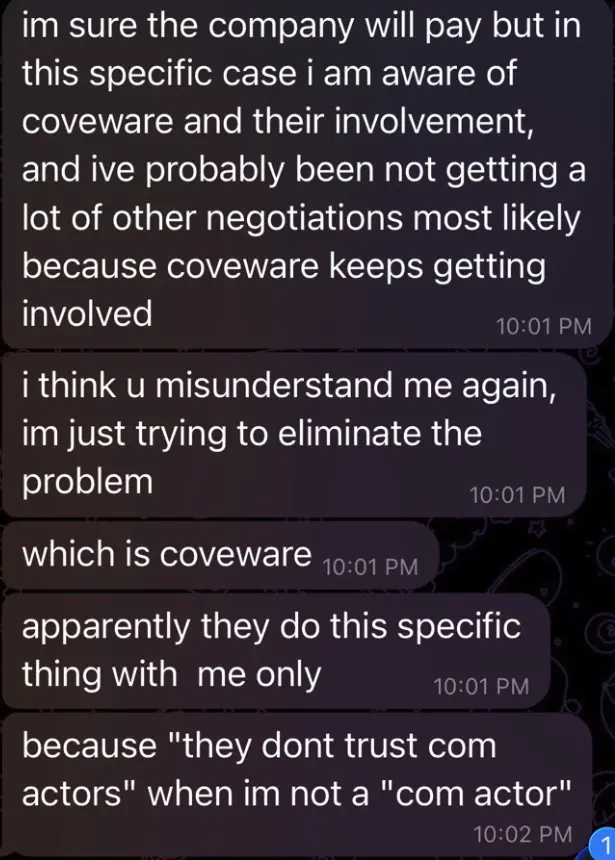
Leading incident response firms like Coveware and Unit 221B have consistently warned against paying ShinyHunters, noting that cybercriminals routinely retain, resell, or weaponize stolen data regardless of financial payouts. Ironically, decrypted Telegram chats reveal that ShinyHunters leaders singled out Coveware as a primary business obstacle, complaining that the firm’s anti-payment advice was single-handedly depressing their extortion revenue and vowing to "eliminate the problem."
Future Outlook: A Reckoning for Cyber Extortion
The Department of Justice is aggressively sweeping through the ecosystem of compromised negotiators. The recent indictment of MonsterCloud CEO Zohar Pinhasi—accused of secretly paying hackers $8 million behind his clients’ backs while billing them $19 million—alongside the 70-month prison sentence handed down to Florida negotiator Angelo Martino for conspiring with the BlackCat/ALPHV group, signals a zero-tolerance policy from federal prosecutors.
As the FBI deepens its investigation into the ShinyHunters network, the cybersecurity industry faces an uncomfortable reckoning. The notion that every incident response firm acts as an uncompromised ally to corporate victims has been shattered. Moving forward, regulatory bodies, cyber insurers, and law enforcement are expected to demand radical transparency regarding cryptocurrency transactions, retainer structures, and negotiation channels. For an industry built on trust, restoring integrity will require purging those who chose to partner with the shadows they were hired to fight.