In the ever-unpredictable landscape of internet culture, where political discourse, absurdism, and viral video editing frequently collide, a new satirical phenomenon has captured the digital imagination. "President Myron Gaines, 2050" has emerged as one of the most pervasive and rapidly expanding meme formats across TikTok, X (formerly Twitter), and YouTube. The trend centers on Myron Gaines, the polarizing podcaster and conservative activist best known for hosting the manosphere talk show Fresh & Fit.
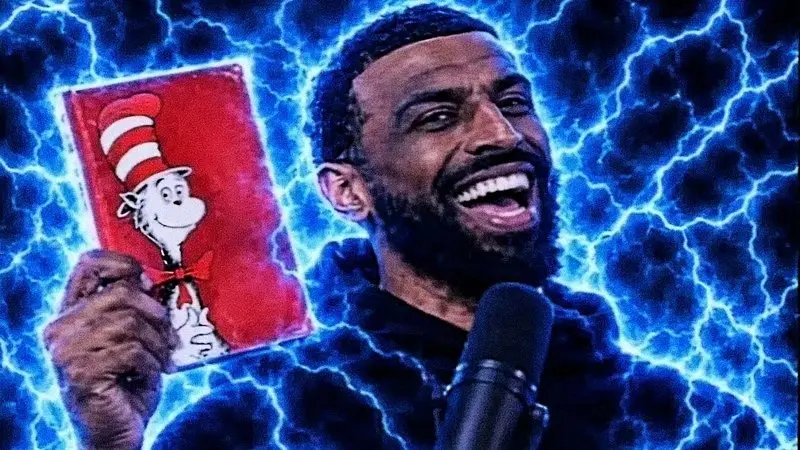
The meme originates from a sensationalized hypothetical scenario posed by Gaines himself during a podcast broadcast, in which he outlines his wildly authoritarian, albeit absurd, platform should he ever ascend to the highest office in the United States. According to Gaines, a hypothetical "President Gaines" administration would immediately institute mandatory national IQ testing. Under his whimsical yet stringent guidelines, citizens would be required to read a single page of Dr. Seuss’s classic children’s book The Cat in the Hat aloud and entirely without stuttering. Failure to do so, Gaines declared, would result in immediate deportation.
What began as a typical piece of provocative internet bluster from a prominent online personality has metastasized into a sprawling cultural touchstone. By late 2026, social media users weaponized the clip, projecting Gaines’s satirical authoritarian fantasy into a near-future dystopia set in the year 2050. The resulting wave of content—comprising satirical election victory projections, mock study guides for children’s literature, and absurd interactive scenarios—highlights the intersection of modern political radicalism and post-ironic digital humor.
This report provides an exhaustive investigation into the genesis, viral acceleration, cultural mechanics, and psychological appeal of the "President Myron Gaines, 2050" phenomenon. Through a detailed chronology and granular examination of platform metrics, we explore how an eccentric podcast rant transformed into a defining internet meme of the mid-2020s.
Detailed Chronology: From Podcast Rant to 2050 Vision
To understand how a fleeting moment of broadcast bravado evolved into a multi-platform satirical movement, one must trace the precise timeline of its dissemination. The lifecycle of the "President Myron Gaines, 2050" meme moves from isolated niche broadcasting to mainstream algorithmic saturation across three distinct phases.
Phase 1: The Incubation Period (December 2025)
The foundational raw material for the meme was captured on December 15th, 2025. During an episode of the Fresh & Fit podcast, Myron Gaines launched into a characteristic polemic directed at his critics and the broader sociopolitical establishment. Addressing his viewing audience directly with characteristic bluster, Gaines warned them that they "better pray" he never acquires executive political power.
Painting a vivid, draconian picture of a theoretical presidency, Gaines outlined his Day One agenda:
- Mandatory National Intelligence Audits: Every citizen would be subjected to state-monitored IQ evaluations.
- The Literacy Litmus Test: Individuals would be handed a copy of Dr. Seuss’s The Cat in the Hat. They would be required to read a designated page aloud under strict temporal and auditory supervision.
- The Penalty for Disfluency: Any hesitation, stumble, or stutter would result in immediate removal from the country.
Shortly after the live broadcast, digital archivists and content curators operating under the banner of OSS Prime seized upon the monologue. On December 15th, 2025, OSS Prime published an edited highlight reel featuring the clip to both YouTube and TikTok. Initially, the video attracted moderate engagement relative to the niche ecosystem of the manosphere—accumulating roughly 7,000 views on YouTube and a more substantial 590,000 views on TikTok over the course of nearly a year. While viral by standard content metrics, the clip remained largely contained within its primary ideological silo, functioning primarily as standard rage-bait or motivational talking points for Gaines’s core demographic.
Phase 2: The Satirical Awakening and Algorithmic Resurgence (November 2026)
The true metamorphosis of the clip occurred nearly a year later, in November 2026. Stripped of its original context by independent content creators, the rant was reframed not as a serious political manifesto, but as a piece of avant-garde speculative fiction.
The internet at large recognized the inherent surrealism of utilizing a children’s book as a matter of national security. TikTok creators began pairing Gaines’s audio track with futuristic visual frameworks, anchoring the narrative firmly in the calendar year 2050. This temporal shift genius-locked the meme into place: it was no longer about what Gaines might do if elected tomorrow, but rather an inevitable, approaching dystopian reality that society needed to actively prepare for.
On November 7th, 2026, TikTok user @fishieboi112 published a foundational video pairing Gaines’s audio with promotional imagery for the upcoming 2026 cinematic adaptation of The Cat in the Hat. The juxtaposition of Hollywood marketing with an authoritarian podcast threat resonated deeply with audiences, surpassing 674,000 views within a fortnight.
Phase 3: Mainstream Proliferation and Interactive Escalation (Late November 2026)
As the trend gained compounding momentum throughout November 2026, the complexity and volume of user-generated responses escalated exponentially.
- November 9th, 2026: TikToker @mistie9110 integrated the audio with synthetic AI-generated summaries, treating Gaines’s 2050 presidency as an objective, pre-programmed historical milestone, garnering over 305,000 views.
- November 13th, 2026: Content creator @sigmemes3 published a viral TikTok displaying a digital Google Calendar interface set to January 2050. The calendar featured recurring reminders urging users to practice reading Dr. Seuss aloud to avoid deportation, accumulating more than 252,000 views in ten days.
- November 19th, 2026: User @surfer_gaming posted a simulated breaking news broadcast detailing the certified results of the 2050 presidential election, projecting a landslide victory for Gaines. The video cleared 320,000 views within 96 hours.
- November 20th, 2026: The meme crossed over from TikTok into X / Twitter when account @myrongainesclip shared a video clip from a live Q&A session. In the video, a university student confronts Gaines, asking whether individuals born with medical speech impediments would be granted exemptions from the mandatory Cat in the Hat literacy evaluation in 2050. In character, Gaines offers no quarter, declining to grant immunity. The interaction ignited widespread commentary, securing over 2,300 direct likes and igniting debate across political timelines.
Supporting Context & Metrics: Decoding the Virality
Analyzing the quantitative footprint of the "President Myron Gaines, 2050" phenomenon reveals distinct patterns in how modern internet communities process polarizing public figures.
Platform Dynamics and Engagement Metrics
Unlike traditional political memes—which typically rely on deepfakes, out-of-context campaign speeches, or traditional policy gaffes—this trend thrives on speculative absurdism. The metrics demonstrate that shorter, highly visual TikTok integrations outperformed long-form video essays on YouTube.
| Date (2026) | Creator / Handle | Platform | Core Concept / Visual Pairing | Engagement (Views / Interactions) |
|---|---|---|---|---|
| Nov 7 | @fishieboi112 | TikTok | Audio paired with Cat in the Hat (2026 film) billboard | 674,000+ views |
| Nov 9 | @mistie9110 | TikTok | Audio paired with fake AI search engine summaries | 305,000+ views |
| Nov 13 | @sigmemes3 | TikTok | Google Calendar interface set to January 2050 | 252,000+ views |
| Nov 19 | @surfer_gaming | TikTok | Simulated 2050 electoral map showing Gaines victory | 320,000+ views |
| Nov 20 | @myrongainesclip | X (Twitter) | Live interaction regarding speech impediments | 2,300+ likes (active debate) |
The Psychological Appeal: Why Dr. Seuss?
The genius of the meme lies in the comedic incongruity of high-stakes geopolitical authoritarianism meeting elementary school literacy milestones. By tethering nationalist hardline ideology to a toddler’s book, the internet effectively neutralizes the perceived threat of the original speaker.
Instead of engaging with the misogynistic or hyper-masculine tenets traditionally associated with the Fresh & Fit brand, internet users chose to hyper-fixate on the single most ridiculous element of Gaines’s rant: the strict enforcement of Dr. Seuss pronunciation. In doing so, the collective online consciousness democratized the political commentary, transforming a polarizing media figure into a cartoonish fictional dictator akin to characters found in satirical dystopian fiction.
Official Statements and Public Reaction
As the meme crossed the threshold from fringe subculture into mainstream youth culture, public reactions varied significantly across the sociopolitical spectrum. Representatives for Myron Gaines and the Fresh & Fit podcast initially maintained silence regarding the transformation of their broadcast into a viral joke, focusing their efforts on standard programming. However, snippets of the live Q&A sessions indicate that Gaines frequently leans into the absurdity when confronted directly by fans and detractors alike in public appearances.
Media literacy experts and cultural commentators have offered diverse interpretations of the phenomenon:
- The Post-Irony Generation: Sociologists note that Gen Z and Generation Alpha internet users heavily employ "post-irony"—a state where sincere political posturing is wrapped in layers of ridiculous fictional framing. By projecting events to the year 2050, participants insulate themselves from current partisan warfare, treating the political landscape as an interactive video game or sci-fi narrative.
- The Weaponization of Ridicule: Critics of the manosphere movement argue that converting figures like Gaines into absurdist meme characters risks normalizing their underlying rhetoric. Conversely, proponents of the meme suggest that reducing aggressive political rants to comedic scenarios involving children’s books strips harmful actors of their intimidating aura, effectively defeating authoritarian posturing through humor.
Future Outlook: The Legacy of 2050 Dystopian Satire
As we look toward the horizon of digital culture, the "President Myron Gaines, 2050" meme serves as a case study in how modern audiences consume and reshape media. The trend has established a new template for internet satire: take a public figure’s most eccentric hyperbole, project it decades into the future, and build an intricate, highly collaborative fictional universe around it.
Whether Myron Gaines will ever hold public office is an irrelevancy in the eyes of digital creators. Within the parallel universe of TikTok and X, President Gaines is already firmly entrenched in the annals of 2050 history—surrounded by cabinet members desperately practicing their phonics, terrified of stumbling over the adventures of a mischievous feline in a striped top hat. As long as public figures continue to issue grandiose, hyperbolic warnings to their audiences, the internet will undoubtedly be waiting with a stopwatch, a copy of children’s literature, and an eye on the calendar.