Executive Overview
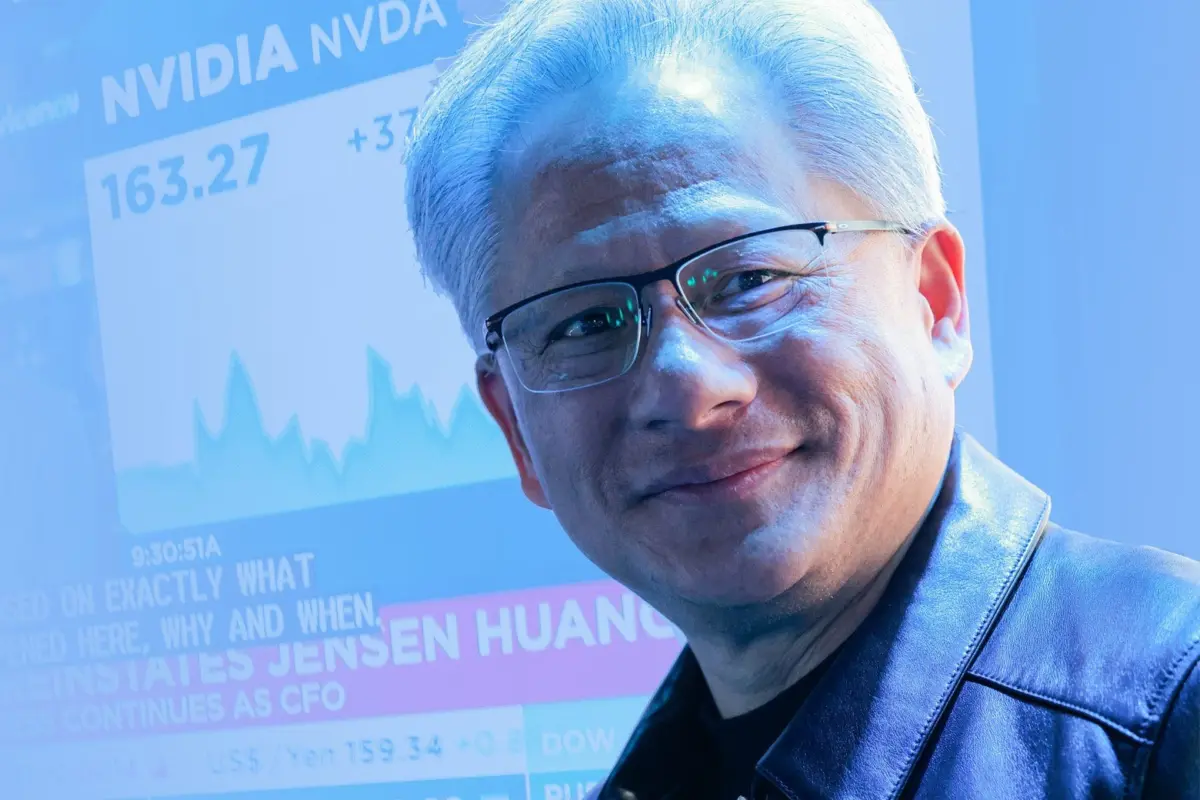
In a stunning display of corporate maneuvering, executive muscle, and presidential intervention, Jensen Huang has reclaimed his throne at Nvidia just eleven days after his abrupt and scandalous ouster. On Monday morning, preceding the opening of the markets, Nvidia’s board of directors announced a unanimous vote to reinstate Huang as president, chief executive officer, and board director.
This dramatic reversal follows his November firing, which was triggered by revelations of an inappropriate workplace affair and a heavily compromising romantic and business relationship with Alice Huang (no relation), an individual flagged as a likely Chinese intelligence operative.
While the swift return sent waves of immense relief through Wall Street and immediately revived a stumbling Nasdaq following a historic tech sector sell-off, the manner of Huang’s reinstatement lays bare a deeply troubling reality. The stability of the modern American stock market—and by extension, the retirement security of millions of everyday citizens—now rests on the capricious whims of a single executive and a White House overly eager to bail out Silicon Valley elite.
The episode has exposed the structural fragility of the artificial intelligence boom, the alarming intersection of partisan politics and national security, and a political-economic system that consistently prioritizes corporate impunity over public accountability.
Detailed Chronology: From Ouster to Presidential Rescue
The saga that shook the global technology and geopolitical landscape unfolded with breakneck speed across November 2026.
The Fall
The crisis began when internal investigations and investigative reporting—most notably by The New York Times—revealed that Nvidia’s visionary, leather-jacket-clad leader was embroiled in an inappropriate workplace affair with Alice Huang. More alarming than the workplace misconduct, however, was the revelation that Alice Huang maintained regular contact with an official inside China’s Ministry of State Security while she and the Taiwanese-born CEO were intimately involved. Concurrently, she was receiving high-end Nvidia semiconductors on behalf of a Singapore-based front, Megaspeed International, effectively bypassing stringent U.S. export controls and establishing a backdoor pipeline to Beijing.
Faced with mounting evidence of executive deception, a board of directors that had increasingly grown weary of Huang’s chronic fabulism and autocratic management style took the unprecedented step of forcing his resignation on November 12. Initially, the board stood firm, publicly stating it had no intention of reinstating him.
The Market Reaction and Panic
The fallout was immediate and catastrophic for the broader financial markets. As the premier supplier of high-performance graphics processing units (GPUs) and large language model (LLM)-adaptable chips powering the global AI boom, Nvidia’s sudden leadership vacuum created existential uncertainty. A steep, cascading sell-off of tech stocks ensued across Wall Street. Even a landmark, record-breaking Initial Public Offering (IPO) by AI competitor Anthropic failed to stanch the bleeding on the Nasdaq. Investors realized that the entire edifice of the artificial intelligence economy was inextricably bound to a single man.
The White House Intervention
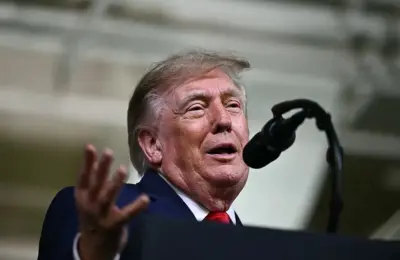
Recognizing the threat to market stability—and by extension, political fortunes—the federal government stepped in. President Donald Trump, who personally holds millions of dollars in Nvidia stock and whose administration had previously weighed levying 15 percent royalties on Nvidia chip sales to China, publicly undermined the national security narrative. Despite months of intelligence briefings establishing Alice Huang’s ties to foreign intelligence, Trump publicly declared on social media and in interviews, "I don’t know that she was a spy at all," and actively encouraged Huang to fight for his position.
By Monday morning, Nvidia’s board capitulated. In its official reinstatement announcement, the board included a telling concession:
"In the process of reaching its decision, the Board received input from senior levels of the United States government. Based on that input, the Board is confident that Mr. Huang’s reinstatement poses no national security risk."
When pressed by reporters on whether Huang would have secured his job without executive branch pressure, President Trump unabashedly took credit, stating, "I believe my intervention was very important."
Supporting Context & Metrics: The AI Bubble and Geopolitical Backchannels
To understand why Huang’s return is viewed by economists and watchdogs as a dangerous omen rather than a simple corporate personnel drama, one must examine the precarious mechanics of the current tech boom.
The Chokepoint of Global Semiconductor Supply
Nvidia does not merely manufacture hardware; it dictates the infrastructure of the modern digital economy. With a market capitalization that has repeatedly rewritten financial records, $NVDA serves as the undisputed tollbooth for the generative AI revolution. Corporations from Microsoft and Google to smaller startups are utterly dependent on Nvidia’s chips to train complex machine-learning models.
However, this dominance created an unhealthy geopolitical balancing act. Jensen Huang had effectively become his own foreign policy architect, navigating U.S.-China tensions by lobbying the federal government to soften export restrictions so that Nvidia could maintain lucrative access to Chinese markets. The pipeline through which advanced chips allegedly flowed to Alice Huang’s network demonstrates how corporate profit motives routinely override national security guardrails.
Public Backlash vs. Wall Street Relief
While Wall Street breathed a collective sigh of relief, public sentiment tells a sharply divergent story. Recent polling data from YouGov indicates that the cascading scandals have paradoxically increased public awareness of Nvidia while tanking its public image to historic lows.
Furthermore, data centers—the physical manifestations of the AI boom—have sparked widespread grassroots backlash across local communities over energy consumption, water usage, and environmental strain. The American electorate has made its displeasure known at the ballot box, registering deep skepticism toward unchecked tech oligarchs and perceived governmental corruption. Yet, through pension funds and retirement portfolios, ordinary citizens remain financially tethered to the very bubble that Huang’s return temporarily inflated.
Official Statements and Industry Reactions
The normalization of executive impunity has drawn sharp rebukes from legal experts, government accountability watchdogs, and progressive policymakers:
-
Sacha Haworth, CEO of the Tech Oversight Project:
"This whole ordeal only reinforces what Americans already believe about a broken political system that stands up for Big Tech CEOs and not the American people."
-
Zohran Mamdani, Mayor of New York City:
"I do not think that working people across the country signed up for their pensions being tied to the question of Jensen Huang’s fidelity to his marriage."
-
Charles Gasparino, Financial Journalist:
Characterized the unfolding scandal and political bailout as "a modern-day Watergate."
-
Alex Jacquez of the Groundwork Collaborative:
Warned that legislative scrutiny is far from over, noting that "Congress, likely on a bipartisan basis, is going to be hauling in Jensen Huang, certainly, but also likely other AI CEOs to get to the bottom of whether or not high-end leading-edge American chips are making their way to China."
Future Outlook: A Precarious Road Ahead
Although Jensen Huang has successfully engineered a coup reminiscent of Sam Altman’s triumphant return to OpenAI—earning public congratulations from Altman himself—his path forward is fraught with systemic peril.
1. Bipartisan Congressional Investigations
Lawmakers from both sides of the aisle remain deeply dissatisfied with the board’s abrupt about-face. Subpoenas are widely anticipated, and congressional committees are preparing to investigate the integrity of U.S. export controls. The fundamental question remains unanswered: How many advanced semiconductors leaked into the hands of foreign adversaries, and what role did corporate leadership play in subverting national security for profit?
2. Ongoing Regulatory Scrutiny
Beyond national security probes, the Securities and Exchange Commission (SEC) continues its active investigation into Nvidia’s accounting disclosures and financial transparency. Independent committees established by Nvidia’s board claim they will continue investigating the intelligence plot, though critics rightly question the efficacy of internal watchdogs appointed under intense political duress.
3. Structural Vulnerability of the Economy
The most significant takeaway from the Huang comeback is not about one CEO’s personal or professional failings; it is a diagnosis of an ailing macroeconomic framework. When the valuation of the world’s most critical financial markets hangs precariously on the job security of a single executive—and requires direct intervention from the Oval Office to maintain its equilibrium—the system is no longer functioning on healthy capitalist principles.
Silicon Valley may celebrate this short-term victory, but the long-term outlook for a market tethered to corporate cronyism, regulatory capture, and geopolitical brinkmanship has never looked more precarious.