Executive Overview
The wearable technology market has long faced a persistent tension between premium capability and prohibitive pricing. As flagship smartwatches regularly cross the $400 to $800 threshold, budget-conscious consumers have often been forced to compromise on hardware integrity, processing power, and essential health sensors. However, the latest retail landscape shifts dramatically this Black Friday.
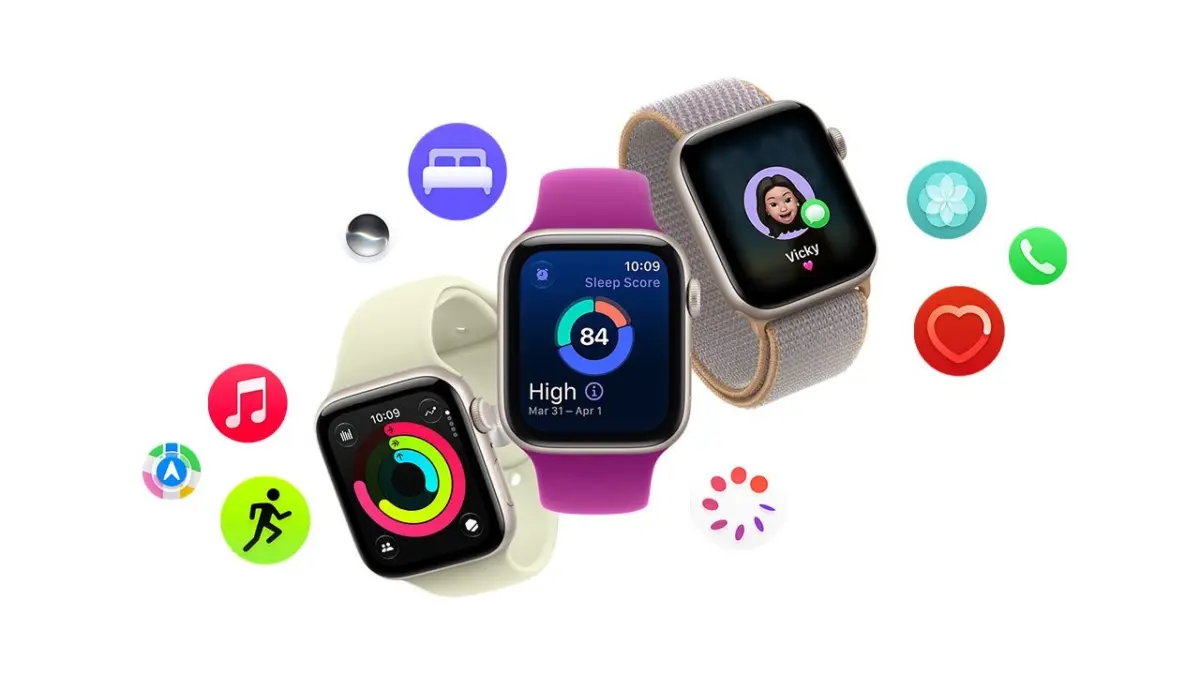
Amazon has announced a historic price drop on the Apple Watch SE (3rd Generation), slashing the cost of the entry-level 40mm model to an unprecedented $179. Representing a 30% instant discount off its standard retail price with complimentary shipping, this aggressive promotion marks the lowest price point ever recorded for the current-generation SE lineup.
Originally launched in September 2025, the third-generation Apple Watch SE was engineered to bridge the gap between high-end smartwatch performance and everyday affordability. By housing the robust S10 processor—the very same silicon that powered the Apple Watch Series 11—within a recycled aluminum chassis, Apple created a device that punches well above its weight class.
For consumers deeply entrenched in the iOS ecosystem who have hesitated to invest in flagship wearables, this Black Friday incentive eliminates the financial barrier to entry. This comprehensive report examines the structural details of the deal, analyzes the hardware and software capabilities of the Apple Watch SE 3, contextualizes its positioning within the broader wearable market, and evaluates compatibility realities for prospective buyers.
Detailed Chronology: The Evolution to the SE 3 Deal
September 2025: The Launch of the Third-Generation SE
When Apple officially debuted the Apple Watch SE (3rd Gen) in September 2025, consumer technology analysts noted a subtle yet significant shift in Cupertino’s product strategy. Rather than positioning the SE as a stripped-down, legacy-dependent alternative, Apple equipped the third-generation iteration with critical trickle-down hardware. Most notably, the integration of the S10 processor positioned the device as a high-velocity entry-level option, narrowing the operational performance gap between the budget tier and the flagship Series lineup.
Q4 2025 Holiday Preparations: Supply Chain Positioning
Ahead of the peak holiday shopping season, major electronics retailers and direct-to-consumer platforms collaborated closely with hardware distributors to secure inventory allocations. Anticipating high demand for sub-$200 premium tech items, supply chains heavily prioritized the 40mm and 44mm aluminum configurations of the Apple Watch SE 3. This proactive inventory staging laid the groundwork for aggressive margin-sharing between retailers and manufacturers, enabling the unprecedented price cuts seen during Black Friday week.
November 2026: The Black Friday Price Floor Breach
The threshold was officially crossed when Amazon deployed a 30% instant discount across foundational SKUs of the Apple Watch SE 3. Dropping the price to $179 for the 40mm variant broke previous historical lows, transforming the device from a standard holiday discount into a dominant market disruptor. Industry observers immediately flagged the promotion as one of the standout consumer electronics deals of the 2026 shopping cycle, driving an immediate surge in online traffic and inventory velocity.
Supporting Context & Metrics: Hardware, Software, and Performance Analysis
Build Quality and Ergonomics
Despite carrying the "budget" designation, the Apple Watch SE 3 does not compromise on material quality. The device features a 100% recycled aluminum case, reflecting Apple’s broader corporate sustainability mandates without sacrificing structural integrity or aesthetic appeal. The display is protected by Ion-X scratch-resistant glass, offering dependable durability against daily wear and tear, whether the user is commuting, working in an office, or engaging in high-intensity interval training.
The watch is available in two standardized form factors to accommodate diverse wrist geometries:
- 40mm Model: Currently discounted to $179, tailored for smaller wrists while retaining complete feature parity.
- 44mm Model: Providing a more expansive screen real estate for users who prefer a larger digital canvas.
Display Specifications
The Apple Watch SE 3 utilizes a crisp Retina OLED LTPO display boasting a pixel density of 326 pixels per inch (ppi). With up to 1,000 nits of peak brightness, the screen remains effortlessly legible even under direct, harsh sunlight—a critical metric for outdoor runners and cyclists. While it omits the perpetual "Always-On" display capability reserved for higher-tier flagship models like the Apple Watch Series 12, the raise-to-wake responsiveness of the SE 3 remains instantaneous and power-efficient.
Processing Power: The S10 Advantage
Perhaps the most compelling technical argument for the Apple Watch SE 3 lies beneath the hood. The device is powered by the S10 processor—the exact same high-performance silicon utilized in the previous-generation Apple Watch Series 11.
This architectural choice ensures that application launch times, fluid scrolling through watchOS menus, and background task execution perform with virtually zero discernible lag. Users experience an interface speed that mirrors hardware costing twice as much. The solitary hardware omission on the processing front is the exclusion of the second-generation Ultra Wideband (UWB) chip, meaning users miss out on granular Precision Finding features for locating lost items, though standard proximity tracking remains fully intact.
Comprehensive Health, Fitness, and AI Integration
The Apple Watch SE 3 is more than a notification mirror for your iPhone; it functions as an autonomous health monitoring and athletic tracking hub. Key features include:

- Advanced Activity Tracking: Comprehensive metric logging for running, swimming, cycling, yoga, and strength training.
- Optical Heart Rate Monitoring: Continuous baseline tracking with automated high and low heart rate notifications.
- Wrist Temperature Sensing: Providing valuable long-term data regarding wellness trends and cycle tracking.
- Sleep Apnea Notifications & Sleep Scoring: Advanced respiratory monitoring algorithms designed to detect signs of moderate-to-severe sleep apnea over consecutive nights of wear.
- Software Ecosystem & AI: Seamless synchronization with the iPhone ecosystem, alongside support for modern software additions like Siri AI and the adaptive Workout Buddy coaching utility.
Official Statements and Industry Perspective
Retail analysts and consumer technology experts have weighed in heavily on the significance of the $179 price point.
"When a device running enterprise-grade silicon from a generation prior drops below the $200 mark from a tier-one manufacturer, it fundamentally changes consumer expectations," notes an independent retail market analyst. "Apple is effectively capturing price-sensitive demographics who might otherwise have migrated toward fitness bands or non-ecosystem smartwatches."
Commerce management experts tracking the promotional landscape have echoed these sentiments. Eric Song, commerce manager specializing in daily technology and gaming value assessments, emphasizes the strategic utility of the hardware:
"The Apple Watch SE has nearly all of the essential watch, tracker, and fitness functions of the flagship Apple Watch Series at nearly half the price. For the vast majority of consumers, paying extra for niche flagship sensors offers diminishing returns compared to what the SE 3 delivers straight out of the box."
From an environmental standpoint, Apple’s continued refinement of the SE lineup highlights a successful scaling of recycled materials. Utilizing 100% recycled aluminum without driving up unit costs demonstrates that sustainability initiatives can coexist with aggressive, mass-market discounting strategies during high-volume retail events.
Addressing Ecosystem Realities: Can You Use an Apple Watch with Android?
A recurring point of inquiry among prospective buyers exploring deeply discounted Apple wearables is cross-platform compatibility. Specifically: Can an Apple Watch be paired with an Android smartphone?
The short technical answer is technically yes, but practically no.
Apple engineered the watchOS architecture to require an iOS operating system running on a host iPhone for initial setup, cellular activation, push notification routing, and deep software synchronization. While third-party tinkerers and specialized software workarounds have occasionally demonstrated rudimentary Bluetooth bridging, the user experience resulting from these hacks is profoundly broken.
Key limitations of attempting to pair an Apple Watch with an Android device include:
- Inability to Complete Initial Setup: You cannot provision or activate a new Apple Watch without access to an iPhone running a compatible version of iOS.
- Severed Notification Pipelines: Native messaging, calling, and app alert integrations fail to function reliably outside the Apple ecosystem.
- Loss of Health Data Synchronization: Critical health metrics, backup synchronization, and software updates are entirely dependent on the iPhone’s Health app and companion architecture.
For the average consumer, attempting to force an Apple Watch to interface with an Android handset represents an unsustainable expenditure of time and effort for severely degraded functionality. Industry consensus is unambiguous: if you intend to purchase an Apple Watch SE 3 at this historic $179 price point, ownership of a compatible iPhone is an absolute prerequisite. For dedicated Android users seeking comparable value, alternative Wear OS devices or dedicated fitness ecosystems remain the appropriate path forward.
Future Outlook: The Trajectory of Entry-Level Wearables
The aggressive discounting of the Apple Watch SE 3 to $179 establishes a new benchmark for what consumers should expect from budget-tier smartwatches. As silicon trickle-down economics continue to mature, manufacturers are finding it increasingly viable to outfit entry-level devices with processors that were considered flagship-grade just twelve to twenty-four months prior.
Looking ahead, this pricing strategy is likely to trigger heightened competitive pressure across the entire wearable sector. Competitors manufacturing Android-compatible smartwatches and dedicated athletic trackers will face renewed pressure to bolster their health suite offerings—such as sleep apnea detection and advanced wrist temperature monitoring—while maintaining aggressive price floors.
For consumers tracking the market in late 2026, the current Amazon Black Friday promotion for the Apple Watch SE 3 represents an optimal convergence of high-tier hardware capability and historic retail discounting. Whether serving as a primary fitness companion, a seamless extension of the iPhone productivity ecosystem, or an introduction to advanced biometric tracking, the device secures its position as the preeminent value proposition in modern wearable technology.