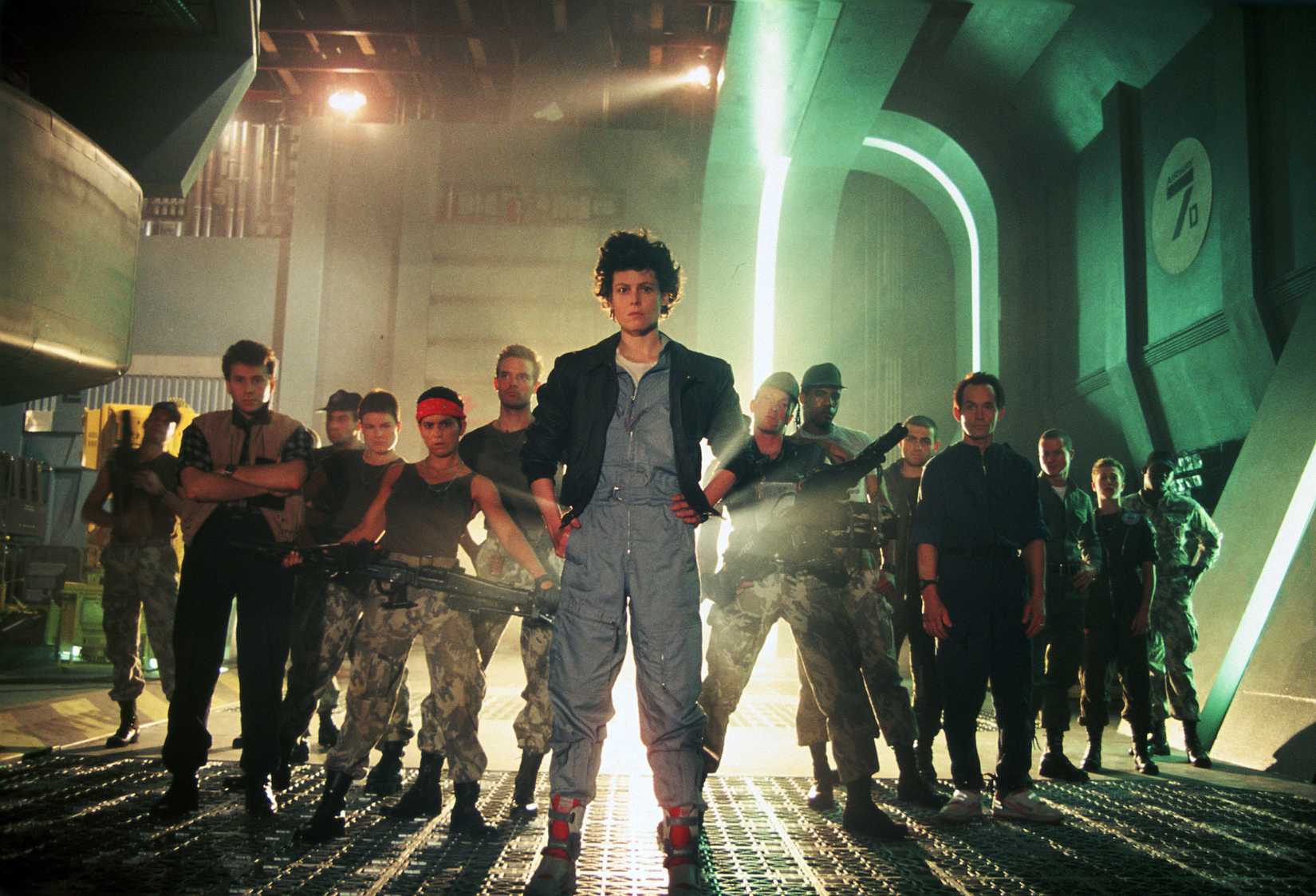
In the realm of action and science fiction cinema, few creative hurdles are as treacherous to clear as the final boss battle. Time and again, otherwise exceptional films stumble at the finish line, trading narrative tension and earned character payoffs for disjointed, incomprehensible CGI spectacles. Recent blockbusters within massive cinematic universes—ranging from the dizzying, cluttered third act of Marvel’s Shang-Chi and the Legend of the Ten Rings to abrupt, anticlimactic anti-resolutions like the fate of the mutated Shredder in Teenage Mutant Ninja Turtles: The Secret of the Ooze—demonstrate how easily a botched conclusion can cheapen an entire runtime. When a climax feels unearned or disconnected, it retroactively diminishes the brilliant world-building and character development that preceded it.
Yet, rare exceptions endure as eternal benchmarks of the medium. Chief among them is James Cameron’s 1986 sci-fi action masterpiece, Aliens. Leaving Netflix on December 1, Cameron’s explosive sequel to Ridley Scott’s atmospheric 1979 horror classic Alien did not merely raise the stakes; it completely shattered the boundaries of what an audience could expect from a genre follow-up.
Transitioning from a haunted-house-in-space formula to a high-octane military sci-fi thriller, Cameron introduced a planetary hive of Xenomorphs, an elite squad of doomed Colonial Marines, and—most importantly—the terrifying Xenomorph Queen. Culminating in the iconic "Get away from her, you bitch!" showdown between Ellen Ripley (Sigourney Weaver) and the towering mother of monsters, the final confrontation remains an unduplicated triumph of practical effects, visceral pacing, and feminist cinematic triumph. Nearly four decades later, Aliens stands as a masterclass in how to construct, execute, and pay off a definitive cinematic climax.
Detailed Chronology: Anatomy of a Masterpiece Climax
To fully appreciate why the final battle of Aliens resonates so profoundly, one must trace the meticulous escalation of tension that leads directly to the cargo bay floor of the Sulaco. Cameron constructs the final sequence not as a single, isolated fight, but as a multi-tiered gauntlet of psychological and physical terror.
Phase 1: Infiltration of the Hive and the Awakening of the Queen
Following the devastating decimation of the Colonial Marine platoon, Ellen Ripley makes the harrowing, deeply personal decision to re-enter the subterranean hive complex beneath the atmospheric processor to rescue Newt (Carrie Henn), the sole surviving child of the doomed colony.
Navigating the grotesque, bio-mechanical architecture of the egg chamber, Ripley discovers Newt cocooned amidst hundreds of dormant leathery eggs. It is here that the audience is introduced to the Xenomorph Queen. Far larger, sleeker, and more terrifyingly intelligent than any standard warrior drone, the Queen presides over her brood with a predatory, chillingly maternal grace.
Realizing that she cannot simply sneak past the beast, Ripley executes a calculated act of environmental sabotage. Utilizing a flamethrower and a pulse-rifle grenade launcher, she ignites the entire nesting ground, systematically destroying the egg sac. The ensuing chaos—the Queen shrieking in primal agony as her spawn are incinerated, tearing herself free from her biological tether—ignites a frantic, white-knuckle footrace for survival as Ripley and Newt sprint toward the dropship.
Phase 2: The Ultimate Cinematic Fake-Out
What follows next is one of the most brilliant narrative fake-outs in the history of motion pictures. The audience, along with Ripley and Newt, is allowed to exhale. Bishop (Lance Henriksen), the synthetic crew member whose loyalty has been questioned throughout the film, arrives in the nick of time aboard a dropship, extracting them from the exploding, nuke-ravaged hellscape of LV-426.
The ship docks with the orbiting command vessel, the Sulaco. The nightmare appears to be over. Characters embrace; wounds are tended to; emotional exhaustion sets in. This deliberate pacing choice is crucial: Cameron lulls the audience into a false sense of security, dropping their adrenaline levels so that when the true final blow lands, the impact is manifold.
The reveal is as quiet as it is horrifying. The Queen, having stowed away within the landing gear of the dropship, silently emerges in the cargo bay. In a flash of merciless violence, she ambushes Bishop, ripping the android cleanly in half.
Phase 3: The Power Loader Showdown
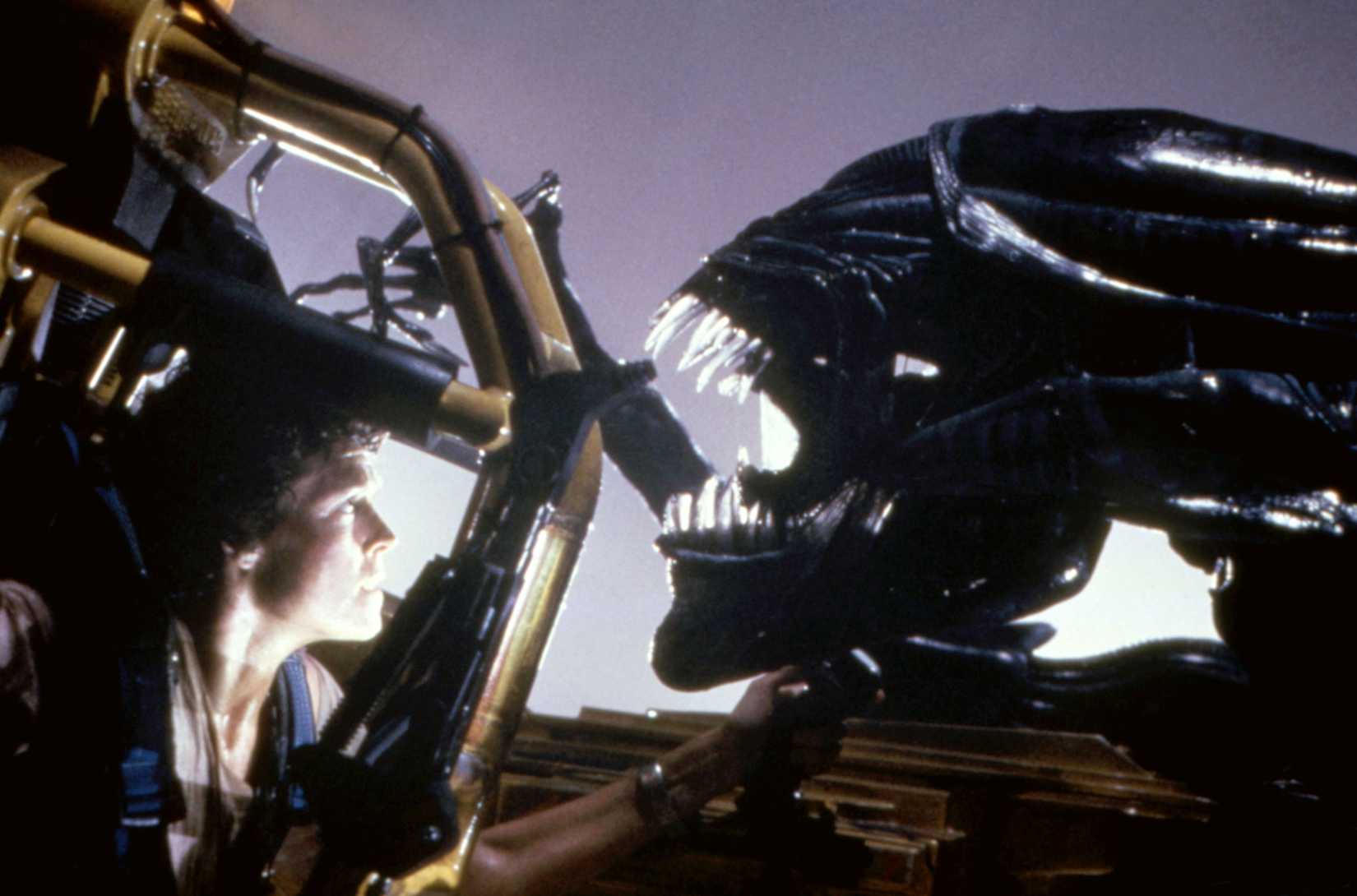
Trapped in the belly of the ship with nowhere left to run, Ripley faces the ultimate maternal adversary. When the Queen zeroes in on a terrified Newt hiding beneath the floor grates, Ripley steps into the light. She does not reach for a high-tech pulse rifle or an explosive device; instead, she climbs into a heavy industrial Caterpillar P-5000 Work Loader—an exosuit designed for heavy cargo lifting, repurposed as a makeshift, mechanical brawler.
What ensues is a brutal, grounded, and physically tactile heavyweight fight. The Queen, possessing lightning-fast reflexes and razor-sharp appendages, attacks with lethal precision, while Ripley utilizes the hydraulic strength of the power loader to block, parry, and strike back. The battle moves across the metal grating of the cargo bay, ending when Ripley opens the cargo airlock. Blasted by the ferocious vacuum of open space, the Queen manages to snag the leg of the loader, dragging Ripley to the precipice. With a final, defiant push using the loader’s hydraulic claws, Ripley severs the Queen’s grip, casting the monstrous matriarch out into the freezing void of deep space.
Supporting Context & Metrics: The Engineering of Terror
The creation of the Xenomorph Queen was not merely a stroke of narrative genius; it was a watershed moment in industrial design and practical special effects engineering.
Expanding Upon Giger’s Blueprint
When Ridley Scott brought the original Alien to life in 1979, Swiss surrealist artist H.R. Giger cemented his legacy by designing the iconic biomechanical Xenomorph. When James Cameron took the directorial reins for the sequel, he faced the daunting task of expanding an already legendary mythology without cheapening its source material.
"The queen was an opportunity to take a design stance that was beyond the first film — create a new organism, basically," Cameron stated in a 1987 interview.
Cameron took charge of the initial design phase himself, sketching concepts that honored Giger’s haunting aesthetic while introducing distinct evolutionary adaptations. He envisioned a creature that possessed massive scale, terrifying velocity, and sleek, deadly feminine characteristics completely absent from the standard warrior drones. Remarkably, the very first full sketch Cameron produced on paper served as the direct blueprint for the final creature seen on screen.
The Stan Winston Workshop Miracle
To bring Cameron’s vision to life without the aid of modern CGI, the production turned to legendary special effects artist Stan Winston and his team. The resulting animatronic marvel was, at the time of its creation, the most complex and sophisticated mechanical puppet ever built for film.
Scale and Operation: The Queen puppet stood over 14 feet tall and required up to 16 specialized puppeteers to operate simultaneously.
Control Systems: Movement was achieved through a hybrid of heavy-duty hydraulics, mechanical rods, and intricate cable controls.
Practical Integrity: Because the film was shot entirely with practical effects in 1986, the operating apparatuses, cables, and puppeteers had to be meticulously hidden or angled out of frame—meaning every single movement, strike, and lunge seen in the final cut was happening live on a physical soundstage.
Official Statements & Retrospective Analysis
The enduring legacy of Aliens is rooted in its thematic depth. Beyond the pyrotechnics and monster-movie thrills, the film fundamentally transformed Sigourney Weaver’s Ellen Ripley into an icon of feminist action cinema.
Film historians and critics frequently highlight how the climax of Aliens serves as a thematic mirror match between two mothers. Both Ripley and the Xenomorph Queen are driven by an absolute, unyielding imperative to protect and defend their young (Ripley protecting Newt; the Queen defending her thousands of eggs). This underlying thematic resonance elevates the cargo bay brawl from a simple monster fight into a clash of evolutionary survival instincts.
Furthermore, industry retrospectives routinely praise Cameron’s restraint in pacing. By choosing to transition Aliens from survival horror into tactical military action, and finally into an intimate, desperate parental showdown, the film avoids the fatigue that plagues modern action blockbusters. Every sequence builds logically upon the last, ensuring that the climax feels earned rather than obligatory.
Future Outlook: Why Aliens Remains Eternal
As blockbuster filmmaking continues to lean heavily into digital volume stages, artificial intelligence-assisted pre-visualization, and weightless computer-generated spectacle, the tactile, sweat-and-steel reality of Aliens feels increasingly rare and precious.
The film’s climax serves as a timeless reminder to Hollywood creators: scale without emotional grounding is meaningless, and true cinematic tension comes from physical stakes, character investment, and uncompromising practical craftsmanship. Decades after its premiere, the image of Sigourney Weaver strapped inside an industrial loader, staring down a 14-foot biomechanical nightmare, remains undefeated.
For fans eager to witness or revisit this masterclass in suspense, "Aliens" is available to stream on Netflix until December 1, and remains accessible across digital and physical home video platforms including Hulu and Disney Plus.