Executive Overview
When Rockstar Games unleashed Grand Theft Auto VI upon an eagerly awaiting world, the cultural shockwaves were immediately predictable. Breaking entertainment records and commanding near-universal critical acclaim, the blockbuster title quickly became the dominant media touchstone of the decade. Yet, buried beneath the high-octane narrative of high-stakes crime, sun-drenched coastal chases, and satirical social commentary lies an unexpected triumph of digital ecology: Grand Theft Auto VI may quietly house the most meticulously rendered depiction of Florida’s avian biodiversity ever engineered for an interactive medium.
While millions of players plunge headfirst into Vice City’s digital underworld—stealing jets, navigating neon-soaked nightlife, and evading law enforcement—a dedicated subculture of ornithologists, streamers, and real-world birdwatchers has weaponized the game’s optics. Engaging in viral "ornithologist runs," these players utilize the game’s expansive logbook and comprehensive fauna tracking systems to catalogue over 170 animal species.
This unexpected intersection between a notoriously violent, hyper-capitalist crime simulator and the quiet, contemplative discipline of birdwatching highlights an astonishing evolution in game design. Rockstar’s digital interpretation of Leonida—its fictionalized analogue to the Sunshine State—proves so geographically and ecologically accurate that veteran field ornithologists can navigate its swamps, mangroves, and urban centers using real-world ecological intuition. For a gaming community waiting 13 years since the last installment, GTA VI offers an intoxicating, if unconventional, sanctuary for wildlife enthusiasts.
Detailed Chronology: The Birder’s Expedition Through Leonida
Phase One: Arrival and Urban Avifauna
The journey into Leonida’s avian ecosystem begins almost immediately. Armed with a standard-issue pair of binoculars handed down during the game’s opening narrative beats, players find the digital sandbox opening up with astonishing speed. Rather than locking wildlife behind late-game progression walls, Rockstar drops the player directly into a living, breathing biosphere.

Stepping out into the residential and commercial neighborhoods of Vice City mirrors the initial steps of any urban birdwatching excursion in real life. Common backyard residents are immediately recognizable: northern cardinals flash brilliant reds from neighborhood shrubbery, house sparrows chatter across telephone wires, and blue jays cast judgmental glances from suburban rooflines.
Most impressively, Rockstar’s ecological attention to detail extends to seasonal and developmental variations. Scanning a gull perched atop a downtown building reveals the distinct, partial black hood of an adult laughing gull in breeding plumage. A few blocks away, a structurally identical gull lacking the characteristic dark hood points to an immature, non-breeding juvenile—a level of molting and age-class differentiation rarely prioritized outside of dedicated biological simulators.
Phase Two: Aquatic Subversion in the Mangroves
True to the spirit of the franchise, improving one’s birding vantage point often involves ethically and legally questionable logistics. Forsaking high-powered motorboats—whose engine noise would realistically flush sensitive shorebird populations—an exploratory birding session often begins with a quiet, targeted act of grand theft: hijacking a kayak to quietly navigate the intricate mangrove labyrinths and sandy islets of the bay.
Drifting silently through the shallow coastal waters reveals an explosion of South Florida’s iconic wetland species. The skies above buzz with white ibises, magnificent frigatebirds riding invisible thermal currents, and ospreys hunting with clinical precision. Small sandy keys host loafing flocks of Caspian terns, while spotted sandpipers pick their way delicately along the mudflats.

Disembarking onto the shore introduces coastal wading birds in their natural territorial hierarchy: great blue herons stalk the shallows, while tricolored herons explode frantically from dense shrubbery—often coinciding with the heart-pounding realization that an American crocodile has been narrowly avoided by mere inches.
Phase Three: Traversing the Inland Habitats of Leonida
To fully appreciate the scope of Leonida’s biodiversity, one must venture away from the coastal fringes and drive inland through the game’s varied ecological zones. The distribution of species map cleanly onto real-world geography, mirroring the actual environmental gradients found throughout South Florida.
- Urban Centers: Downtown Vice City hosts introduced, non-native species such as feral rock pigeons (descendants of European imports dating back to the 1600s) and showy, noisy peacocks strutting through manicured commercial plazas.
- Pine-Covered Uplands: Traveling north into the sandy, pine-dominant ecosystems brings encounters with specialized endemics, including red-cockaded woodpeckers and scrub jays—the game’s brilliant analogue to the highly localized, threatened Florida scrub-jay.
- Agricultural and Suburban Transitions: Open countrysides and roadside utility lines feature American robins, northern mockingbirds, and "New World orioles"—a clever nod to the Baltimore oriole reimagined for a universe where Baltimore ostensibly exists outside the narrative spotlight.
Supporting Context & Metrics: Reality Versus Digital Representation
While the fidelity of GTA VI’s ecosystem is a monumental achievement, a quantitative comparison between the digital world of Leonida and the physical reality of South Florida highlights both the astonishing depth and inherent limitations of Rockstar’s creation.
The Numbers Game
- In-Game Species Count: Rockstar has populated the game world with over 170 total animal species, encompassing mammals, reptiles, and a substantial catalog of birds.
- Regional Bird Diversity: While the game features dozens of avian models, real-world biodiversity remains unmatched. For context, birdwatchers active in Miami-Dade County routinely log over 240 distinct bird species during a single autumn month (such as November), with individual birders occasionally documenting up to 61 species during a single two-hour window on game release day alone.
- The Waiting Game: The 13-year development and release cycle between Grand Theft Auto V and GTA VI bridges an entire generational gap in computational rendering, allowing procedural animal behavior and AI flocking mechanisms to leap forward exponentially.
Behavioral Realism and Easter Eggs
Beyond mere static appearance, the birds of GTA VI exhibit complex, context-aware behaviors that delight field ornithologists:

- Mobbing Behavior: When players attempt to study a majestic bald eagle, local crows frequently mobilize to harass and chase the large raptor away from their territory—an authentic territorial defense mechanism observed constantly in the wild.
- Micro-Behaviors: Monk parakeets calmly preen while perched on high-voltage utility lines, and juvenile mockingbirds display signature wing-flicking postures.
- The Unintended Comic Relief: In a quirk that has amused players across the board, the game’s great blue herons appear locked in an eternal, highly active mating loop—an amusing exaggeration not typically documented with such relentless frequency in standard ornithological literature.
Official Statements and Expert Perspectives
The phenomenon of "virtual birding" within high-end video game engines is not entirely new, but GTA VI represents its most ambitious realization to date. Experts in both gaming and ornithology have weighed heavily on the cultural crossover.
Nick Lund, an acclaimed author, conservationist, and veteran birdwatcher who previously documented the rich avian ecosystems of Rockstar’s Red Dead Redemption II, notes that the geographical translation is remarkably authentic.
"The first thing I thought was how closely this resembles birding in Florida," Lund observed while conducting early-release birding speedruns in GTA VI. "The pacing, the spatial distribution, the way you find yourself constantly distracted while driving down a highway just staring at telephone wires—it is an uncanny mirror of the actual field experience."
Lund also pointed out several subtle Easter eggs tucked away by developers, such as the inclusion of spot-breasted orioles—a striking Central American species successfully introduced to southeastern Florida that real-world birders specifically target when visiting the Miami metropolitan area.

However, experts are quick to point out minor ecological inaccuracies. Keen-eyed ornithologists have flagged occasional audio-visual mismatches:
- Vocal Mismatches: The roseate spoonbill in the game occasionally emits the distinct vocalization of the willow ptarmigan—a northern, tundra-dwelling grouse—reuniting an audio quirk previously noticed in Red Dead Redemption II.
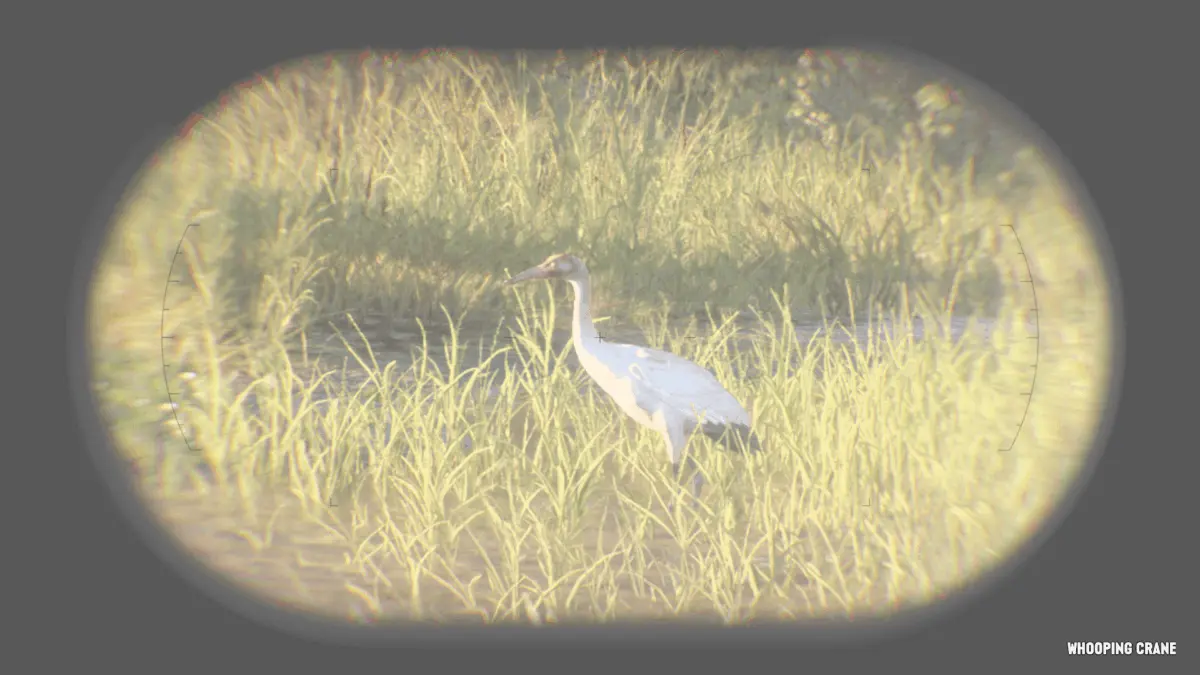
- Rare Transplants: The game features unexpected populations of whooping cranes, one of the rarest bird species in North America, which largely vanished from Florida following historical reintroduction hurdles. Conversely, localized species like the Caribbean bananaquit are heard singing in neighborhoods where they virtually never appear in the wild.
Future Outlook: The Intersection of Gaming and Field Conservation
As Grand Theft Auto VI continues to dominate global entertainment charts, its unexpected legacy as an educational and meditative escape for naturalists offers a fascinating glimpse into the future of virtual environments.
While the game cannot replicate the absolute unpredictability of real-world birding—such as stumbling upon a rare migratory warbler sheltering in a desolate hotel parking lot, or watching an egret hunt lizards atop an urban topiary—it successfully captures the core psychological hook of the hobby: the relentless, satisfying pursuit of discovery.
For conservation educators and digital designers alike, GTA VI establishes a powerful precedent. By populating multi-billion-dollar blockbusters with ecologically rich, geographically accurate biomes, developers are inadvertently fostering a deeper appreciation for natural sciences among demographics traditionally detached from outdoor conservation. Whether players are executing high-speed heists or quietly parked on a Leonida roadside tracking the subtle silhouette of a soaring osprey through digital binoculars, Grand Theft Auto VI proves that even the most chaotic digital worlds have plenty of room for nature.