Executive Overview
Long before the algorithmic homogenizations of modern short-form video platforms dictated the velocity of internet culture, early Web 2.0 operated on a plane of serendipitous discovery, surrealism, and cross-cultural reclamation. Few artifacts capture this golden era of viral media quite like the phenomenon known universally as "Trololo."
At its core, the meme is built upon a 1970s television broadcast of the distinguished Soviet-era baritone Eduard Khil performing a buoyant, wordless vocalise titled "I am Glad, ’cause I’m Finally Returning Back Home." Stripped of its original geopolitical and lyrical context—yet amplified by the infectious, absurdist joy of its non-lexical vocables ("trololo")—the clip transformed an aging Soviet performer into an unlikely global icon.
Functioning simultaneously as a quintessential bait-and-switch internet prank akin to "Rickrolling," a subject of endless derivative parodies, and an accidental bridge between Cold War nostalgia and modern digital connectivity, the Trololo phenomenon remains a masterclass in how the internet can excavate, recontextualize, and immortalize art from the most unexpected corners of history.
This retrospective examines the trajectory of the Trololo phenomenon: from its mid-century television origins in the Soviet Union to its viral explosion across YouTube, Reddit, and global news outlets in 2009 and 2010; Eduard Khil’s own heartwarming reception of his belated global fame; his tragic passing in 2012; and his enduring legacy cemented by digital retrospectives, including Google Doodles and global tributes.
Detailed Chronology
1. Mid-Century Roots and the Art of the Vocalise
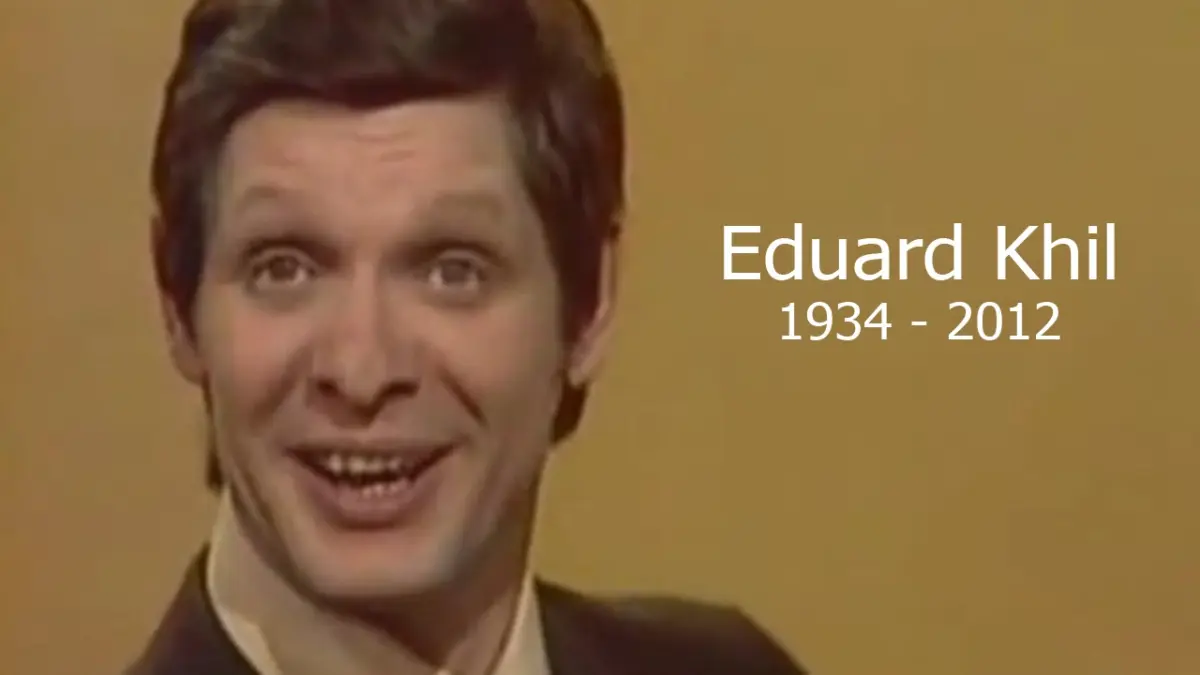
The genesis of the Trololo phenomenon traces back decades before the advent of high-speed internet. Eduard Anatolyevich Khil, born in Smolensk in 1934, rose through the ranks of Soviet entertainment to become one of the nation’s most celebrated vocalists. He was officially designated an "Honored Artist of the USSR" in 1968 and attained the prestigious title of "People’s Artist of the USSR" in 1974. Renowned for his rich baritone and expressive stage presence, Khil was a staple of Soviet television and concert halls.
The specific performance that would capture the global digital imagination dates to a 1970s television appearance. Khil performed the song originally titled "I am Glad, ’cause I’m Finally Returning Back Home" (Russian: Я очень рад, ведь я наконец возвращаюсь домой). Composed by Arkady Ostrovsky with lyrics by Lev Oshanin, the song was originally intended to feature lyrics about a man riding a stallion across the prairies to visit his sweetheart in Kentucky.
However, according to historical accounts, Soviet censors took issue with the overtly Americanized thematic elements during a period of heightened geopolitical friction. To circumvent ideological scrutiny, the lyrics were stripped away entirely, replaced by a sophisticated vocalise—a style of singing using wordless vowel sounds, akin to Western scat singing of the 1920s or pantomime vocalizations. Khil’s performance relied entirely on facial expressions, charismatic gesturing, and the bouncy, repetitive syllable pattern that would eventually birth a global meme: "Trololo-lolo-lol."
2. The Digital Renaissance: Discovery and Viral Explosion (Late 2009)
For decades, the performance remained a dusty archival artifact of Soviet broadcasting. That changed irrevocably on November 26, 2009, when a YouTube user operating under the handle RealPapaPit uploaded a digital copy of the clip under the English title "I am very glad, because I’m finally back home."
Initially shared as an amusing curiosity, the video quickly transcended standard archival viewing. Internet users were instantly captivated by the hypnotic melody, Khil’s impeccably tailored double-breasted brown suit, his exaggerated eyebrow movements, and his beaming, fixed smile. Within months, the video was renamed "Mr. Trololo original upload," setting off a chain reaction of digital content creation.
The meme’s distribution network relied heavily on early Web 2.0 curation hubs:
- December 20, 2009: YouTuber KamoKatt uploaded an isolated, tightly cropped clip focusing purely on the laughing and scat-singing breakdown of the performance, making it infinitely more consumable for fast-paced internet culture.
- January 27, 2010: Redditor gn3xu5 submitted the video to the
/r/WTFsubreddit under the title "Trololololololololo," propelling the clip onto the front page of community discussions and exposing it to hundreds of thousands of users. - February 2010: Viral media mainstays such as BuzzFeed and The Huffington Post spotlighted the video, debating whether Khil was the greatest or most eccentric lyricist of all time. Concurrently, single-serving websites like Trololololololololololo.com launched, greeting visitors with an auto-playing, infinitely looping browser experience.
- March 4, 2010: Influential web personality Ray William Johnson featured the clip on his widely watched web series Equals Three, explicitly pitching the video to his audience as the rightful successor to "Rickrolling" as the internet’s premier bait-and-switch hyperlink prank.
3. Khil’s Personal Reaction and Global Embrace
Unlike many public figures who find themselves unwillingly thrust into the center of internet mockery, Eduard Khil’s interaction with his viral fame became a heartwarming masterclass in grace and self-awareness.
In March 2010, after hearing his own grandson humming the infectious tune around the house, an 75-year-old Khil investigated the digital commotion. Realizing he had become an international sensation, he embraced the moment with genuine amusement. On March 11, 2010, parodies and reaction clips circulated widely, culminating in an official interview with Radio Free Europe/Radio Liberty on March 26, 2010, where Khil expressed profound gratitude toward his young global audience.
With the assistance of his family, Khil established an official YouTube channel (saitEdHil) to connect with his newfound fanbase. Far from feeling exploited, the veteran performer capitalized on his cultural resurrection, performing encore renditions of the song on Russian variety shows and even appearing in snow-covered street performances that delighted online communities worldwide. The peak of this mainstream offline crossover occurred in 2014, when the melody was integrated into the opening ceremonies of the Winter Olympics in Sochi, Russia.
4. Illness, Passing, and Global Mourning (2012)
The light-hearted internet celebration turned to collective sorrow in the spring of 2012. On May 28, 2012, international news agencies reported that Eduard Khil had been hospitalized in St. Petersburg following a severe stroke. Subsequent medical updates from Russian media outlet RT revealed that Khil had suffered extensive, irreversible brain damage and had slipped into a coma.
Despite the intervention of medical specialists, Khil succumbed to his condition on June 4, 2012, passing away at the age of 77.
The news of his death reverberated far beyond Russian borders, triggering obituaries and tributes across major Western publications, including The Washington Post, NPR, and The Huffington Post. Simultaneously, the Reddit community rallied once more, driving a tribute post detailing his passing to the top of the platform’s front page within hours, garnering tens of thousands of upvotes as users shared their favorite memories of the "Trololo Man."
5. Posthumous Honors and the 2017 Google Doodle
Khil’s permanent imprint on digital culture was formally solidified on September 3, 2017. To mark what would have been the artist’s 83rd birthday, technology conglomerate Google dedicated its homepage globally to an interactive Google Doodle.
The animated feature showcased a cartoon incarnation of Khil stepping up to a television microphone, decked out in his signature brown suit, executing his iconic vocalise while the animated background shifted through pastel color palettes. The tribute introduced a brand-new generation of internet users to the mid-century performer, inspiring fresh retrospectives in major outlets like The Telegraph and ensuring that the Trololo melody would continue echoing across digital archives indefinitely.
Supporting Context & Metrics
To understand the longevity of the Trololo phenomenon, one must evaluate the quantifiable impact of the media across platforms:
- Viewership Milestones: The primary "Mr. Trololo" YouTube upload amassed over 26 million views and tens of thousands of comments over its first decade of active archiving. The isolated laugh-track cut uploaded by KamoKatt secured upwards of 6.6 million views within its first three years.
- The Bait-and-Switch Ecosystem: Alongside Rick Astley’s "Never Gonna Give You Up" and the "Surprise, Motherfucker" clips, Trololo established a tripartite foundation for early social engineering pranks on forums like 4chan, Reddit, and specialized gaming lobbies. Embedding the auto-playing single-serving site into hyperlink text became a staple of digital trolling.
- Derivative Culture: The meme spawned hundreds of notable sub-genres, including time-stretched remixes (such as the "800% Hyper Extended Mix"), heavy metal covers, chiptune 8-bit conversions, and political satire mashups. Furthermore, musicologists and internet historians frequently group Khil’s performance alongside international vocalise experiments, noting parallel performances by contemporaries like Valery Obodzinsky and Muslim Magomaev that were similarly unearthed by the archival deep-dive habits of early YouTubers.
Official Statements & Archival Quotes
-
Eduard Khil, reflecting on his internet fame during a 2010 interview with Radio Free Europe/Radio Liberty:
"When I first heard the kids humming it around the house, I wondered what had happened. Then I saw what the internet had done. It is wonderful that people young and old can find joy in a song that was written so many decades ago. Music has no borders."
-
Excerpts from Media Analysis (The Huffington Post, February 2010):
"Is this smiling, suited Soviet crooner the greatest lyricist of all time? Strictly speaking, no—because he has no lyrics at all. Yet, in an era of hyper-produced, over-commercialized pop, the sheer, unadulterated euphoria of Khil’s wordless scat singing offers a purity that modern digital culture cannot help but obsess over."
Future Outlook
As the internet continues to fragment into hyper-niche algorithmic feeds, the mechanics of virality that birthed the Trololo phenomenon have largely evolved. Modern memes cycle through public consciousness at an accelerated pace, often burning out within days rather than enduring across decades.
Yet, the legacy of Eduard Khil stands as an enduring monument to a different internet epoch—one driven by communal curation, joyful absurdity, and cross-cultural empathy. Long after the original links break and digital platforms transform, the bouncy, irrepressible refrain of “Trololo-lolo-lol” remains etched into the foundational architecture of digital folklore, ensuring that the smiling Soviet crooner will forever remain a welcome ghost in the machine of global connectivity.