Date: November 27, 2026
Reading Time: 8 minutes
Location: Bangkok, Thailand / Global Telecommunications Desk
Executive Overview
The telecommunications landscape is undergoing a monumental paradigm shift, moving rapidly away from manual interventions and reactive fault management toward self-healing, highly adaptive, and cognitive architectures. At the forefront of this digital transformation is Huawei, which delivered a tour de force at TM Forum’s Innovate Asia 2026 conference in Bangkok, Thailand.
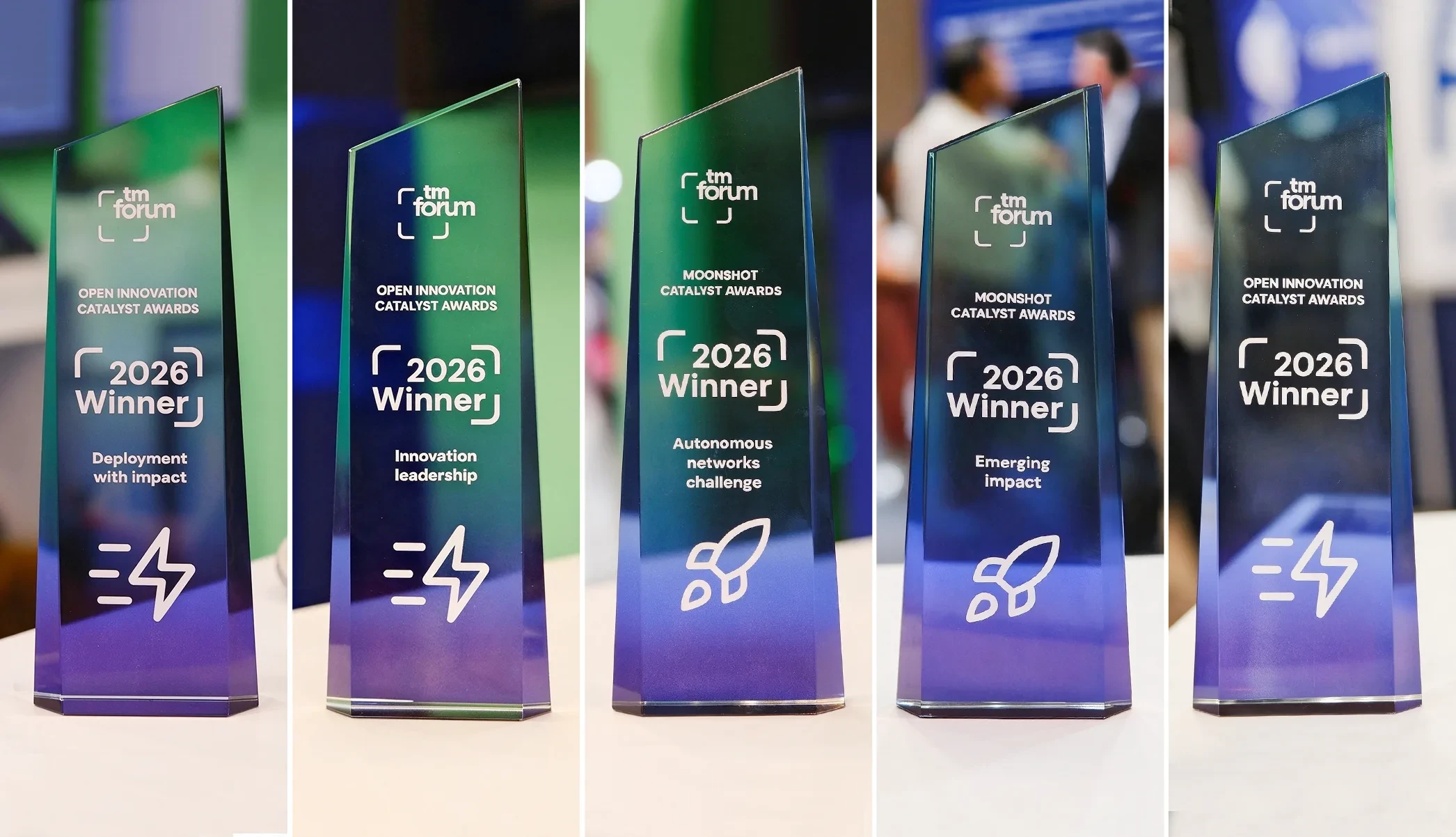
Recognised for its pioneering advancements in Autonomous Driving Network (ADN) solutions and Autonomous Networks (AN), Huawei secured the prestigious Catalyst Innovation Visionary Award, alongside an impressive haul of five Catalyst Project Awards.
These accolades were distributed across highly competitive categories, including Emerging Impact, Deployment with Impact, Innovation Leadership, Responsible and Trusted Innovation, and the Autonomous Networks Challenge. Out of 18 award-winning Catalyst projects showcased at the global summit, Huawei actively collaborated on nine—demonstrating its deep, cross-industry integration across artificial intelligence (AI), Agent-to-Agent for Telecoms (A2A-T), intelligent agents, digital twins, and high-value commercial deployment scenarios.
This comprehensive report examines the breakthrough projects that earned Huawei and its global industry partners these top honors, explores the underlying technologies driving the evolution toward Autonomous Networks Level 4 (AN L4), and evaluates the broader strategic implications for communications service providers (CSPs) worldwide.
Detailed Chronology: The Road to Bangkok 2026
The triumphs witnessed in Bangkok on November 19, 2026, were not born overnight; they represent the culmination of years of collaborative research, standardization efforts, and rigorous field testing between Huawei and leading global operators, academic institutions, and technology standards bodies.
The Lead-Up to Innovate Asia 2026
Over the past 24 months, the telecommunications industry has faced mounting pressures. As 5G-Advanced (5G-A) deployments accelerate and preparations for early 6G frameworks begin, network complexity has exponentially increased. Traditional Network Operations Centers (NOCs) are increasingly overwhelmed by the sheer volume of telemetry data, multi-vendor environments, and dynamic service requirements demanded by enterprise and consumer segments alike.
Recognizing this bottleneck, TM Forum’s Autonomous Networks framework has served as the industry’s North Star, outlining a path from basic automated execution (Level 2) toward conditional autonomy (Level 3) and advanced, predictive autonomy (Level 4), with the ultimate goal of zero-touch, zero-wait, zero-trouble operations (Level 5).
Huawei’s strategy leading into Innovate Asia 2026 focused on moving past theoretical frameworks into large-scale commercial validation. By partnering with Tier-1 carriers and technology innovators, Huawei sought to prove that AN Level 4 is not merely an aspirational goal, but an economically viable and technically stable reality.
The Award Ceremony Highlights
During the core sessions of Innovate Asia 2026, TM Forum evaluated dozens of collaborative "Catalyst" projects—rapid-fire proof-of-concept initiatives where operators and vendors solve pressing industry challenges. Huawei’s participation in nine distinct projects underscored its commitment to open collaboration.
The crowning achievement was the Catalyst Innovation Visionary Award, which acknowledged Huawei’s holistic contributions to reshaping the architectural blueprint of modern telecommunications. In addition, the five dedicated Catalyst Project Awards cemented the practical viability of Huawei’s ADN solutions across diverse operational environments.

Deep Dive: The Five Award-Winning Catalyst Projects
To fully understand the significance of Huawei’s sweep at Innovate Asia 2026, one must examine the specific technical challenges, architectural innovations, and real-world outcomes of the five award-winning Catalyst projects.
+---------------------------------------------------------------------------------+
|                       HUAWEI'S 2026 CATALYST PROJECT PORTFOLIO                  |
+------------------------------------+--------------------------------------------+
| Project Name                       | Core Focus & Operational Impact            |
+------------------------------------+--------------------------------------------+
| 1. Trusted Multi-Agent Collaboration| Multi-CSPs, A2A-T protocol, cross-domain   |
|    (Phase II - C26.5.1023)         | fault management, and power optimization.  |
+------------------------------------+--------------------------------------------+
| 2. Experience-Centric AN L4        | AI-driven resource allocation, predictive  |
|    (C26.5.1022)                    | analytics, and 5G service degradation fixes|
+------------------------------------+--------------------------------------------+
| 3. Vision 2030: Smart Campus       | Autonomous fault resolution, automated     |
|    (C26.5.1010)                    | energy management, and risk identification.|
+------------------------------------+--------------------------------------------+
| 4. Agentic NOC                     | AI-native proactive risk prevention and    |
|    (C26.5.1019)                    | model-driven decision making at scale.     |
+------------------------------------+--------------------------------------------+
| 5. Ontology and Digital Twin       | Semantic consistency, real-time twins, and |
|    (C26.5.1027)                    | closed-loop data management for AN L4.     |
+------------------------------------+--------------------------------------------+
1. Trusted Multi-Agent Collaboration for Autonomous Networks – Phase II (C26.5.1023)
- The Challenge: Modern digital ecosystems require seamless collaboration not just within a single enterprise, but across multiple Communications Service Providers (CSPs) and disparate vendor domains. Siloed operations frequently cause delays in cross-domain troubleshooting and service provisioning.
- The Solution: Phase II of this pioneering project demonstrates how multiple CSPs can leverage the cutting-edge Agent-to-Agent for Telecoms (A2A-T) protocol. By establishing trusted multi-agent collaboration, the system coordinates autonomous actions across high-value AN Level 4 scenarios.
- Key Use Cases: Intelligent power management, cross-domain and cross-vendor fault management, and automated customer complaint handling.
- Impact: The solution drastically cuts down integration overhead, accelerates problem resolution times, and elevates operational efficiency across multi-operator landscapes.
2. Experience-Centric AN Level 4 Solution for End-to-End User Experience Assurance (C26.5.1022)
- The Challenge: Traditional network Key Performance Indicators (KPIs) often fail to reflect the actual subjective experience of the end-user, particularly in complex, high-density 5G environments where traffic patterns fluctuate wildly.
- The Solution: This project shifts the operational focus from network-centric metrics to experience-centric guarantees. It utilizes advanced AI-driven resource allocation, predictive analytics, and automated optimisation loops to identify micro-anomalies before they impact the user.
- Impact: By continuously tuning network performance based on real-time experiential insights, the solution effectively prevents service degradation, transforming how carriers deliver resilient, high-quality 5G and 5G-A connectivity.
3. Vision 2030: Smart Campus Network Autopilot (C26.5.1010)
- The Challenge: Higher education and enterprise campuses face unique networking hurdles, including heavy reliance on manual configuration, complicated troubleshooting routines across sprawling facilities, and escalating energy footprints.
- The Solution: The Vision 2030 project introduces a comprehensive "Network Autopilot" tailored for campus environments, delivering four essential pillars of automation:
- Automated Fault Resolution: Instant identification and self-healing of link and device failures.
- Self-Assurance for Major Events: Dynamic bandwidth and resource scaling during high-density university lectures or campus-wide broadcasts.
- Automated Energy Management: Intelligent power-down and sleep modes for network hardware during off-peak hours.
- Automated Risk Identification: Proactive detection of security vulnerabilities and hardware degradation.
- Impact: Together, these capabilities drastically reduce human intervention, elevate teaching and research service quality, and significantly lower energy consumption—supporting global sustainability and green campus initiatives.
4. Agentic NOC: Model-Driven Risk Prevention at Scale (C26.5.1019)
- The Challenge: Network Operations Centers (NOCs) have historically functioned in a reactive posture: waiting for alarms to trip, dispatching engineers, and troubleshooting outages after services have been interrupted.
- The Solution: Embracing a paradigm shift, this Catalyst project introduces an AI-native "Agentic NOC." Powered by sophisticated models, the system continuously analyzes network telemetry to proactively identify emerging risks, assess potential service impacts, and recommend or execute intelligent mitigation strategies autonomously.
- Impact: This transition from reactive firefighting to proactive risk prevention forms the bedrock of true AN Level 4 operations, laying the groundwork for scalable, zero-touch network management.
5. Ontology and Digital Twin-Driven Intelligent Operations and Service Delivery (C26.5.1027)
- The Challenge: Data fragmentation remains one of the greatest obstacles to network automation. Different domains and legacy systems interpret network data through disparate schemas, creating semantic silos that hinder machine reasoning.
- The Solution: Centered on digital twins, ontology, and agentic AI, this project constructs a unified semantic foundation using a standardized service ontology fed by real-time network twin data. It integrates foundation models and agentic capabilities to streamline four critical workflows:
- Data governance and harmonization
- Customer requirement analysis
- Automated service provisioning
- Operations and maintenance (O&M) assurance
- Impact: The resulting technical framework delivers absolute semantic consistency, cognitive decision-making, and closed-loop data lifecycle management—accelerating the industry’s migration toward AN Level 4 maturity.
Supporting Context & Strategic Metrics
To contextualize Huawei’s recent wins at Innovate Asia 2026, industry analysts point to the broader financial and operational imperative driving Autonomous Networks. According to recent TM Forum data, operators that successfully implement AN Level 3 and Level 4 capabilities experience:
- Up to a 40% reduction in mean-time-to-repair (MTTR) for complex multi-vendor network faults.
- Significant energy savings (ranging from 15% to 25% in RAN and campus environments) through automated power management and AI-driven load balancing.
- Substantial OPEX reductions, as routine configuration, provisioning, and optimization tasks shift from human engineers to autonomous software agents.
Huawei’s heavy involvement in 9 out of the 18 showcase Catalyst projects demonstrates its pivotal role as an ecosystem enabler. Rather than operating in a proprietary vacuum, Huawei’s architecture emphasizes open standards, multi-vendor interoperability, and cooperative protocol development—qualities that were heavily praised by the TM Forum evaluation panel.
Official Statements and Industry Perspective
While specific executive quotes from the Bangkok awards ceremony emphasize collective industry progress, the overarching message from Huawei’s leadership and TM Forum stakeholders is clear: Autonomous Networks have crossed the chasm from concept to commercial reality.
Industry analysts note that the introduction of protocols like Agent-to-Agent for Telecoms (A2A-T) represents a watershed moment. For years, automation was trapped within single-vendor silos. By establishing standardized agent communication protocols, Huawei and its partners are enabling heterogeneous network components—spanning core, transport, RAN, and cloud—to "talk" to one another, negotiate actions, and resolve anomalies without human mediation.
Furthermore, the integration of foundational AI models with digital twins has transformed network operations from simple script-based automation to cognitive, intent-driven management. Operators no longer need to write complex command-line scripts; they express high-level business intents ("Ensure ultra-low latency for emergency services in District A"), and autonomous multi-agent systems handle the complex orchestration underneath.
Future Outlook: The Road to OpenAN and Autonomous Networks Level 5
As Innovate Asia 2026 concludes, Huawei has outlined its strategic roadmap for the remainder of the decade. The company remains steadfastly committed to its core guiding philosophy: "Layered Intelligence, Open Collaboration."
Looking ahead, Huawei’s R&D focus will concentrate on three primary pillars:
- Advanced Multi-Agent Ecosystems: Expanding the capabilities of A2A-T protocols to support even larger, cross-industry collaborative networks involving enterprise customers, cloud providers, and utility companies.
- ADN Single-Domain Network Agents: Refining specialized, highly autonomous domain agents for wireless, optical, datacom, and core networks that possess deep contextual awareness and self-optimizing loops.
- OpenAN Open-Source Standards: Actively championing open-source frameworks and collaborative industry standards to ensure that smaller operators and regional carriers can equally benefit from AN Level 4 advancements without vendor lock-in.
By bridging cutting-edge foundational AI models with rigorous telecommunications engineering, Huawei and its partners are steadily turning the vision of zero-touch, zero-wait, and zero-trouble autonomous networks into an everyday operational standard. As carriers face mounting demands for high-performance 5G-A and future 6G services, the innovations validated in Bangkok will serve as the indispensable engine powering the next generation of global connectivity.
Related reading: Huawei’s NG WAN service enters large-scale commercial use to drive carrier growth