Executive Overview
The global PC hardware landscape has experienced a turbulent cycle of pricing adjustments, driven largely by persistent supply chain bottlenecks, inflationary pressures, and an acute memory crisis affecting fundamental components like SSDs, RAM, and graphics cards. For consumers seeking to replace a defunct system or upgrade their gaming setup, seasonal shopping events such as Black Friday carry heightened significance. However, this year’s promotional landscape defies traditional expectations of deep, sweeping discounts on prebuilt gaming rigs. Instead, current market forces have generally pushed hardware pricing upward, meaning promotional events primarily serve to normalize prices back to levels observed earlier in the year.
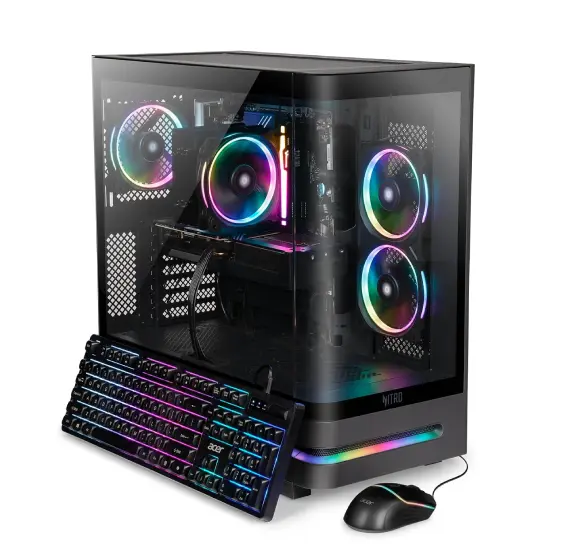
Within this challenging financial environment, specific prebuilt systems merit close examination. The Acer Nitro 85 gaming desktop, currently listed on Amazon for $1,900, represents a fascinating case study in modern component balancing. It matches its lowest recorded summer price point, offering a compelling blend of high-performance architecture alongside deliberate cost-saving compromises. Featuring a powerful 12-core AMD processor built on the advanced Zen 5 architecture paired with AMD’s flagship Radeon RX 9070 XT graphics card, the system aims to appeal to both enthusiast gamers and digital content creators.
This report provides an exhaustive analysis of the Acer Nitro 85, contextualizing its hardware specifications within the broader macroeconomic trends shaping the consumer PC market. By evaluating structural strengths, performance bottlenecks, thermal management capabilities, and market viability, this feature offers an authoritative guide for prospective buyers navigating the current hardware economy.
Detailed Chronology and Market Dynamics
To understand why a $1,900 prebuilt gaming PC like the Acer Nitro 85 commands attention during the holiday shopping season, one must examine the trajectory of the hardware market over the preceding twelve months.
Early-Year Baseline Pricing
During the first and second quarters of the year, component manufacturers stabilized output following post-pandemic adjustments, allowing prebuilt system integrators to establish competitive baselines. During this period, the Acer Nitro 85 established its benchmark retail price of $1,900. While not inexpensive, this figure reflected a balanced equilibrium between component costs and retail margins, attracting early adopters and productivity-focused professionals who required multi-core processing power without assembling a custom loop or sourcing individual parts.
The Mid-Year Memory Crisis and Upward Price Creep
As the year progressed, the industry faced an intensifying memory crisis. Surging enterprise demand for high-bandwidth memory (HBM) and enterprise-grade solid-state drives reallocated semiconductor manufacturing capacity. Consequently, consumer-facing DRAM and NAND flash memory prices escalated sharply. This supply constriction rippled down to graphics cards and system RAM, forcing component manufacturers and prebuilt vendors to adjust their pricing structures upward.
By late summer and early autumn, the baseline cost of assembling or purchasing a mid-to-high-tier gaming rig had noticeably inflated. Systems that previously occupied the $1,700 to $1,800 bracket saw price jumps of 10% to 15%, while flagship graphics cards routinely broke four-digit pricing thresholds when purchased as standalone components.
The Black Friday Correction
As the retail industry entered the Black Friday window, consumer anticipation reached a fever pitch. However, seasoned industry observers noted that promotional discounts this year lack the aggressive margin-slashing seen in previous cycles. Because baseline component prices drifted significantly higher throughout the year, current "Black Friday sales" largely function as market corrections—returning inflated hardware costs down to where they sat earlier in the year.
For the Acer Nitro 85, the $1,900 Amazon listing does not introduce an unprecedented all-time low, but rather restores
the favorable pricing structure last witnessed during the summer months. In a market otherwise characterized by stubborn price inflation, reclaiming this summer baseline is a notable development for buyers with immediate hardware needs.
Supporting Context & Metrics: Hardware Deep Dive
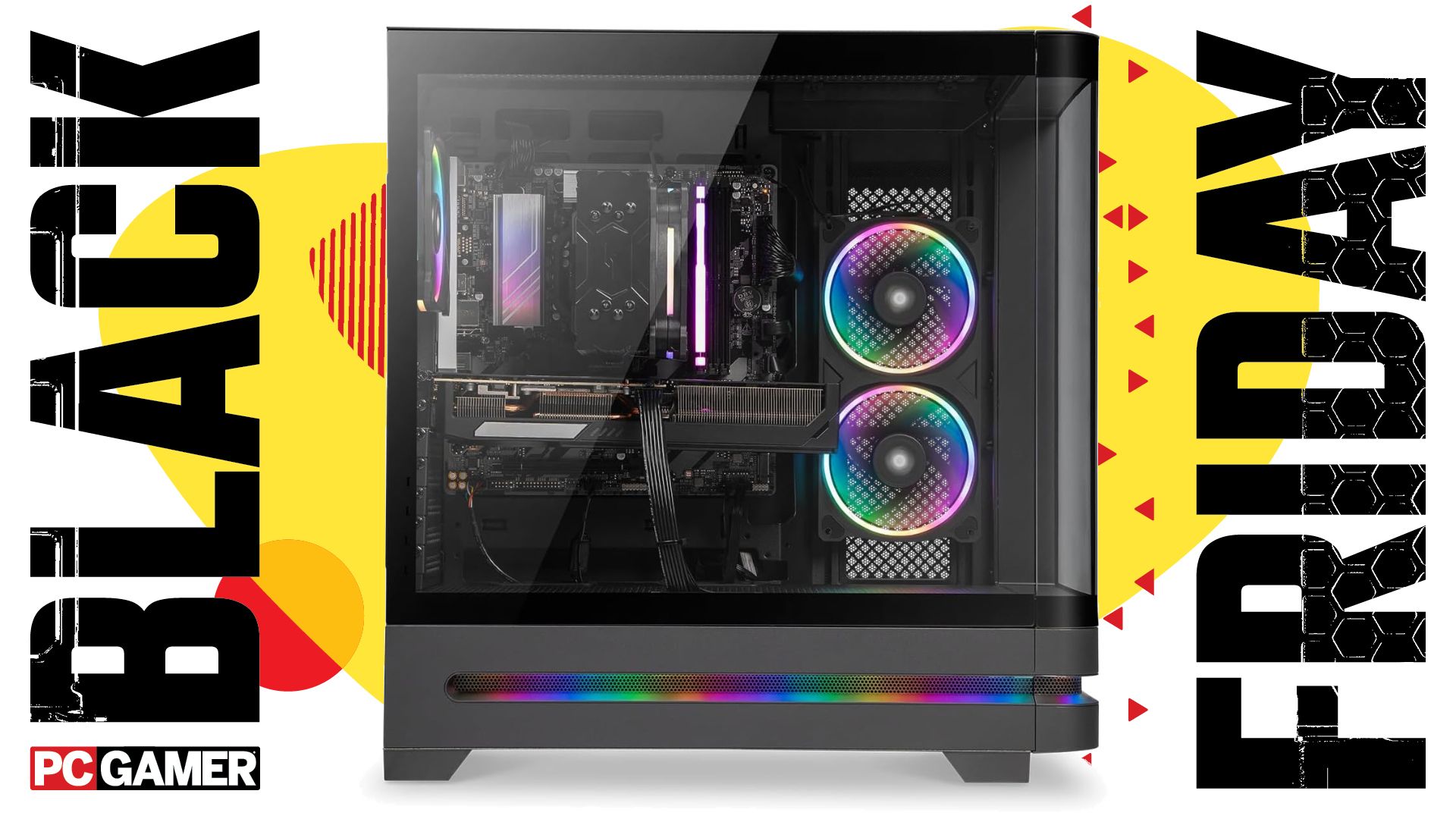
Analyzing a prebuilt system requires looking past marketing bullet points to examine the synergy, performance capabilities, and thermal constraints of its internal hardware. The Acer Nitro 85 presents a unique architectural profile characterized by high-end processing and graphics capabilities offset by specific component compromises.
Processor: AMD Zen 5 Architecture
At the heart of the system lies a 12-core processor utilizing AMD’s latest Zen 5 architecture. While specialized enthusiast gamers often gravitate toward AMD’s X3D chips—which feature massive amounts of 3D V-Cache tailored explicitly for high frame rates in gaming—the 12-core processor included in the Nitro 85 serves a broader user base.
For workloads extending beyond traditional gaming, this CPU shines. Video editors, 3D modelers utilizing software like Blender, live streamers, and software developers will find the multi-threaded performance exceptionally robust. The processor handles heavy multitasking, rendering pipelines, and background compilation tasks with ease.
Graphics Processing Unit: AMD Radeon RX 9070 XT
The standout component of the Acer Nitro 85 is undeniably the inclusion of AMD’s Radeon RX 9070 XT graphics card, equipped with 16GB of VRAM. As AMD’s premier flagship graphics solution, the RX 9070 XT has earned critical acclaim for its native rasterization performance, high frame-rate output at 1440p and 4K resolutions, and generous VRAM buffer.
As standalone components, top-tier GPUs have frequently commanded four-digit price tags, straining custom-build budgets. Integrating the RX 9070 XT into a prebuilt system priced at $1,900 significantly improves the overall value proposition. The 16GB VRAM allocation ensures longevity, providing ample headroom for modern texture-heavy game engines, ray-tracing implementations, and upcoming software titles requiring substantial memory pools.
Memory (RAM) Bottlenecks
Despite the impressive pairing of a Zen 5 processor and a flagship Radeon GPU, cost-saving measures in other areas become apparent upon inspecting the system memory. The Nitro 85 ships with a single 16GB stick of DDR5 RAM.
In modern PC architecture, running memory in a single-channel configuration creates a severe performance bottleneck. Dual-channel memory configurations—utilizing two matched sticks—effectively double the memory bandwidth, improving minimum frame rates, reducing latency, and enhancing overall system responsiveness. While upgrading the system by adding a matching 16GB stick is a straightforward and relatively inexpensive user modification, out-of-the-box performance suffers a minor penalty compared to systems equipped with dual-channel kits from the factory.
Thermal Management and Cooling Solutions
Pairing a high-performance, 12-core processor with a compact cooling solution introduces thermal management challenges. The Nitro 85 appears to utilize a single-tower air cooler. Under sustained workloads—such as prolonged rendering sessions or intensive gaming marathons—a single-tower cooler may struggle to dissipate heat efficiently, potentially leading to elevated CPU temperatures and thermal throttling.
Fortunately, modern hardware offers software-level mitigations. AMD Ryzen processors feature an integrated Eco Mode, a utility that intelligently reduces the power draw of the chip without inflicting a severe penalty on operational performance. By lowering the wattage delivered to the CPU, Eco Mode substantially reduces thermal output. Industry testing confirms that utilizing Eco Mode on modern Ryzen chips preserves the vast majority of application and gaming performance while keeping operating temperatures well within safe thresholds, making it a recommended setting for users of this system.
Storage Capacity
Storage compromises are increasingly common in prebuilt configurations, where manufacturers frequently trim costs by installing 512GB solid-state drives. Fortunately, Acer has equipped the Nitro 85 with a full 1TB NVMe SSD. While modern game installations routinely exceed 100GB apiece—making 1TB a baseline requirement rather than an abundance of space—the inclusion of a full terabyte prevents immediate storage anxiety and defers the necessity of purchasing secondary drives.
Official Statements and Industry Perspective
Industry analysts and hardware reviewers have closely monitored the shifting dynamics of the prebuilt desktop market throughout the late-autumn sales cycle. Consensus among hardware publications highlights a cautious approach to holiday shopping.
Leading hardware commentators note that while holiday promotions provide temporary relief, consumers should manage expectations regarding massive windfalls. As one hardware analyst observed regarding current market conditions:
"I’d be lying if I said I was hugely impressed with the savings on full rigs this year, as three key components of any PC build are ludicrously expensive due to the memory crisis: that’s SSDs, RAM, and graphics cards. So, we’ve seen prices generally trending upwards, and Black Friday is mostly knocking them back down to where they were earlier in the year."
Regarding specific architectural choices found in systems like the Acer Nitro 85, technical commentators emphasize the duality of high-end components paired with budget peripheral hardware. The inclusion of AMD’s flagship graphics hardware remains a primary selling point, shifting the economic equation for prospective buyers. As noted in hardware evaluations of the Radeon RX 9070 XT:
"The RX 9070 XT is the main appeal here. That’s AMD’s best Radeon card today and comes with 16 GB of VRAM. We have been really big fans of this card, up until its price tag had four digits. Though that helps the value proposition of this prebuilt PC a fair bit."
Industry stakeholders underline that prebuilt manufacturers are operating under severe margin constraints. Consequently, consumers evaluating systems in the sub-$2,000 category must carefully weigh the balance between powerful core components (CPU and GPU) and supporting infrastructure (cooling, power supplies, and RAM configurations).
Future Outlook
Looking ahead into the remainder of 2024 and anticipating the technological landscape of 2025, the PC hardware market faces a complex trajectory. The underlying memory crisis—driven by high-density enterprise demand and manufacturing reallocations—is not expected to resolve overnight. Industry supply chains will likely experience lingering cost pressures well into the new year, suggesting that aggressive price drops on core components will remain scarce.
For consumers evaluating their upgrade paths, several key takeaways emerge:
- Immediate Need vs. Strategic Waiting: If a primary gaming or productivity rig has failed and an immediate replacement is required, shopping current holiday sales for systems that revert to summer pricing baselines (such as the Acer Nitro 85 at $1,900) represents a sensible financial strategy. Waiting for deeper discounts may prove fruitless given broader component inflation.
- Post-Purchase Upgrades: Prebuilt systems frequently require minor user interventions to unlock their full potential. For configurations like the Nitro 85, budgeting a small secondary investment to upgrade from a single 16GB memory stick to a dual-channel 32GB kit will yield immediate dividends in system responsiveness and gaming stability.
- Thermal Monitoring: Buyers investing in high-core-count processors housed in compact prebuilt chassis should familiarize themselves with BIOS settings and software utilities like AMD Eco Mode. Managing thermal output proactively ensures hardware longevity and sustained peak performance without requiring immediate aftermarket cooler replacements.
As the hardware market continues to adapt to macroeconomic pressures, consumer vigilance and thorough component analysis will remain the best tools for securing value in an increasingly complex technological ecosystem.