Executive Overview
The year 2026 will go down in Magic: The Gathering history as one of the most mechanically daring and expansive periods for the Commander format. Balancing a meticulous return to beloved, foundational fantasy planes with high-profile Universes Beyond crossovers, Wizards of the Coast delivered a release calendar that fundamentally reshaped casual and competitive tables alike. From the fae-dense boughs of Lorwyn Eclipsed to the academic mysteries of Secrets of Strixhaven, and spanning blockbuster pop-culture universes such as Marvel Super Heroes, The Hobbit, and Star Trek, the sheer volume of new legendary creatures introduced unprecedented design spaces.
At MagicCon: Atlanta 2026, Magic: The Gathering Principal Designer Gavin Verhey sat down to break down the year’s monumental lineup. Rather than evaluating cards exclusively through the lens of raw competitive power ceilings—the traditional domain of high-tier cEDH optimization—Verhey emphasized legends that ignite creative deckbuilding, foster dynamic table politics, and generate memorable, cinematic gameplay moments.
This retrospective examines the 11 most defining and impactful Commanders of 2026, exploring their mechanics, community reception, and the design philosophy that brought them to life.
Detailed Chronology: The Year’s 11 Defining Commanders
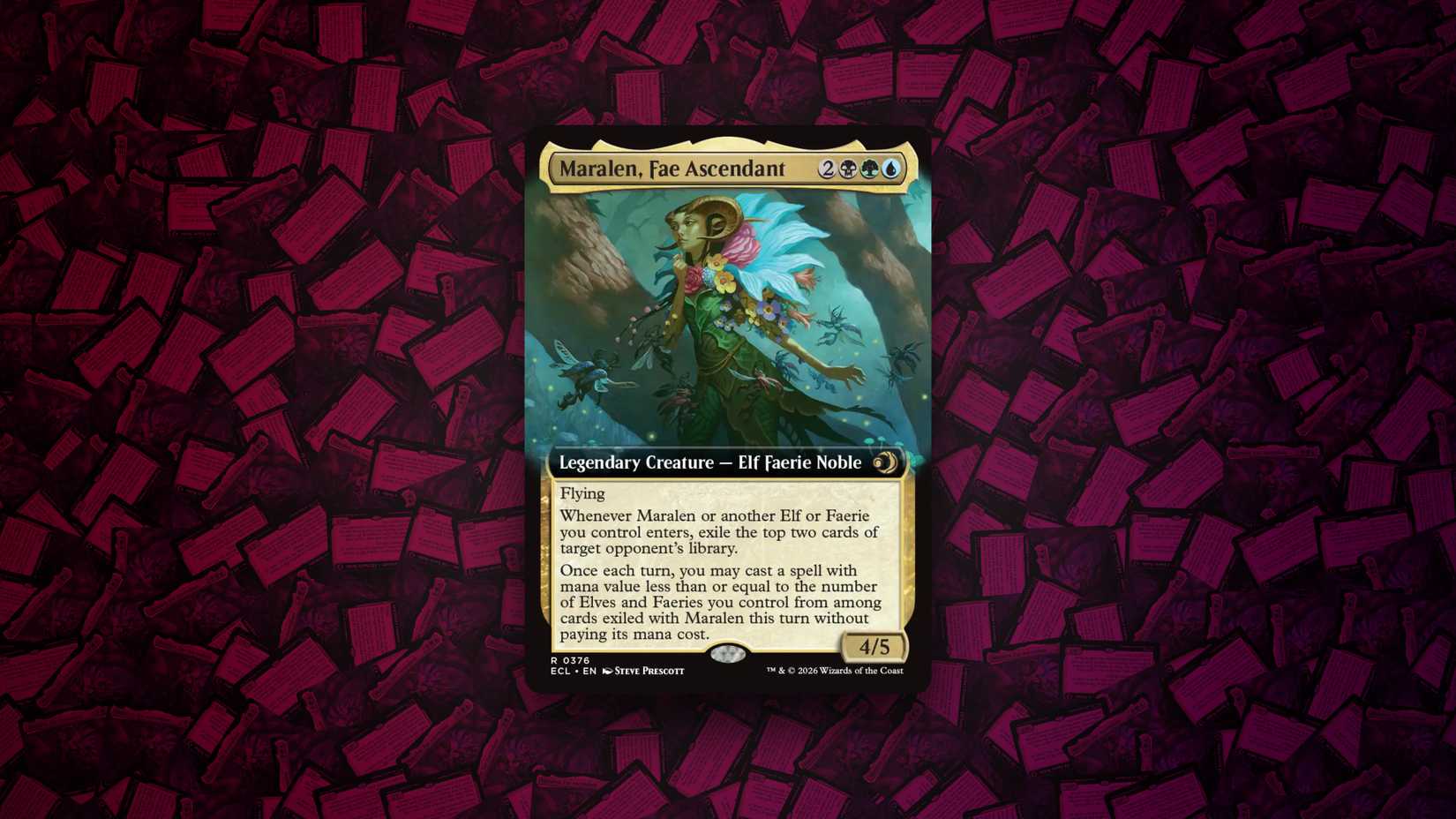
1. Maralen, Fae Ascendant (Lorwyn Eclipsed)
We all love abilities that trigger when something enters the battlefield, but Lorwyn Eclipsed pushed this design space to extraordinary new heights by bridging two of the plane’s most iconic kindred types. Maralen, Fae Ascendant serves as a nimble, highly synergistic value engine that bridges Elves and Faeries into a singular strategy.
Whenever Maralen or another Elf or Faerie enters the battlefield under your control, she exiles the top two cards of a target opponent’s library. You are then permitted to cast one of those exiled spells for free each turn, provided its mana value is equal to or less than your total count of Elves and Faeries.
Reflecting on the card’s reception, Verhey noted, "Maralen turned out awesome," highlighting the community’s enthusiastic adoption of the archetype. Verhey has long championed team-up legends within internal design pipelines, and seeing Maralen resonate so strongly with the player base has fueled his desire to explore more dual-type pairings—following in the philosophical footsteps of past favorites like Rin and Seri, Inseparable.
2. Swappable Precon Commanders (Turtle Power! / TMNT)
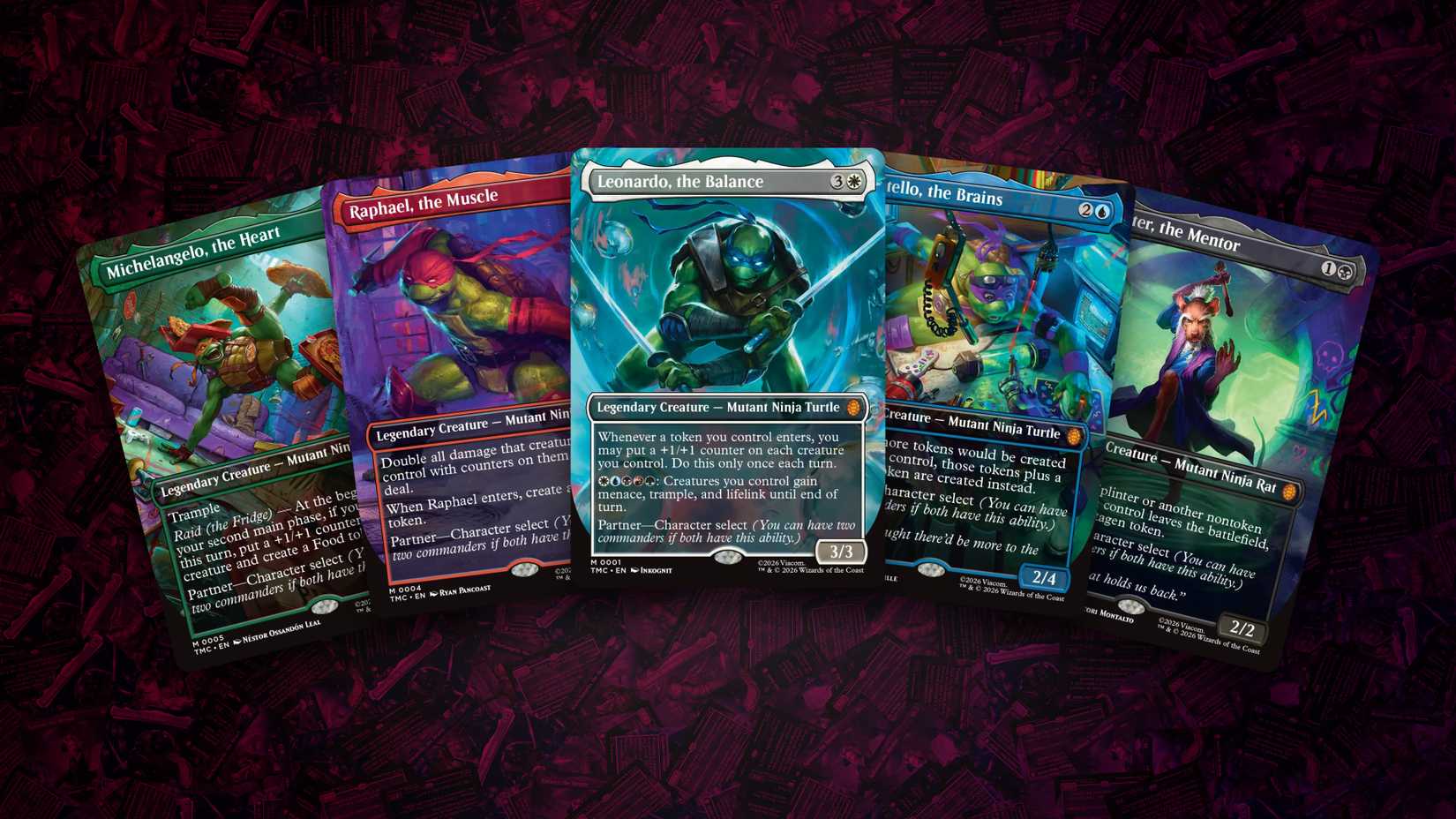
Rather than focusing the spotlight on a single hero from the Turtle Power! Commander preconstructed deck, the true triumph of this release is its modular roster built around the innovative "Partner — Character Select" mechanic. Inspired by classic arcade beat-’em-ups, this keyword permits players to mix and match eligible legends within the Command Zone.
Brewers can pair Leonardo, the Balance alongside Raphael, the Muscle or Donatello, the Brains, tailoring their synergies to exact tactical specifications. Verhey praised this modularity: "I think the interchangeable Character Select partner mechanic in the Commander deck is pretty awesome there." He emphasized how these legends "can be interfaced and spliced together," noting that players immediately gravitated toward the mechanical flexibility.
For instance, pairing Leonardo with Raphael bridges token-generation strategies with aggressive payoffs, placing a +1/+1 counter across your board whenever a token enters, while simultaneously doubling damage dealt by creatures bearing counters. Modest boards can thus transition into lethal threats in a single, explosive combat phase.
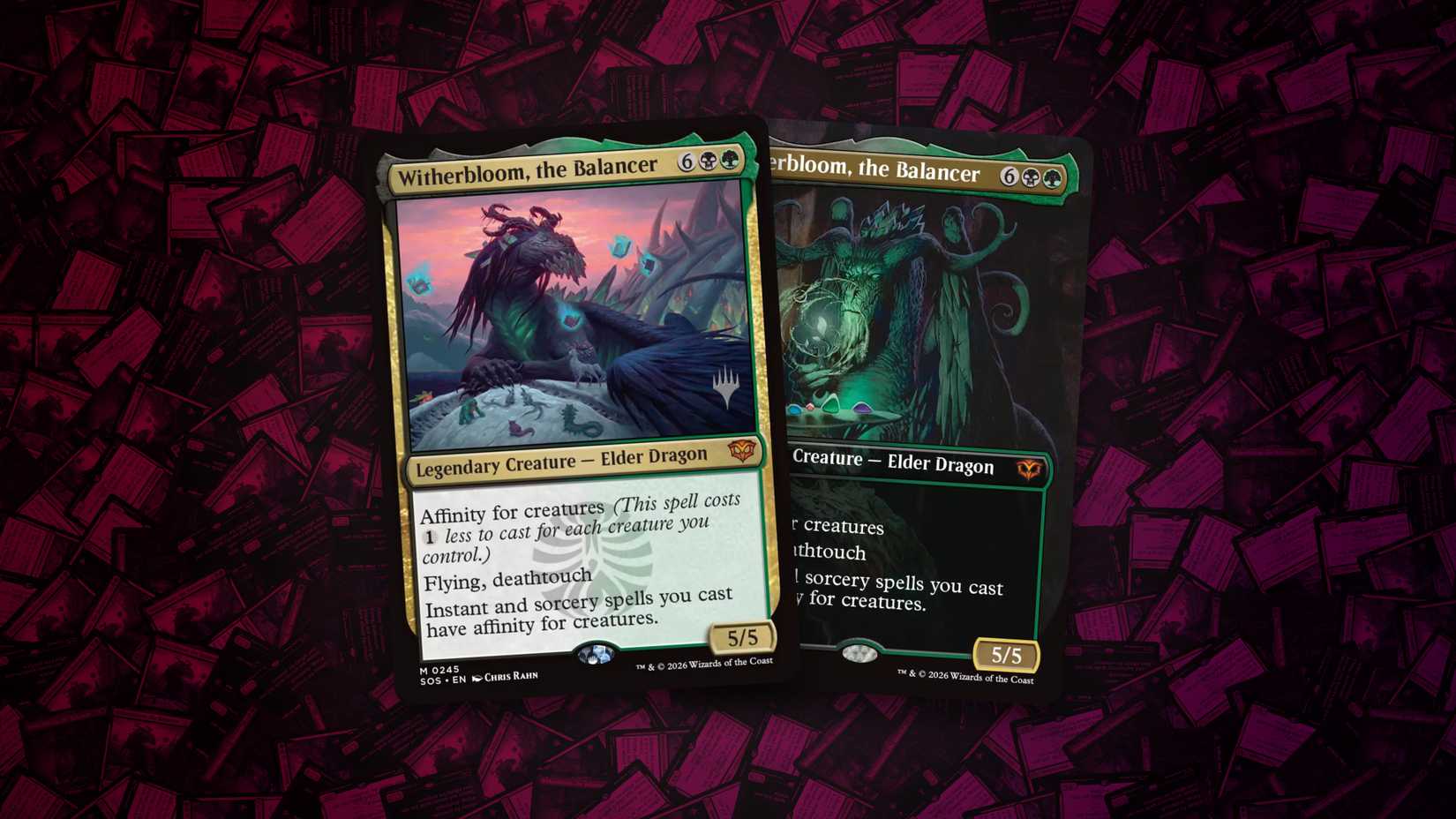
3. Witherbloom, the Balancer (Secrets of Strixhaven)
Cost-reduction mechanics have always commanded respect in Commander, but Witherbloom, the Balancer takes the concept to a staggering scale. Costing six generic, one black, and one green mana, Witherbloom features inherent affinity for creatures and extends that exact cost-reduction capability to every instant and sorcery spell you cast.
Flooding the battlefield with cheap tokens or mana-dorks transforms notoriously expensive spells—such as Army of the Damned or Shamanic Revelation—into trivial mana investments. When paired with token doublers like Chatterfang, Squirrel General, even massive life-drain finishers like Exsanguinate or Torment of Hailfire can be fired off for lethal damage with minimal strain on your mana pool.
Secrets of Strixhaven was exceptionally dense with standout commanders. Verhey admitted he could easily rattle off roughly ten distinct deckbuilding centerpieces from the set alone. Yet, even within such a competitive internal field, Witherbloom, the Balancer emerged as a fan-favorite build-around, pairing effortlessly with spell-copying powerhouses like Professor Onyx and graveyard recursion staples like Eternal Witness.
4. King T’Challa // Black Panther, Hope Enduring (Marvel Super Heroes)
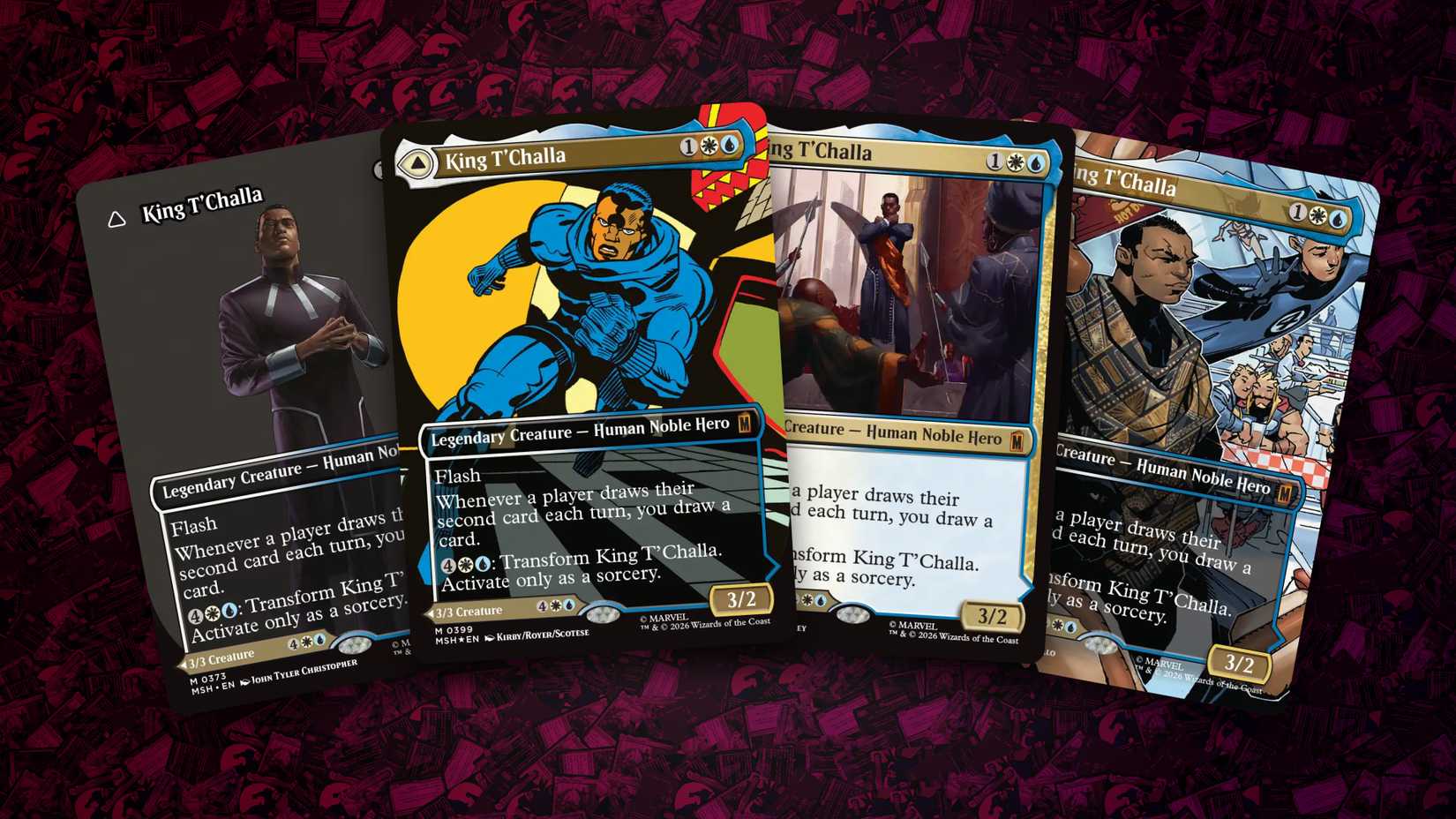
Representing the Universes Beyond crossover into Marvel Super Heroes, this double-faced mythic rare grants Azorius color identities an immense degree of flexibility at flash speed. On his front face, King T’Challa draws you a card whenever any player draws their second card each turn. For a total investment of six mana, he transforms into Black Panther, Hope Enduring.
The reverse side yields a double-striking threat with flash that prevents all damage dealt to him and continues drawing cards upon connecting in combat. This profile makes him exceptionally lethal when paired with equipment staples like Sword of Feast and Famine or unblockable auras such as Steel of the Godhead.
Verhey pointed to T’Challa as a prime example of a design that respects traditional color-pie expectations while simultaneously "tearing up tables." Surrounding him with symmetrical draw engines like Howling Mine or wheel effects ensures his front-side triggers fire consistently across every turn cycle before transforming to close out the game.
5. Nick Fury, Agent of S.H.I.E.L.D. (Marvel Super Heroes)
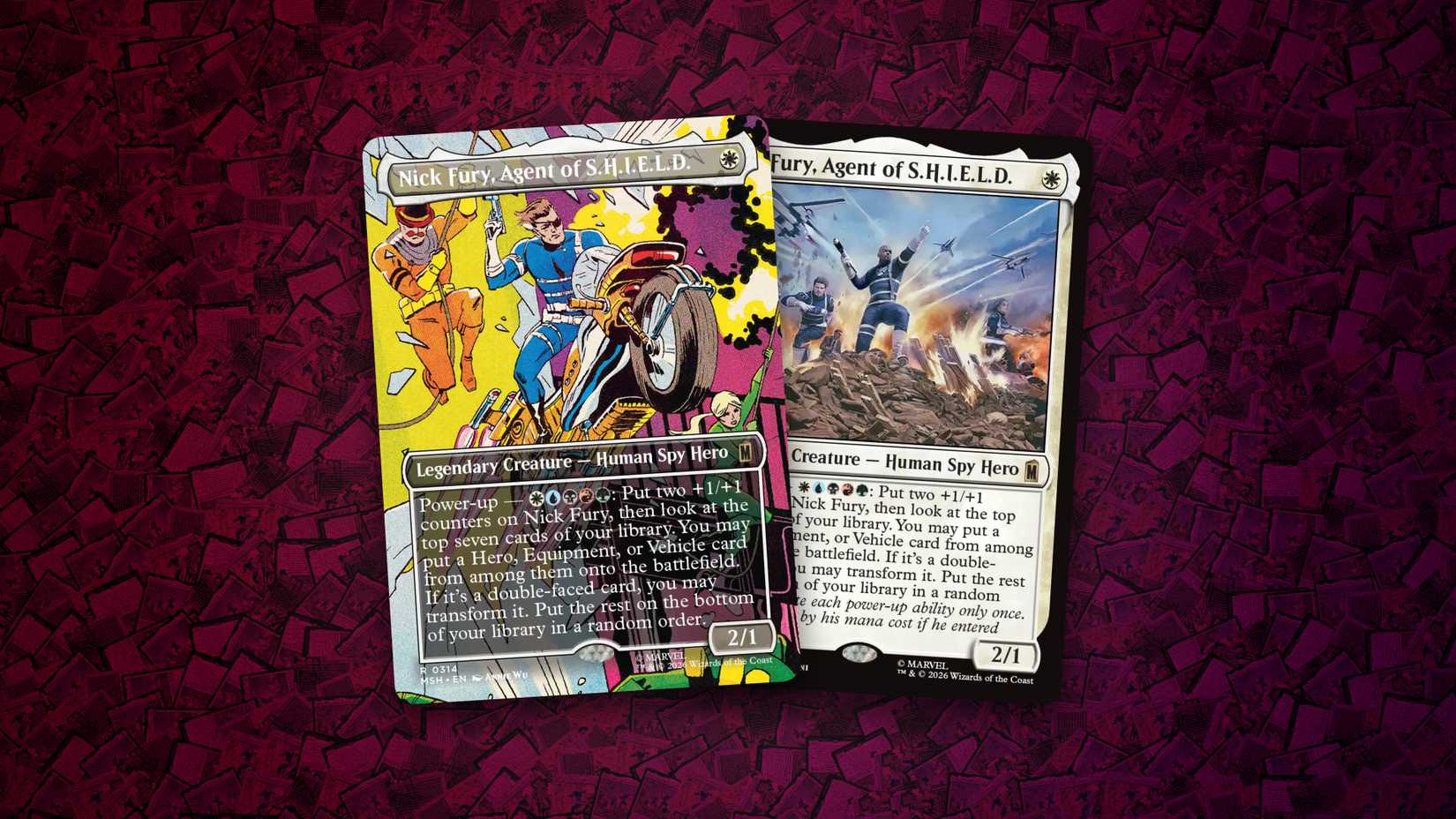
At a single white mana, Nick Fury, Agent of S.H.I.E.L.D. appears modest at first glance, demanding a closer look at his novel Power-up mechanic. Because Power-up reduces its activation cost by the creature’s mana cost when cast that turn, Fury immediately places two +1/+1 counters on himself while digging seven cards deep to deploy a Hero, Equipment, or Vehicle straight onto the battlefield.
It is flavorful design for a 2/1 operative, harboring devastating potential when optimized. Verhey described Fury as "really unassuming" yet deceptively potent, noting that "Nick Fury, the one-mana white commander, has been really strong." Verhey casually revealed he had experimented with running all five free-casting spells off the back of Fury hitting the board for a single white mana.
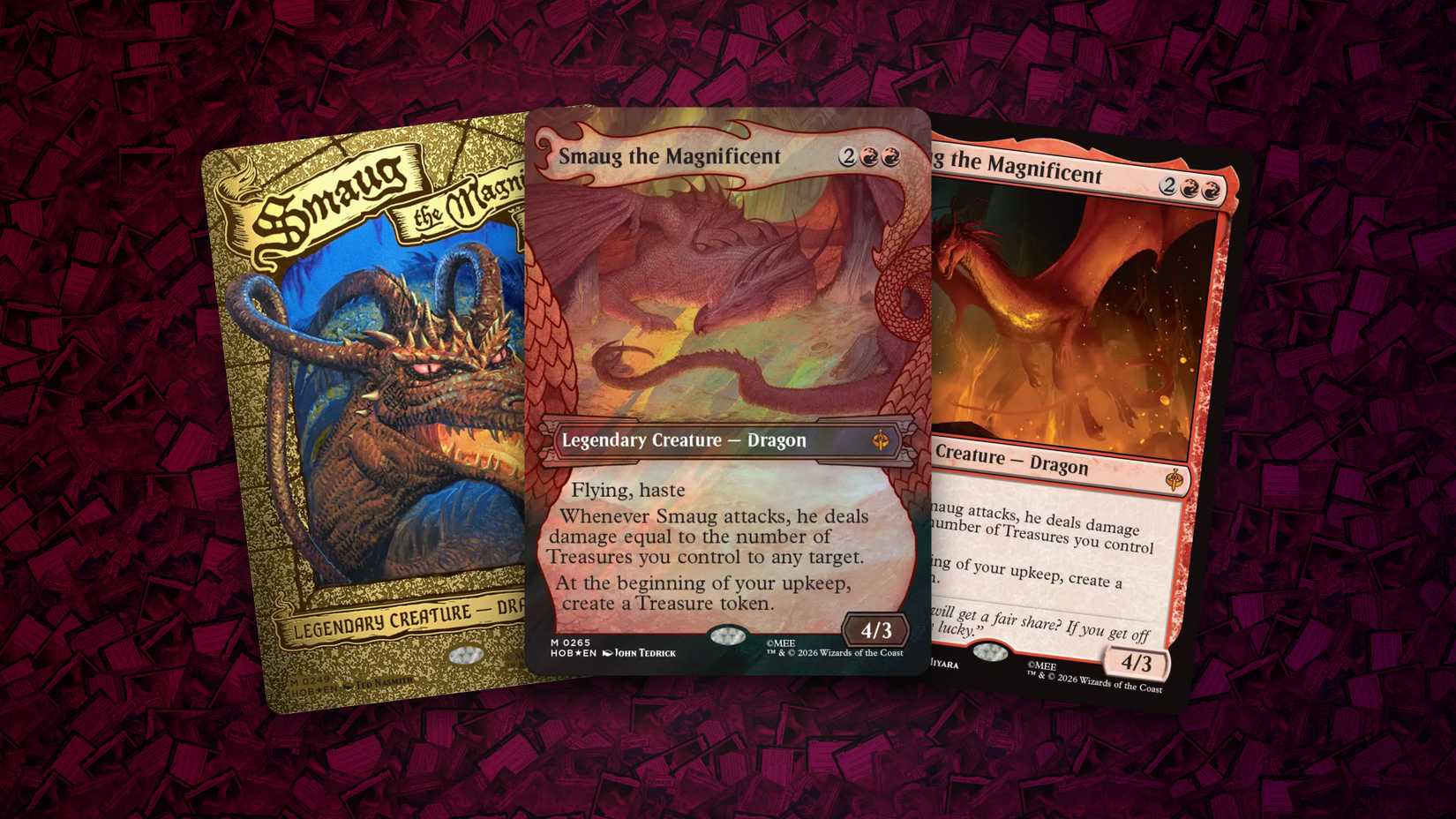
6. Smaug the Magnificent (The Hobbit)
While The Hobbit expansion introduced plenty of whimsical charm via legendary figures like Bilbo Baggins and Thorin Oakenshield, Smaug the Magnificent stands out as an absolute powerhouse. A 4/3 legendary dragon featuring flying and haste, Smaug generates a treasure token at the start of your upkeep.
However, his most devastating feature is his activated and triggered toolkit: whenever Smaug attacks, he deals damage to any target creature equal to the total number of treasures you control. Verhey noted that "Smaug Treasure decks look pretty cool" and praised him as a "really powerful Commander."
For four mana, Smaug accumulates economic resources every single turn while doubling as targeted removal or a direct life-total pressure tool. Because he enters with haste, dropping him into an established late-game board brimming with accumulated treasures allows him to swing immediately for catastrophic, game-ending damage—a clock easily accelerated by red damage-amplifiers like Furnace of Rath and Fiery Emancipation.
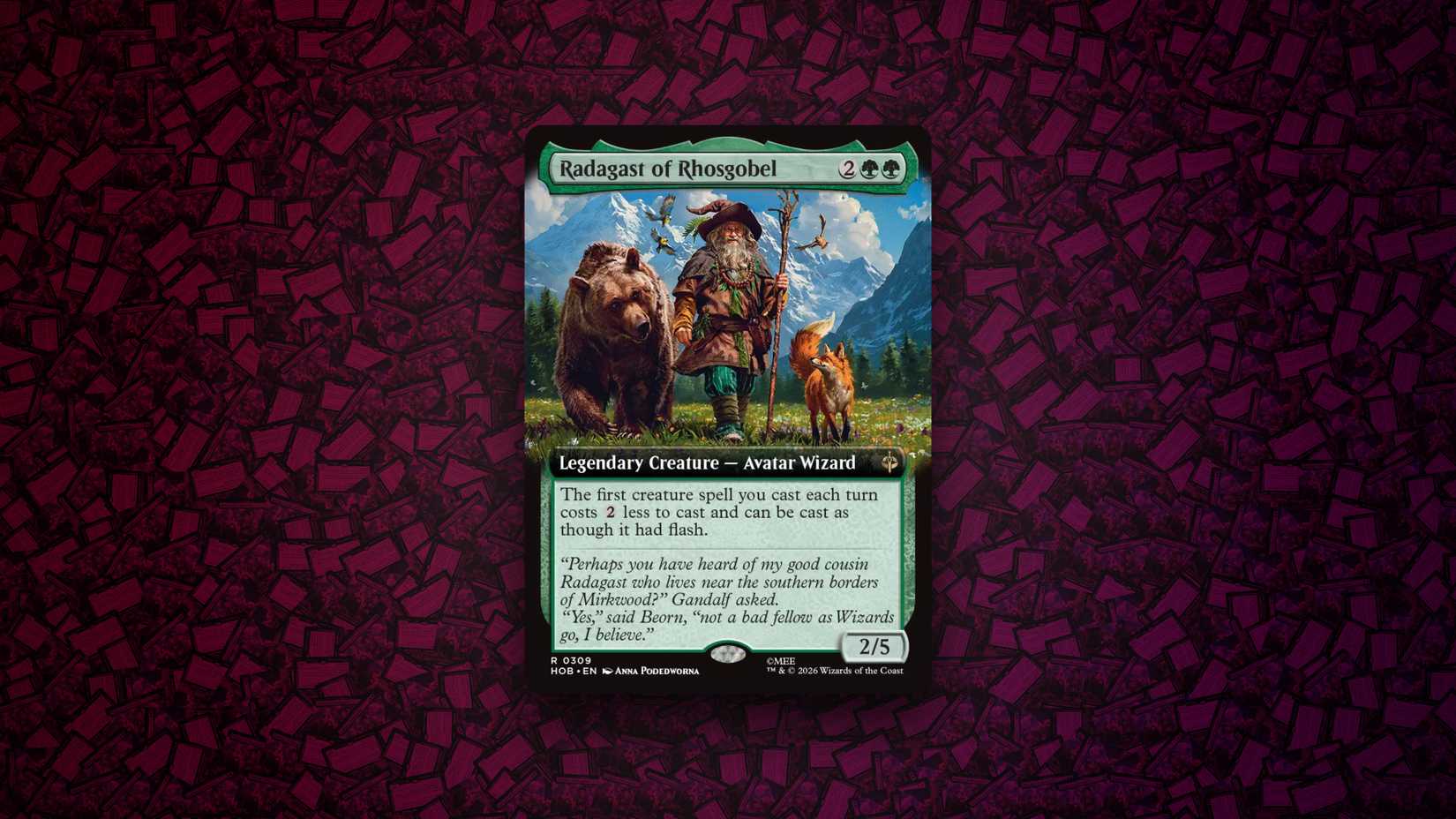
7. Radagast of Rhosgobel (The Hobbit)
Hailing from the same Middle-earth expansion, Radagast of Rhosgobel injects instant-speed tempo directly into mono-green archetypes. His static ability discounts the first creature spell you cast each turn by two generic mana and grants it flash, allowing green mages to hold up mana for interaction before deploying massive threats during an opponent’s turn.
Verhey expressed admiration for the archetype, stating, "I like the Radagast decks I’ve been seeing that discount your spells when you play one a turn." This opens up thrilling tactical avenues, such as flashing in Kogla, the Titan Ape for unexpected artifact/enchantment removal, or deploying discounted behemoths like Ghalta, Stampede Tyrant right before your untap step.
8. Dack Fayden, Helping Hand (Reality Fracture)
A color-shifted, conceptually inventive twist hailing from the Reality Fracture Commander precons, Dack Fayden, Helping Hand reimagines a classic Magic character in fresh ideological territory. Upon entering the battlefield, Dack reveals cards from the top of your library until he hits a number of creature cards equal to the number of opponents you have. He then places those creatures onto the battlefield permanently goaded—handing one over to each opponent.
Labeling the white-aligned Dack Fayden "kind of a funky one," Verhey suggested he may quietly represent the peak of raw power generation within the release. Players who pair his entry trigger with blink effects like Ephemerate or symmetrical table artifacts like Homeward Path and Trove of Temptation can quickly convert chaotic handouts into a heavily lopsided, one-sided advantage.
9. Liliana the Faultless (Reality Fracture)
Liliana the Faultless turns familiar narrative lore on its head within the Echoverse-themed Reality Fracture set, presenting a white-aligned iteration of the iconic necromancer. This version grants you life whenever another creature or planeswalker you control enters the battlefield. Furthermore, players can pay one mana and discard a card to grant another target creature or planeswalker hexproof until end of turn, providing mono-white strategies with a reliable, repeatable defensive shield.
Verhey highlighted Liliana alongside the set’s white Leonin legends and his own black Abzan preconstructed designs. Her discard-to-protect clause synergizes cleanly with planeswalker-centric or token-heavy commanders like Elspeth, Sun’s Champion and Mondrak, Glory Dominus, both of which demand robust protection to dominate the board.
10. Q, Stacking the Deck (Star Trek)
True to his chaotic, trickster pedigree, Q, Stacking the Deck forces an immediate library shuffle upon entry, exiling cards from the top until he hits a nonland card. He then allows you to repeatedly copy that exiled spell by discarding cards from your hand during your turn. Creative brewers immediately pushed this mechanic to astonishing extremes, utilizing specialized 98-land decklists designed to guarantee hitting a single, catastrophic combo piece every single time.
Verhey admitted a deep personal fondness for Q, stating he wanted "to believe that Q has something pretty wacky." He framed the trickster not necessarily as the most mathematically optimized card in the set, but as a fascinating design "on my radar" that inspired immediate, unconventional brewing. Slotting Glaring Fleshraker into a 98-land Q deck exemplifies the sheer absurdity achieved in 2026: exiling lands from your hand to chain copies of Fleshraker floods the board with Eldrazi Spawn tokens that simultaneously refund the mana for subsequent copies and ping the entire table to death in a single turn.
Supporting Context & Metrics: The 2026 Metagame Shift
The diversity of the 2026 Commander catalog reflects a deliberate shift in Wizards of the Coast’s R&D philosophy. Internal metrics shared during MagicCon panels indicate that casual Commander players increasingly favor commanders that create "emergent narratives" over linear, hyper-efficient combo engines.
- The Rise of Hybrid Typal Frameworks: Cards like Maralen, Fae Ascendant demonstrate a growing appetite for cross-pollinating tribal synergies that were once strictly isolated to distinct color pairings or eras.
- Modular Mechanics: The breakout success of the TMNT "Character Select" partner system has proven that players crave modularity in the Command Zone, paving the way for future mechanically interchangeable legendary squads.
- Color-Pie Fluidity: Universes Beyond and experimental sets (Reality Fracture) proved that shifting iconic characters into unconventional colors (such as white-aligned Dack Fayden and Liliana) revitalizes player interest without violating mechanical identity.
Official Statements & Design Philosophy
Speaking directly to the design challenges of 2026, Gavin Verhey emphasized that the metric for a great Commander is no longer just its ability to close out a game on turn four. Instead, the design team prioritizes agency, table interaction, and emotional resonance.
"We aren’t just looking at how fast a legend can win," Verhey explained during his MagicCon: Atlanta keynote. "We look at the stories people tell after the game ends. Did Maralen force a weird political truce? Did Dack Fayden’s goaded creatures cause absolute chaos across the board? Those are the moments that make Commander endure."
Verhey’s ongoing crusade to introduce more team-up and dual-type legends has clearly borne fruit, with 2026 serving as the proving ground for mechanics that bend traditional deckbuilding restrictions.
Future Outlook: Where Commander Goes From Here
As the dust settles on an extraordinarily packed 2026 release schedule, the Commander format stands in a remarkably healthy, vibrant place. The successful integration of deep narrative crossovers (Marvel, Star Trek, The Hobbit) alongside traditional intellectual properties (Lorwyn, Strixhaven) has proven that Magic: The Gathering can successfully host vastly different aesthetic styles without sacrificing mechanical integrity.
Looking ahead, the design paradigms established in 2026—modular partner arrays, flexible cost-reducers, and chaotic political handouts—will undoubtedly cast a long shadow over future design cycles. For casual kitchen-table groups and competitive tournament organizers alike, the bar has been raised. The 2026 Commander roster didn’t just add new cards to the card pool; it redefined what a legendary creature is capable of achieving on the battlefields of the Multiverse.