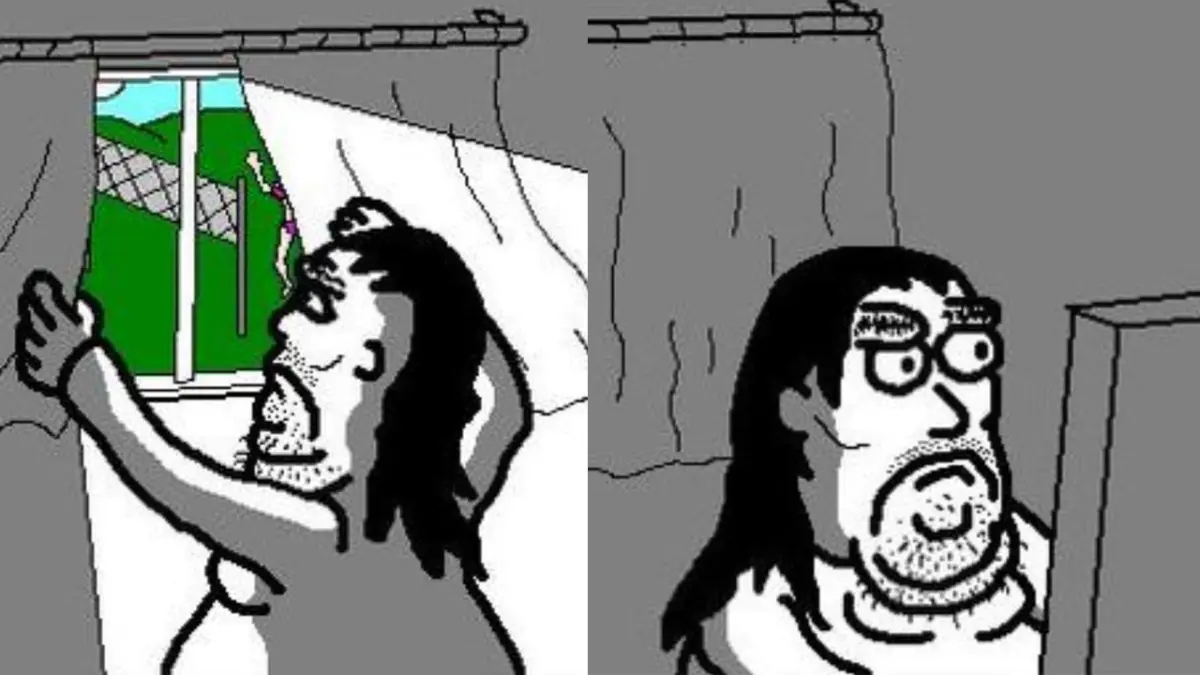
In the sprawling, hyper-connected digital landscape of the 21st century, internet memes have long served as the primary vernacular for expressing complex cultural cynicism, social alienation, and the surreal detachment of modern existence. Among the enduring visual formats of this digital lexicon is "Closing the Curtains," a multi-panel exploitable comic series that originated in the mid-2000s. Depicting an isolated, overweight computer user abruptly shutting his window blinds to block out external real-world distractions—ranging from mundane outdoor activities to apocalyptic global events—the format has evolved from a targeted webcomic jab into a versatile macro-cultural archetype.
For nearly two decades, the meme has adapted alongside changing internet demographics, transitioning from MS Paint aesthetics and classic forum culture to Reddit threads, 4chan boards, and eventually mainstream political discourse. Its latest mutation, the "Chudjak Closing the Curtains" variant, captures a pervasive modern ethos characterized by ironic nihilism, "nothing ever happens" fatalism, and extreme digital insulation. This report provides a comprehensive examination of the meme’s historical trajectory, its technological and cultural evolution, metrics of online resonance, and the unexpected ways in which fringe digital artifacts cross over into official institutional communications.
Detailed Chronology: From Forum Feuds to Mainstream Satire
The Genesis on Something Awful (2005–2007)
The roots of "Closing the Curtains" trace back to the volatile ecosystem of the Something Awful forums during the mid-2000s. On November 27, 2005, a user operating under the handle CrumFUNist initiated a thread titled "Lego_Robot sucks ass." The thread targeted Bob Averill, a webcomic artist known online as Lego_Robot, criticizing his simplistic MS Paint art style and his controversial posting habits across the forums.
Over the course of nearly two years, the thread ballooned into a contentious meta-discussion, garnering upwards of 1,500 responses. In May 2007, Averill retaliated via his webcomic platform (then titled Lego Robot Comics, later rebranded as PlasticBrickAutomaton) by publishing a strip titled "This one’s not funny."
The comic featured a caricature of an overweight, anti-social Something Awful forum critic engaged in online disputes. Distracted briefly by two women playing volleyball outside his window, the protagonist grimaces, pulls down his curtains to seal himself in darkness, and immediately returns to his computer monitor. The comic served as a piece of meta-commentary on the insular nature of internet trolls who actively reject real-world engagement in favor of online validation.
Early Spread and Forum Culture (2007–2014)
Following Averill’s ban from the Something Awful forums in September 2007, the comic escaped its original context. On November 15, 2007, a cropped version featuring the final three panels was uploaded to an image repository on the Finnish domain MBnet. This distillation excised the specific forum references, transforming the comic into a universal template for antisocial detachment.
As the 2010s dawned, the format found a fertile breeding ground on Reddit. On December 31, 2010, Redditor byxekaka posted an edited iteration titled "This is how I will celebrate New Years," altering the view outside the window to display festive fireworks. The post struck a chord with the platform’s demographic, securing over 2,100 upvotes and hundreds of comments on the /r/pics subreddit.
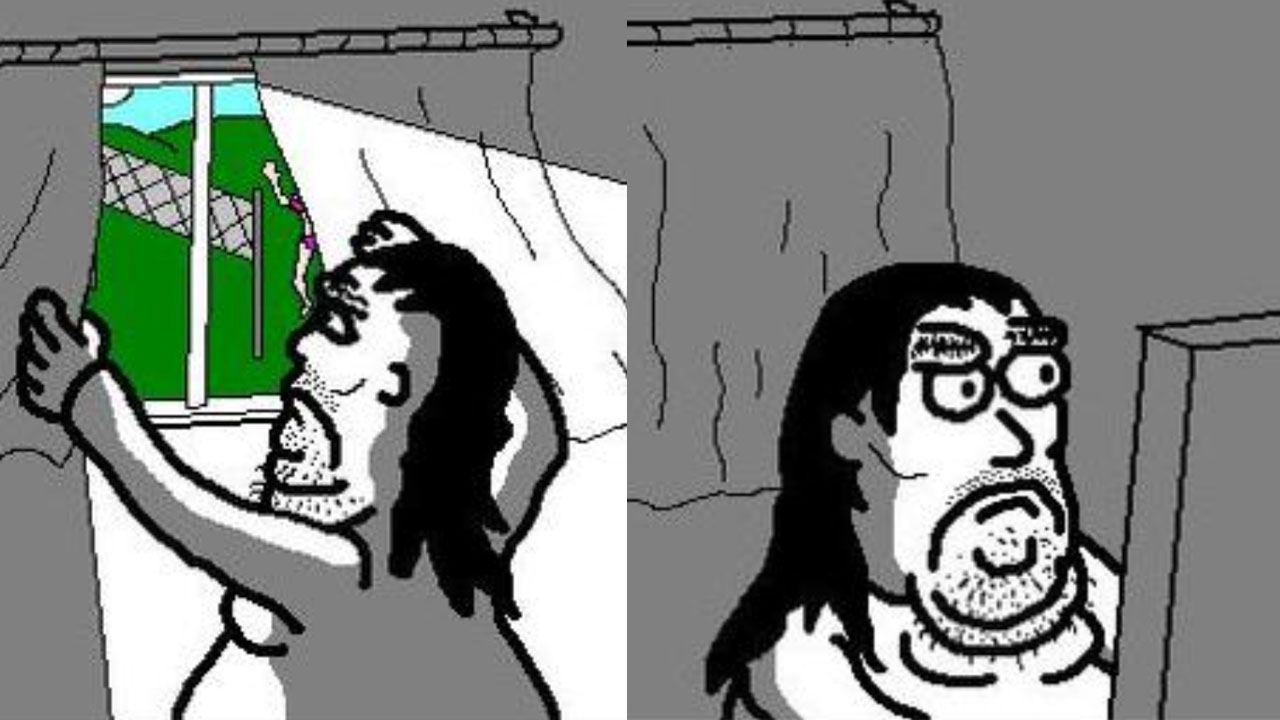
This template of substituting the outdoor view with monumental global or cultural events quickly became standard exploitable practice:
- May 2012: Redditor notthatjesus posted a version depicting a solar eclipse outside the window to
/r/funny. - December 2012: Capitalizing on apocalyptic anxiety surrounding the Mayan calendar doomsday predictions, Redditor FazeKross shared a version titled "What I’ll be doing December 21st," featuring a mushroom cloud outside the window, which amassed over 2,700 upvotes.
- December 2014: A repost of the New Year’s fireworks variation by user TwistedFisters pulled in nearly 3,900 upvotes on
/r/funny, cementing the format’s institutional permanence within meme culture.
The Chudjak Mutation and the "Nothing Ever Happens" Era (2023–Present)
By the mid-2020s, the visual language of internet subcultures had shifted toward exaggerated character archetypes, chief among them the "Chudjak"—a derivative of the Wojak family associated with ironic pessimism and detached cynicism.
The integration of the Chudjak into the "Closing the Curtains" format birthed a new subgenre of the meme tailored to geopolitical fatalism and the popular internet philosophy of "Nothing Ever Happens"—the belief that despite escalating global tensions, catastrophic structural collapses will continuously fail to materialize, leaving citizens trapped in a monotonous cycle of digital consumption.
On March 26, 2024, the Facebook page Daily Reminder published a variant showing a Chudjak character closing his blinds on an erupting nuclear mushroom cloud to resume browsing the internet in a dark room. The format rapidly jumped to 420-friendly and political imageboards on 4chan’s /pol/ board by April 2024. Days later, X (formerly Twitter) user @vergilswarrior deployed the meme in response to breaking news regarding drone strikes launched by Iran against Israel, illustrating the format’s utility as a shorthand for civilian apathy and informational overload in wartime.
Supporting Context & Metrics: Quantitative Analysis
While raw search volume for the exact phrase "Closing the Curtains" has historically remained niche due to its colloquial nature, the lifecycle of its individual iterations demonstrates explosive viral potential upon recirculation.
Engagement Metrics of Key Milestones
- December 2010 (Fireworks Edit): Garnered 2,100+ votes (91% positive ratio) and 480 comments on
/r/pics. - December 2012 (Doomsday / Mushroom Cloud): Achieved 2,700+ votes (94% positive ratio) and 200 comments on
/r/funny. - December 2014 (New Year Repost): Reached 3,900+ votes (89% positive ratio) and 560 comments within a two-month archival window.
- March 2024 (Facebook Chudjak Variant): Accumulated steady cross-platform traction, anchoring community discussions around systemic burnout.
- July 2025 (White House Institutional Crossover): Generated over 5 million impressions and 24,000 likes within 24 hours of posting.
The longevity of the meme relies heavily on its modularity. Because the core narrative beat—rejecting external reality in favor of hyper-focus on a glowing screen—is universally relatable to digital natives, the window panels act as an infinitely customizable green screen for contemporary anxiety.
Official Statements and Institutional Crossovers
The cultural boundary separating underground internet subcultures from mainstream institutional communication dissolved further on July 10, 2025, when the official X account of the White House (@WhiteHouse) published a post leveraging an AI-generated adaptation of the Chudjak Closing the Curtains meme.

The July 2025 White House Controversy
The administration’s official social media team deployed the meme in response to unprecedented financial reports showing NVIDIA and broader technology sector stocks reaching historic all-time highs following the market stabilization after the January 2025 economic fluctuations.
The AI-generated image depicted a stylized, commercially sanitized Chudjak closing his window blinds to block out a blazing green stock market graph shooting upward, accompanied by the bold text caption: "PANICANS hardest hit." The post was intended as a celebratory macro-economic flex, mocking critics of the administration’s fiscal policies who had anticipated economic downturns.
The post instantly polarized observers, accumulating over 5 million views and 24,000 likes in less than 24 hours, while igniting a fierce debate regarding state-sponsored meme integration and the ironic adoption of fringe internet imagery by government entities.
Public and Media Reaction
Digital watchdogs and political commentators immediately seized upon the surreal nature of an official government channel utilizing a derivative of the Wojak/Chudjak meme universe—subcultures historically rooted in anonymous message boards and satirical political extremism.
- User @ettingermentum expressed bewilderment on X, highlighting the ironic pedigree of the visual tropes by posting: "Did they forget that the pic here is of the El Paso shooter lol," drawing tenuous parallels between the visual lineage of the character archetype and real-world alienated loner aesthetics.
- User @CiaKids remarked on the bizarre corporate sanitization of the art style, describing the graphic as an "uncanny valley legally distinct chudjak jumpscare."
The incident underscored a broader structural shift in political communication: the complete absorption of ironic, hyper-niche internet vernacular into the official toolkits of state apparatuses seeking to appeal to younger, digitally fluent demographics.
Future Outlook
As the "Closing the Curtains" meme approaches its third decade of existence, its trajectory offers a fascinating case study in the evolution of digital folklore. What began as an ad-hominem webcomic attack between web-cartoonists and forum trolls on Something Awful has successfully weathered multiple generations of internet culture.
- AI Generation and Standardization: The integration of generative AI tools into meme creation, as evidenced by the July 2025 White House publication, suggests that classic meme templates will increasingly be rendered in high-definition, commercially sterilized formats, potentially stripping them of their grassroots grit.
- The Persistence of Digital Escapism: As geopolitical uncertainties, economic volatility, and information saturation continue to define the modern human experience, the core psychological thesis of "Closing the Curtains"—voluntary withdrawal into digital safe spaces amidst external chaos—will only grow more resonant.
- Institutional Co-optation: The weaponization of niche irony by official state bodies signals that the barrier between internet counterculture and official public relations has permanently collapsed. Future iterations of the meme will likely continue to dance on the edge of institutional appropriateness, reflecting the profound absurdity of contemporary civic life.
Ultimately, the man pulling his blinds shut remains the quintessential monument to modern digital insulation: a mirror held up to a society that increasingly prefers the illuminated glow of the monitor to the unpredictable realities of the world outside.