Published: March 6, 2018 | Updated & Expanded Analysis
Author: Global Financial & Technology Desk
Executive Overview
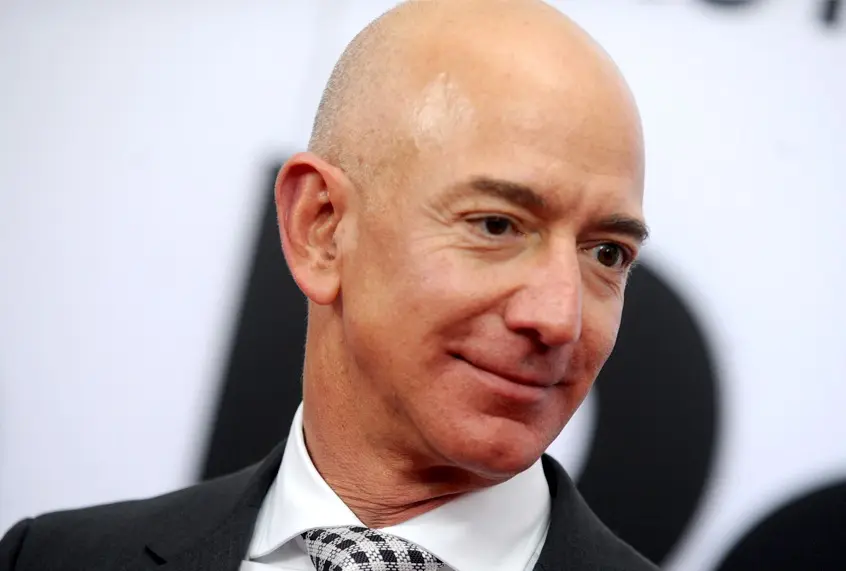
Having systematically conquered the realms of online retail, book-selling, cloud computing, and smart-home automation, Jeff Bezos’s Amazon is setting its sights on an even larger and more entrenched target: the global banking industry. According to reports originally surfaced by The Wall Street Journal, the e-commerce titan has explored launching an Amazon-branded checking account product aimed squarely at younger consumers and the historically underserved "unbanked" demographic.
This calculated pivot into consumer finance is far from an isolated corporate experiment. It represents the next logical phase in Amazon’s broader metamorphosis from an online bookstore into the foundational infrastructure of modern commerce. Having already built out internal logistics networks to rival FedEx and UPS, and having swallowed physical retail footprints through its $13.7 billion acquisition of Whole Foods in 2017, Amazon is now positioning itself to mediate the flow of consumer capital itself.
While the prospect of low-cost, digital-first banking services could provide a lifeline to millions of Americans alienated by traditional Wall Street fees, it also sounds alarm bells among antitrust regulators, consumer privacy advocates, and traditional financial institutions. Critics argue that an Amazon-branded financial product would give the tech giant unprecedented visibility into consumer spending habits, further deepening its monopolistic grip over digital commerce. As Amazon evolves from a mere market participant into the very infrastructure upon which the global economy runs, the question facing consumers and policymakers alike is no longer whether Big Tech can disrupt banking—it is whether society can afford to let them.
Detailed Chronology: The Evolution of an Empire
To understand Amazon’s interest in the financial sector, one must examine the systematic trajectory of the company’s expansion over the past two decades. What began as a digital storefront for literature in a Seattle garage has meticulously engineered a vertically integrated empire that touches nearly every aspect of contemporary life.
- 1994–2000s: The E-Commerce Monopoly: Amazon launched as an online bookstore, rapidly expanding into consumer electronics, household goods, and media. By undercutting traditional brick-and-mortar stores and operating at razor-thin margins, the company captured an immense share of consumer retail traffic, ultimately establishing a marketplace that hosted thousands of third-party vendors.
- 2006: The Birth of AWS: With the launch of Amazon Web Services (AWS), Bezos unlocked a goldmine that fundamentally changed corporate infrastructure. Today, AWS powers a staggering percentage of the global internet, hosting data for entities ranging from streaming giants like Netflix to government agencies like the Central Intelligence Agency (CIA).
- 2014: Entering the Living Room: Amazon introduced the Echo smart speaker and its voice assistant, Alexa. By embedding itself into the domestic routines of millions of households, Amazon secured a direct, frictionless pipeline for household reordering—often bypassing traditional search engines entirely.
- 2017: Bridging Digital and Physical Retail: In a move that shocked the grocery industry, Amazon acquired Whole Foods Market. This acquisition gave the company an immediate physical footprint across hundreds of affluent urban neighborhoods, laying the groundwork for omnichannel retail dominance.
- Late 2017–Early 2018: The Shipping Shift and Banking Explorations: Moving away from its heavy reliance on third-party couriers like FedEx and UPS, Amazon began building out its own proprietary delivery pipelines. Concurrently, internal discussions began regarding a branded checking account product, signalling the company’s intent to capture the lucrative financial services ecosystem.
Supporting Context & Metrics: Wall Street Vulnerability vs. The "Unbanked" Reality
Amazon’s potential entry into consumer banking is not happening in a vacuum. It is heavily fueled by deep-seated public resentment toward traditional financial institutions and a persistent structural gap in the modern banking system.
The Crisis of Public Trust in Wall Street
Decades removed from the 2008 financial crisis, Wall Street banks continue to struggle with abysmal public perception ratings. In a comprehensive poll conducted by Bloomberg News, just 31 percent of respondents reported having a favorable view of Wall Street banks.
For generations of consumers, traditional banking has been synonymous with friction and penalization. High minimum balance requirements, complex fee structures, and punitive overdraft charges have alienated millions of everyday customers. These consumer-unfriendly policies have created a massive opening for agile technology companies promising transparency, digital convenience, and lower costs.
The "Unbanked" and "Underbanked" Demographic
According to comprehensive research published by the Federal Deposit Insurance Corporation (FDIC), the traditional banking system has entirely failed a significant portion of the American population:
- 7% of American households are classified as "unbanked"—meaning they possess no checking or savings accounts whatsoever.
- 20% of American households are "underbanked"—meaning that while they may utilize a basic checking account, they are forced to rely on alternative, high-cost financial services such as check-cashing outfits, payday loans, and money orders.
Crucially, FDIC data reveals that a clear majority of unbanked households cite an inability to maintain the minimum balances required to dodge steep overdraft fees as their primary reason for avoiding traditional banks. If Amazon can successfully engineer a low-cost, fee-free checking product integrated seamlessly with its retail ecosystem, it could instantly capture millions of loyal customers whom Wall Street has deemed unprofitable or too high-risk.
Official Statements and Industry Analysis: Becoming the Infrastructure
As whispers of Amazon’s banking ambitions leaked via The Wall Street Journal, financial analysts, consumer advocates, and market competitors scrambled to assess the fallout. While Wall Street executives publicly downplayed the threat, privately, legacy institutions recognize that a tech giant entering finance wields an unfair advantage: asymmetric data access.
Industry experts point out that Amazon’s financial aspirations are inextricably linked to its broader corporate philosophy. Writing for The Nation, Stacy Mitchell, co-director of the Institute for Local Self-Reliance, offered a sobering assessment of the company’s ultimate ambitions:
"Bezos has designed his company for a far more radical goal than merely dominating markets; he’s built Amazon to replace them. His vision is for Amazon to become the underlying infrastructure that commerce runs on."
Mitchell emphasizes that by controlling the essential pipelines of the modern economy—retail traffic, cloud data storage, logistics, and potentially financial transactions—Amazon gains the ultimate mechanism of corporate self-preference:
- Pipeline Control: Amazon can seamlessly privilege its own private-label products and services as they traverse its digital and physical networks.
- The Private Tax: By levying fees on third-party vendors who rely on its marketplace and cloud architecture, Amazon effectively taxes external trade.
- Shifting the Democratic Economy: Instead of operating within an open market governed by public, democratic rules, commerce increasingly takes place inside a private, corporate arena dictated entirely by Amazon’s algorithmic terms of service.
This is not a hypothetical risk. Clear precedents already exist within the Amazon ecosystem. For example, the Alexa voice assistant is programmatically restricted from ordering products sold by vendors who refuse to participate in the lucrative Amazon Prime subscription program. Applying this logic to a banking product could allow Amazon to steer consumers toward its own financial offerings while systematically penalizing competitors.
Future Outlook: Regulatory Headwinds and the Road Ahead
Looking forward, Amazon’s flirtation with financial services presents a profound regulatory crossroads for governments worldwide. As the boundaries separating retail, technology, logistics, and banking continue to dissolve, regulatory frameworks designed in the 20th century are struggling to keep pace.
The Privacy vs. Convenience Trade-Off
Consumers have historically demonstrated a willingness to trade personal data and privacy in exchange for lower prices, unparalleled convenience, and expedited shipping. However, pairing consumer retail data with real-time financial transaction data creates an Orwellian profile of individual spending habits. An Amazon bank account would give the company absolute visibility not just into what consumers buy, but when, how often, and how much disposable income they possess at any given moment. This data goldmine could supercharge Amazon’s advertising targeting capabilities, cementing an unassailable competitive advantage over independent merchants.
Antitrust Scrutiny and Legislative Pushback
Without proactive legislative intervention and aggressive antitrust oversight, Amazon’s march toward becoming the world’s default commercial infrastructure appears unstoppable. Lawmakers in Washington and Brussels are increasingly examining whether a single entity should be permitted to control the cloud infrastructure of governments and enterprises while simultaneously operating the world’s largest retail marketplace and offering consumer banking services.
If Amazon successfully bridges the gap into banking, it will cross a historic Rubicon. The transition from selling goods to holding capital marks the final step in transforming Amazon from a mere corporate giant into an indispensable, quasi-governmental utility. Whether consumers welcome Wall Street’s displacement or come to regret trading traditional banking monopolies for a single, all-powerful digital sovereign will define the economic landscape of the 21st century.