Executive Overview
The aftermath of the recent midterm elections has birthed more than just a newly configured legislative map—it has ignited a profound generational dialogue across America’s digital public squares. Following a decisive Democratic "blue tsunami," social media feeds have experienced an extraordinary cultural resurgence. Platforms like TikTok and Instagram are currently saturated with viral retrospectives, nostalgia-driven audio tracks, and fast-paced video edits celebrating the midterms.
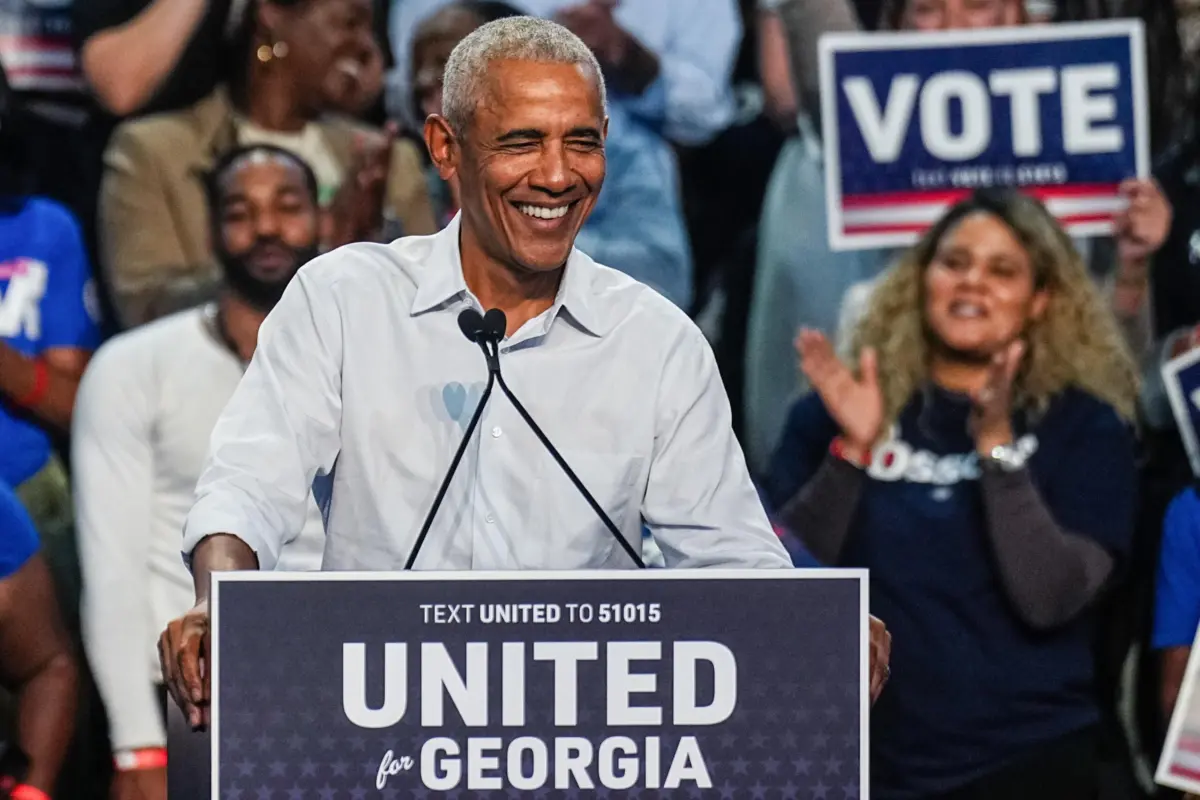
This wave of online euphoria explicitly channels the political signifiers of the late 2000s and early 2010s: the iconic hope of Barack Obama’s historic 2008 victory, the unironic indie-rock soundtracks of youth, the ubiquitous branding of "girlboss" corporate feminism, and the earnest, theatrical emotionality of the era.
Yet, this digital nostalgia tour carries a fascinating generational twist. A significant portion of the content producers spearheading this revival are members of Generation Z—young adults who were either in diapers or not yet born when Obama took the oath of office. To older millennials, the trend represents a comforting, long-awaited restoration of their cultural dominance. To Gen Z, however, it is something entirely different: a canvas for satire, historical reenactment, and a distinct new political ethos they have coined "WhimZ."
This article explores the growing cultural and political chasm between millennial optimism and Gen Z realism. By examining the roots of "millennial cringe," the trauma of the Trump political era, shifting party allegiances, and the emergence of a pragmatic, results-driven youth movement, we unpack how two generations on the same side of the political aisle view the architecture of hope, progress, and political resistance.
Detailed Chronology: From Obama’s Hope to the Trump Era and Beyond
To understand the current cultural collision on social media, one must trace the timeline of political maturation for both millennials and Generation Z. The differences in their worldview are deeply rooted in the historical flashpoints that punctuated their formative years.
The Millennial Blueprint: The Audacity of Hope (2008–2012)
For older millennials, political consciousness was forged during a period of high-stakes optimism. The election of Barack Obama in 2008 served as an ideological touchstone. It was an era defined by the belief that institutional rules worked, that systemic change was attainable through organized enthusiasm, and that technological and cultural progress was a historical inevitability.
Millennials came of age believing in the social contract: follow the rules, earn a degree, secure a stable corporate or public-sector job, and trust the machinery of liberal democracy. When they won political battles, they celebrated with unvarnished, earnest joy—typified by flash mobs, massive electoral rallies, and a cultural embrace of institutional theater (such as the enduring popularity of Lin-Manuel Miranda’s Hamilton).
However, this foundational optimism also bred vulnerability. When the systemic machinery stalled—particularly after the 2010 midterms and the subsequent disillusionment of the Obama administration—many millennials struggled to maintain that initial high-octane momentum, leading to a dip in youth voter participation throughout the mid-2010s.
The Gen Z Awakening: Trial by Fire (2016–Present)
In stark contrast, Generation Z’s political debut occurred against a backdrop of stark instability and polarization. First-time voters in the current cycle were born the very year Obama was elected; they were merely eight years old when Donald Trump won the presidency in 2016.
For Gen Z, political awakening was not marked by a soaring victory speech, but by institutional shock. As Lauren Kapp, co-founder of Democratic digital strategy firm Luminary Strategies, recalls, a core formative memory for many Zoomers was walking into high school classrooms the morning after the 2016 election to find Advanced Placement government teachers in tears.
Rather than inheriting a belief in steady, linear progress, Gen Z has spent its adolescence navigating continuous crises: the COVID-19 pandemic, climate anxiety, economic precarity, intense culture-war vitriol, and high-profile rollbacks of federal rights. Their primary political memories are defined not by electoral triumphs, but by direct-action movements—such as March for Our Lives, Black Lives Matter, global climate strikes, and organized pushbacks against institutional overreach. Consequently, Zoomers learned early that winning an election is rarely a final victory; it is merely a momentary defensive hold.
Supporting Context & Metrics: Shifting Demographics and Independent Alignments
The divergence in political temperament between millennials and Gen Z is heavily reflected in empirical data regarding party identification, institutional trust, and civic engagement.
The Rise of the "Generation Independent"
While millennials established a reliable, albeit sometimes frustrating, pipeline of support for the institutional Democratic Party, Generation Z is markedly more skeptical of political labels. According to extensive data from Gallup and youth research organizations like The Up & Up, 56 percent of Gen Z adults now identify as political independents.
| Demographic Metric | Millennial Generation | Generation Z |
|---|---|---|
| Primary Party Alignment | Heavily leans Democratic/Institutional | 56% Independent / Non-Partisan |
| View of Political Institutions | Cautiously trusting; reform-minded | Deeply skeptical; anti-establishment |
| Coping Mechanism for Losses | Continued faith in electoral processes | Political dark humor, satire, and irony |
| Core Political Touchstones | 2008 Obama Election, Marches, Hamilton | BLM, March for Our Lives, Direct Action |
| Form of Civic Expression | Earnest community organizing ("Hopecore") | Strategic pragmatism and "WhimZ" |
Zoomers who do lean left display a notable comfort with anti-establishment rhetoric and democratic-socialist movements, caring far less about party discipline and institutional decorum than about tangible, immediate material results.
Institutional Trust and the Reality of Precarity
This independent streak stems from a pervasive lack of trust in legacy institutions. Olivia Julianna, a prominent Democratic strategist and content creator, notes the stark socioeconomic divide underlying generational worldviews:
"Millennial optimism exists because Obama won elections so decisively that they had time to hit the club afterward. Then they could go to urgent care for IV fluids on their parents’ health insurance the next morning. WhimZ comes from a place that’s a little more vengeful. Our greatest victories have largely come from stopping the worst shit from happening instead of witnessing massive moments of inspiration from people in power."
This absence of a reliable safety net has forced Gen Z to adopt a pragmatic, clear-eyed realism. They recognize that traditional promises—such as stable employment and economic mobility in exchange for playing by institutional rules—no longer apply reliably to their generation.
Official Statements and Perspectives
To capture the nuances of this generational conversation, prominent political figures and digital strategists have weighed in on how "millennial cringe" and Gen Z realism intersect in the current political landscape.
Rep. Alexandria Ocasio-Cortez on "Millennial Cringe"
Addressing her younger followers on Instagram, 37-year-old Representative Alexandria Ocasio-Cortez (D-NY) offered an empathetic breakdown of why millennials hold onto their signature earnestness—a quality Gen Z frequently labels as cloying or naive:
"Imagine all the seats we flipped last night, that feeling, plus on top of it, electing the first Black president ever. And on top of that, you did it the first time you ever voted? That hits generationally," Ocasio-Cortez explained. "Like, you are chasing that feeling ever since. And because you did it the first time you ever voted, you’re like, ‘Yeah, we can change the world. Yeah, why not. We did it the first time. Why not just do it again?’"
Digital Voices: The Birth of "WhimZ"
On TikTok, creators have worked overtime to articulate the distinction between their outlook and that of their older peers. TikToker @bearclawharley distilled the sentiment for millions of viewers:
"Gen Z’s ‘WhimZ’ is very different than millennial optimism and the reason why is us as Gen Z know that we still have to fight. This is no hate to millennials; you guys were promised… follow the rules and you guys will get a good job and yada yada. We as Gen Z know that that’s not going to happen. You guys were just carefree; we are ironically doing this."
Lauren Kapp of Luminary Strategies reinforced this perspective, emphasizing that humor serves as a vital coping mechanism for a generation raised amid continuous crisis:
"Political instability has left Gen Z burned. We’ve had to cope through our humor as a matter of processing. To me, WhimZ is less about believing things will get better and more about finding moments of joy despite the uncertainty."
Future Outlook: Finding Common Ground in a "Politics of Love"
Despite their divergent emotional starting points—millennial earnestness versus Gen Z ironic pragmatism—both generations are finding unexpected alignment in the wake of the midterms.
Rejecting the Culture War Fatigue
As exit data and focus groups from the recent election cycle indicate, younger voters across the board are increasingly exhausted by traditional culture-war distractions. Whether millennial or Zoomer, the electorate under age 45 is prioritizing substantive, forward-looking policy solutions over partisan posturing. Voters are demanding candidates who address core systemic concerns—such as housing affordability, economic inflation, climate policy, and the ethical governance of artificial intelligence—rather than those who rely on divisive identity politics.
The Emergence of a New Political Language
This shared weariness with toxicity has paved the way for a surprising political evolution. Even as Gen Z remains deeply jaded, there is a growing recognition that pure cynicism, nihilism, and political withdrawal are dead ends.
In progressive political spaces, figures like Texas Senate candidate James Talarico have popularized what he terms a "politics of love." For a generation raised under the shadow of relentless political bullying and societal polarization, rejecting fear and division in favor of unapologetic, values-driven human connection feels revolutionary.
While Gen Z may not be ready to abandon their protective armor or adopt the unbridled, starry-eyed optimism of the Obama era, their embrace of "WhimZ" proves that hope does not have to be naive to be powerful. By blending millennial tenacity with Gen Z radical realism, America’s youngest voters are proving that joy can coexist with vigilance—and that changing the world requires both the courage to fight and the humor to endure.