Executive Overview
Something profound—and deeply troubling to educators, parents, and publishers alike—happens to children right around their ninth birthday. Up until that milestone, many kids are voracious bookworms. Industry metrics from organizations like Scholastic consistently reveal that a vast majority of young children report reading for fun at least five days a week. But almost like clockwork, that enthusiasm plummets after age nine. Today, only 35 percent of children past this threshold maintain a regular, voluntary reading habit.
Publishing insiders and childhood literacy experts refer to this precipitous drop-off as “the decline by 9.” For years, the industry relied on generational literary juggernauts—such as the Harry Potter and Percy Jackson series—to carry kids safely through these volatile transition years. These monumental hits served as cultural touchstones, selling millions of copies and keeping millennial and Gen Z children glued to the page instead of glowing screens.
However, the past decade has exposed a quiet crisis within the publishing ecosystem. Books targeting readers ages 8 to 12—a demographic known in the trade as “middle grade”—have experienced a persistent, long-term sales slump. What began as a slow downward slope turned into a devastating cliff following the disruptions of 2020. In the years since the COVID-19 pandemic, major publishing houses have systematically dismantled or shuttered multiple middle-grade imprints, culminating in a wave of structural reorganizations and layoffs that continue to rock the industry.
As traditional middle-grade fiction gasps for air, a fierce debate has erupted over the culprit. Is the modern child’s attention span fundamentally fractured by iPads, TikTok, and YouTube shorts, or did the publishing industry itself miscalculate by flooding the market with bloated, overly complex novels? Whatever the root cause, the stakes are immense. The ravenous eight-year-old readers of today depend on a robust middle-grade market to sustain their literacy as they grow. If publishers fail to bridge this critical gap, millions of children risk losing reading as a lifelong source of entertainment, empathy, and intellectual growth.
Detailed Chronology: From the "Harry Potter Effect" to Pandemic Disruption
To understand how the middle-grade market reached its current state, one must trace a timeline defined by runaway success, stylistic overcorrection, and an unprecedented global health crisis.
The Pre-2000s Baseline
Before the turn of the millennium, middle-grade publishing followed a relatively reliable blueprint. Standard novels for this age group were moderately paced, accessible, and concise. Series like The Baby-Sitters Club and Encyclopedia Brown relied on strong storytelling rather than sheer physical heft, with typical volumes hovering around 35,000 words. These books were engineered to be easily digestible for children transitioning out of illustrated early readers.
The "Harry Potter Effect" (2000s–2010s)
The landscape shifted irrevocably with the global phenomenon of J.K. Rowling’s Harry Potter series. Harry Potter and the Sorcerer’s Stone clocked in at a hefty 76,944 words, pushing the outer limits of a traditional middle-grade reader’s attention span. Yet, as the characters aged and the plots darkened, the books expanded exponentially. By the time Harry Potter and the Order of the Phoenix was published, it stretched to a staggering 257,045 words—surpassing the length of most adult novels.
Eager to replicate this astronomical success, publishers across the industry chased the formula. Between 2006 and 2016, the average length of a middle-grade book swelled from 174.5 pages to a daunting 290 pages. As Vicky Weber—an author, literary agent, and author coach—points out, the industry failed to account for a crucial demographic detail: a massive portion of Harry Potter readers were actually adults. By scaling up word counts and thematic complexity to mirror adult fantasy, publishers inadvertently began producing books that were far too intimidating for their actual target audience.
The Slow Bleed and the 2020 Precipice
According to Joanne O’Sullivan, a children’s book author and reporter for Publishers Weekly, the decline in middle-grade sales did not happen overnight. "It had been happening for maybe a decade, very, very slowly," she notes.
What had been a manageable, downward slope transformed into a sheer drop in 2020. The COVID-19 pandemic introduced a catastrophic convergence of negative factors: schools and libraries closed indefinitely, peer interaction vanished, and children’s daily screen time skyrocketed. Kristen McLean, who runs the thought leadership collective Circana Entertainment Knowledge Group, describes this period as a "perfect storm for lower literacy." The pandemic fundamentally "broke the discovery chain" that traditionally connected young readers to new fiction.
The Imprint Closures of the 2020s
The financial strain of the post-pandemic sales slump has forced legacy publishing houses to aggressively restructure. Over the past few years, the industry has witnessed the systematic closure of several iconic children’s literature imprints. Dial Books for Young Readers suffered significant layoffs and restructuring in March, while Macmillan dissolved Roaring Brook Press, replacing it with a newly formed imprint dedicated to illustrated books and nonfiction. These high-profile contractions signal a definitive end to the era of business-as-usual for middle-grade publishing.
Supporting Context & Metrics: The Anatomy of the Reading Decline
The crisis facing middle-grade books cannot be divorced from the broader sociological and educational shifts impacting modern children. Industry experts point to a confluence of structural pressures that have eroded children’s reading habits.
The "Pain Point" of the Middle-Grade Transition
The decline by 9 coincides directly with a major developmental bottleneck: the transition from short, highly illustrated chapter books and leveled classroom readers to full-length novels.
"They’ve been doing short chapter books; they’ve been doing those leveled readers in the classroom; and, then, all of a sudden, what’s available to them is a lot chunkier, more challenging," O’Sullivan explains. This transition is not merely jarring for struggling readers; it alienates children who are otherwise capable and enthusiastic about books.

Kelly Dickinson, a middle school librarian in Bethesda, Maryland, encounters this hesitation daily. "If you have a kid who’s not a very confident reader, a long book is very intimidating," Dickinson says. "They just stall out before they can even pick one, because they look at it and they think, ‘I can’t read that.’”
Squeezed Schedules and Falling Test Scores
Beyond the physical intimidation of thick books, children today simply have less free time. Unstructured play has steadily vanished, replaced by the relentless grind of organized sports, competitive extracurriculars, and private music lessons. The wide-open childhood hours that once served as prime real estate for reading have evaporated.
Concurrently, national literacy metrics have flashed warning signs. Standardized reading scores for young students began trending downward around 2014, reflecting a broader erosion of deep-focus literacy skills among digital-native generations. While reading scores for nine-year-olds recently rebounded slightly—rising four points in 2025 to match pre-pandemic baselines—the underlying habits of sustained, long-form reading remain fragile.
Official Statements and Industry Insights
Key stakeholders across the publishing and library sectors are candid about the systemic missteps of the past and the urgent necessity of evolution.
-
On the Misguided Pursuit of Adult-Style Complexity:
Vicky Weber emphasizes the miscalculation regarding audience appeal: "When something becomes really popular, other publishers try to replicate that success. I think one of the things we didn’t take into account is how many Harry Potter readers were adults." -
On the Disruption of the Literary Pipeline:
Kristen McLean of Circana identifies the pandemic as a structural breaking point: "There were factors like schools and libraries closing, not much time with peers, and plenty of screen time during the pandemic… essentially ‘breaking the discovery chain’ for middle-grade fiction in a perfect storm for lower literacy." -
On the Need for Humor and Accessibility:
Jackie De Leo, chief merchant and publisher at Scholastic (formerly a vice president at Barnes & Noble during the pandemic), notes a vital shift in what children actually crave: "Kids like things that are funny, and we were giving them some pretty serious things for a while—books for adults packaged as middle-grade books." -
On Redefining Visual Literacy:
Addressing whether graphic-heavy formats signal a decline in textual capability, De Leo pushes back against traditionalist anxieties. She views graphic novels not as a lesser medium, but as a distinct form of "visual literacy" that modern children navigate with an innate fluency she finds genuinely impressive.
Future Outlook: Reenvisioning the Middle-Grade Book
Despite the turbulence of recent imprint closures and shifting literacy trends, a wave of cautious optimism is finally washing over the publishing industry. Rather than fighting a losing battle to force digital-age children back into the 400-page prose novels of the 2000s, publishers are choosing to "meet kids where they are."
The Graphic Novel and Hybrid Pivot
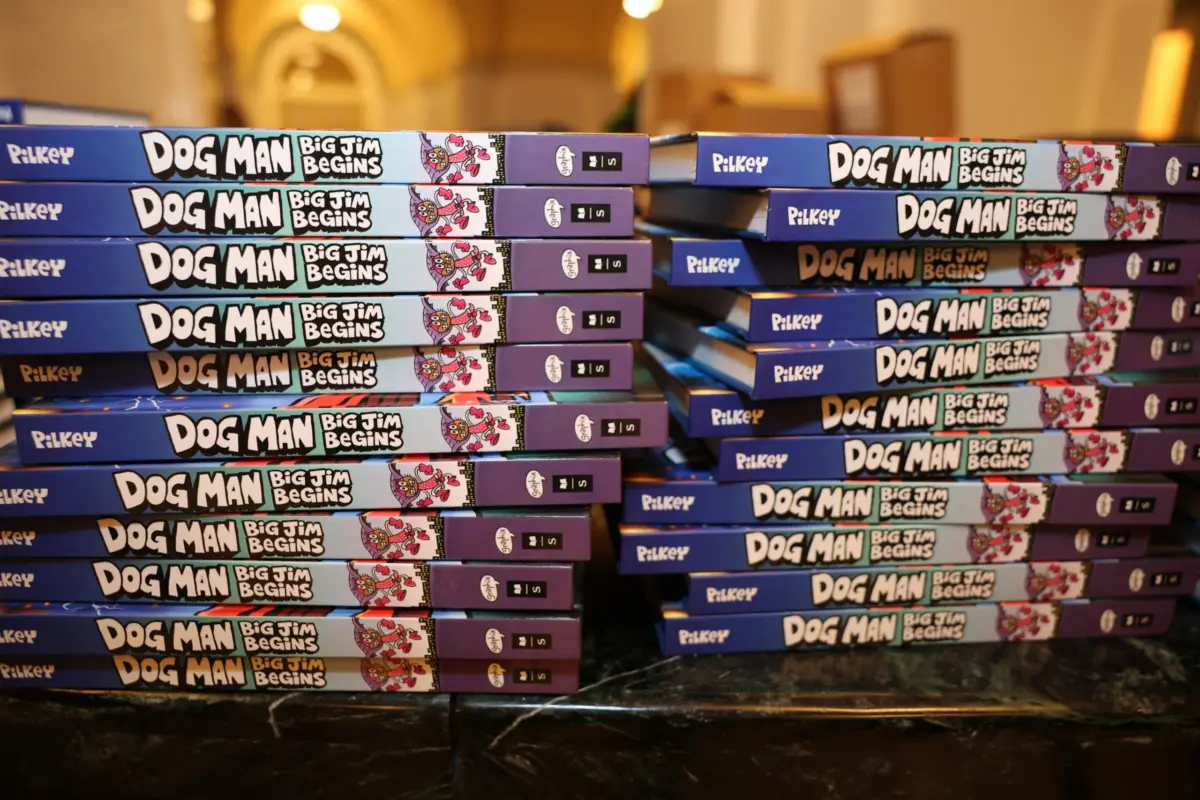
The blueprint for the future of middle-grade publishing is brightly colored, fast-paced, and highly visual. Phenomenons like Dav Pilkey’s Dog Man series—which features full-color artwork, dynamic layouts, and interactive physical elements like animated page-flipping—have demonstrated immense market viability.
Publishers are increasingly investing in illustrated novels, hybrid comic-prose formats, and heavily broken-up text featuring simulated digital elements like chat panels. Librarian Kelly Dickinson advocates for expanding this comedic, hybrid approach across more formats, noting that children desperately want funny stories, yet the market remains saturated with overly serious titles.
A New Chapter for Young Readers
This pivot does not mean a regression to the simplistic chapter books of the pre-Harry Potter era, nor does it mean abandoning deep literary engagement. Instead, it represents a sophisticated re-envisioning of what a book can be in the 21st century.
As structural changes take root—exemplified by Macmillan launching new imprints dedicated to illustrated works and nonfiction—the publishing industry is betting that accessibility breeds enthusiasm. By lowering the initial barrier to entry, putting humor back into storytelling, and validating visual literacy, publishers hope to help nine-year-olds preserve their love of reading.
For a demographic characterized by intense self-absorption balanced by a profound, newly awakened sense of empathy, fiction remains one of the most powerful tools available for understanding the human experience. If the industry can successfully bridge the gap between children and books, the "decline by 9" may soon transition from an inevitable tragedy into a manageable hurdle overcome by innovation.