Executive Overview
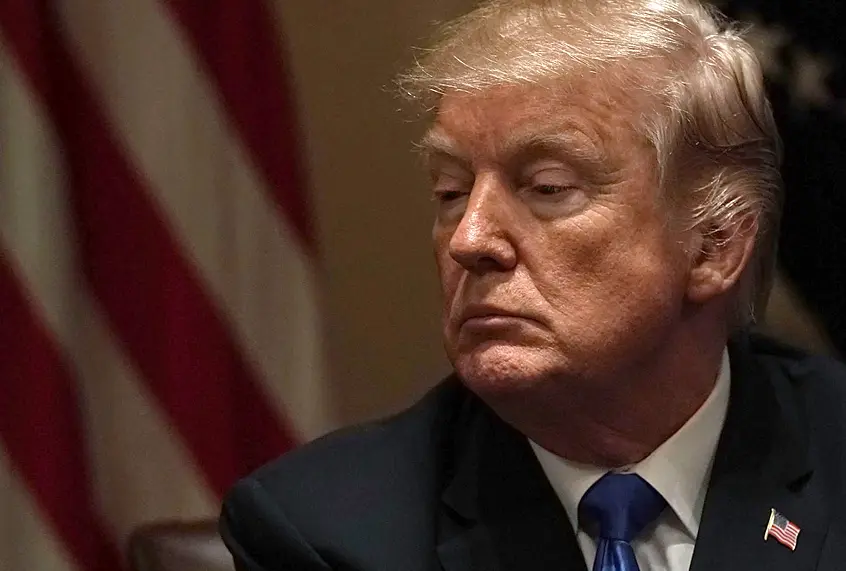
In the spring of 2018, the intersection of executive power, modern digital communications, and constitutional law reached a critical juncture in a New York federal courtroom. As President Donald Trump faced mounting legal pressure from Special Counsel Robert Mueller’s widening investigation into Russian election interference, his administration was simultaneously fighting a bizarre and unprecedented legal battle on an entirely different front: social media censorship.
In a filing submitted to the U.S. District Court for the Southern District of New York, the Department of Justice (DOJ) asserted an extraordinary legal claim—that the president of the United States possesses the constitutional authority not only to block critics from his personal Twitter account (@realDonaldTrump), but also to bar citizens from reading or interacting with official government accounts, specifically @POTUS and @WhiteHouse.
This assertion immediately drew sharp rebukes from legal scholars, civil liberties advocates, and the presiding judge, Naomi Reice Buchwald. At the heart of the dispute was a fundamental question of the digital age: Can a public official use designated government-run communication channels to disseminate vital public information while simultaneously locking out political detractors, all under the guise of the First Amendment’s "right not to associate"?
Critics and attorneys representing the plaintiffs—including the Knight First Amendment Institute—argued that the administration’s aggressive stance was not only legally untenable but deeply offensive to democratic norms. By attempting to equate blocking digital access with the constitutional right of non-association, while ignoring readily available platform tools like Twitter’s "mute" function, the White House transformed a simple administrative grievance into a high-stakes constitutional showdown over public access to government speech.
Detailed Chronology
The legal confrontation over presidential social media practices unfolded through a series of escalating court filings, hearings, and public statements during the early months of 2018.
Early 2018: The Knight Institute Lawsuit and Judicial Skepticism
The legal challenge originated from a lawsuit filed by the Knight First Amendment Institute on behalf of several individuals who had been blocked by President Trump after posting critical replies to his tweets. The plaintiffs argued that the president’s Twitter feed operated as a designated public forum, meaning that blocking users based on their political viewpoints constituted viewpoint discrimination in violation of the First Amendment.
As the litigation progressed, the presiding jurist, U.S. District Judge Naomi Reice Buchwald, expressed visible frustration with the administration’s legal strategy. During a court hearing on March 8, 2018, Judge Buchwald repeatedly questioned why the Justice Department was expending taxpayer resources to defend the practice when a simpler, built-in platform solution was readily available.
"Isn’t the answer he just mutes the person he finds personally offensive?" Judge Buchwald asked during oral arguments. "He can avoid hearing them by muting them. Why are we here? Don’t we have a solution that serves the interests of the plaintiffs, serves the interests of the president?"
Despite the judge’s pointed inquiries and suggestions for a pragmatic settlement, the administration’s legal team pushed forward, setting the stage for a broader defense of executive digital censorship.
March 28, 2018: The Justice Department’s Escalation
The controversy deepened on Wednesday, March 28, 2018, when the DOJ submitted a formal response to Judge Buchwald’s inquiries regarding whether the administration drew any legal distinction between the president’s personal account (@realDonaldTrump) and his official institutional accounts (@POTUS and @WhiteHouse).
Rather than clarifying that the policy applied solely to the personal account—or offering a compromise—the DOJ’s filing, led by attorney Michael Baer, took a profoundly pugnacious turn. The government explicitly refused to concede that blocking users from the official @POTUS and @WhiteHouse accounts would violate the First Amendment.
April 2, 2018: Public Revelation and Backlash
By Monday, April 2, 2018, the implications of the DOJ’s filing became public, sparking widespread condemnation. Legal analysts pointed out the absurdity of claiming that an administration could legally bar citizens from reading official announcements posted on institutional government handles. Critics drew parallels to an elected official attempting to ban constituents from reading printed press releases, checking public court notices, or accessing the official White House website.
Throughout April, attorneys for the Knight First Amendment Institute prepared their formal rebuttals, maintaining that the administration’s reliance on the "right not to associate" was a legally hollow smokescreen designed to shield the president from online dissent.
Supporting Context & Metrics
To fully understand the gravity of the 2018 Twitter litigation, one must examine the broader legal environment surrounding the Trump presidency and the unique nature of social media as an instrument of modern governance.
The Mueller Investigation and Legal Strategy Strain
The Twitter lawsuit coincided with a period of severe turmoil within President Trump’s legal orbit. As Special Counsel Robert Mueller’s investigation into ties between the Trump campaign and Russian operatives gathered momentum, the president struggled to secure and retain top-tier legal representation.
Reports from outlets such as The New York Times, The Washington Post, and New York Magazine highlighted Trump’s historical reputation for failing to pay independent contractors and legal counsel. More significantly, prospective attorneys were frequently deterred by the president’s insistence on pursuing aggressive, unorthodox public relations and legal strategies that directly attacked federal investigators and intelligence agencies.
While these combative tactics successfully maintained the loyalty of Trump’s political base, they carried no weight within actual courtrooms. Legal experts frequently noted a stark disconnect between the conspiracy-laden narratives advanced by the president’s external defenders and the strict evidentiary standards required by federal judges. The Twitter litigation was viewed by many observers as an extension of this pattern: a politically motivated fight pursued at the expense of sound legal precedent and judicial economy.
The Mechanics of Digital Governance
At the center of the dispute was a clash between traditional First Amendment jurisprudence and the proprietary architecture of modern social media platforms.
- The Public Forum Doctrine: Constitutional scholars argued that because the president used his social media accounts to conduct official state business—announcing policy decisions, firing cabinet secretaries, and issuing diplomatic statements—the interactive portions of those accounts functioned as public forums. Under established constitutional law, the government cannot exclude individuals from a public forum simply because they express disfavored viewpoints.
- The "Mute" vs. "Block" Distinction: Twitter offers two distinct tools for managing unwanted interactions:
- Blocking: Prevents the targeted user from seeing the account holder’s tweets, replying to them, or following the account entirely.
- Muting: Silences notifications from specific users without alerting them, allowing the account holder to curate their own digital experience while leaving the public record and viewing capabilities intact.
The administration’s insistence on utilizing the "block" function—and extending it to institutional accounts—ignited a debate over whether an official’s personal comfort could override a citizen’s right to petition the government and access public information.
Official Statements & Legal Arguments
The legal arguments presented by both the Department of Justice and the plaintiffs underscored a fundamental disagreement over the nature of presidential communication in the twenty-first century.
The Department of Justice Defense
In their written submissions to the U.S. District Court for the Southern District of New York, DOJ attorneys maintained that the First Amendment protects an official’s discretion over who they interact with on digital platforms. The government invoked the "right not to associate," suggesting that forcing a public official to maintain digital connections with hostile or abusive users infringes upon their own free speech and association rights.
Crucially, the DOJ’s filing addressed the official institutional handles:
"As an initial matter, the government does not concede — and did not mean to concede at oral argument — that blocking users from those two [official] accounts would run afoul of the First Amendment."
This broad assertion alarmed free speech advocates, who noted that the @POTUS and @WhiteHouse accounts are institutional assets funded by taxpayers and archived by the National Archives and Records Administration (NARA), distinguishing them from a purely personal campaign page.
The Plaintiffs’ Perspective
Katherine Fallow, a senior attorney with the Knight First Amendment Institute representing the blocked users, dismantled the administration’s legal justifications in statements to the press and subsequent court filings.
"We are going to be filing our formal response very soon, but reading through the letter, there is nothing new here. It’s just restating the same things they’ve already said in different language," Fallow told reporters.
The Institute argued that the government’s invocation of non-association rights was entirely inapplicable to public forums. They contended that while a private citizen has an absolute right to choose their associates, an elected official acting in an official capacity cannot discriminate against citizens based on political viewpoints within a government-controlled communication channel.
Judicial Warnings
Judge Buchwald made it clear that the judiciary viewed the administration’s stubbornness as an inefficient use of judicial resources. Warning of an unfavorable verdict should the administration refuse a settlement, the judge emphasized the practical path forward:
"If there’s a settlement that serves the interests of all parties," Buchwald cautioned during the March hearings, "it’s often considered the wisest way to go."
Despite this judicial warning, the White House elected to press forward, elevating a minor administrative dispute into a defining constitutional test for the digital era.
Future Outlook
The legal battles fought over presidential social media accounts in 2018 established vital precedents that continue to shape the boundaries of digital governance, free speech, and executive power.
As courts increasingly grapple with the realities of public officials conducting state business on private technological platforms, the fundamental principle affirmed by legal watchdogs remains clear: public servants cannot use the tools of modern communication to selectively silence critics without violating the core tenets of the First Amendment. The attempt by the Trump administration to claim the right to bar citizens from even reading official government accounts served as a stark reminder of the fragile nature of digital transparency and the ongoing necessity of judicial oversight in the electronic public square.