Executive Overview
The landscape of artificial intelligence is undergoing a profound structural shift. For the past several years, mainstream AI adoption has been dominated by conversational chatbots—sophisticated text-based interfaces that excel at generating ideas, drafting copy, and answering complex questions. Yet, despite their immense intellectual capacity, tools like ChatGPT and Claude have historically suffered from a fundamental bottleneck: the human-in-the-loop requirement. They ask, "How can I help you?" but leave the grueling execution, data transfer, cross-platform navigation, and multi-step orchestration entirely up to the user.
Enter the era of agentic workflows. Spearheaded by next-generation tools like Manus, the paradigm has shifted from conversational assistance to autonomous execution. Rather than waiting for incremental instructions at every phase of a task, agentic AI platforms ask, "What can I do for you?" and then independently coordinate multiple digital environments, access live web systems, execute complex sequences, and deliver fully realized business deliverables with minimal human supervision.
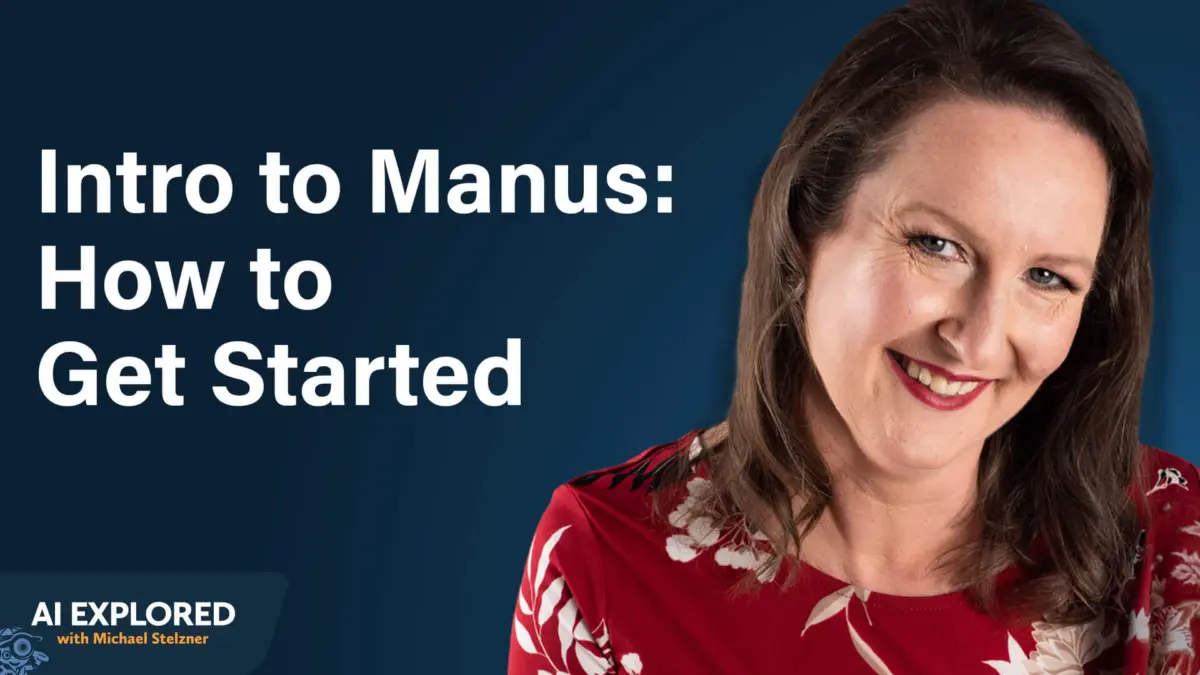
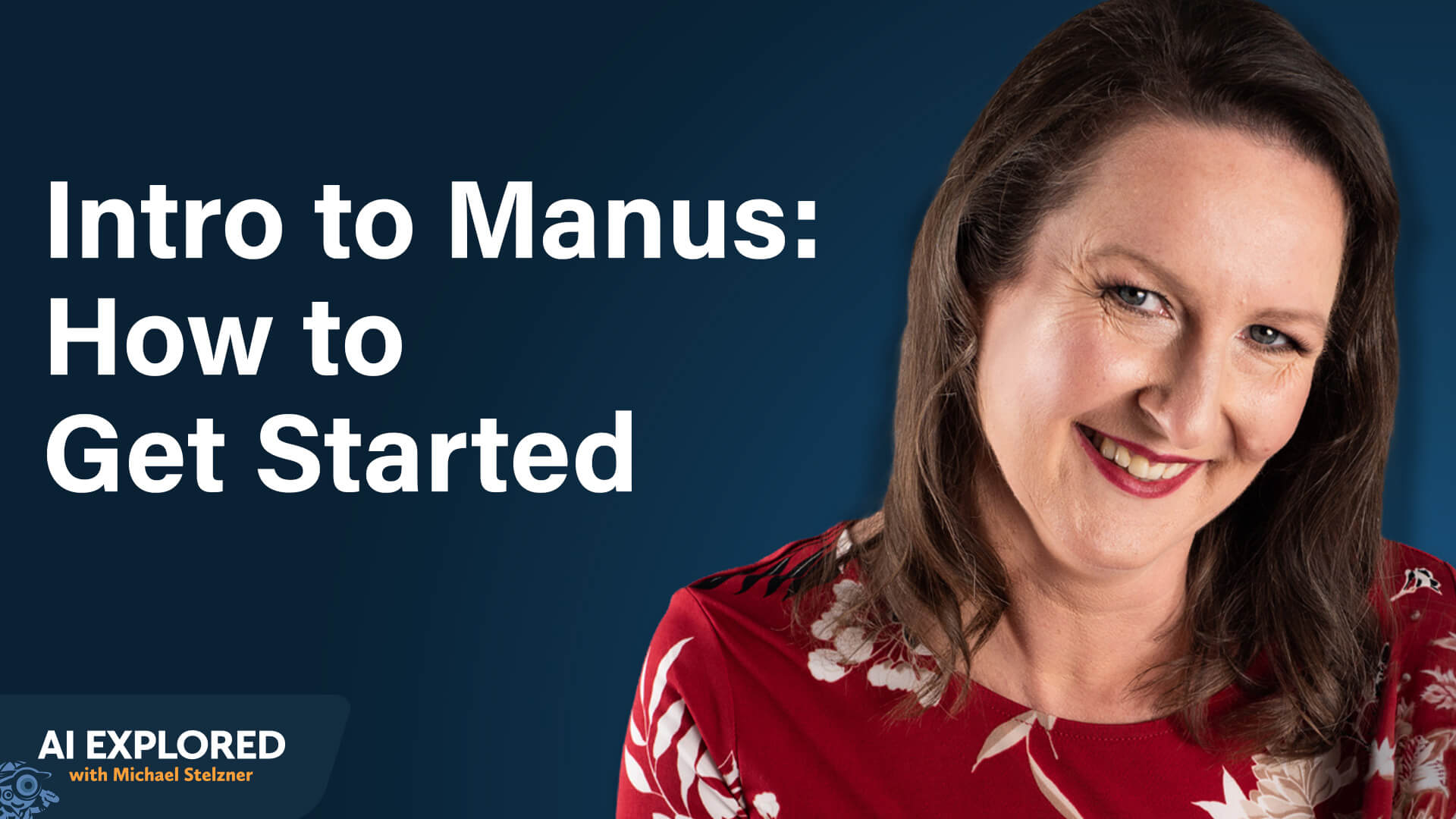
Co-created by marketing strategist Kate vanderVoort and industry analyst Michael Stelzner, recent breakdowns of Manus reveal that non-technical professionals can now build, deploy, and scale intricate automation pipelines using simple natural language. This report provides an exhaustive look into what makes agentic workflows distinct from legacy AI models, breaks down subscription metrics and access modes, details real-world enterprise use cases, and outlines best practices for prompting and scaling autonomous agents.
Detailed Chronology: The Evolution from Chatbots to Autonomous Agents
To understand the disruptive nature of Manus, one must trace the chronological evolution of commercial AI tooling over the last decade.
- Phase 1: Static Prompt-Response Models (2022–2023): Early large language models functioned primarily as sophisticated autocomplete engines. Users provided a prompt, received a text output, and manually copied, pasted, and reformatted that data into localized software (spreadsheets, content management systems, email clients).
- Phase 2: Assisted Tool Integration (2024–2025): Platforms began introducing function-calling and browser-extension capabilities, allowing AI models to interact with isolated external APIs. However, these systems still required continuous user validation, step-by-step guidance, and hand-holding to prevent errors or hallucinations.
- Phase 3: The Agentic Workflow Era (Present): Tools like Manus represent the normalization of autonomous agency. Operating via sandboxed cloud environments, desktop integrations, and Telegram pipelines, these agents plan their own execution paths. They break down high-level business goals into dozens of sequential sub-tasks, execute them across disparate platforms, and autonomously self-correct when encountering roadblocks.
The Core Differentiator: Execution Over Advice
The core philosophical difference between traditional LLMs and Manus lies in autonomy and tooling. Standard chatbots operate within strict conversational borders. If a marketer wants to research a prospective client, build a briefing dashboard, and write a targeted proposal, they must manually orchestrate multiple prompts across Perplexity, Gemini, Canvas, and Claude.
Manus collapses this friction-heavy pipeline into a single instruction. By leveraging natural language processing coupled with deep browser automation and file-system access, Manus acts as a digital workforce. It logs into secure platforms (such as LinkedIn or enterprise CRMs) using existing browser credentials without exposing sensitive passwords, extracts the necessary intelligence, synthesizes the findings, and drafts the final asset.
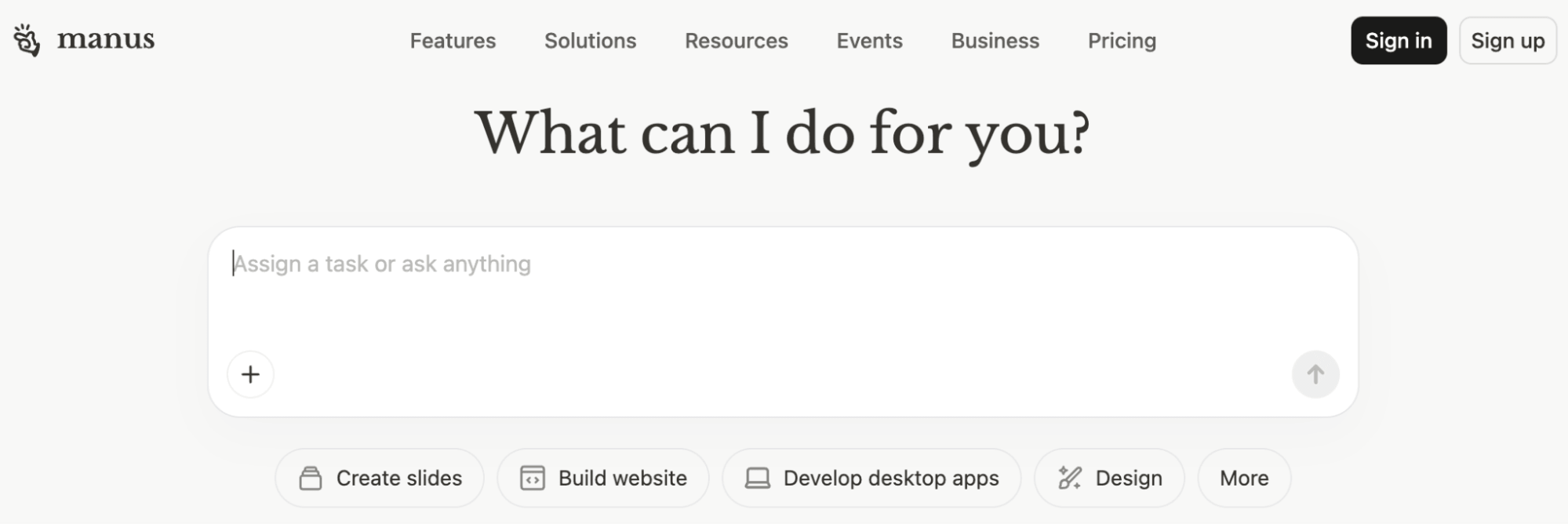
Crucially, this entire ecosystem requires zero coding background. Designed with intuitive natural language interfaces, it democratizes advanced automation for professionals in marketing, sales, and operations who previously relied heavily on engineering teams to build custom scripts or Zapier integrations.
Supporting Context, Architecture, and Pricing Metrics
Adopting agentic workflows requires a clear understanding of infrastructure costs, access topologies, and operational economics.
Subscription Models and Credit Economics
Manus employs a consumption-based credit model paired with tiered monthly subscriptions. This ensures that users pay for the computational and operational complexity of the tasks their agents execute:
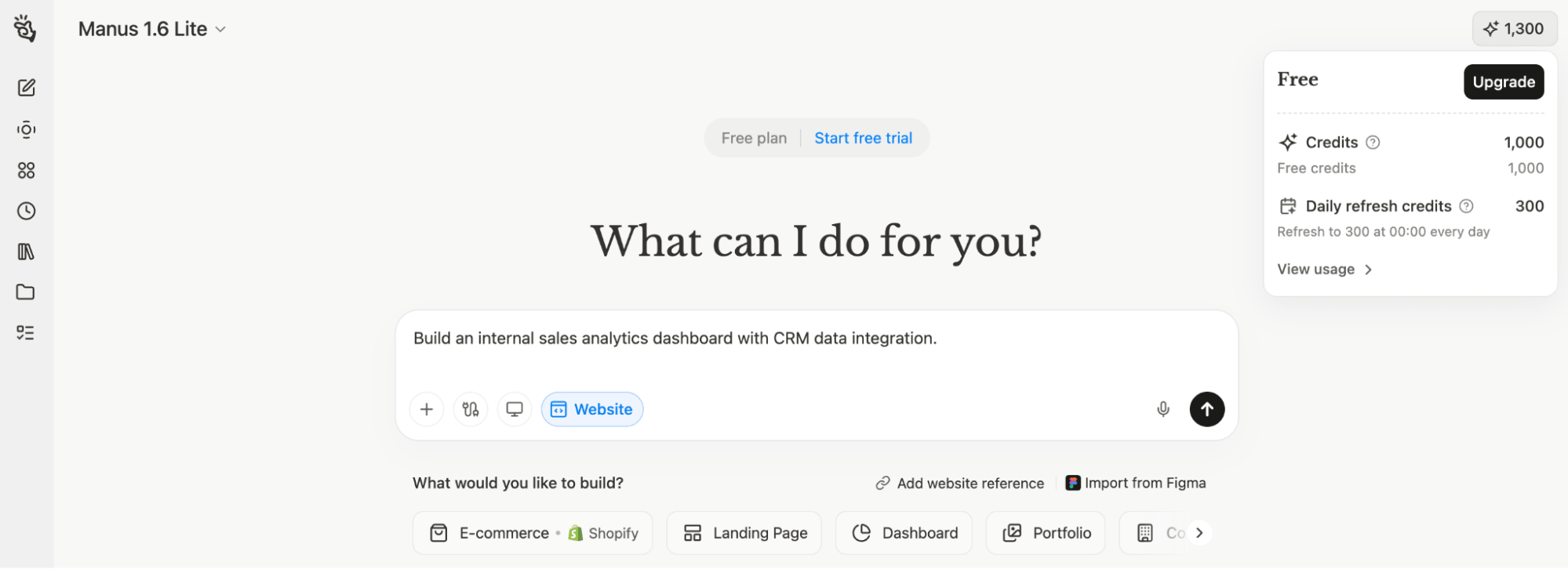
- Free Tier: Includes a foundational allocation alongside 300 refresh credits that reset every 24 hours. Ideal for light, daily utility queries.
- Entry-Level Paid Tier ($20/month): Grants 4,000 monthly credits, designed for individual professionals running moderate workflows.
- Mid-Tier ($40/month): Provides 8,000 credits for growing consultancies and small teams.
- Enterprise/Scale Tier ($200/month): Offers 40,000 credits for high-volume automated operations.
Operational Note: Unused credits do not roll over at the end of the billing cycle. While simple queries consume minimal resources (5 to 10 credits), deep autonomous workflows—such as multi-site web scraping, data synthesis, and long-form report generation—can consume 900 or more credits per run.
The Four Access Modes
Manus accommodates diverse operational styles through four distinct deployment environments:
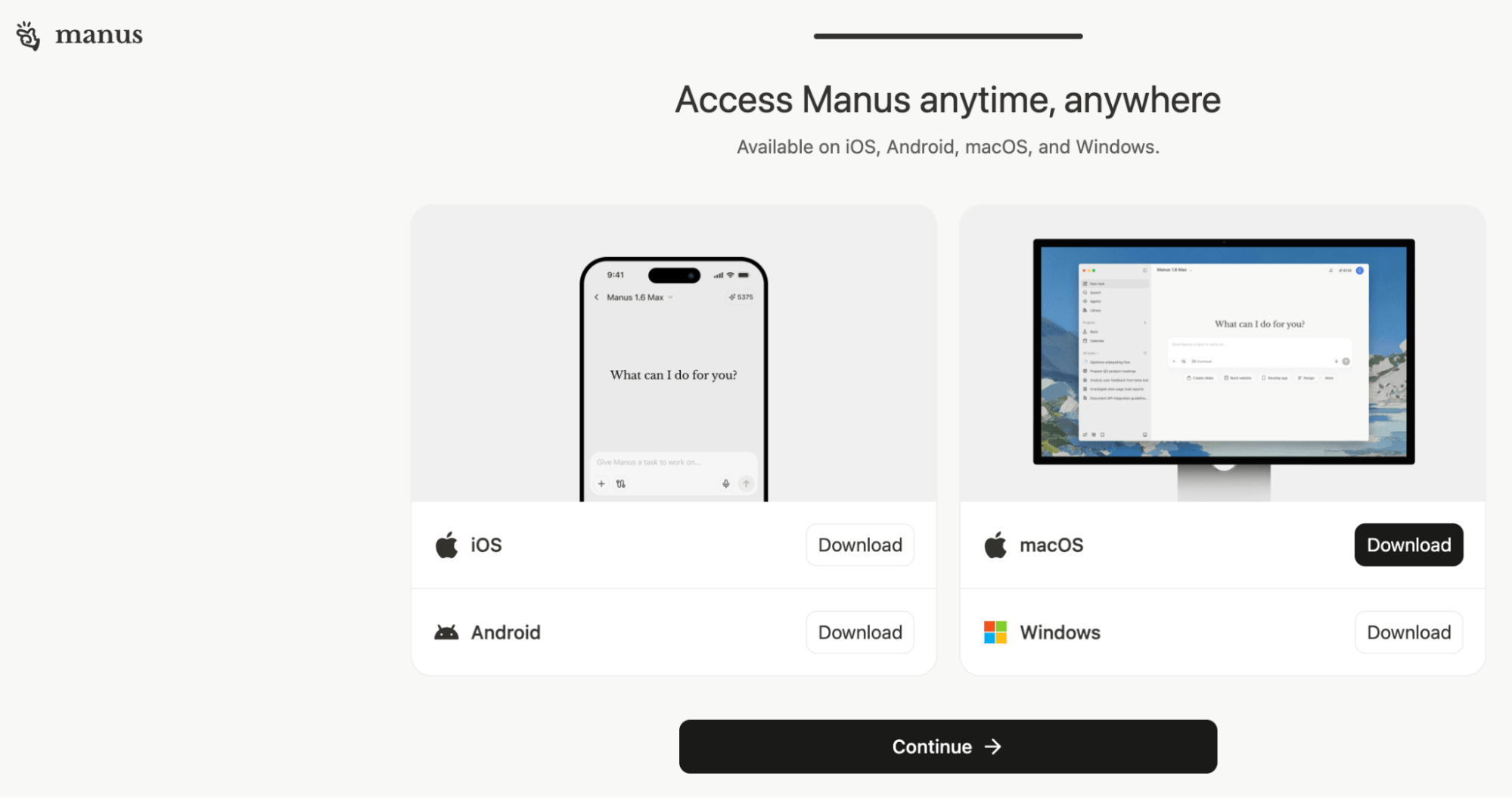
- Browser-Based Access: The familiar web application interface. Its superpower is browser automation: it can log into web applications as the user, navigate dashboards, and harvest data securely without viewing raw credentials.
- My Computer (Desktop App): Similar to local-first coding and documentation assistants, this mode grants Manus direct access to files stored on the user’s local machine, provided the computer remains powered on and active.
- Manus Agent via Telegram: A mobile integration that links Manus to a Telegram channel. This allows users away from their workstations to monitor long-running desktop tasks, receive status updates, and provide mid-process authorizations directly from their smartphones.
- Manus Cloud Computer: A fully persistent, virtual cloud environment running 24/7. Unlike standard sessions that spin up and dissolve within a temporary sandbox, the Cloud Computer maintains ongoing databases, executes background code via command-line interfaces autonomously, and handles continuous operations like competitor surveillance, social media management, and automated customer interaction pipelines.
Official Insights: Real-World Enterprise Applications
To evaluate the practical efficacy of agentic AI, business leaders must look beyond theoretical benchmarks and examine production deployments. Kate vanderVoort’s implementation metrics across her consulting business and client workshops illustrate the scale of transformation possible.
1. The Client Proposal Generation Pipeline
- The Legacy Workflow: Previously, onboarding a new corporate client required a fragmented, manual chain of operations. Researching a company via Perplexity, generating deep background briefings through Gemini Deep Research (producing 30 to 40 pages of data), building mapping dashboards via Gemini Canvas, conducting discovery calls, and finally feeding transcripts into Claude to draft a proposal consumed three to four hours of billable human time per client.
- The Manus Agentic Workflow: Today, Manus executes this entire sequence autonomously. It performs the background research, compiles the briefing dashboard, and drafts the personalized proposal. The human operator only intervenes to upload the final discovery call transcript into the active thread.
- Cost Efficiency: While building the initial workflow required an investment of roughly $15 in credits, subsequent execution for each new client drops to a fraction of that cost, saving hours of tedious administrative labor.
2. Autonomous Training Program Development
In a live workshop with a major food and beverage manufacturer, vanderVoort tasked Manus with designing a comprehensive corporate training program for their internal Learning and Development (L&D) team.
- Execution Metrics: Manus autonomously ran a 42-step task list for nearly 50 minutes. Recognizing data nuances within the prompt, it dynamically adjusted the curriculum from six modules to seven.
- Deliverables: The agent successfully produced a complete seven-module training program featuring experiential exercises, a 150-page training manual, and an interactive quiz system capable of grading learner progression module by module.
- Business Impact: The corporate L&D team revealed they had spent two years stalled on step four of the project and had recently considered paying an external agency $150,000 to complete the curriculum. Manus delivered the functional equivalent in under an hour.
Strategic Implementation: Prompting and Reusable Skills
Maximizing the return on investment with agentic tools requires a distinct departure from standard conversational prompting.
The Consultant Mindset: Advanced Prompt Preparation
When hiring a high-level consultant at $500 an hour, an executive does not waste billable time brainstorming objectives on the fly; they arrive with a comprehensive brief. Manus operates under the exact same economic principle. Interacting with an autonomous agent in real-time to figure out scope burns valuable credits while the agent waits idly.

To optimize efficiency, professionals should draft their Manus prompts within secondary LLMs (such as Perplexity Pro) before opening the Manus platform. Using voice-to-text tools like Wispr Flow, users can perform an unedited brain dump of their requirements, followed by this strict programmatic instruction:
"Please write a highly optimized prompt for a Manus AI agent. Do not do the task."
The inclusion of the negative constraint prevents the auxiliary LLM from attempting the work itself, resulting in a structured, highly detailed operational brief ready for immediate deployment in Manus.

Scaling via Manus Skills and Standard Operating Procedures (SOPs)
Skills are the foundational multiplier of the Manus ecosystem. Structurally packaged as zip folders containing explicit instructions, naming conventions, descriptions, and contextual assets (such as brand voice guidelines and formatting templates), Skills allow complex workflows to be saved and repeated indefinitely.
- Dynamic Loading: Manus reads only the name and description of stored skills to determine contextual relevance, pulling the full underlying code and context into memory only when invoked. This keeps token and credit usage remarkably lean.
- Building Business Intelligence: By codifying internal Standard Operating Procedures (SOPs)—particularly across structured frameworks like 14-point business categorization models—professionals can transform raw human expertise into machine-executable skills. When an agent executes a task successfully, Manus prompts the user to save the pipeline as a permanent skill, ensuring that business processes remain standardized, repeatable, and scalable across entire organizations.
Future Outlook
The maturation of agentic workflows signals the definitive twilight of administrative friction in the modern workplace. As tools like Manus evolve, the role of the knowledge worker is shifting from executor to architect.
In the near future, the competitive advantage will no longer belong to those who can type the fastest or manage the most browser tabs, but to those who can design the most resilient, intelligent operational pipelines. With cloud-hosted autonomous agents running 24/7—monitoring markets, managing client communications, and self-optimizing business intelligence centers—enterprises that embrace agentic workflows today will undoubtedly set the standard for speed, scale, and operational efficiency in the years to come.