Executive Overview
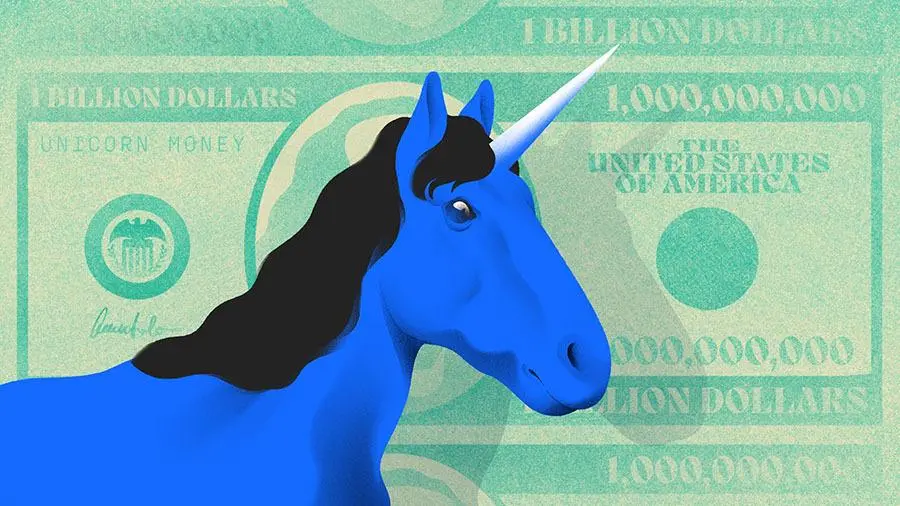
The venture capital landscape is experiencing a definitive resurgence, marked by an unprecedented wave of newly minted unicorns that is reshaping the global innovation economy. According to comprehensive data from the Crunchbase Unicorn Board, the pace of private market value creation has accelerated dramatically. Between January 1 and August 15, 2026, an impressive 250 companies have vaulted past the coveted $1 billion valuation threshold. This represents a robust year-over-year increase compared to the 193 companies that achieved unicorn status during the same period in 2025.
At the center of this momentum are the elite tier of institutional venture capital firms. Legacy heavyweights—most notably Sequoia Capital, Khosla Ventures, and startup accelerator behemoth Y Combinator—have emerged as the most prolific backers of this 2026 cohort. These institutions are not merely writing checks; they are engineering the market’s trajectory, leveraging deep capital reserves and multi-stage investment platforms to capture outsized stakes in tomorrow’s enterprise giants.
This year’s unicorn class is distinguished not only by its sheer volume but also by its thematic concentration. Capital is flowing aggressively into frontier technologies, with robotics, specialized AI labs, artificial intelligence infrastructure, and AI deployment algorithms leading the charge. Simultaneously, traditional stalwarts like financial services, biotechnology, and advanced healthcare continue to command substantial valuations. Regionally, the United States remains the epicenter of venture-backed hyper-growth, housing 139 (or 56%) of the newly minted unicorns, while China follows as a formidable second with 47 companies (19%), anchored by active domestic and cross-border investment networks.
Beneath the headline-grabbing valuations lies a compelling story of capital concentration. Data analysis reveals that 75% of all historic funding raised by this cohort—amounting to an astonishing $74 billion out of a cumulative $98 billion—was injected in 2026 alone. While deal volume has hit a modern high-water mark with 329 distinct transactions recorded this year, the foundation for these unicorns was laid years prior. Seed investments tracing back to 2012, Series A rounds initiated in 2014, and Series B expansions beginning in 2017 demonstrate that the path to a billion-dollar valuation requires a long-term, patient commitment—even as the final dash to unicorn status has compressed dramatically since 2024.
Detailed Chronology and Investment Lifecycle
To fully comprehend how 2026’s unicorns reached their current apex, one must examine the chronological pipeline of venture financing. The journey from a nascent garage startup to a billion-dollar enterprise rarely happens overnight. For this current cohort, the evolutionary timeline spans over a decade, though the velocity of capital deployment has undergone a profound transformation.
The Seed Foundation (2012–2021)
The earliest venture seeds for today’s unicorns were planted as early as 2012. During this period, foundational technological shifts—particularly the democratization of cloud computing and early deep learning breakthroughs—attracted visionary micro-VCs and accelerators. Y Combinator and Sequoia Capital established an early dominance in this cohort’s seed portfolios, deploying strategic amounts of $20 million or less to capture prime market real estate.
Specialized seed players also punched well above their weight class during these formative years. New York-based BoxGroup secured the third-largest count of seed portfolio companies in the 2026 cohort, a remarkable feat considering its leaner fund sizes relative to multi-billion-dollar generalist funds. Other notable seed-stage contributors included Soma Capital with five portfolio companies, alongside South Park Commons, Lux Capital, and Founders Fund, each anchoring four seed-stage companies. Notably, Lux Capital and Founders Fund exhibited a high degree of syndicate crossover at the earliest stage, sharing three out of their four seed investments.
The Series A Acceleration (2014–2023)
As these companies moved out of the ideation phase and into product-market fit, Series A rounds became the crucible for long-term partnership. Andreessen Horowitz emerged as the most active Series A lead investor for this group, while Khosla Ventures, Spark Capital, and Sequoia Capital tied closely behind, each leading six Series A rounds.
The financial contours of Series A financing during this cycle varied wildly. Check sizes spanned anywhere from $6 million to an unprecedented $500 million, reflecting an era of inflated round sizes and hyper-competitive valuations. While mega-rounds became a hallmark of the broader venture market, a select group of disciplined investors—namely Ant Group, Founders Fund, and Bessemer Venture Partners—maintained rigorous valuation discipline, often bypassing the market’s penchant for bloated early-stage rounds in favor of measured capital injections.
The 2026 Hyper-Growth Inflection
The defining characteristic of the 2026 unicorn cohort is the sheer velocity of capital concentration in the final stretch. While the underlying companies accumulated their historical funding across hundreds of deals spanning over a decade, three-quarters of all capital—$74 billion—was poured into these enterprises within the first eight months of 2026. This signals a bifurcated market: while early-stage investing remains methodical and risk-averse, growth and late-stage capital is aggressively chasing proven winners, driving up valuations and fast-tracking companies onto the Crunchbase Unicorn Board.
Supporting Context and Metrics: The Top 10 Breakdown
An analysis of the top 10 most active investors across the entire lifecycle of the 2026 unicorn cohort reveals a clear hierarchy dominated by generalist venture giants, complemented by specialized outliers.
The Top 10 firms, ranked by cumulative investment count in this specific cohort, comprise:
- Sequoia Capital
- Khosla Ventures
- Y Combinator
- Lightspeed Venture Partners
- Founders Fund
- Andreessen Horowitz
- Bessemer Venture Partners
- Lux Capital
- General Catalyst
- BoxGroup
Ecosystem Diversity: Accelerators, CVCs, and PE
While traditional venture capital funds command the lion’s share of the rankings, the ecosystem supporting these 29 elite investors features distinct structural archetypes:
- Accelerators: Y Combinator stands alone as the sole accelerator to crack the Top 10, underscoring its unmatched engine for generating early-stage outlier companies.
- Seed Specialists: BoxGroup represents the premier dedicated seed investor operating at the highest echelons of unicorn creation.
- Geographic Expansion: HSG (formerly Sequoia Capital China), operating out of Hong Kong with an extensive footprint across mainland China, serves as the preeminent Asian powerhouse represented in the leading investor circle.
- Private Equity and Corporate VCs: The boundaries between traditional VC, private equity, and corporate venture capital (CVC) continue to blur. Valor Equity Partners and Thrive Capital represent the private equity vanguard active in this cohort, while strategic corporate players such as Google Ventures (GV), Nvidia, and NVentures wield significant balance-sheet influence to secure stakes in frontier tech and AI infrastructure plays.
Perspectives from the Vanguard
The concentration of power among a handful of multi-stage venture institutions has sparked intense debate regarding market access, syndication dynamics, and the future of startup governance. Industry observers and fund managers point out that the structural advantages held by firms like Sequoia, Andreessen Horowitz, and Lightspeed give them an insurmountable edge in capturing top-tier deal flow.
"As funding activity, unicorn creation, and valuations accelerate in 2026, the investors with the largest portfolios are unequivocally those with early-stage access and the deep balance-sheet resources required to continue backing companies aggressively as they scale," notes a leading venture capital analyst tracking global private markets.
This sentiment is echoed by founders navigating the current fundraising environment. With multi-stage funds operating internal pipelines that can seamlessly transition a company from a $5 million seed round to a $100 million Series B without ever opening the capitalization table to outside syndicates, early access has become the ultimate currency in venture capital.
Furthermore, corporate venture capital arms—particularly those tied to semiconductor and cloud computing giants like Nvidia—play an indispensable role in the 2026 cohort. Beyond capital, these strategic investors provide critical hardware allocations, proprietary compute clusters, and immediate enterprise distribution channels that traditional financial sponsors simply cannot replicate. This has transformed standard equity financings into highly strategic, ecosystem-locking alliances.
Future Outlook: Navigating the Post-Unicorn Horizon
As the venture ecosystem passes the milestone of 250 new unicorns for the year, the broader industry must confront a sobering reality: achieving a $1 billion valuation is no longer the ultimate validation of business longevity; rather, it is merely the entry ticket to a far more rigorous economic arena.
The overarching question defining the remainder of 2026 and heading into 2027 is whether these newly minted unicorns can successfully transition rapid capital formation and lofty, paper-based valuations into durable, cash-flow-positive, category-defining enterprises. The macroeconomic backdrop—characterized by shifting interest rate expectations, evolving global regulatory scrutiny on artificial intelligence, and tightening public market exit windows—will test the operational resilience of these high-flying startups.
For the elite venture firms topping the Crunchbase leaderboard, the mandate moving forward involves active portfolio management and strategic guidance. Having successfully engineered the financial acceleration of their portfolio companies through the turbulent early-stage and growth cycles, Sequoia, Khosla, Y Combinator, and their peers must now steer these enterprises toward sustainable monetization, strategic consolidation, or viable public market debuts.
Ultimately, the 2026 unicorn class will serve as a bellwether for the next decade of technological innovation. If these companies can harness the monumental inflows of capital to solve complex enterprise and consumer problems at scale, the venture capital elite will have successfully midwifed a historic generational shift in the global economy. If not, the heavy concentration of capital recorded in 2026 may serve as the high-water mark of a cycle defined more by valuation velocity than enduring economic value.