Executive Overview
Throughout history, humanity’s persistent dissatisfaction with the mundane realities of daily existence has driven the invention of transformative technologies. From the mythological artifacts of ancient folklore to the whimsical time-travel and alternate-reality devices of contemporary science fiction, human ingenuity has consistently returned to a single, unifying premise: what if we could enhance, alter, or completely bypass the lived experience?
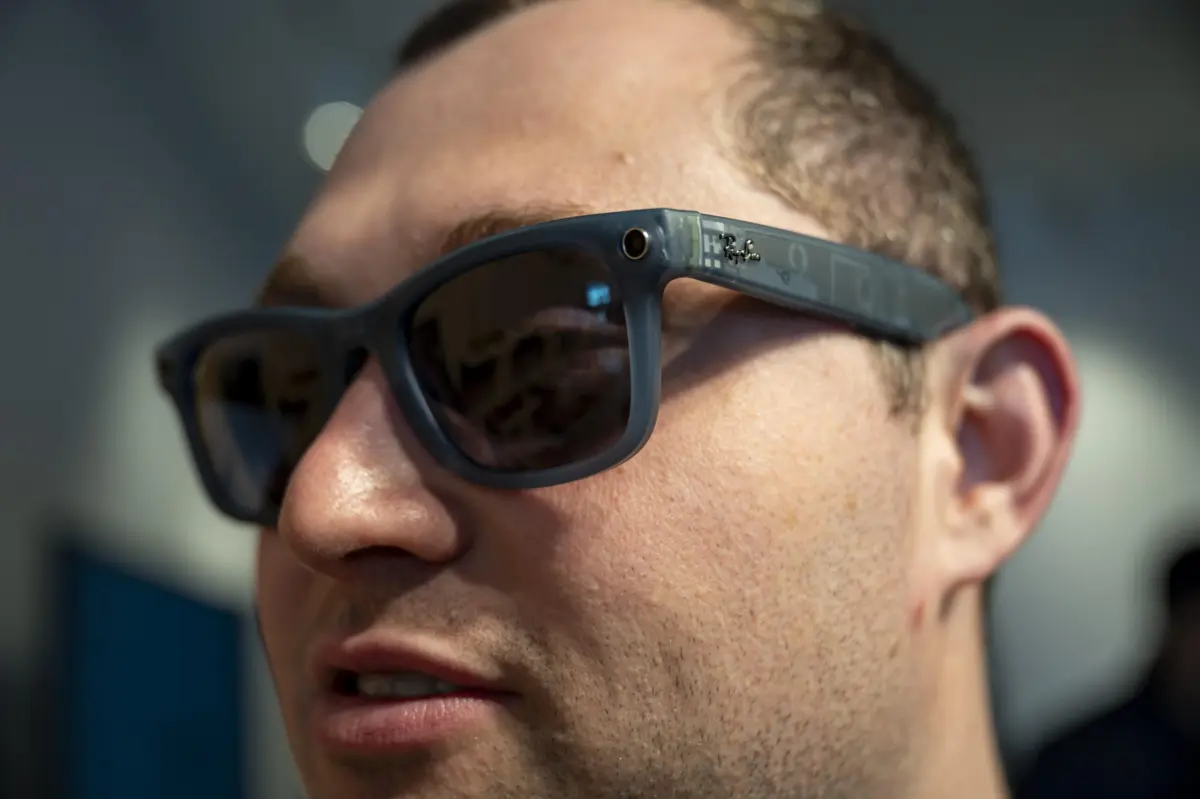
In 2026, that literary trope has materialized as a commercial product. Enter the $300 Meta AI-enhanced smart glasses—disguised as stylish Ray-Bans, yet packing dual high-resolution cameras, multiple integrated microphones, tiny directional speakers, and an always-ready connection to an on-device AI ecosystem. Promoted as a seamless digital companion, these spectacles allow users to translate foreign languages on the fly, command music playlists, interact with contextual visual intelligence, and—most critically—record anything, anywhere, and potentially store it forever.
According to Meta’s multi-million-dollar promotional campaigns, wearing these glasses is meant to make life effortlessly better. You are encouraged to wear them everywhere: tucked inside dimly lit Japanese restaurants, flashing through neon-soaked nights at exclusive clubs, navigating crowded city escalators, standing backstage at concerts, or skydiving over coastal retreats.
Yet, this utopian vision collides with a messy, highly uncomfortable social reality. Beneath the glossy marketing veneer lies a growing public backlash. These super-powered spectacles run a continuous risk of annoying, offending, or deeply unnerving the people caught in their crosshairs. By simply wearing them in public spaces, early adopters and casual users alike are discovering a harsh truth: Meta’s smart glasses have an uncanny ability to completely kill the social vibe, alter human behavior through an omnipresent panopticon effect, and earn a deeply troubling, difficult-to-shake moniker: "pervert glasses."
Detailed Chronology: From Silicon Valley Pitch to Public Backlash
To understand how a sleek piece of eyewear devolved into a social lightning rod, it is necessary to trace the trajectory of how wearable technology has integrated—and frequently collided—with public spaces over the past several years.
Phase 1: The Honeymoon Phase and the Marketing Onslaught
When Meta first accelerated its push into AI-infused smart glasses, the marketing strategy was built entirely around hyper-ubiquity. Utilizing high-profile spokesmodels like pop-culture icon Kylie Jenner, Meta framed the glasses not as a nerdy piece of enterprise hardware—the fatal flaw of Google Glass a decade prior—but as an essential lifestyle accessory. The pitch was simple: your perspective matters, and the world deserves to see through your eyes.
Early buyers rushed to purchase the hardware in late 2025 and early 2026. Creators envisioned effortless point-of-view (POV) content creation for TikTok, Instagram Reels, and YouTube Shorts. For a brief moment, wearing black Ray-Bans indoors or at social gatherings was seen as cutting-edge trendsetting.
Phase 2: The Realization of Social Friction
The honeymoon period, however, was remarkably short-lived. As adoption scaled, non-users began to notice the subtle visual cues of the hardware. In cities like Washington D.C., New York, and Miami, casual observers started spotting fitness trainers, fellow commuters, and partygoers wearing opaque black frames that felt distinctly out of place.
Real-world friction quickly followed. Interviewed for this piece under pseudonyms to speak freely, everyday citizens shared mounting instances of unease. Sean, a Washington D.C. resident, recalled noticing a gym trainer wearing the distinctive Ray-Ban frames. "I almost said something to a manager, but then he stopped wearing them before I could say anything," Sean noted, capturing the paralyzed hesitation felt by many bystanders who find themselves unsure of how to confront suspected recording.
Phase 3: The "Pervert Glasses" Phenomenon and Underground Misuse
As the hardware saturated nightlife districts, music festivals, and private events, a darker subculture emerged. A vocal contingent of internet pranksters, pickup artists, and bad actors began leveraging the glasses’ discreet form factor to covertly film individuals—frequently women in various states of undress or intoxication—without their explicit knowledge or consent.
This seedy underbelly led to widespread condemnation across social media platforms. Reddit and other digital forums were forced to crack down on unauthorized, candid video-sharing rings originating from festivals and clubs. Consequently, the public perception of the device underwent a radical shift. The hardware acquired an unavoidable, deeply damaging pejorative label: "pervert glasses." Nightlife aficionados began organizing petitions to ban the eyewear from bars and dance floors entirely, arguing that intoxication and constant, unconsenting surveillance are entirely incompatible.
Supporting Context & Metrics: The Panopticon Effect in Real Life
The psychological fallout of Meta’s smart glasses can be analyzed through the lens of Jeremy Bentham’s panopticon—a institutional design where an observer can watch all inmates without them knowing whether they are being watched, forcing them to constantly regulate their own behavior.
When applied to public consumer spaces, this dynamic yields severe social costs:
- The Behavioral Chilling Effect: According to nightlife veterans and casual observers alike, the mere presence of a recording device fundamentally changes human interaction. People stop cutting loose, monitoring their movements, expressions, and conversations out of fear that they might become unwilling background characters in a stranger’s viral video.
- The Indicator Light Dilemma: To mitigate privacy concerns, Meta integrated a visible white/red LED indicator light on the frame to signal when recording is active. However, in dimly lit environments like restaurants, clubs, and theaters, this light acts as an obnoxious "vibe-kill." It alerts everyone in the vicinity that a camera is rolling, creating a palpable tension.
- The Hacking Epidemic: Driven by the desire to avoid public scorn, a subset of users attempted to tamper with or disable the mandatory recording lights. This counter-movement directly fueled the "pervert glasses" narrative, forcing Meta to rush out emergency firmware updates designed to completely brick or disable recording capabilities if the physical indicator light is manipulated.
Consider the experience of Jason, a 28-year-old who purchased a pair in November with dreams of launching a food-review brand called Sandwich Digest. Walking into a Japanese sandwich shop for his first test run, Jason experienced immediate panic.
"I felt so uncomfortable," Jason recalled, noting that the obviousness of his glasses and their glowing recording light spiked his self-consciousness. "But I also felt like the people I was interacting with were also uncomfortable. And I felt like they were feeling like, Okay, we both know this is weird, but I can’t say that because you’re actively filming me."
For Jason, the experiment was a failure. He abandoned his food-critic ambitions and now limits his use strictly to solo outdoor excursions like ziplining or hiking in remote areas—activities where "the ocean, mountains, flowers, and trails do not care about being filmed the way people do."
Official Statements & Industry Response
Faced with mounting public relations crises, regulatory scrutiny, and a burgeoning reputation as a privacy nightmare, Meta has been forced to recalibrate its messaging and software deployment strategy.
In mid-2026 corporate updates, Meta executives addressed consumer anxieties directly, rolling out stringent software countermeasures. The company’s updated safety protocols state that any attempt to hardware-hack, obstruct, or tamper with the external recording LED will instantly trigger a software lock, disabling the camera suite entirely.
Industry analysts note that Meta is walking a precarious tightrope. On one hand, the company heavily promotes the non-surveillance utility of the glasses:
- Accessibility: Real-time visual and auditory assistance designed to empower individuals with reduced vision or hearing impairments.
- Productivity & Utility: Hands-free phone calling, instant real-time foreign language translation, and integrated sun protection.
- Augmented Reality Foundations: Building the foundational software architecture necessary to transition consumers from smartphones to spatial computing.
Yet, despite these genuine technological advancements, company leadership acknowledges that public perception remains tethered to the camera. Max, an Australian-based owner who wears his Meta glasses roughly 40 hours a week for work and commuting, points out the complex dichotomy of modern public surveillance:
"While we’re constantly being recorded when in public anyway, there’s a big difference between mass surveillance and one random weirdo recording you for their own purposes," Max observed. He argues that despite its awkwardness, the indicator light remains the sole defensive barrier wearers have against public hostility. "If the firmware update is successful, and the marketing around the update is widespread, I think we can slowly turn the public in their favor again."
Future Outlook: Can Smart Glasses Shed Their Infamy?
As we look toward the remainder of 2026 and beyond, the future of AI-enhanced eyewear hangs in a delicate balance between utility and social ostracization.
The core conundrum facing the industry can be summarized simply: Even if you are not using these glasses to act as a creep, people automatically assume you are—and you are acutely aware of their suspicion.
For smart glasses to truly transcend their current cultural bottleneck, several structural shifts must occur:
- Cultural Etiquette Evolution: Just as mobile phone usage evolved from being a rude disruption in public spaces to an accepted norm with unspoken rules (e.g., speakerphone taboos), wearable camera culture will require strict, community-enforced codes of conduct. Filming must become opt-in by default, restricted strictly to private spaces or explicit group consent.
- Hardware Transparency: Hardware manufacturers must make privacy indicators tamper-proof and undeniably visible, even in bright sunlight or pitch-black night clubs. Restoring public trust requires absolute certainty that recording cannot happen covertly.
- Pivoting the Value Proposition: Until the public associates smart glasses primarily with health, accessibility, productivity, and heads-up computing rather than covert content generation, the shadow of the "pervert glasses" moniker will persist.
Ultimately, Meta’s smart glasses are a mirror reflecting our society’s deepest contradictions. We live in an era where everyone is encouraged to broadcast their personal perspective to the world via endless digital platforms, yet we fiercely protect our right not to be unwilling extras in someone else’s digital narrative. Until technology companies and consumers find a harmonious equilibrium between self-expression and radical respect for personal privacy, wearing a pair of AI glasses in public will remain a hazardous social experiment—conducted entirely at your own risk.