Executive Overview
In the modern technology landscape, the archetype of the venture-backed startup founder is often narrow: a computer science prodigy straight out of Stanford or MIT, writing code in a dorm room before dropping out to conquer Silicon Valley. Yet, a quiet counter-revolution is reshaping the venture ecosystem. Non-technical founders—those steeped in the humanities, manual trades, or operational trenches—are increasingly building high-growth, deeply technical companies that command massive valuations.
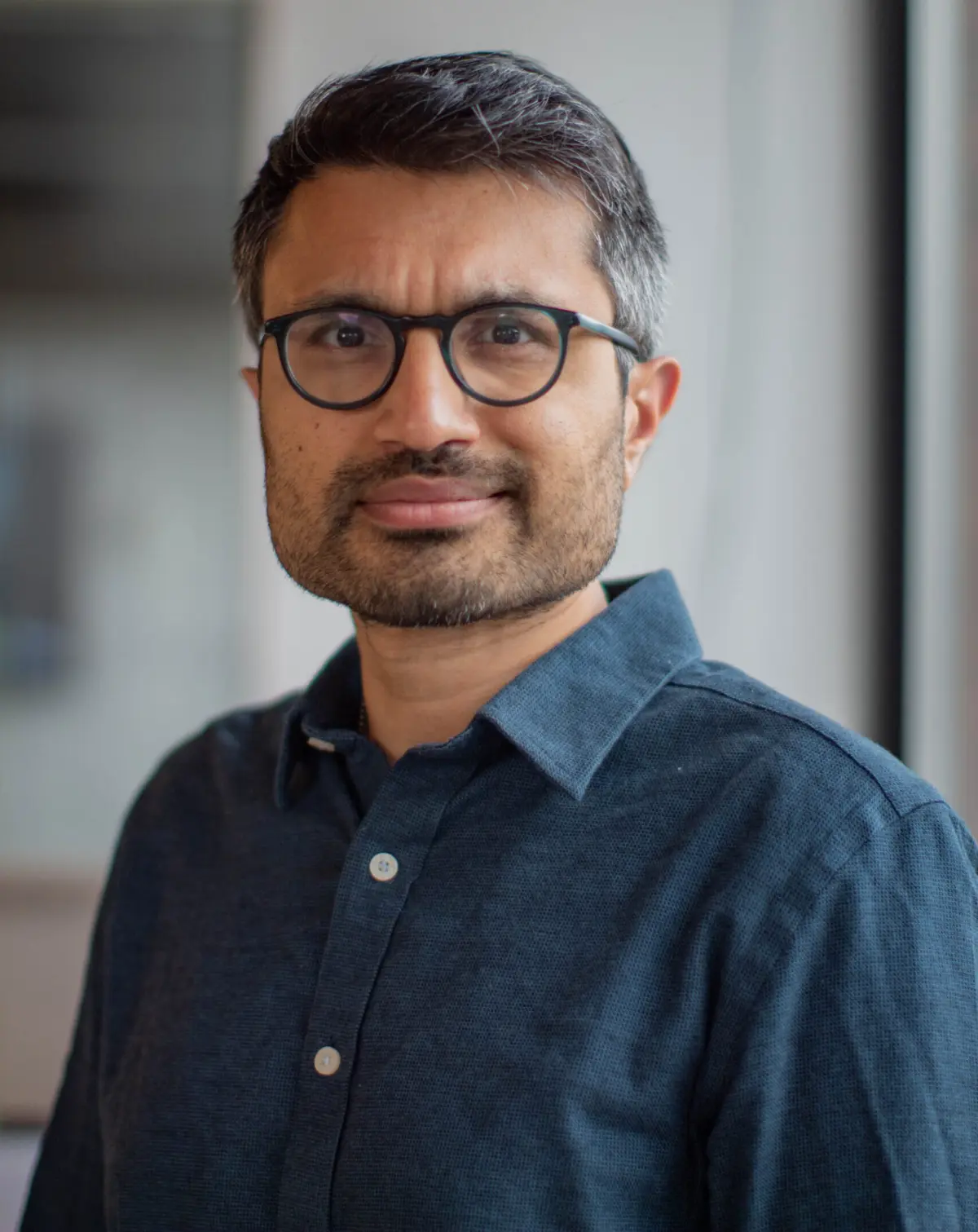
Ali Hussain, co-founder and CEO of New York-based financial automation platform Tabs, represents the pinnacle of this shift. Hussain did not study computer science, nor did he write a single line of code for his platform. Instead, his journey winds from packing cigarette cartons in a St. Paul convenience store as a child of Pakistani immigrants, through the rigorous corridors of Cornell and Oxford, into the high-stakes crucible of management consulting and early-stage tech operations.
Launched in 2023, Tabs leverages artificial intelligence to automate complex corporate finance workflows, including revenue recognition, billing, and collections. In a remarkably short span, the company has raised approximately $90 million in venture capital, scaled to a headcount of roughly 180 employees, and secured a staggering $400 million valuation.
This profile, the third in an ongoing series examining successful non-technical startup founders, explores how Hussain’s atypical background forged the resilience, operational clarity, and commercial vision necessary to build a deep-tech fintech juggernaut.
Detailed Chronology: From the Corner Store to the C-Suite
The St. Paul Foundation: Immigrant Grit and Early Lessons
Ali Hussain’s understanding of business did not come from an MBA textbook or a venture capital pitch deck; it was forged in the aisles of a family-owned convenience store in St. Paul, Minnesota. His father, a first-generation immigrant from Karachi, Pakistan, began his American working life at a 7-Eleven. Through relentless labor—working seven days a week, 365 days a year—he eventually transitioned from employee to independent store owner.
For Hussain, childhood meant being immersed in this environment. He spent his formative years stocking shelves, packing cigarette cartons, and observing firsthand the grueling realities of small-business survival. It instilled an unyielding work ethic, but it also came with a clear directive from his father. Rather than grooming his son to take over the corner store, his father viewed education as an escape hatch.
"My dad didn’t want me to necessarily come back to the store," Hussain recalls. "He’s like, ‘Look, this is what I did and built. Go use school as a mechanism to leave.’"
Academia, Oxford, and the Pivot at 23
Taking his father’s advice to heart, Hussain secured a prestigious scholarship from the Telluride Association, enabling him to attend Cornell University. There, he immersed himself in the humanities, falling deeply in love with comparative politics and history. Consumed by the intellectual rigor of academia, he graduated with honors and immediately crossed the Atlantic to pursue a Ph.D. at the University of Oxford on a Marshall Scholarship.
However, the reality of a protracted academic life set in rapidly. Barely two months into his doctoral studies, Hussain faced an existential realization.
"I realized this is a terrible idea," Hussain admits. "I grew up way too scrappy packing the cooler to survive through a postdoc and potentially a very structured 10-year career, which seemed very hard and long and not in my control."
At just 23 years old, Hussain made the abrupt and courageous decision to alter his life’s trajectory. Abandoning academia entirely, he took a position in management consulting with The Boston Consulting Group (BCG) in the Midwest. While BCG served as an intensive crash course in corporate finance, spreadsheet modeling, and business operations, the rigid corporate hierarchy lacked the entrepreneurial agency he had witnessed in his father’s store.
The Latch Apprenticeship: Learning the Tech Playbook
Craving direct immersion in the technology sector, Hussain made a high-risk career move in 2015. He accepted a massive pay cut to join Latch, then an early-stage, 10-person seed startup, as its first operations hire.
Reflecting on that transition, Hussain notes that launching his own venture straight out of Oxford or BCG would have been nearly impossible.
"One of the things that often keeps many non-technical founders out is the ability to access capital, but also understand the playbook of how to build, how to design around a real problem, and build a team."
Over the course of six years at Latch, Hussain served as an operational sponge. As the company scaled to tens of millions in revenue, he mastered critical entrepreneurial competencies: how to target massive addressable markets, how to recruit and surround oneself with complementary talent, and how to position a company to capitalize on generational technology shifts. This "apprentice" phase provided the foundation he needed to transition from operator to founder.
Supporting Context & Metrics: The Anatomy of Tabs
By 2023, Hussain was ready to apply the cumulative lessons of his career to a problem he had observed firsthand across corporate environments: the inefficient, manual nightmare of B2B financial operations. Together with deeply technical co-founder Deepak Bapat, Hussain launched Tabs.
The Technological and Market Problem
Finance and accounting departments are notoriously weighed down by legacy processes. Revenue recognition, complex contract billing, and collections remain largely manual tasks prone to human error and administrative bloat. Tabs introduced an AI-driven platform designed to ingest complex customer contracts, automate billing schedules, and streamline revenue accounting.
For Hussain, recognizing his own limitations was just as important as leveraging his strengths. While he brought an acute commercial vision and elite operational execution to the table, writing production-grade code was not in his wheelhouse.
"I came from the humanities," Hussain notes. "Tabs is a deeply technical and complex problem to solve, and so having someone who could augment my vision was a very important part." By partnering with Bapat, Hussain built a leadership team where deep technical architecture and commercial execution operated in lockstep.
Funding and Financial Trajectory
The credibility Hussain established during his years at Latch, combined with a crystal-clear market thesis, immediately resonated with institutional investors.
- Pre-Seed Funding: Tabs rapidly secured a $4 million pre-seed funding round co-led by Primary Venture Partners and One Way Ventures.
- Growth and Capitalization: Since its inception in 2023, the company has raised approximately $92 million in total venture capital.
- Valuation and Scale: In its most recent funding rounds, Tabs achieved a valuation of $400 million, while growing its internal team to roughly 180 employees. The company has consistently maintained triple- to quadruple-digit year-over-year revenue growth, placing it among the fastest-growing enterprise fintech startups in the United States.
Official Statements and Industry Insights
Hussain’s journey highlights a broader philosophical shift in venture capital regarding who makes a successful tech founder. Traditional institutional backing has long favored pedigree—specifically elite engineering degrees from select coastal universities. However, founders like Hussain, alongside previous profiles in this series like MagicSchool AI founder Adeel Khan and Trunk Tools founder Sarah Buchner, prove that non-traditional backgrounds often impart unique psychological and operational advantages.
"I think a lot of non-traditional folks have to embrace a ton of volatility, even ahead of being a founder, to make the sacrifices to learn," Hussain explains. "Sometimes it’s just the non-traditional background that allows you to embrace non-traditional ways of learning that ultimately get you into entrepreneurship."
Venture capitalists are increasingly recognizing that domain expertise and deep empathy for customer pain points often outweigh pure coding ability. In enterprise software and fintech, the hardest problems are rarely purely technical; they involve workflow redesign, change management, and navigating complex organizational incentives—areas where a humanities background and operational immersion shine.
Future Outlook: The Next Frontier for AI in Finance
As Tabs looks toward the future, the company is positioned at the intersection of two massive macroeconomic trends: the maturation of enterprise generative AI and the tightening of corporate purse strings requiring rigorous financial optimization.
With $92 million in total funding and a rapidly expanding client base, Tabs aims to cement its status as the default operating system for modern B2B finance teams. The challenge moving forward will be scaling organizational culture and engineering velocity while maintaining the agile, customer-centric ethos that fueled its initial rocket-ship growth.
For Ali Hussain, the journey from packing cigarette cartons in a St. Paul corner store to presiding over a $400 million AI enterprise is a testament to the power of resilience. By leveraging a non-traditional toolkit—combining immigrant grit, historical inquiry, management consulting rigor, and startup operational experience—he has redefined what it takes to build a generational technology company.