Executive Overview
For three decades, the Women’s National Basketball Association (WNBA) has operated as a crucible of athletic excellence, gritty perseverance, and groundbreaking social activism. Today, the league is experiencing an unprecedented golden era. Spurred by record-shattering attendance, a historic collective bargaining agreement guaranteeing massive player payouts, and a transformative multibillion-dollar media rights deal, the WNBA is expanding its footprint further into the mainstream than ever before.
Yet, this surge in visibility has proven to be a double-edged sword. As millions of new fans tune in to watch high-stakes basketball, the league has inadvertently—and increasingly—been dragged into the sprawling, polarized landscape of American culture wars.
From debates over transgender inclusion in female sports to historic flashpoints concerning race, labor politics, and traditional gender roles, the WNBA has transformed into a high-profile proxy battleground. The core tension lies between a league historically defined by the marginalized—predominantly Black, openly queer, and politically progressive athletes—and an influx of a broader, more politically diverse fan base. This collision of sports, media monetization, and ideological friction signals a new era for women’s athletics, where success on the court is inextricably bound to relentless scrutiny off of it.
Detailed Chronology: The Making of a Cultural Flashpoint
To understand how a women’s professional basketball league became a focal point for national political discourse, one must trace a series of catalytic moments over the past several years. The transformation of the WNBA from a niche sports league into a cultural fault line did not happen overnight; it is the result of a precise chronological convergence of explosive athletic talent, demographic shifts, and strategic media amplification.
The 2023 NCAA Championship Game: The Inciting Incident
The foundational fault lines of the current culture war were visibly drawn during the 2023 NCAA Women’s Basketball National Championship game, where Caitlin Clark of the University of Iowa faced off against Angel Reese of Louisiana State University (LSU). LSU ultimately claimed the title, but the post-game narrative was quickly hijacked by cultural commentators.
During the game, Reese directed a "You can’t see me" taunt—a gesture Clark herself had used earlier in the tournament—toward Clark while pointing to her ring finger. What would typically be dismissed as standard athletic trash-talk erupted into a nationwide media firestorm. Reese faced severe vitriol, labeled "classless" by figures spanning the political spectrum, while underlying racial and cultural tensions bubbled to the surface. For many long-time WNBA fans and media observers, the disproportionate backlash against Reese served as a glaring dog whistle, cementing sports media as a battleground for racial and gender representation.
The Arrival of Caitlin Clark and the Demographic Shift
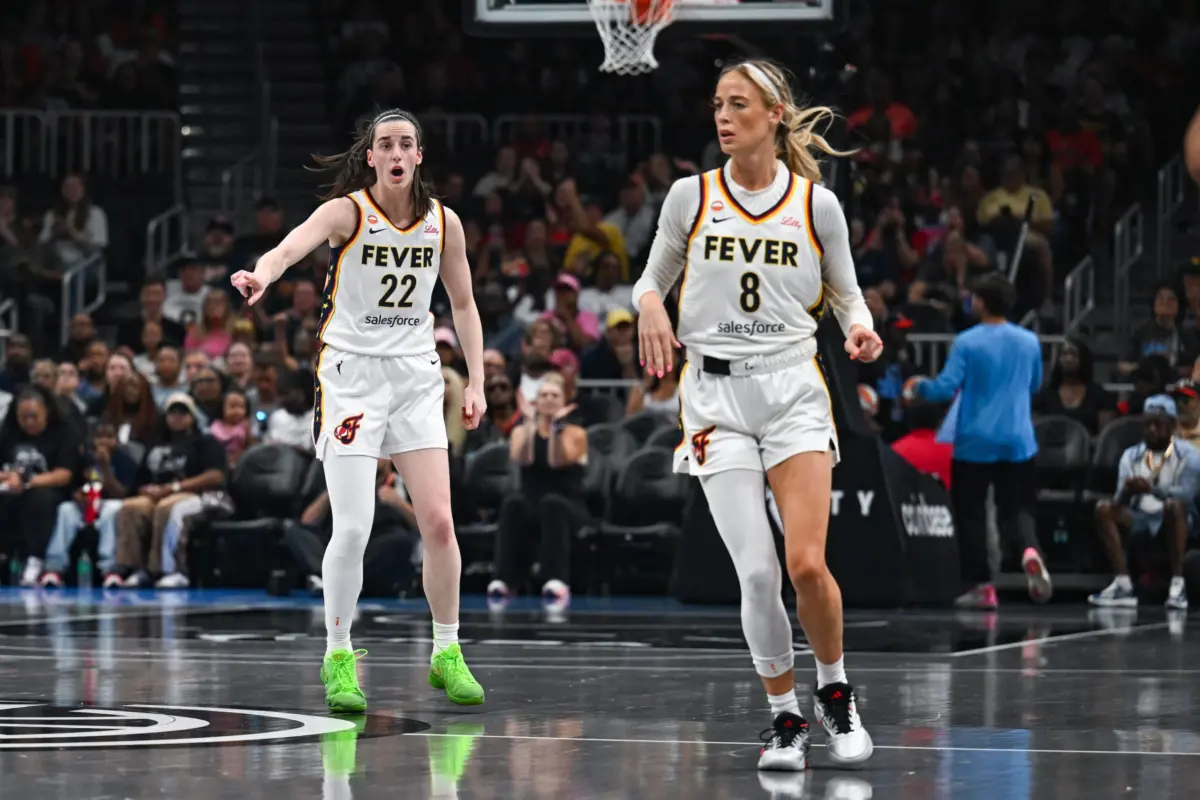
When Caitlin Clark transitioned from the collegiate ranks to the WNBA as the first overall pick for the Indiana Fever, she acted as a powerful catalyst for the league’s growth. Clark brought unprecedented television ratings, sold-out arenas, and a massive influx of new viewers—many of whom traditionally sat outside the league’s core demographic base.
However, Clark’s entry also coincided with a narrative constructed by right-wing media figures who sought to frame her as an outsider in a league they alleged was hostile to her demographic profile (white and straight). While players and coaches consistently emphasized the normal competitive environment of professional sports, outside pundits leveraged Clark’s arrival to critique the league’s established culture. The sudden implementation of structural upgrades—such as full-time charter flights for teams—highlighted long-standing player grievances, ironically exposing how historical league underfunding had held back operational standards until an organic, mainstream phenomenon forced their hand.
The "Enforcer" Comments and the Transgender Debate in Sports
The most recent escalation occurred when Indiana Fever guard Sophie Cunningham weighed in on the national debate surrounding transgender athletes in women’s sports. Speaking with ESPN in July, the 30-year-old veteran positioned herself as an "enforcer" for Clark while taking a firm stance on biological definitions in athletics, stating her desire to protect young girls from having to compete against biological men.
Cunningham’s remarks thrust the WNBA directly into the legislative and cultural battles currently playing out across school boards, state legislatures, and federal courts. The irony of the debate—given that no known transgender athlete has ever played in the WNBA—underscored how the league has become a convenient theoretical canvas for broader political anxieties regarding gender fluidity, sex-segregated spaces, and the future of female athletics.
Supporting Context & Metrics: Growth, Demographics, and Institutional Realities
The friction facing the WNBA today is deeply rooted in the historical tension between the league’s foundational identity and its corporate evolution. Analysts note that the WNBA’s institutional failures have historically hampered its ability to control its own narrative, leaving it vulnerable to external exploitation.
The Marketing Paradox
From its inception, the WNBA struggled with an identity crisis. Top-down leadership frequently attempted to market the league through the lens of a traditional, apocryphal nuclear family, often running away from the very demographics that defined its soul.
Historically, the league has been defined by women who existed on the margins of mainstream sports culture:
- Queer Representation: Icons like Sue Bird and Diana Taurasi entered the league in eras when management actively encouraged players to conceal their sexual orientation to appease mainstream advertisers.
- Racial Composition: The league has always boasted a predominantly Black player base that has consistently used its platform to champion social justice, most notably during the 2020 WNBA season when players famously mobilized to support Raphael Warnock’s Georgia Senate campaign, effectively ousting then-Atlanta Dream owner Kelly Loeffler.
When modern media environments caught up to these realities, the league’s historical hesitation to embrace its authentic identity left it lagging behind the cultural curve. Today, as these identities are celebrated in mainstream media, the WNBA’s past institutional timidness stands in stark contrast to its players’ outspoken nature.
Quantitative Growth and the Right-Wing Cultural Lens
The economic indicators of the WNBA’s growth are staggering, yet they tell only half the story.
| Metric / Indicator | Historical Context (Pre-2023) | Current Era (2026 Projections) |
|---|---|---|
| Average Attendance | Subsidized, modest crowds | Record sellouts across multiple markets |
| Media Rights Valuation | Minor tier-two cable packages | Multibillion-dollar comprehensive distribution deal |
| Player Travel Logistics | Commercial flights, scheduling strain | Full-time charter flight integration |
| Public Discourse | Sports-centric coverage | Mainstream political, cultural, and ideological debate |
Political analysts point out that conservative movements have latched onto the WNBA for the same reasons they scrutinize cultural touchstones like Hollywood media: an acute understanding of symbolism. Seeing female athletes thrive in the public eye—sweaty, assertive, financially independent, and demanding agency—challenges traditional patriarchal frameworks. Consequently, the WNBA has been weaponized as a proxy war for discussions surrounding Diversity, Equity, and Inclusion (DEI), labor economics, and the changing societal role of women.
Official Statements and Expert Perspectives
To unpack the complexities of this cultural collision, sports media analysts and league insiders continue to debate the root causes of the WNBA’s current socio-political entanglement.
In a recent interview on the current affairs podcast Today, Explained, Ringer staff writer Seerat Sohi broke down the structural vulnerability of the league:
"The WNBA is a league that invites, frankly, a lot of distraction, both because of its own institutional failures… I do think the WNBA really struggles at telling its own story and has at times run away from its own story. But I think in general, the WNBA has become fertile ground for the culture wars… because the league has exploded in popularity at the same moment in the country where we are embroiled in this cultural, political, legal fight over what the role of women is in society."
Addressing the historical marketing strategies of the league, Sohi noted the persistent hesitation of early executives:
"It’s the league that is primarily Black, that is openly queer, that is politically outspoken. And the league has always tried to toe the line of marketing the faces that feel more like a girl-next-door type of vibe… Sue Bird, when she entered the league, was encouraged to not come out."
Conversely, players like Sophie Cunningham have defended their commentary as a matter of advocacy for the integrity of women’s spaces. In her statements to ESPN, Cunningham articulated a viewpoint shared by a segment of athletes and fans navigating the changing landscape of sports regulations:
"I think that I am here to extend love, but I also think that with love is truth, being honest. And I want to protect young girls in a locker room or young girls in sport who shouldn’t have to go against biological men."
These contrasting viewpoints illustrate the profound ideological chasm dividing players, management, and the expanding audience base.
Future Outlook: Navigating the New Normal
As the WNBA steps into its fourth decade, the league faces a defining crossroads. The financial security provided by the newly minted collective bargaining agreement and media rights package ensures that the business of women’s professional basketball has never been more stable. Athletes are finally receiving compensation that reflects their immense labor value, and structural upgrades like charter flights have permanently elevated the standard of professional operations.
However, insulation from the broader American culture war is no longer a viable option. The league’s visibility has made it an irresistible canvas for external political agendas.
Moving forward, the primary challenge for WNBA leadership, team executives, and the players themselves will be maintaining the purity and intensity of the athletic product while managing the relentless noise generated by outside commentators. If the league can successfully lean into its authentic history—owning its identity as a progressive, diverse, and fiercely competitive sporting institution—it may serve as a blueprint for how modern sports leagues navigate an increasingly polarized society.
Ultimately, the hardwood remains the ultimate arbiter. No matter how many cultural debates are projected onto the WNBA, the soaring three-pointers, defensive stops, and historic rivalries driven by elite athletes will continue to dictate the heartbeat of the game.