Executive Overview
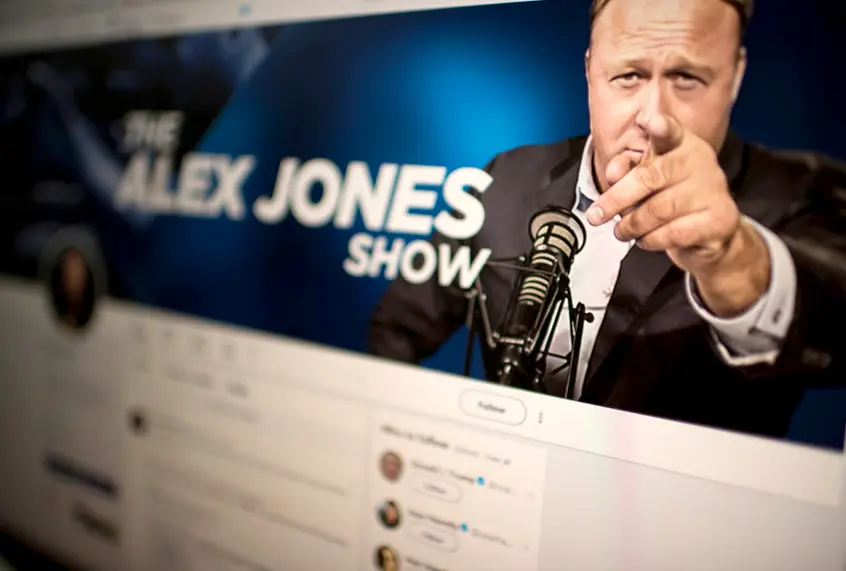
In a significant policy pivot that sent shockwaves through the tech and media landscapes, Twitter placed InfoWars founder and far-right conspiracy theorist Alex Jones under a seven-day "timeout" in August 2018. The move marked a definitive about-face for the microblogging platform, which had previously resisted mounting public pressure to ban Jones, consistently defending his presence on the grounds that his content had not explicitly violated the company’s rulebook.
The suspension was triggered when Jones used his personal account to urge followers to ready their "battle rifles" against various perceived enemies, including the mainstream media. This direct call to arms crossed a bright-line policy against individuals or organizations using or promoting violence against civilians to advance their agendas.
Twitter’s action brought it—albeit temporarily and less stringently—into alignment with a broader industry exodus. In the days preceding Twitter’s decision, major Silicon Valley titans including Apple, Facebook, Pinterest, Spotify, and Google’s YouTube had aggressively purged Jones and InfoWars from their ecosystems, citing systemic violations of hate speech policies.
Yet, Twitter’s cautious, weeklong penalty underscored the profound ideological and operational tightrope walk facing social media executives. As platforms grapple with the weaponization of digital spaces, the dilemma remains: How do tech giants police harmful rhetoric without descending into subjective censorship? This comprehensive report examines the chronology of Twitter’s policy reversal, the rationale provided by CEO Jack Dorsey, the escalating pressure from digital watchdogs, and the broader implications for free speech in the digital age.
Detailed Chronology of Events
The events leading up to Twitter’s August 2018 disciplinary action against Alex Jones culminated years of controversy surrounding the conspiracy theorist’s online footprint.
For over a decade, Jones utilized social media platforms to broadcast unverified hoaxes, fringe political theories, and targeted harassment. While platforms like Facebook and YouTube faced heavy criticism for monetizing and algorithmic-boosting InfoWars content, Twitter maintained a strict "hands-off" stance, emphasizing a commitment to open discourse and refusing to penalize users based on general outrage or off-platform behavior.
By early August 2018, however, the digital dam broke.
- August 5–6, 2018: Apple became the first major tech giant to take decisive action, removing several InfoWars podcasts from iTunes and the Apple Podcasts app for violating hate speech guidelines. Shortly after, Facebook pulled four primary pages linked to Jones and InfoWars, citing community standards violations regarding hate speech and graphic imagery. Spotify and YouTube swiftly followed suit, removing prominent videos, channels, and audio programs associated with the brand.
- August 9, 2018: Amid mounting scrutiny over why Twitter remained the lone major holdout, company executives defended their policies, asserting that Jones had not technically breached their specific Terms of Service while logged onto Twitter.
- August 14, 2018: The tipping point arrived. Jones posted a video to Twitter directly calling upon his supporters to grab their "battle rifles" and confront the mainstream media and political adversaries. The post was flagged internally and externally as a direct violation of Twitter’s safety policies prohibiting the incitement of violence.
- August 15, 2018: Twitter officially locked Jones’s personal and official accounts for seven days. Later that day, Twitter CEO Jack Dorsey appeared on NBC News to defend the platform’s handling of the situation in an interview with Lester Holt, while clarifying his remarks later via a series of posts on his own platform.
Supporting Context & Metrics: The Anatomy of InfoWars’ Digital Empire
To understand the weight of Twitter’s seven-day suspension, one must examine the staggering reach Alex Jones commanded prior to the August 2018 purges. InfoWars operated not merely as a fringe blog, but as a multi-platform media conglomerate generating millions of views and substantial revenue through product sales, ad placements, and donations.
The Scale of Harmful Content
Jones’s digital footprint was defined by a series of high-profile, highly damaging hoaxes that extended far beyond standard political commentary:
- 9/11 Trutherism: For years, Jones promoted the baseless theory that the September 11 terrorist attacks were an "inside job" orchestrated by the United States government.
- Targeted Harassment and Pedophilia Accusations: Jones repeatedly leveled unverified, defamatory accusations of pedophilia against prominent public figures, ranging from political activists to Special Counsel Robert Mueller.
- The Sandy Hook Elementary School Massacre Denial: Perhaps most egregiously, Jones spent years telling his audience that the 2012 mass shooting at Sandy Hook Elementary School—which claimed the lives of 20 children and six educators—was a "false flag" operation staged by the government using actors. This relentless campaign subjected grieving parents to severe online harassment, death threats, and in-person stalking, ultimately prompting a series of crippling defamation lawsuits.
The Multi-Platform Ban Wave
Before Twitter issued its temporary timeout, the coordinated removal of Jones by competitors dramatically shifted the landscape:
- YouTube (Google): Terminated multiple channels associated with InfoWars, wiping out roughly 2.4 million subscribers.
- Facebook: Un-published four main pages tied to Jones, which collectively boasted nearly 3 million followers.
- Apple & Spotify: Eradicated the vast majority of InfoWars audio feeds from their directories.
- Pinterest: Banned accounts sharing InfoWars content for violating policies against misinformation and hate speech.
Twitter’s decision to issue a temporary suspension—rather than a permanent ban—made it an outlier, highlighting the deep philosophical divide within the company regarding content moderation.
Official Statements and Industry Defense
The public backlash against Twitter’s initial reluctance to ban Jones forced CEO Jack Dorsey into a defensive and explanatory posture. Speaking to NBC News anchor Lester Holt on August 15, 2018, Dorsey articulated the foundational philosophy guiding Twitter’s moderation teams at the time.
"We can’t build a service that is subjective just to the whims of what we personally believe," Dorsey told Holt, emphasizing the necessity of objective, rule-based enforcement rather than reactionary censorship driven by public outrage.
Dorsey argued that temporary suspensions serve a distinct psychological and behavioral purpose within the platform’s governance model.
"I feel any suspension, whether it be a permanent or a temporary one, makes someone think about their actions and their behaviors," Dorsey stated.
When pressed by Holt on whether a mere seven-day timeout would realistically alter the behavior of a seasoned provocateur like Jones, Dorsey admitted uncertainty.
"Whether it works within this case to change some of those behaviors and change some of those actions, I don’t know," Dorsey conceded. "But this is consistent with how we enforce."
Following the broadcast of the interview, Dorsey took to Twitter to add nuance to his remarks, clarifying that his statements regarding behavioral change were meant to be interpreted broadly across the platform’s entire ecosystem of rule enforcement rather than as a guarantee for any single high-profile user.
“To clarify: I was speaking broadly about our range of enforcement actions, when asked why we timeout functionality on Twitter," Dorsey tweeted. “I don’t assume everyone will change their actions. Enforcement gets tougher with further reported violations.”
Digital rights advocates and civil society groups, however, remained skeptical. Critics argued that treating systemic hate speech, incitement to violence, and targeted harassment with temporary timeouts amounted to a slap on the wrist, failing to protect vulnerable populations or counter the radicalization fueled by conspiracy networks.
Future Outlook: The Ongoing War Over Digital Governance
The August 2018 suspension of Alex Jones served as a critical watershed moment for social media moderation, foreshadowing the immense challenges tech companies would face in subsequent years regarding political polarization, electoral integrity, and public health misinformation.
By drawing a firm line at the incitement of physical violence—the "battle rifles" remark—Twitter established a precedent that off-platform behavior and severe rhetoric could indeed intersect with platform rules, piercing the shield of absolute free-speech absolutism that executives like Dorsey had historically championed.
However, the half-measure of a seven-day timeout left critical questions unanswered:
- Where is the threshold for permanent exile? If repeated violations of anti-violence and harassment policies only result in rolling temporary bans, do platforms effectively provide bad actors with a roadmap on how to skirt permanent accountability?
- How will platform rules adapt to decentralized networks? As mainstream platforms began closing their doors to figures like Jones, media operations adapted by migrating audiences to alternative, lightly moderated platforms and encrypted channels, fracturing the digital public square even further.
- Can content moderation ever achieve true neutrality? Dorsey’s core anxiety—avoiding subjectivity and the "whims" of personal belief—remains the central paradox of modern content moderation. As long as human beings and proprietary algorithms write and enforce terms of service, accusations of political bias will inevitably follow every high-profile enforcement action.
Ultimately, the Alex Jones Twitter suspension of 2018 was not merely about a single controversial internet personality; it was an existential stress test for the architecture of online speech. It forced Silicon Valley to confront the sobering reality that unchecked connectivity can be weaponized against democratic norms, obligating platforms to evolve from passive digital town squares into active arbiters of public safety.