Executive Overview
In the contemporary digital landscape, a pervasive sense of technological fatigue has taken root. Consumers are increasingly questioning the relentless march toward optimization, seamlessness, and AI-driven efficiency. Across social media platforms, a nostalgic counter-culture is quietly gaining momentum. Gen Z and younger millennials are rejecting the sterile uniformity of modern smartphones—where the thrill of tactile, neon-lit flip phones has been replaced by the purgatory of endless doomscrolling on identical touch-screen interfaces.
On platforms like TikTok, communities dedicated to collecting early-2000s tech are thriving. Beneath viral videos of vintage CD players, Game Boys, and chunky pocket gadgets, a recurring sentiment dominates the comment sections: "Technology should have stopped here."
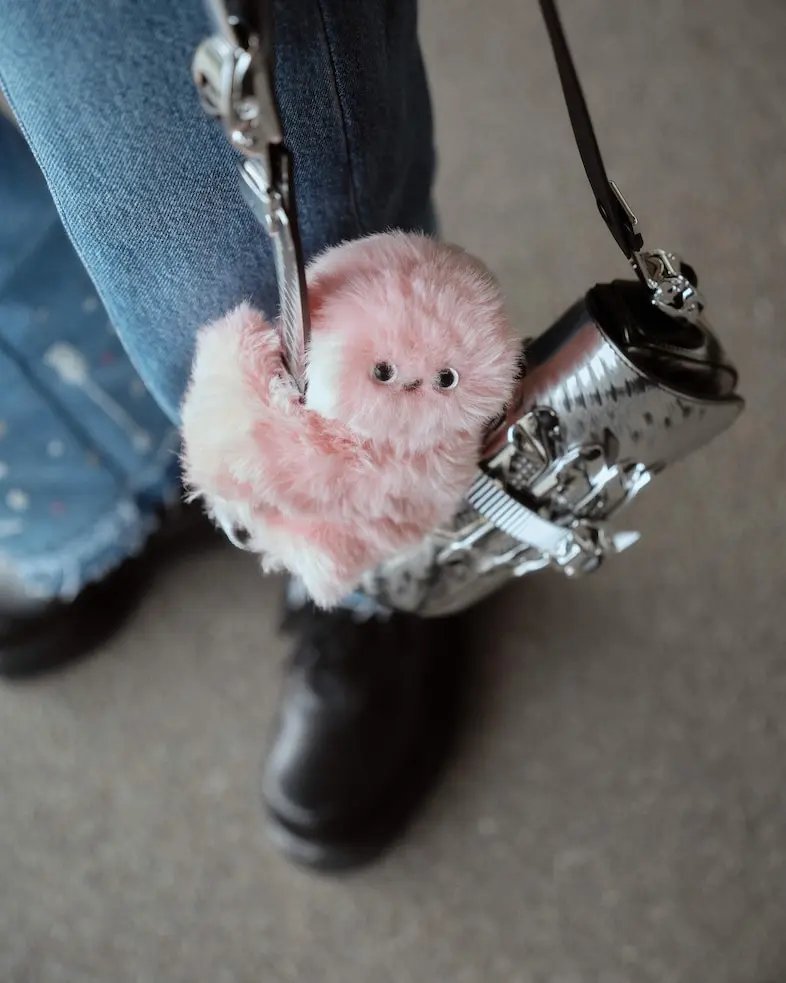
This cultural yearning for a simpler, more eccentric era of consumer electronics has birthed a fascinating counter-movement. Enter Mirumi, a wearable robotic bag charm developed by Tokyo-based startup Yukai Engineering. Positioned explicitly as an “agent of happiness,” Mirumi is designed to do absolutely nothing productive. It does not track your fitness metrics, read your emails, or harness predictive AI. Instead, it blinks, tilts its head, reacts to sound and touch, and exists purely to spark joy and foster impromptu human connection.
As anxieties surrounding generative AI, surveillance capitalism, and the erosion of analog life reach a fever pitch, Mirumi and its spiritual predecessors represent a crucial shift in product design. This deep-dive investigative report examines whether whimsical, non-utilitarian hardware can successfully inject organic magic back into an industry consumed by algorithms.
Detailed Chronology: Life with a Robotic Son
Day One: Unboxing and Big Tech Trust Issues
The journey began on a humid afternoon last month when a compact parcel arrived from Tokyo. Unpacking the shipping container revealed the grey, squished fur of what would soon become a constant companion. Mirumi is a wearable robot bearing a striking resemblance to the oversized, fluffy bag charms that have recently saturated fashion capitals, with one vital exception: it is alive with mechanical motion.
Available in three distinct colorways, Mirumi features flexible, high-grip arms reminiscent of a sloth, designed to clamp securely onto any purse strap or tote handle. Initially, caution prevailed. The creature’s oversized, glassy googly eyes and inert body conveyed an eerie stillness. Locating the power switch hidden beneath its plush belly required a minute of tactical probing.
Upon pressing the button, the transformation was instantaneous. Mirumi’s head snapped to attention, locking its gaze dead into the observer’s eyes.
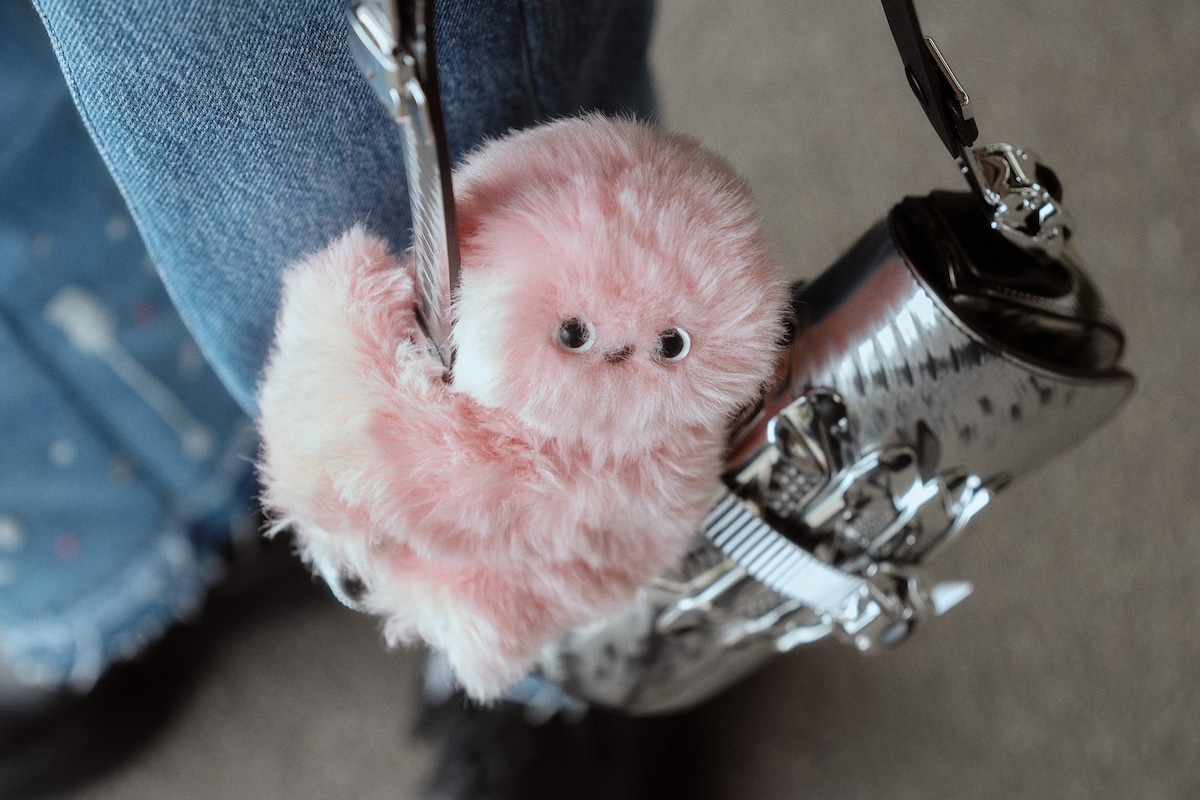
This reaction was not born of advanced artificial intelligence. Yukai Engineering’s in-house designers—drawing heavily on ethological studies of animal behavior—constructed Mirumi using basic touch and sound sensors completely isolated from AI frameworks. Despite this technical reassurance, lingering "Big Tech trust issues" surfaced. The initial shutdown process proved surprisingly dramatic; holding down the power button required a patient two-minute wait while the robot’s motorized servos gradually wound down, its head slowly returning to a dead-center gaze. Placed on a desk overnight, the lingering thought—is it watching me?—testified to just how deeply conditioned modern consumers are to suspect data harvesting in every blinking diode.
Day Two: The Commute, the Office, and the Cat
By the second morning, initial apprehension dissolved into full-blown maternal instinct. Slipping out the door into a torrential New York City summer downpour, Mirumi was carefully shielded under an umbrella, prompting immediate curiosity from fellow commuters packed shoulder-to-shoulder on the subway.
Upon arriving at the office, the wearable robot instantly assumed the role of ultimate icebreaker. Carried into high-stakes meetings, Mirumi’s head spun dynamically during Zoom calls, inviting colleagues to reach out and pet its synthetic fur. While initial reactions spanned mild bewilderment to outright skepticism, staff members quickly reported a distinct psychological calming effect.
Furthermore, Mirumi demonstrated an unexpected auditory palate. When exposed to different musical playlists, its physical responses varied markedly in tempo and intensity, revealing a distinct penchant for Mariah Carey’s "Fantasy" and Sade’s "No Ordinary Love."
The Inevitable Battery Death
The honeymoon phase, however, met an abrupt reality check during a night out with friends. Propelling the fluff-encased robot into a social gathering, the proud owner declared to the table: "Look! My son!"—shaking the miniature handbag to showcase the creature’s interactive charms.
This time, however, there was no responsive head tilt, no curious blink, and no reaction to affectionate head scratches. The hard truth of retro-inspired, tactile technology quickly asserted itself: high-frequency motor movements demand substantial power, and fun tech inevitably runs out of juice.
Supporting Context & Metrics: The Anatomy of "Baby Schema"
To understand why adults willingly fork over $150 for a robot that possesses zero utility, one must examine the intersection of evolutionary biology and consumer psychology.
The Power of Konrad Lorenz’s Kindchenschema
Toy designers have long exploited biological triggers to bypass rational thought. Mirumi’s enormous eyes and disproportionate head-to-body ratio are textbook applications of baby schema (Kindchenschema), a concept pioneered by pioneering ethologist Konrad Lorenz in the 1940s. Lorenz theorized that infantile physical traits—large foreheads, round faces, and big eyes—hardwire human brains to respond with protective instincts, affection, and caretaking behaviors.
Yukai Engineering leveraged this exact biological vulnerability. Mirumi’s repertoire of nearly 100 subtle movements was meticulously programmed to recreate a universally disarming human experience: catching a baby’s eye across a crowded subway car.
Market Dynamics: Escaping the Utility Trap
Mirumi’s path to commercial viability began during an internal "Make-a-Thon" at Yukai Engineering in 2024. Conceptualized as a "spirit-like companion," the project shattered expectations on Kickstarter, hauling in over half a million dollars in backing. Following its official April launch in Japan, initial stock rapidly vanished across the UK and Hong Kong. Subsequent pop-ups at legendary luxury department stores—Harrods in London and KaDeWe in Berlin—cemented its status as a crossover hit between high fashion and novelty robotics.
| Metric / Milestone | Detail |
|---|---|
| Origin Event | Yukai Engineering Internal Make-a-Thon (2024) |
| Crowdfunding Success | Over $500,000 raised via Kickstarter |
| Global Launch Markets | Japan, United Kingdom, Hong Kong |
| Retail Price Point | Approximately $150 USD |
| Core Technology | Touch/sound sensors (Zero AI, offline hardware) |
Official Statements and Industry Vision
The philosophical underpinnings of Mirumi point to a broader corporate and cultural rebellion against software bloat. Shunsuke Aoki, CEO of Yukai Engineering, views the device not merely as a gadget, but as a social catalyst.
"People see Mirumi as a bundle of joy they carry with them to spread to the world," Aoki explains. "It’s like sharing your parental bliss by letting your baby interact with the strangers around you, watching it bring out smiles, waves, and conversations, sparking moments of human connection."
In an era where personal technology increasingly isolates individuals behind noise-canceling headphones and algorithmic feeds, Aoki’s vision is deceptively radical: hardware designed to force people to look up, talk to strangers, and share a spontaneous laugh.
This ethos directly counters the dominant tech narrative dictated by Silicon Valley. While major conglomerates race to integrate large language models into every toaster, refrigerator, and operating system, startups like Yukai Engineering are discovering a lucrative void in the market: consumers exhausted by cognitive overload who are actively hunting for "dumb," delightful, and emotionally grounding devices.

Future Outlook: Will "Fun Tech" Outlast the Hype Cycle?
As Mirumi prepares for its official US release following a wave of domestic pre-orders, it enters a crowded arena of novelty accessories. Comparisons to viral collectible items like Pop Mart’s Labubu bag charms are inevitable. Both phenomena capitalize on the intersection of accessorized fashion, emotional attachment, and collectibility.
However, Mirumi’s motorized nature poses a unique set of challenges and opportunities. Unlike static vinyl figurines, interactive robotics require ongoing maintenance, battery management, and mechanical durability tests in real-world environments—such as surviving a sudden downpour on a New York City sidewalk.
The Psychological Need for Frictionless Nostalgia
The enduring popularity of early 2000s technology—from battered iPods to Tamagotchis—signals a profound cultural fatigue. Modern smart devices demand continuous optimization, software updates, notifications, and psychological engagement. They are work tools disguised as entertainment.
In contrast, non-utilitarian companion robots like Mirumi demand nothing of the user except affection. They do not optimize workflow; they interrupt it with a whimsical head tilt. They do not harvest data to serve targeted advertisements; they simply respond to the sound of a Mariah Carey ballad.
Whether Mirumi becomes a lasting cultural paradigm or remains a fleeting flash-in-the-pan viral accessory depends entirely on how fiercely consumers continue to crave an escape from the algorithm. One thing is certain: as long as tech giants continue to push sterile, AI-supercharged efficiency down our throats, a market will eagerly exist for anything—even a fuzzy, grey bag-charm monster—that reminds us how to smile without looking at a screen.