Executive Overview
In a decisive regulatory and security pivot, home appliance giant LG Electronics USA has announced plans to crack down on software applications that secretly transform consumer living room televisions into always-on residential proxy nodes. The sweeping enforcement action arrives in the wake of alarming cybersecurity research revealing that nearly half of all available applications in LG’s webOS smart TV app store contained embedded software development kits (SDKs) capable of routing unknown third-party internet traffic directly through an unsuspecting user’s home network.
The structural vulnerability exposed by these applications bridges the gap between consumer electronics and illicit proxy networks, raising profound questions regarding device security, digital consent, and corporate oversight. While software developers routinely integrate these monetization SDKs to profit off user bandwidth, security experts emphasize that smart TVs are uniquely ill-equipped—both in terms of hardware auditing and user perception—to act as gateways for commercial proxy architectures.
With LG now initiating a strict platform-wide purge and demanding that developers strip proxy components from their apps under threat of suspension, the industry faces an unprecedented reckoning over how third-party monetization tools infiltrate mainstream hardware ecosystems.
Detailed Chronology of an Emerging Cyber Threat
The trajectory leading to LG’s corrective action began to materialize at the start of July, shaking foundational assumptions about the safety of connected home environments.
The Spur Security Disclosure
On July 2, 2026, threat intelligence and cybersecurity firm Spur published a landmark investigative report detailing the systemic infiltration of residential proxy software development kits across major smart TV operating systems. Spur’s telemetry and application analysis revealed that an astounding 42 percent of applications hosted on the LG webOS store harbored proxy components. These libraries effectively co-opted the processing power and residential IP addresses of consumer televisions, turning them into perpetual relay nodes for external entities.
Furthermore, the research demonstrated that this practice was not unique to LG. Approximately 25 percent of applications built for Samsung’s Tizen operating system were found to incorporate similar residential proxy configurations, illustrating a widespread, cross-platform monetization trend targeting high-end consumer entertainment hardware.
Unpacking the Monetization Mechanism
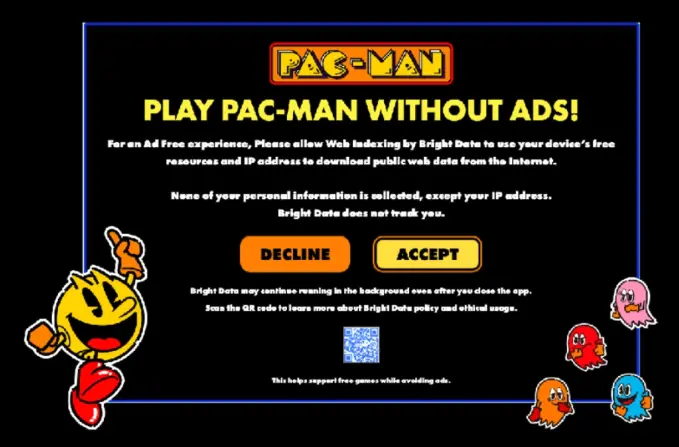
For application developers searching for reliable ways to monetize free or low-cost products, residential proxy platforms offer an enticing financial incentive. Proxy providers pay developers to bundle proprietary SDKs into applications ranging from casual retro games—such as adaptations of Pac-Man—to desktop utilities and simple screensavers.
When installed, these applications present users with a choice, often embedded within a lengthy terms-of-service agreement or a binary configuration prompt: view traditional advertisements or agree to let the television serve as a network proxy node. If the user consents, the application continuously routes international web traffic through the television’s home internet connection, allowing paying enterprise customers to utilize the residential IP address for various web scraping, data gathering, and market research operations.
LG’s Swift Response and Policy Enforcement
Faced with mounting public scrutiny and direct inquiries from investigative journalists at KrebsOnSecurity, LG Electronics USA moved swiftly to distance itself from the practice. John Taylor, Senior Vice President at LG, issued a definitive statement outlining the corporation’s stance on the matter:
"A residential proxy network is not an intended use for LG smart TVs, and LG Electronics is working with developers to remove the residential proxy option from their apps on the webOS platform. If this option is not removed, these apps will be suspended."
Taylor confirmed that internal reviews to identify and purge offending applications were "well underway now." He added that LG is actively refining its developer submission and evaluation guidelines to block the future integration of residential proxy SDKs, prioritizing platform security and user trust above developer monetization shortcuts.
Supporting Context & Metrics: The Scale of the Proxy Economy
To fully grasp the gravity of LG’s intervention, one must examine the metrics driving the modern residential proxy ecosystem and the specific defense mechanisms cited by the companies operating within it.

Prevalence Across Operating Systems
Spur’s quantitative analysis underscores a disturbing reality regarding modern application stores. Smart televisions, once viewed as isolated multimedia endpoints, are effectively functioning as headless servers within residential local area networks (LANs).
- LG webOS Store: Over 42% of audited games and utility applications contained hidden proxy functionality.
- Samsung Tizen OS: More than 25% of evaluated applications integrated comparable third-party proxy SDK software.
- Application Categories: Ranged from casual arcade titles and customized screensavers to file management tools.
[Smart TV App Store]
       │
       ├──> Legitimate App Code (Games, Utilities)
       └──> Embedded Residential Proxy SDK (Bright Data, etc.)
                   │
                   ▼
      [Consumer TV Becomes Proxy Node] ──> Routes Unknown External Traffic
The Role of Bright Data and Industry Countermeasures
The majority of proxy SDK installations discovered across both LG and Samsung televisions traced back to Bright Data, one of the industry’s most prominent residential proxy networks.
In response to the publication of Spur’s findings, Bright Data defended its operational framework, asserting that its business model relies strictly on explicit consent, transparency, and rigorous regulatory compliance. A corporate statement provided to security researchers highlighted the following safeguards:
- Opt-In Architecture: Every user peer allegedly opts in through a dedicated configuration screen, receiving perceived value or ad-free access in exchange.
- Customer Vetting: The platform enforces strict Know-Your-Customer (KYC) protocols to vet every corporate client utilizing the network.
- Independent Auditing: Bright Data’s practices have undergone secondary independent auditing by accounting and professional services network PwC.
- Network Isolation: Proxy providers emphasize that technical countermeasures are explicitly built into their SDKs to prevent proxy customers from pivoting, interacting with, or commanding other sensitive connected devices residing on the local home network.
Official Statements and Industry Perspectives
While proxy network operators maintain that their services facilitate legitimate, transparent data collection and academic research, cybersecurity analysts remain deeply skeptical of applying these business models to consumer appliances.
The Illusion of Informed Consent
Trevor Sutter of Spur voiced strong objections to how consent is acquired in household environments. According to Spur, burying a network-sharing opt-in inside a television app installation wizard fails to meet basic standards of digital safety.
"A one-time consent prompt buried in a TV app is not a substitute for meaningful transparency, ongoing control, and platform oversight," Sutter noted. "The risk is amplified when consent comes from individuals within the household who use the device but shouldn’t give consent, such as minors."
Unlike traditional personal computers or smartphones, which feature granular user accounts, active permission prompts, and robust endpoint security auditing tools, a living room smart TV is communal. Children, visiting guests, and elderly relatives frequently interact with these screens without comprehending that agreeing to skip an advertisement may inadvertently enroll their home router into a global traffic-routing botnet.
Broader Corporate Scrutiny for LG
LG’s decisive action against proxy SDKs comes at a delicate time for the hardware manufacturer’s public relations regarding software integration. Beyond the webOS controversy, LG recently faced severe pushback concerning unrelated software bundling practices.
Prominent hardware analysis channels, including the YouTube channel Gamers Nexus, highlighted that select high-end LG LCD monitors automatically push promotional applications for McAfee antivirus subscriptions directly through Windows Update without prompting the user for explicit installation consent. This convergence of passive software delivery mechanisms has amplified consumer anxieties regarding bloatware and background utility incursions on modern hardware platforms.
Future Outlook: Securing the Connected Living Room
The confrontation between LG Electronics and residential proxy providers marks a critical watershed moment for IoT (Internet of Things) and smart home security. As hardware manufacturers transition from simple appliance makers to platform operators hosting complex, app-driven ecosystems, the attack surface of household devices expands exponentially.
What Lies Ahead for App Stores?
- Stricter App Store Audits: Major TV manufacturers—including LG, Samsung, Sony, and Roku—will likely face mounting pressure to implement automated static and dynamic code analysis tools designed specifically to sniff out undocumented proxy SDKs during the app submission phase.
- Regulatory Interventions: Consumer protection agencies globally are increasingly casting a critical eye on dark patterns, misleading consent pop-ups, and the monetization of consumer bandwidth without explicit, ongoing user awareness.
- Consumer Advocacy: As awareness grows regarding the hidden costs of "free" smart TV applications, consumers and privacy advocates will demand clearer diagnostic tools to monitor outbound network connections originating from home appliances.
LG’s commitment to purging residential proxy software from webOS is a welcome and necessary step toward restoring integrity to the smart TV marketplace. However, the incident serves as a stark reminder that the modern living room is increasingly targeted as a commercial resource, requiring constant vigilance from both device manufacturers and security researchers alike.