Executive Overview
Picture the scene: Somewhere tonight, across a candlelit bistro table or amidst the ambient thrum of a crowded neighborhood bar, a first date is unfolding. Two people are delicately performing the ancient, high-stakes ritual of romantic evaluation. Conversation flows with deceptive ease, green flags accumulate like chips at a poker table, and they may even marvel at a serendipitous overlap in mutual acquaintances. Then, a wrist flicks or a shirt sleeve rides up, briefly exposing an intriguing flash of ink.
"Oh, I love that," your companion says, leaning in. "What’s the story behind it?"
There is a microsecond of hesitation—a quiet, telltale hitch in the breath—before the unvarnished truth drops: "It’s a matching tattoo, actually. With my ex."
In our contemporary landscape, which is largely governed by provisional connection, relationships are routinely "soft-launched" on social media and can be erased just as subtly with a block, an unfollow, and a digital deletion. Modern romance has birthed a generation of masters at keeping their escape routes clear. While Western society has grown increasingly comfortable with the idea of altering our bodies permanently for individual aesthetic expression, the matching couple’s tattoo remains fiercely taboo. It is widely judged as a reckless, overly emotional gamble—a neon sign flashing poor judgment and a lack of emotional self-preservation.
Yet, to write off shared ink merely as bad decision-making is to miss a deeper cultural anxiety. In a world designed to make every social commitment reversible, opting for permanence with another human being is a radical act. Whether viewed as a scarlet letter of youthful indiscretion or a meaningful timestamp of emotional vulnerability, the matching tattoo forces us to confront an uncomfortable truth: we were once foolish enough to believe in forever, or at least brave enough to bleed for the present.
Detailed Chronology: The Evolution of Shared Permanence
To understand why matching tattoos carry such potent cultural weight today, one must examine how society’s relationship with both body modification and romantic permanence has shifted over the last few decades.
The Fringe Era (Pre-2000s)
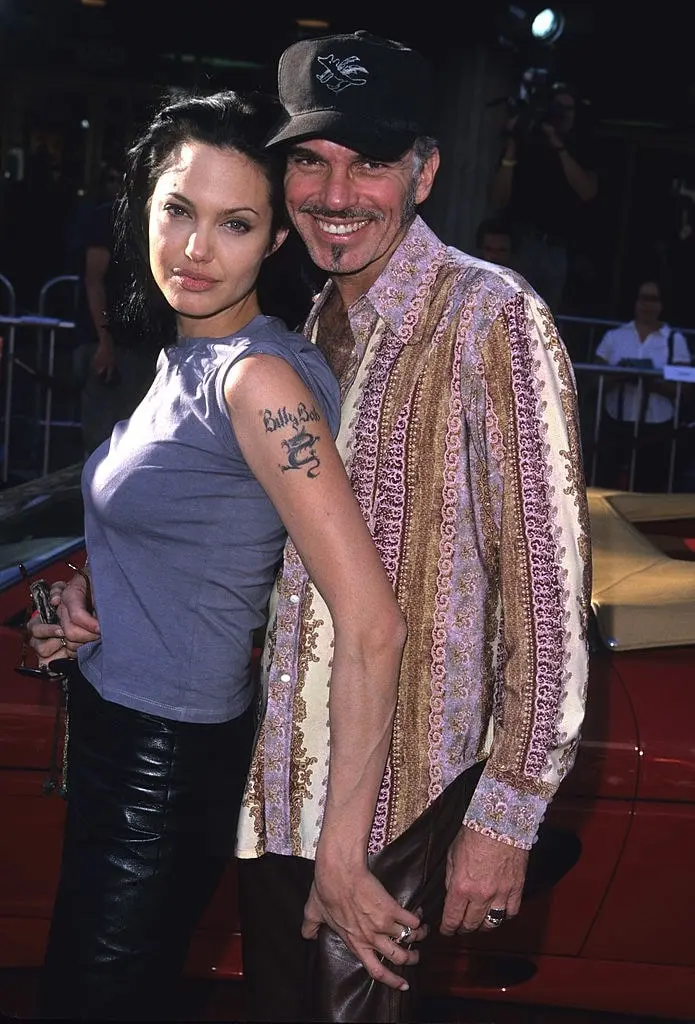
Historically, tattoos were the exclusive domain of sailors, outcasts, bikers, and rebels. Within these countercultures, getting a partner’s name or a shared symbol inked onto the skin was a gritty testament to absolute loyalty. However, in the mainstream consciousness, it was universally regarded as a catastrophic mistake waiting to happen—the ultimate relationship jinx. Pop culture routinely lampooned the trope; Johnny Ryder famously altering his "Winona Forever" tattoo to "Wino Forever" after his split from Winona Ryder remains the pop-cultural cautionary tale of a generation.
The Aesthetic Boom (2000s–2010s)
As tattooing transitioned from a subcultural art form into a multi-billion-dollar mainstream wellness and lifestyle industry, the paradigm shifted toward the individual. The human body became a curated canvas for self-actualization, identity formation, and personal storytelling. Tattoos became socially acceptable in corporate boardrooms and high fashion, but the focus remained intensely introspective. Ink was for you, your journey, your healing, and your autonomy. Sharing that canvas with a romantic partner went against the grain of the burgeoning self-care movement, which preached emotional independence and boundaried self-preservation.
The Hyper-Ephemeral Present (2020s and Beyond)
Today, we inhabit an era dominated by frictionless digital interactions. Swiping left or right, ghosting, unmatching, and pruning followers have trained us to treat human relationships with the same disposability as fast fashion or streaming queues. Against this backdrop of hyper-ephemeral connections, the act of getting a matching tattoo with a partner has evolved from a simple stylistic choice into a profound cultural rebellion. It stands as a stubborn, tangible pushback against a digital age that has engineered all of our commitments to be easily undone.
Supporting Context & Metrics: The Psychology of the "After"
The resistance to matching tattoos is rarely about the ink itself; rather, it is anchored entirely in fear of the "after."
Psychologically, modern daters are terrified of carrying emotional collateral into new relationships. In a dating culture that prizes cool detachment, nonchalance, and an unblemished emotional ledger, a matching tattoo is an inescapable piece of physical evidence. It proves unequivocally that you did not just drift through someone’s life unscathed—you let them leave a permanent footprint.
The Cover-Up and Laser Economies
The societal anxiety surrounding failed couple tattoos has quietly birthed a lucrative, booming shadow industry: laser removal and creative cover-ups.
- Laser Removal: Clinics report a steady stream of clients seeking to erase the names, initials, or matching geometric shapes of former flames. However, dermatologists note that laser removal is rarely a magical reset button. It is expensive, time-consuming, painful, and often leaves behind hypopigmented "ghost" scars—faint, raised white lines that trace the phantom shape of what used to be there.
- Blast-Overs and Cover-Ups: Tattoo artists increasingly specialize in "blast-overs"—bold, dark pieces tattooed directly over older, unwanted ink—or complex cover-ups designed to swallow past mistakes.
Even in erasure, the ghost of the relationship lingers. The skin remembers what the mind is trying to forget.
Official Statements & Industry Perspectives
To gauge the reality behind the stigma, we spoke with professional tattoo artists on the front lines of modern romance, as well as young adults navigating the murky waters of permanent body art.
The Artists’ Viewpoint
Tattoo artists see the raw emotional underbelly of relationships every single week. They watch couples walk into shops high on the dopamine of new love, eager to solidify their bond in blood and pigment.
"There’s an abiding superstition that matching tattoos are cursed—that they actively mark a relationship for a catastrophic ending," says Jayson, a professional tattoo artist. "I’ve heard that anxiety voiced by clients countless times. I’ve often wondered if there’s an element of underlying desperation at play. Perhaps the real reason they are rushing to get matching tattoos is a subconscious attempt to stabilize a relationship that is already showing structural cracks."*
Natalie*, a tattoo artist based in Bristol, is even more blunt when assessing specific trends.
"Tattooing a romantic partner’s actual name is a definitive no-no—it’s the absolute kiss of death," she warns. "Whether it eventually transforms into a daily, painful reminder of heartache or simply a monument to someone you no longer care about, it’s best avoided if you want to dodge future regret."
At the same time, some artists view the phenomenon with pragmatic empathy. Ayşe, a Leeds-based tattoo artist running the popular studio Magnolia Tats, acknowledges the sweet sentiment behind them while noting the realities of her chair.
"I think they can look undeniably cute in the moment," she reflects. "Even so, I’ve had to perform plenty of cover-up sessions on couple tattoos not long after the ink has settled."
The Consumer Perspective
Despite the warnings from the industry, younger generations are beginning to recalibrate how they view these permanent mistakes. Maria*, a 23-year-old art student, views matching tattoos with a refreshing dose of existential indifference.
"I actually think they’re kind of cool," Maria argues. "It reminds me of how young people pull off spontaneous, rockstar shotgun weddings—not in a traditional, religious sense, but in a rebellious one. It flies right in the face of everything our culture tells us we should be: relentlessly cool, detached, and nonchalant."
Maria points out that having a tattoo tied to an ex doesn’t magically rewrite history.
"Having a tattoo for an ex doesn’t change the fact that they were deeply significant in your life, nor does it erase them from your past. Unless it’s literally someone’s full name sprawled across your throat, I just don’t think it’s that deep."
For those who actually live with the ink long after a breakup, the narrative shifts from regret to archiving. Elsie*, a 26-year-old living in London, bears a matching tattoo with an ex-partner whom she hasn’t spoken to in years. She harbors zero remorse.
"We don’t communicate anymore, but I don’t regret the tattoo at all," Elsie shares. "When I look at it now, it’s not really about her anymore. It’s about who I was at that specific chapter in my life. It functions more like a physical timestamp." She notes with a laugh that having a larger overall collection of body art helps: "I have quite a few pieces, so it stays relatively hidden. Random people aren’t constantly pointing it out."
Conversely, James*, 29, admits to feeling the friction of the "after."
"New partners inevitably ask about it. I’ve had to explain the backstory more times than I can reasonably count," James says. "It’s not that I deeply regret getting it, exactly; it’s more that I just wish I had thought seriously about the aftermath."
Future Outlook: The Reclaiming of Vulnerability
As we look toward the future of dating and self-expression, the cultural conversation around matching tattoos points to a broader existential tug-of-war.
On one side lies the hyper-curated safety of the modern digital landscape—a world that encourages us to edit our lives until only polished, risk-free highlights remain. On the other side lies messy, unfiltered reality: an accumulation of detours, bad timing, impulsive decisions, and fierce, imperfect devotions.
Ultimately, the ultimate act of modern romance is not foolishly promising that a feeling will last forever; it is bravely acknowledging that even if it fades, the moment was real enough to bleed for. Whether a matching tattoo is ultimately worn as a badge of lingering regret or cherished as a poetic timestamp, it signals a stubborn, irreplaceable humanity. It proves that at least once in your life, you were willing to risk the future entirely for the sake of the present.
And in an age obsessed with emotional safety, that might just be the most radical mark you can make.
*Note: Names marked with an asterisk have been changed to protect the privacy of the sources.