Executive Overview
The modern social media landscape is undergoing its most radical transformation since the advent of the algorithmic feed. At the epicenter of this seismic shift is Twitter—now operating under the corporate banner of X Corp.—and its controversial overhaul of user verification. What was once a globally recognized digital status symbol reserved for public figures, journalists, institutions, and verified creators is now rapidly transitioning into a commoditized subscription perk.
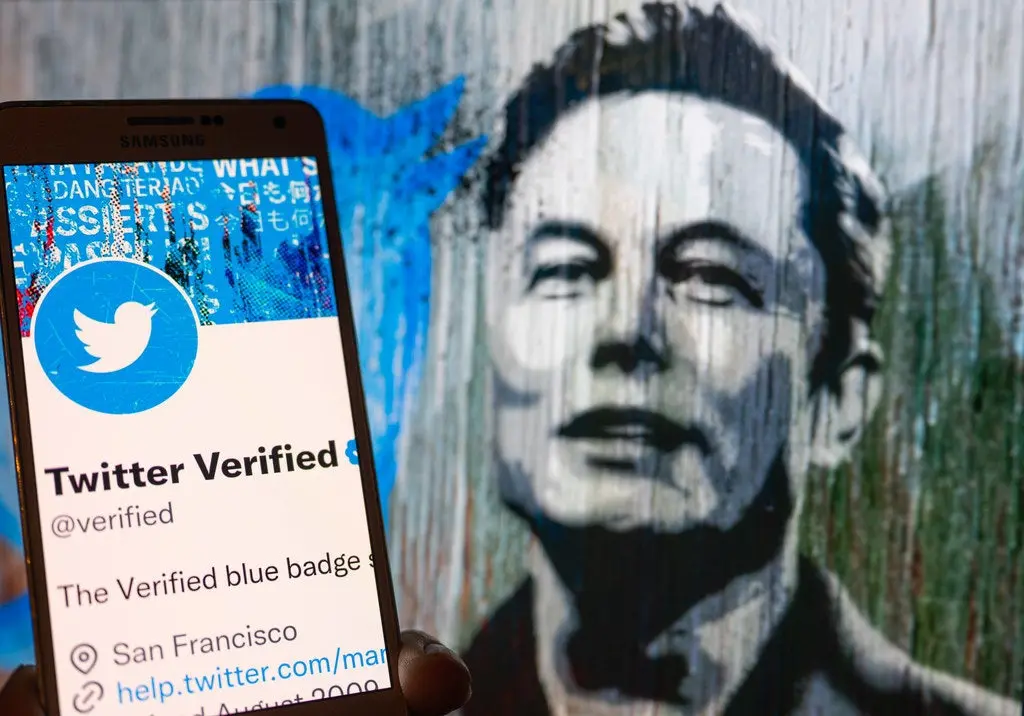
The announcement that legacy verified accounts will systematically lose their blue checkmarks unless enrolled in the paid Twitter Blue program marks the end of an era. For nearly a decade and a half, the blue check served as a vital trust signal, mitigating impersonation and establishing baseline accountability in public discourse. Today, it is evolving into a mere transactional badge, purchasable by anyone willing to meet the monthly financial threshold.
Simultaneously, internal developments reveal a paradoxical feature: tools designed to allow paying subscribers to hide those very same checkmarks. This calculated addition underscores a deep industry anxiety—that the stigma of paid validation may outweigh its prestige. Coupled with impending algorithmic adjustments that threaten to relegate unpaid accounts to the historical margins of the chronological "Following" feed, the platform is actively engineering a new ecosystem.
In this newly monetized arena, visibility on the algorithmic "For You" page will heavily favor paying accounts. For brands, self-promoters, and opportunistic actors, this dynamic offers an unprecedented, low-cost amplification engine that bypasses traditional ad-buying frameworks. For everyday users and civic organizations, however, it signals a fragmented digital public square increasingly dominated by those willing to pay to be heard.
Detailed Chronology of a Platform Shift
To fully understand the current transformation of Twitter’s verification system, one must trace the rapid-fire succession of policy pivots, technical rollouts, and abrupt reversals that have defined the platform’s leadership over the past two years.
The Acquisition and the Genesis of Twitter Blue
When new leadership took the helm of the microblogging platform, the mandate for sweeping financial restructuring was immediate. The existing infrastructure of legacy verification—which relied on a manual, opaque review process to confirm the identity of notable individuals—was openly criticized by executives as a "lords and peasants" system. The proposed egalitarian alternative was deceptively simple: open verification to the masses via a subscription model.
The initial rollout of Twitter Blue in late 2022 resulted in immediate chaos. The absence of robust identity verification protocols at launch led to a wave of high-profile impersonation accounts purchasing checkmarks and masquerading as major corporations, politicians, and celebrities. The resulting corporate stock dips and public relations crises forced a temporary suspension of the program.
The Re-Engineering and the April 1 Mandate
Following months of technical iteration and the introduction of distinct badge colors—gold for organizations, grey for government entities, and blue for individuals—the platform established a definitive timeline for the eradication of the old guard.
The announcement that legacy verified accounts would lose their checkmarks set a hard deadline. Accounts that had spent over a decade building credibility under the traditional verification framework were suddenly given an ultimatum: subscribe to Twitter Blue or surrender the marker that distinguished them from the general user base. This deadline transformed verification from a measure of public interest and authenticity into a pure software-as-a-service (SaaS) subscription metric.
The Paradox of the Hidden Checkmark
As the deadline approached, platform data and leaked source code revealed an emerging internal contradiction. Engineers began developing functionality enabling paid subscribers to conceal their blue checkmarks from public view.
This feature highlights a profound psychological and sociological reality within the platform’s user base: the perceived value of the checkmark has inverted. While originally coveted as a mark of distinction, the badge increasingly functions as a scarlet letter among certain demographics, signaling to audiences that the account holder financially supports the platform’s controversial ownership and monetization policies. By offering a mechanism to pay for algorithmic amplification while simultaneously hiding the badge of participation, the platform attempts to reconcile the friction between paid status and social stigma.
Supporting Context & Metrics: The Mechanics of Algorithmic Amplification
The restructuring of Twitter’s verification system is not merely an aesthetic or branding exercise; it is deeply intertwined with the platform’s core algorithmic delivery mechanisms. To evaluate the true impact of these changes, industry analysts and data scientists are examining how visibility is distributed across the platform’s primary interfaces.
The Bifurcation of the Feed Experience
The user experience on the platform is now sharply divided between two distinct spaces:
- The "Following" Feed: Operating as a traditional, chronological stream consisting exclusively of accounts a user explicitly chooses to follow, this space remains relatively insulated from algorithmic manipulation. However, industry insiders note that unpaid accounts will default to visibility primarily within this legacy framework.
- The "For You" Feed: Driven by opaque machine-learning recommendation models, this algorithmic feed serves as the primary engine for platform discovery and viral reach. Under the updated visibility rules, amplification is heavily tilted toward accounts bearing verified status or active subscription metrics.
Economic Implications for Brands and Creators
For digital marketers, corporate entities, and content creators, this structural shift upends traditional social media return on investment (ROI) calculations. Historically, maximizing organic reach required sophisticated content strategies, community engagement, and, crucially, significant capital expenditure on dedicated advertising campaigns.
By tying algorithmic amplification directly to the base subscription fee, the platform has inadvertently created a massive arbitrage opportunity. Brands and self-promoters can bypass formal ad-buying channels, securing broad algorithmic distribution simply by maintaining an active subscription.
Conversely, this dynamic threatens to drown out non-paying voices, civil rights watchdogs, independent journalists, and everyday citizens who rely on organic reach to share critical information during breaking news events. The "For You" page risks transforming into a marketplace dominated by financially motivated actors, self-promoters, and commercial enterprises willing to pay for digital real estate.
Official Statements and Industry Reaction
The systematic dismantling of legacy verification and the pivot toward paid subscription models have elicited sharp responses from across the technology sector, media organizations, and public advocacy groups.
Corporate Justifications
From the perspective of platform leadership, the transition is framed as a necessary democratization of digital tools and a critical defense against sophisticated bot networks. Executives have repeatedly argued that manual verification processes are inherently prone to corruption, bias, and administrative bottlenecks. By automating the verification process through a financial barrier, the company maintains that it introduces economic friction that makes large-scale bot operations economically unviable, while simultaneously diversifying revenue streams away from traditional digital advertising.
Pushback from Media, Public Figures, and Institutions
The reaction from the journalistic community, academic institutions, and high-profile creators has been overwhelmingly critical. Major news organizations have publicly stated they will not subsidize verification for their reporting staff, arguing that the checkmark’s original purpose—authentication—is entirely undermined when anyone can purchase it without rigorous identity confirmation.
Civil society organizations have raised alarm bells regarding the potential for coordinated disinformation campaigns. Without reliable, free authentication markers, bad actors can more easily purchase credibility, obscure their origins, and amplify misleading narratives within the algorithmic "For You" feed during critical civic events, such as elections and public health emergencies.
Future Outlook: The Post-Verification Digital Public Square
As the dust settles on the rollout of paid verification and the purging of legacy badges, the long-term implications for social media architecture are coming into sharper focus. The decisions made by platform leadership are establishing a compelling precedent that competing networks are watching closely.
The Commoditization of Trust
The most enduring consequence of this policy shift is the fundamental decoupling of "verification" from "trust." Historically, digital platforms invested heavily in establishing trust frameworks to protect users from fraud, impersonation, and misinformation. By converting verification into a consumer product, platforms signal that trust is no longer a public good to be curated, but a premium feature to be monetized.
If this model proves financially successful, competing social networks may feel compelled to adopt similar monetization strategies, fundamentally altering how humanity establishes credibility online. However, if the proliferation of low-quality content, commercial spam, and obscured bad actors degrades the user experience to the point of mass churn, it may serve as a cautionary tale against the financialization of digital infrastructure.
Navigating the New Normal
For users, researchers, and brands navigating this new ecosystem, adaptability is paramount. As the algorithmic feed increasingly favors those with paid status, audience fragmentation will accelerate. Users seeking unmanipulated, chronological information will likely retreat further into niche communities, decentralized alternatives, and traditional RSS or newsletter formats.
Ultimately, the transformation of Twitter’s verification system represents a critical juncture in the evolution of the internet. It forces a fundamental question that will define the next decade of digital communication: Can a public square function effectively when the foundational currency of truth and visibility is sold to the highest bidder?