Executive Overview
For long-distance runners, the sport is rarely just about accumulating miles; it is a profound exercise in psychological endurance, physical adaptation, and community building. In an era where endurance sports are experiencing a massive cultural renaissance, balancing rigorous training blocks with daily life requires meticulous planning, a deep understanding of biomechanics, and, above all, an unyielding mental framework.
This deep dive chronicles a pivotal week in the life of a dedicated runner currently deep into a demanding dual-marathon preparation block. Navigating the delicate intersection of high-mileage weeks, cross-training, active recovery, and life transitions—such as starting a new career—provides a unique lens into the modern runner’s psyche. Far from the solitary, punishing stereotype of early morning miles, contemporary endurance training is increasingly social, experiential, and deeply intertwined with holistic well-being.
At the heart of this routine is the philosophy that running acts as a catalyst for self-efficacy. By repeatedly confronting and overcoming physical discomfort, athletes build a reservoir of mental resilience that transcends athletics. This report explores a week-long training diary, examining the physiological demands of long distances, the essential role of gear innovation—such as testing high-performance footwear like the Nike Invincible 3—and the growing trend of experiential running, where urban exploration and artisanal bakeries meet high-intensity interval training.
Detailed Chronology: A Week in Training
Saturday: The Art of Active Rest and Mental Anticipation
The anatomy of a successful marathon training block relies just as heavily on strategic rest as it does on high-intensity output. Saturday served as a crucial rest day, eschewing running entirely in favor of active recovery. Low-impact movement, such as walking, keeps the circulatory system active without inducing muscle fiber micro-tears.
With a major long run looming on Sunday—the psychological and physical anchor of the weekly training schedule—the focus shifted toward mental preparation and spatial logistics. Relocating to Richmond to utilize its expansive, historic parklands sets the stage for optimal pacing. Richmond Park, with its sweeping vistas and roaming herds of wild deer, offers an ideal psychological escape from urban congestion, proving that environment plays a critical role in mitigating the monotony of high-mileage preparation.
Sunday: The Long Run, Fueling Strategies, and Gear Testing
Sunday delivered the peak physical challenge of the week: an 18-kilometer endurance run mapped out within week three of the marathon training program. Braving the rolling topography of Richmond Park, the route pushed upward toward panoramic viewpoints before descending into the dense flora.
Overcoming Adversity Through Audio and Nutrition
Adverse weather conditions often test an athlete’s resolve. Around the 10-kilometer mark, steady rain began to fall, threatening to derail the remaining distance. To combat the physical discomfort and the absence of expected wildlife sightings, the runner leaned into auditory motivation, curating a playlist dominated by pop divas. This psychological trick—shifting sensory focus away from fatigue and toward rhythm—enabled a strong finish across the final five kilometers.
Post-run nutrition is a critical window for glycogen replenishment. Breaking the minimalist rules of strict athletic diets, the session concluded at a local café with a cinnamon roll. Transported home in a paper bag and slightly dampened by the rain, the pastry epitomized the indulgent balance required to sustain motivation over months of training.
Field-Testing the Nike Invincible 3
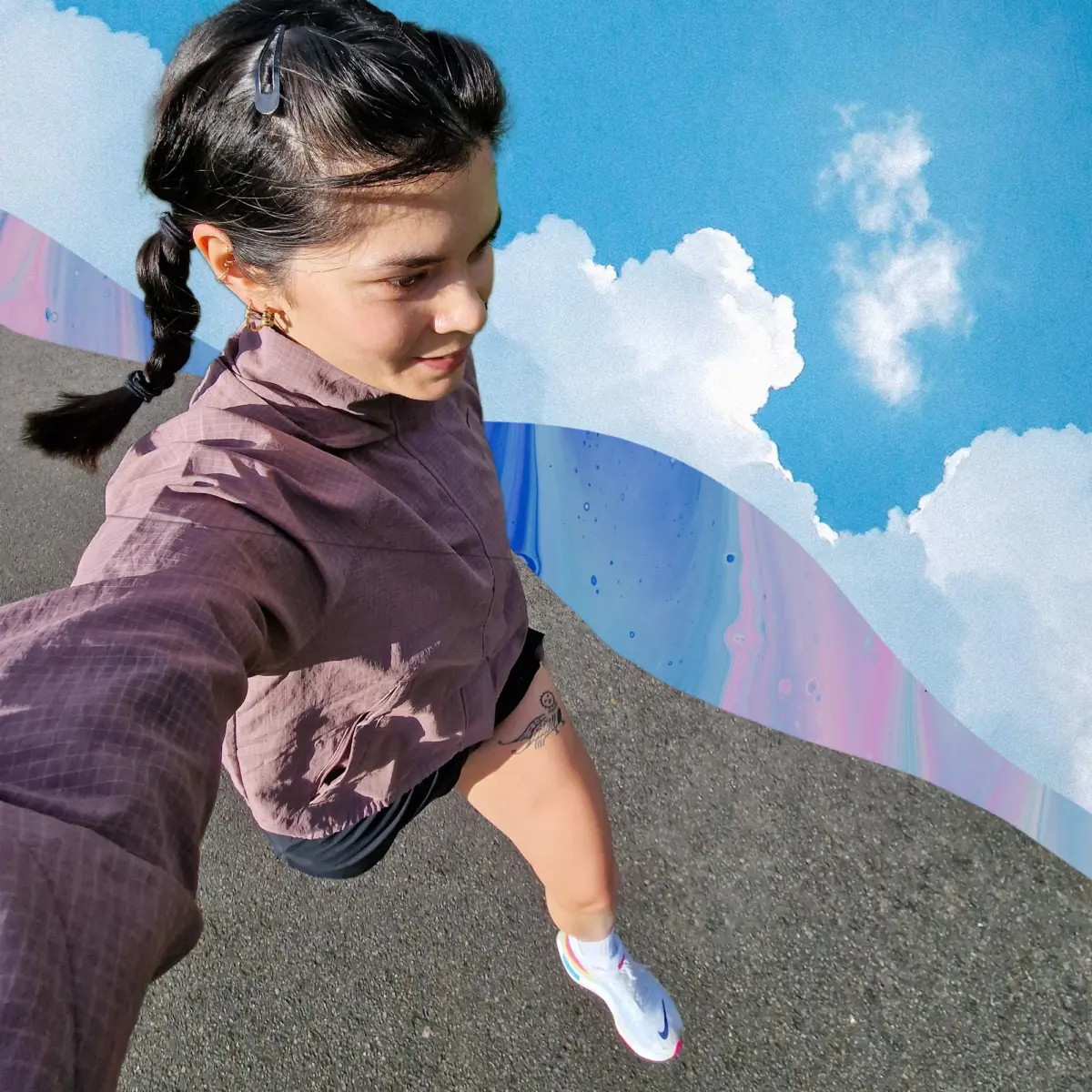
A notable risk was taken on Sunday: debuting a brand-new pair of running shoes during an 18-kilometer long run—a practice typically discouraged by coaches. However, the Nike Invincible 3 proved resilient. Following an initial five-kilometer break-in period, the footwear adapted seamlessly to the foot’s natural biomechanics. Rather than causing friction or blisters, the shoe’s responsive cushioning provided a noticeable forward propulsion, allowing the feet to move fluidly across wet pavement and uneven park trails.
Monday: The Post-Long Run Slump and Career Transitions
Monday marked a scheduled rest day, coinciding with a major life milestone: a week off prior to starting a new professional role. While theoretically a day of rest, the physiological reality of the day after a long run often tells a different story.
High-mileage runs induce significant systemic inflammation and central nervous system fatigue. Engaging in domestic chores, standing for extended periods, and attending a family dinner left the runner physically exhausted by evening. This highlights a common misconception about rest days in endurance sports: rest is not synonymous with complete physical restoration immediately following a peak effort; rather, it is a period of biological repair where the body actively rebuilds stronger tissue.
Tuesday: Cross-Training and Injury Prevention
To mitigate the repetitive impact forces associated with running, Tuesday incorporated a full-body strength and conditioning session. Integrating strength workouts twice a week is an evidence-based strategy for distance runners, targeting key stabilizer muscles in the hips, core, and knees to prevent common running injuries like patellofemoral pain syndrome.
Coinciding with Pancake Day, the evening offered a culinary celebration featuring both sweet and savory pancakes—with a traditional British preference for lemon and sugar. Far from derailing progress, the caloric intake served as vital fuel for systemic recovery, with the runner noting a profound return of energy levels driven by adequate nutritional replenishment.
Wednesday: Valentine’s Day Social Jog and Urban Exploration
Wednesday blended romance with mileage, featuring a 10-kilometer recovery run completed alongside a partner. Far from the solitary grind of speed work, running with a companion alters the physiological experience, often lowering perceived exertion through conversation and shared pacing.
The Culinary Running Route
The route served as a masterclass in experiential running, beginning at London Bridge, crossing Tower Bridge, weaving along Regent’s Canal, and culminating at a specialty bakery in Dalston.
- The Route: London Bridge $rightarrow$ Tower Bridge $rightarrow$ Regent’s Canal $rightarrow$ Dalston.
- The Culinary Reward: A toasted fennel sausage sandwich, complemented by artisanal coffee and fresh lemonade.
Rather than heading straight home, the pair walked an additional 10 kilometers back, punctuated by a secondary culinary stop for a pistachio pain au chocolat. This underscores a burgeoning trend in modern running culture: the "café run," where athletic output is deliberately paired with neighborhood discovery and gastronomic exploration.
Thursday: Strength, Socializing, and Active Recovery
Thursday’s schedule prioritized structural integrity through another targeted lower-body and core strength session, followed by family time with young nieces and nephews.
The evening offered an unconventional form of active recovery: a live concert with friends. Navigating a crowded music venue and dancing through a setlist of pop hits places unexpected demands on the lower extremities. While not a traditional cross-training session, rhythmic dancing engages stabilizer muscles and provides a vital mental health break, proving that an active social life can coexist with elite athletic training.
Friday: High-Intensity Intervals and Urban Elevation
The final training session of the week shifted from endurance and recovery to raw speed and anaerobic threshold work: an interval session completed in southeast London.
Operating from a base in Brockley, the workout consisted of four progressive interval repetitions. To maximize the terrain, the runner tackled the Brockley Three Peaks Walk, a route characterized by steep urban inclines and sweeping city views.
Despite the grueling nature of hill sprints—where the sensation of maximum exertion flirts with physical limits—the runner successfully hit target paces and even surpassed previous velocity benchmarks on the final rep. The session concluded, fittingly, with another celebratory coffee and cinnamon roll, cementing the runner’s philosophy that fitness gains and culinary exploration are mutually inclusive.
Supporting Context & Metrics: The Science of the Running Boom
The experiences detailed in this training diary reflect broader socioeconomic and physiological trends currently sweeping the global fitness landscape. Running has evolved from an isolated pursuit into a vibrant, community-driven cultural movement.
The Rise of Experiential and Social Running
Data from athletic federations and fitness tracking platforms indicate a significant surge in run clubs, particularly among urban millennials and Gen Z demographics. Runners are increasingly rejecting the solitary treadmill grind in favor of:
- Community-Led Crews: Social runs that prioritize inclusivity, pacing groups, and post-run socialization.
- Gastronomic Mapping: Planning routes that culminate in local bakeries, specialty coffee shops, and artisanal eateries discovered via social media platforms like TikTok and Instagram.
- Multi-Disciplinary Integration: Blending running with fashion, music curation, and urban exploration.
Biomechanical Demands and Footwear Evolution
Long-distance running places immense loads on the musculoskeletal system. With ground reaction forces reaching up to three times a runner’s body weight with every stride, footwear technology has become paramount.
Modern high-cushion neutral trainers, such as the Nike Invincible 3, represent a paradigm shift in how brands approach impact mitigation and energy return. Utilizing advanced foam compounds with high energy-return properties, these shoes aim to reduce lower-limb fatigue without sacrificing stability. As demonstrated during Sunday’s 18-kilometer test run, modern foams allow athletes to bypass lengthy break-in periods, offering immediate structural support and dynamic propulsion that aids both recovery and performance.
Official Insights: The Psychology of Running
Beyond the physical metrics of pace, heart rate, and cadence lies the true bedrock of marathon training: psychological resilience. Sports psychologists and elite coaches consistently emphasize that endurance sports serve as a powerful vehicle for mental health enhancement.
"When you show yourself time and time again what you can achieve through discomfort, your mind adapts. The self-respect and self-love that stem from moving your body, honoring your limits, and prioritizing your own well-being fundamentally elevate your baseline confidence. This confidence is rarely about physical appearance; it is about cultivating an internal reservoir of energy and grit applicable to every facet of life."
Morgan’s Three Pillars for Sustainable Running Success
For athletes looking to break the monotony of traditional training blocks and foster a lifelong passion for the sport, the following foundational strategies are recommended:
- Prioritize Community: Run with others. Social connection reduces the psychological burden of high mileage and builds accountability.
- Curate Your Soundtrack: Utilize high-tempo music—specifically disco and pop divas—to distract the central nervous system from fatigue during difficult pacing blocks.
- Explore with Purpose: Design running routes around destinations. Whether discovering a new neighborhood, a historic park, or an artisanal bakery, turning a run into an urban adventure transforms exercise from a chore into an exploration.
Future Outlook: The Evolution of the Runner’s Lifestyle
As the sport of running continues to mature, the boundary between elite athletic performance and lifestyle culture will only blur further. The modern runner is simultaneously an endurance athlete, a data analyst monitoring training loads, a cultural consumer navigating urban food scenes, and an advocate for mental health.
Looking ahead, the integration of advanced footwear technology—like the responsive cushioning systems found in the Nike Invincible 3—will continue to push the boundaries of what recreational athletes can achieve safely over high-mileage blocks. Furthermore, as cities become increasingly pedestrian-friendly and run-centric, urban infrastructure will adapt to accommodate the massive influx of daily runners.
Ultimately, whether the goal is crossing a marathon finish line for the first time or simply chasing the endorphin high of a Friday morning hill sprint, the core tenets remain unchanged: consistency, community, proper recovery, and the willingness to reward hard work with a well-earned cinnamon roll.