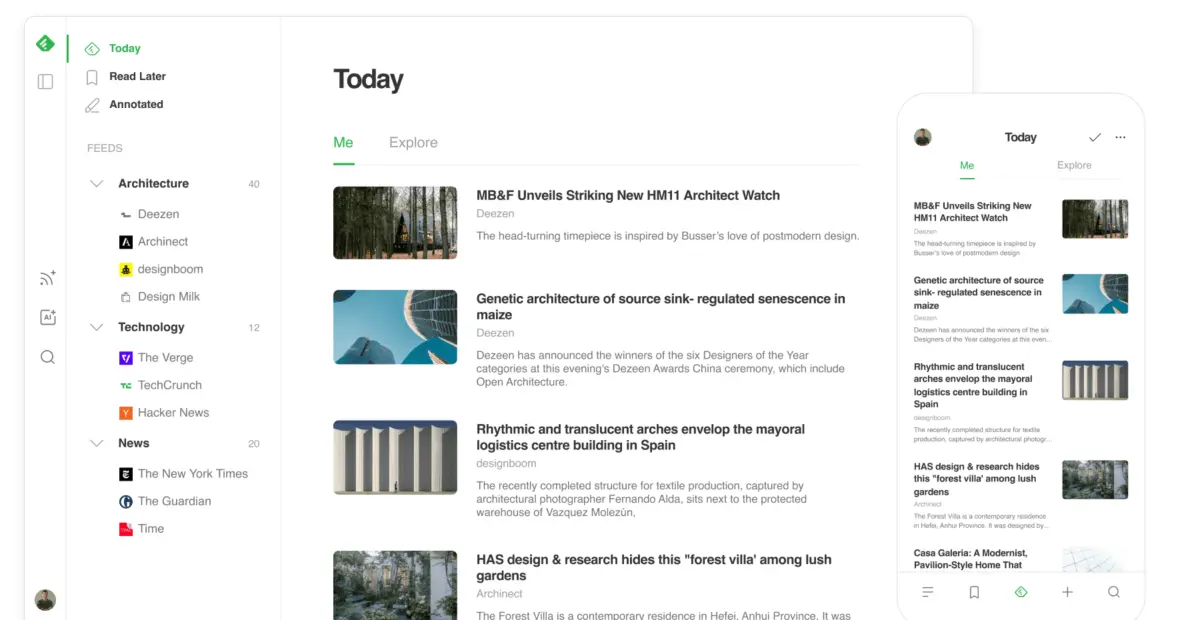
Executive Overview
For over a decade, Feedly has stood as the undisputed guardian of the open web’s syndication pipeline. Born from the ashes of Google Reader’s sudden demise in 2013, the platform grew to command a loyal base of 15 million users, making it the largest standalone RSS reader in the world. Yet, for more than a week, that massive user base found itself staring at hanging tabs, crashing browser windows, and an application rendered practically unusable.
What began as sporadic complaints on developer forums and Reddit quickly snowballed into a widespread crisis of confidence. Paying subscribers—many of whom rely on Feedly for professional curation, research, and daily workflows—reported that the web application had slowed to an agonizing crawl. Compounding this frustration was a wall of silence from Feedly’s customer support, leaving users to wonder if their lifelines to the web had been severed.
This disruption does not exist in a vacuum. It coincides with Feedly’s aggressive corporate pivot toward Cyber Threat Intelligence (CTI) and business-facing Artificial Intelligence (AI) curation tools. As the company reframes its homepage to target enterprise security teams rather than casual news readers, the outage has reignited a critical debate: Can a tech company successfully transition into a high-value B2B AI platform without abandoning the core consumer base that built its empire?
Detailed Chronology: A Week of Degradation
The technical issues plaguing Feedly did not emerge overnight, but rather accumulated over a twelve-day period of compounding failures. To understand how the platform’s performance deteriorated, we must look at the sequence of events that left both web and mobile users locked out of their feeds.
[Day 1-3] Implementation of resorting logic change -> Latency begins to spike for power users
[Day 4-7] Web app reports "unusable" slowness; Reddit outcry grows; Classic App abruptly retired
[Day 8-10] Support requests go unanswered; iOS app loading failures reported
[Day 11] Friday: Initial "Mark as Read" patch deployed (Partial relief)
[Day 14] Monday: Root cause identified as resorting logic; Final hotfix rolled out; Status page updated
The Web App Slowdown
The trouble began in mid-January when users noticed an unusual lag when attempting to load their feeds on desktop browsers. Within days, this latency escalated into a complete bottleneck. For power users with hundreds of curated folders, the interface would freeze entirely.
On online forums such as Reddit, users described the platform as "unusably slow" and "hanging indefinitely." The core value proposition of an RSS reader—the ability to scan, triage, and digest hundreds of headlines in minutes—was entirely neutralized.
The Unannounced Sunset of Feedly Classic
Simultaneously, legacy users of Feedly’s mobile ecosystem discovered that the "Feedly Classic" application—a lightweight, older version of the mobile app preferred by a small but dedicated cohort of long-time users—had stopped functioning entirely.
Unlike typical software deprecations, which are accompanied by deprecation warnings, emails, and transition periods, Feedly Classic was retired overnight. Users who opened the app were met with broken connections, learning only after the fact that the app had been permanently pulled from both the Apple App Store and Google Play Store.
The iOS App Failure
The problems soon spread to the primary mobile ecosystem. Users running modern versions of iOS, including those testing developer builds, reported that the flagship Feedly iOS application refused to load beyond the initial splash screen.
As the mobile and web platforms faltered simultaneously, subscribers turned to Feedly’s official support channels, only to be met with an automated silence. For paying "Pro" and "Pro+" subscribers, who are promised priority support as part of their annual fees, this lack of communication was viewed as a betrayal of trust.
Supporting Context & Metrics: The RSS Landscape and the Pivot to CTI
To understand why the outage provoked such intense anxiety among its user base, one must examine the delicate economics of the RSS market and Feedly’s historical trajectory.
The Legacy of 2013 and the 15-Million-User Footprint
When Google abruptly shut down Google Reader in July 2013, it created an existential crisis for internet purists. RSS (Really Simple Syndication), once hailed as the decentralized future of web consumption, was declared dead by mainstream tech pundits.
Feedly, however, seized the moment. By building a seamless migration tool that allowed Google Reader refugees to import their feeds with a single click, Feedly acquired over three million new users in a matter of weeks.
| Platform | Estimated User Base | Primary Target Audience | Core Business Model |
|---|---|---|---|
| Feedly | 15,000,000+ | Consumers, Enterprise, CTI Teams | Freemium, Pro SaaS, B2B Enterprise |
| Inoreader | Undisclosed (Millions) | Power Users, Researchers | Premium Subscription, Developer APIs |
| NetNewsWire | N/A (Open Source) | Apple Ecosystem Purists | Free / Open Source |
| Reeder | N/A (Desktop App) | iOS/macOS Power Users | One-time Purchase |
Today, Feedly sits at the top of this ecosystem with over 15 million registered users. This footprint dwarfs competitors like Inoreader, Feedbin, and client-side applications like NetNewsWire or Reeder. For a decade, Feedly has acted as the default infrastructure of the curated web.
The Enterprise Shift: Cyber Threat Intelligence and AI
While 15 million users is an impressive metric, consumer RSS readers are notoriously difficult to monetize. The average consumer is hesitant to pay more than a few dollars a month for feed aggregation, and the rise of algorithmic social feeds (Twitter/X, Reddit, TikTok) and integrated news apps (Apple News, Google News) has squeezed the consumer RSS market into a dedicated, but financially limited, niche.
Recognizing these headwinds, Feedly began a quiet but profound architectural shift. The company transitioned from a simple news aggregator into an enterprise-grade AI intelligence engine.
[Traditional RSS Feed] ──> [Feedly Aggregation Engine] ──> [Consumer UI (Low Margin)]
                                       │
                                       ▼
                         [Feedly AI Engine ("Leo")]
                                       │
                                       ▼
             [Cyber Threat Intelligence (CTI) Platform (High Margin)]
Through the introduction of "Feedly AI" (formerly known as Leo), the company began marketing its platform to corporate security teams, threat analysts, and market researchers.
Instead of merely displaying articles, Feedly’s AI models scan the web to:
- Identify zero-day exploits and software vulnerabilities.
- Track emerging geopolitical threats and regulatory changes.
- Curate highly specific competitive intelligence for Fortune 500 companies.
This B2B model allows Feedly to command enterprise-level pricing—charging thousands of dollars per seat annually—contrasting sharply with the $5-to-$12 monthly fees paid by its legacy consumer base. This financial reality has led many long-time users to worry that the consumer-facing "News Reader" is being treated as technical debt rather than a core asset.
Official Statements & Technical Explanations
Following days of mounting pressure and direct inquiries from journalists, Feedly’s leadership broke their silence. In an interview, Feedly CEO Edwin Khodabakchian addressed the technical failures, the quiet retirement of legacy software, and the strategic direction of the company.
Reaffirming Commitment to RSS
Addressing the widespread fear that Feedly is abandoning its roots, Khodabakchian insisted that the core RSS reader remains vital to the company’s enterprise ambitions.
"Despite the pivot to cyber threat intelligence, fixing the basic RSS functionality is still a priority because our CTI community uses the news-reading capability. Our goal has been to maintain the Feedly News Reader as fast and streamlined as possible."
In short, because enterprise security analysts rely on the same underlying feed-parsing engine to spot cyber threats, any degradation in the consumer product directly threatens the high-value B2B product.
The Diagnostics: Root Cause of the Slowdown
Khodabakchian revealed that the web app’s debilitating slowness was caused by two distinct, compounding technical issues:
[Resorting Logic Update] (Deployed ~12 days prior)
         │
         ├──> [High Database Latency on Folder-Heavy Accounts]
         │             │
         │             └──> [Triggered by "Mark as Read" Operations]
         │                         │
│ └──> [Result: UI Thread Locks / Browser Hangs]- The "Mark as Read" Bug: Initially, the engineering team believed the performance bottleneck was isolated to users executing the "Mark as Read" command on accounts containing highly complex, deeply nested folder structures. A patch designed to optimize these database queries was deployed on a Friday, providing only partial relief.
- The Resorting Logic Root Cause: Upon further investigation, engineers discovered the true culprit: a change to the database "resorting logic" deployed approximately 12 days prior. This update was meant to optimize article sorting but instead caused severe database latency under heavy query loads.
Following this discovery, Feedly officially updated its status page (status.feedly.com) and rolled out a comprehensive hotfix on Monday evening, promising a return to baseline performance within 24 hours.
Explaining the Demise of Feedly Classic
When asked about the sudden disappearance of the Feedly Classic app, Khodabakchian defended the decision on security and compliance grounds. The app, he explained, had become a liability:
- Compliance Failures: The legacy codebase could no longer meet the modern API, privacy, and security requirements mandated by the Google Play Store and Apple App Store.
- Low Engagement: The app had been hidden from app stores for a long period and had dwindled to "only a few hundred active users."
- The Communication Gap: The CEO acknowledged that the team chose not to notify these remaining users before pulling the plug—a decision that contributed significantly to the community’s feeling of alienation.
The iOS Loading Bug
Regarding the bugs preventing the flagship iOS app from loading, Khodabakchian admitted that the issue had bypassed internal monitoring. He committed the company’s mobile team to an immediate investigation, emphasizing that Feedly continues to actively invest in and maintain its primary iOS and Android applications.
Future Outlook: The Delicate Balance of Developer and Community Trust
Feedly’s turbulent week serves as a cautionary tale for modern software-as-a-service (SaaS) companies navigating the transition from consumer darling to enterprise power player.
                  ┌─────────────────────────────┐
                  │   The SaaS Dilemma:         │
                  │   Balancing Two Masteries   │
                  └──────────────┬──────────────┘
                                 │
         ┌───────────────────────┴───────────────────────┐
         ▼                                               ▼
┌─────────────────────────────────┐             ┌─────────────────────────────────┐
│     The Consumer Base           │             │     The Enterprise Pivot        │
├─────────────────────────────────┤             ├─────────────────────────────────┤
│ • 15 Million strong             │             │ • High margin, contract-based   │
│ • Low margins, high support load│             │ • Demands extreme SLA & uptime  │
│ • Vital for brand and testing   │             │ • Drives AI & CTI development   │
└─────────────────────────────────┘             └─────────────────────────────────┘
The Cost of Communication Failures
In the digital age, technical debt and bugs are inevitable. However, Feedly’s crisis was severely exacerbated by a lack of communication. By failing to update its status page during the initial days of the slowdown, keeping customer support channels silent, and shutting down legacy apps without warning, the company allowed a standard technical bug to morph into a narrative of corporate abandonment.
For a service that users pay for to save time, silence is the most expensive response. When paying subscribers are left in the dark, they begin auditing alternative platforms. Competitors like Inoreader and open-source clients stand ready to welcome users who feel deprioritized by Feedly’s enterprise ambitions.
The Interdependence of Consumer and Enterprise Software
The silver lining for Feedly’s 15 million consumer users is the architecture of the product itself. As Edwin Khodabakchian noted, the enterprise threat intelligence platform is built directly on top of the consumer feed-parsing engine. Feedly cannot neglect the performance of its core RSS infrastructure without directly damaging the product it sells to enterprise security operations centers.
Moving forward, Feedly’s challenge will be to rebuild the trust it eroded over this twelve-day period. To do so, the company must:
- Improve Transparency: Ensure the public status page reflects real-time performance degradation, rather than updating it only after media inquiries.
- Respect Legacy Cohorts: Provide clear deprecation timelines for legacy software, giving loyal users time to transition.
- Rebalance Support Resources: Ensure that the surge of capital from enterprise contracts is reinvested into basic customer support for the consumer base that keeps the platform relevant.
Ultimately, RSS remains one of the few open, non-algorithmic frontiers of the modern internet. As social media platforms become increasingly walled gardens, the demand for clean, user-controlled syndication is experiencing a quiet renaissance. Feedly possesses the scale, the technology, and the history to remain the leader of this movement—provided it remembers that its 15 million foundation blocks are just as valuable as its high-paying enterprise crown jewels.