As the United States accelerates its push toward ubiquitous, high-speed wireless connectivity and broadband expansion, a quiet crisis is unfolding thousands of feet above the ground. Driven by Federal Communications Commission (FCC) mandates and aggressive congressional timelines, television and telecommunications stations nationwide are rushing to upgrade their infrastructure. However, this high-stakes race to clear airwaves and expand digital access is coming at a devastating human cost.
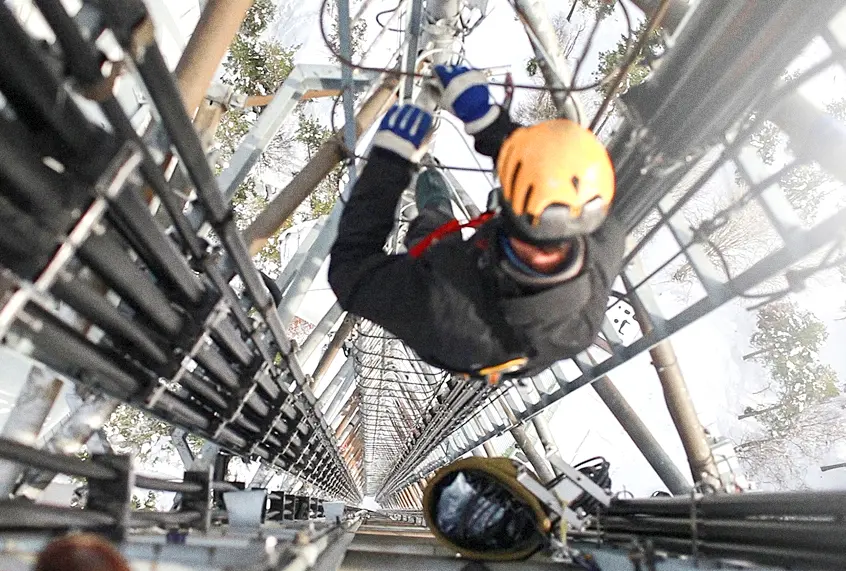
Communication tower climbers—the specialized laborers who scale metal monoliths often towering up to 2,000 feet—are facing an unprecedented surge in fatal accidents and structural collapses. Industry experts, labor advocates, and safety officials warn that the current federal schedule for the nationwide television spectrum "repack" and wireless expansion creates a volatile mix of rushed timelines, a severe shortage of qualified hands, and dangerously lax regulatory oversight.
With roughly 1,000 television stations mandated to transition to new channels, and mounting political pressure to meet strict deadlines, the message from the field is stark: in the scramble to modernize America’s digital infrastructure, human lives are being treated as collateral damage.
Detailed Chronology: A Trail of Tragedies
The human toll of the infrastructure expansion is best understood through the individual lives lost in pursuit of the nation’s connectivity goals. The dangers inherent in tower work have crystallized in a series of high-profile accidents that underscore the lethal nature of the profession.
The Miami Gardens Disaster
In September, a routine antenna replacement project in Miami Gardens, Florida, working on behalf of WSVN-Channel 7, turned catastrophic. Three young men lost their lives in a sudden, violent accident while working high above the ground:
Brachton Barber, 23, of Longwood, Florida.
Benito Rodriguez, 35, of Tampa, Florida.
Marcus Goffena, 31, of Sidney, Ohio.
The tragedy sent shockwaves through the close-knit community of tower workers and highlighted the immediate perils faced by technicians striving to meet broadcast upgrade deadlines.
The Fordland Tower Collapse
Just months prior, in April, another catastrophic failure claimed the life of a veteran tower worker. Stephen Lemay, 56, of Blaine, Washington, was working on a massive 1,980-foot broadcast tower in Fordland, Missouri, utilized by Ozarks Public Television. Without warning, the colossal structure collapsed, resulting in a fatal disaster that devastated his family and triggered exhaustive federal and state investigations into structural integrity and maintenance standards.
These incidents are not isolated anomalies. Industry databases maintained by safety advocates indicate that fatalities among tower workers continue to mount as the pressure to complete infrastructure projects intensifies.
Supporting Context & Metrics: The Mechanics of Risk
To comprehend why tower climbing remains one of the most perilous occupations in the modern economy, one must examine the sheer scale of the environment and the inadequacy of current regulatory frameworks.
The Scale of the Hazard
Workers scaling communication towers routinely ascend anywhere from 100 to 2,000 feet—heights that dwarf many skyscrapers (for comparison, One World Trade Center stands at 1,776 feet). At these altitudes, technicians are exposed to extreme environmental and physical hazards, including:
Severe Weather: High winds, sudden lightning storms, and ice accumulation.
Structural Instability: Aging infrastructure, rusted bolts, and overloaded platforms laden with multiple generations of heavy antennae.
Electrical and RF Hazards: High-voltage equipment and radio frequency (RF) radiation exposure.
Catastrophic Falls: The inherent risk of equipment failure or human error while maneuvering at extreme vertical heights.
Statistical Danger and Regulatory Voids
According to data highlighted by former Assistant Labor Secretary David Michaels, the statistics surrounding the profession are alarming. Tower workers face a risk of fatal injury 25 to 30 times higher than the average American worker.
Compounding this danger is a historic regulatory vacuum. The Occupational Safety and Health Administration (OSHA) has historically lacked specific, comprehensive rules tailored exclusively to the unique hazards of communication tower construction and maintenance. Although OSHA began developing targeted safety standards during the Obama administration—spurred by a grim spike in 2013 that saw 13 tower workers killed, surpassing the total fatalities of the previous two years combined—enforcement and oversight remain inconsistent.
Thomas Fuller of Illinois State University, an expert in occupational safety, points out that tower climbing operates largely as an under-regulated sector. According to Fuller, as towers age and bear the weight of increasingly dense arrays of new antennae, they become exponentially more hazardous. Compounding the issue, workers and subcontractors are frequently hesitant to report structural defects or safety violations out of fear of losing lucrative contracts—knowing there is no agile federal agency designed to handle emergency reports of unsafe tower conditions with the necessary speed.
Official Statements and the Legislative Battleground
At the heart of the crisis lies a fierce debate between operational safety advocates who demand a measured pace and lawmakers and commercial stakeholders pushing for rapid economic expansion.
The Warning from the Industry
Industry leaders have repeatedly sounded the alarm, warning that the federal government’s roadmap is detached from on-the-ground realities. Jim Tracy, chairman of the National Association of Tower Erectors (NATE), addressed Congress bluntly, arguing that the post-auction TV repack timeline should not be rushed.
"There is one inescapable fact," Tracy stated. "There are not, at present, enough qualified workers to perform all the tower work we will be required to complete."
Station engineers echo these sentiments. Bill Hayes, director of engineering for Iowa Public Television, captured the ethical dilemma facing media executives and regulators alike:
"You can be gambling at best with the reliability of your station’s service, and at worst you’re gambling with people’s lives."
The Push for Speed and Economic Necessity
Despite these grave warnings, political momentum has favored an aggressive schedule. A powerful coalition of 56 members of Congress—including prominent figures such as Representative Steve Scalise (R-La.) and Representative Darrell Issa (R-Calif.)—formally urged FCC Chairman Ajit Pai to maintain the strict deadline requiring all television station tower work to be completed by July 3, 2020.
Lawmakers argue that expediting the transition is vital for clearing airwaves to expand high-speed mobile broadband access, particularly to underserved rural communities. In their joint communications, proponents framed the policy in stark economic terms:
"Ultimately, it’s a matter of economic necessity in today’s globally-connected world."
The push for rapid deployment is further reinforced by heavy financial lobbying. Commercial television and radio stations poured nearly $29 million into federal lobbying efforts in 2017 alone, underscoring the massive financial stakes tied to the spectrum reallocation and infrastructure upgrade process.
Future Outlook: Balancing Connectivity and Human Life
As the telecommunications landscape continues its relentless evolution toward 5G, enhanced broadband, and expanded digital broadcasting, the fundamental tension between technological progress and worker safety remains unresolved.
The July 2020 deadline set by the FCC has passed, but the structural degradation of America’s tower network and the demand for ongoing maintenance persist. Experts argue that long-term safety reforms must move past reactive investigations and establish proactive measures:
Enforceable Federal Standards: OSHA must implement and aggressively enforce rigorous, specialized safety codes designed specifically for tower erection, modification, and maintenance.
Independent Safety Audits: Mandatory, independent structural integrity assessments must be conducted before workers are sent up aging or overloaded towers.
Whistleblower Protections: Robust legal protections must be established to empower technicians to halt work and report hazardous structural conditions without fear of economic retaliation or job loss.
Workforce Training and Certification: Expanding accredited apprenticeship and safety certification programs to address the critical shortage of qualified, experienced tower climbers.
Until the safety of the workforce is prioritized with the same intensity as the speed of broadband deployment, America’s digital future will continue to be built on a foundation of unacknowledged risk—resting heavily on the shoulders of the workers who climb into the sky.