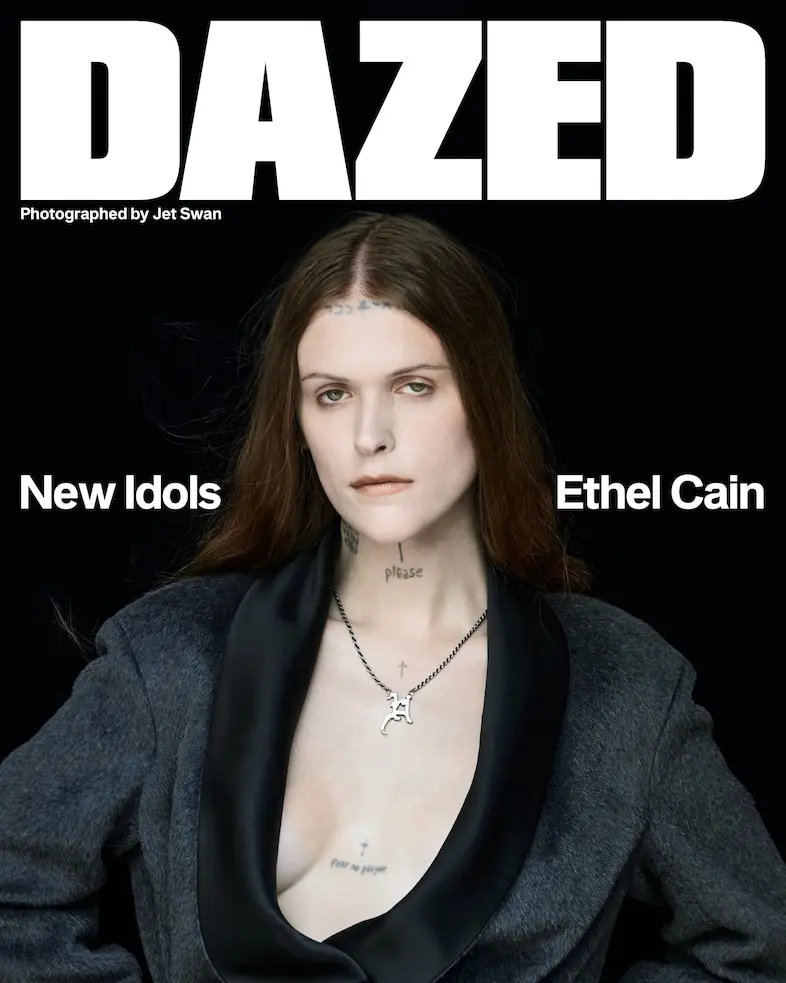
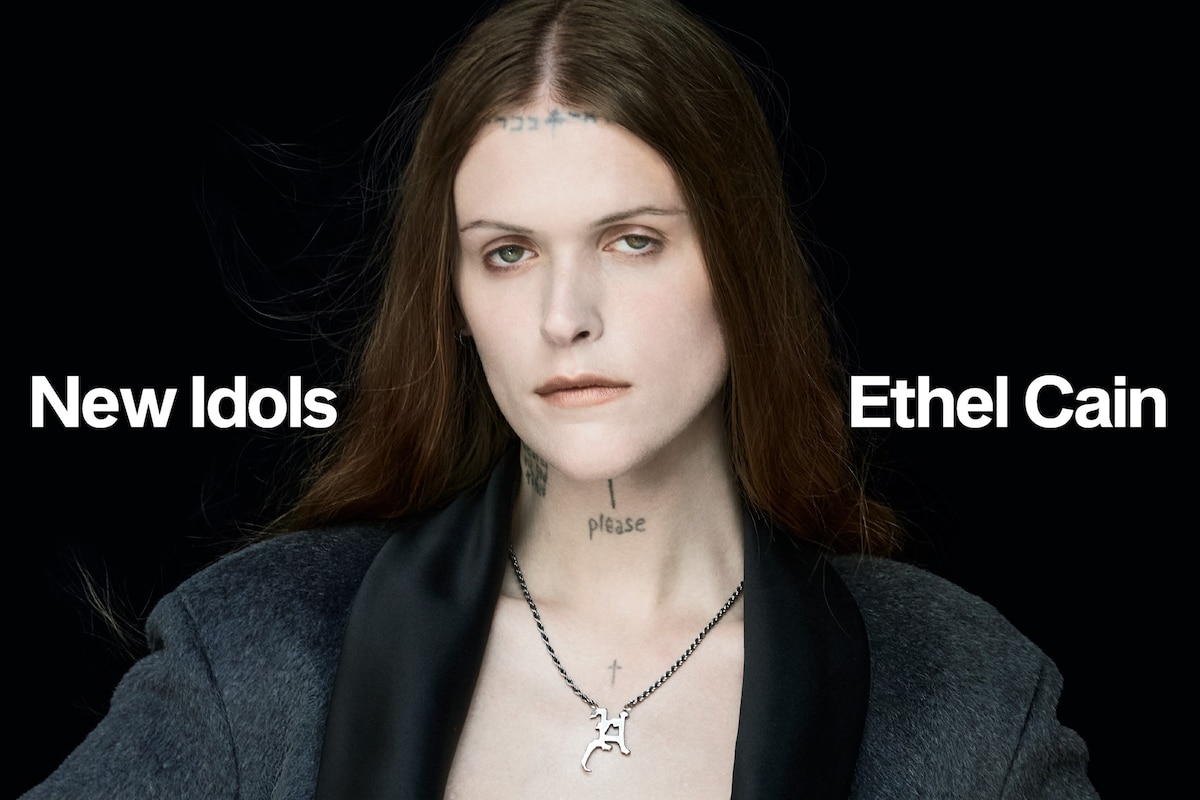
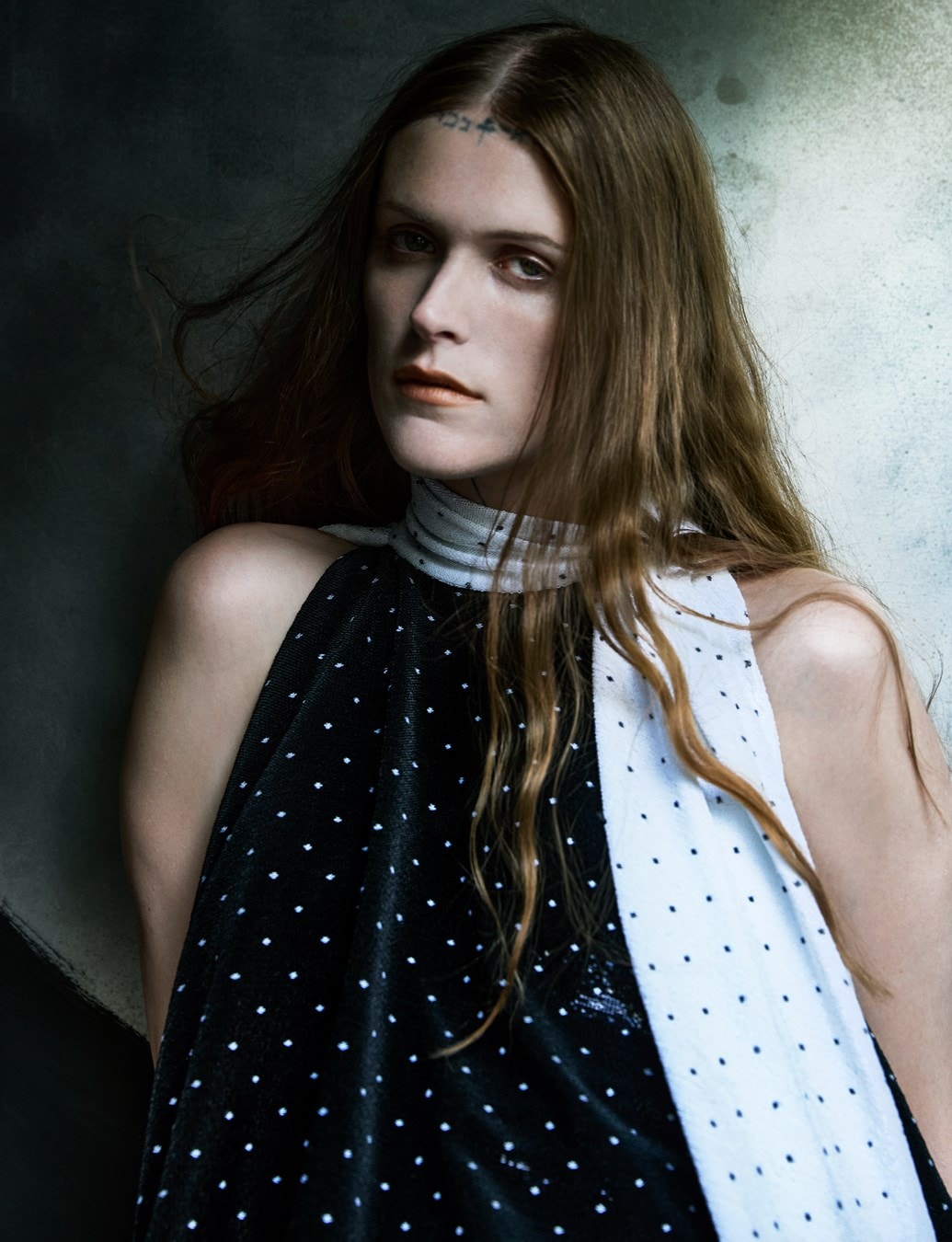
This story is adapted from the autumn 2026 issue of Dazed, on international sale from September 10.
Executive Overview
In the stifling heat of early July 2026, Paris baked under its second major summer heatwave. Amid the oppressive atmosphere of the Musée Rodin gardens—where clothes clung to skin and guests vied for the cooling salvation of electric fans—an unexpected cultural crossover took place. It was here, at Dior’s AW26 couture show, that Hayden Anhedônia, better known by her musical moniker Ethel Cain, crossed paths with actor Inde Navarrette.
Hours later, when Cain shared a photograph of the Obsession star on her Instagram Stories, the internet ignited. For fans of both creators, the pairing felt both surprising and entirely inevitable. Both women occupy a rare cultural space: artists who are profoundly, uniquely at home in the dark.
What followed was not merely a fleeting celebrity encounter, but a deep, meandering dialogue between two creative forces whose work explores religious trauma, bodily horror, psychological isolation, and the brutal weight of desire. Days after the Paris show, Cain and Navarrette connected via Zoom—Cain retreating to her gothic, fabric-draped Florida sanctuary, and Navarrette bringing the sleek, understated polish of oversized Dior sunglasses and French manicured nails. What emerged from their conversation was an unvarnished look into the psyches of two modern auteurs who weaponize vulnerability, grapple with internal darkness, and find beauty in the suffocating textures of human experience.
Detailed Chronology: From Digital Infatuation to Parisian Convergence
The Spark: May 2026
The groundwork for this creative alliance was laid months prior to their physical meeting. In May 2026, Curry Barker’s psychological horror feature Obsession hit cinemas, quickly cementing itself as the defining horror success story of the year.
Among the film’s many enthralled viewers was Ethel Cain. Captivated by the film’s bleak, hypnotic tension, Cain went to the cinema to see it five times in its opening week alone. Driven by sheer fandom, she sought out Navarrette on Instagram, leaving a blunt, high-praise comment under one of her posts: "You are mindblowing."
Coincidentally, Navarrette had spent weeks listening to Cain’s music to anchor herself psychologically while building her character for the film. Replying in immediate disbelief, the actress wrote back: "um i luv u. just in case u were wondering."
The Convergence: July 2026
Months of mutual admiration finally culminated in Paris during the Dior AW26 couture presentation. Despite the punishing weather, the event served as a crucible for their burgeoning friendship.
"Inde was such a sweetheart [in Paris]," Cain recalls, pausing to take a swig from a liter bottle of Pepsi during their post-show Zoom call. "We wound up just kicking it the whole time."
When Navarrette logs onto the digital call moments later, their banter is instantaneous. Eschewing formal pleasantries, the two launch into a rapid-fire exchange that mirrors the ease of lifelong confidantes rather than recent acquaintances.
Supporting Context & Metrics: Deconstructing the Mythologies
To understand why Cain and Navarrette’s friendship resonates so deeply with contemporary audiences, one must examine the dense, uncompromising mythologies they construct within their respective mediums.
Ethel Cain and the Southern Gothic Canon
Operating under the musical persona Ethel Cain, 28-year-old Hayden Anhedônia has spent the past several years redefining the parameters of indie and alternative music. Her 2022 debut album, Preacher’s Daughter, established an entire southern gothic universe centered on a fictional alter ego: the daughter of a preacher in the American Deep South who flees an abusive religious upbringing, only to meet a grisly fate involving abduction, murder, and cannibalism at the hands of a lover.
Rather than stopping at traditional song structures, Cain expanded her sonic world with 2025’s Perverts—a commercially hostile, 90-minute sprawl of dark ambient drone—followed later that same year by Willoughby Tucker, I’ll Always Love You, a tragic teenage love story. These records are architectural works, rich in cinematic scale and narrative lore. For Cain, music is a vehicle for physical and psychological claustrophobia.
Inde Navarrette and the Anatomy of Obsession
For 25-year-old Inde Navarrette, Obsession marked a monumental breakthrough, representing her first major feature film role. She stars as Nikki, a woman ensnared by a co-worker wielding a malevolent magical trinket known as a "One Wish Willow," which forces Nikki into a brutal, fatal infatuation.
In lesser hands, Nikki could have been flattened into a cliché "psycho girlfriend" trope. Instead, Navarrette infuses the character with elasticity and terrifying depth. Her facial expressions snap between desperate comedic neediness and abject horror. It is a performance defined by visceral victimization and misplaced desire—themes that run parallel to the female archetypes populating Cain’s musical canon.
Official Dialogue: Textures, Psychopathy, and the Creative Process
The heart of Cain and Navarrette’s conversation lies in a shared fascination with texture, isolation, and the burden of self-perception.
The Materiality of Art
The dialogue opens on an eccentric, tactile note introduced by Navarrette:
Inde Navarrette: "I have questions for you, madame… I’m a texture person. When I’m watching movies, I assess the characters by their materials… What material are you?"
Ethel Cain: "It’s funny you say that. I had the first inkling of the Ethel Cain character because I bought this handmade linen prairie dress on Etsy, and it was low-key claustrophobic… You’re locked in like a straitjacket… I was like, ‘This is what it would feel like to be a stuffy, suffocated southern woman.’ That’s where Ethel Cain was born. ‘I can’t breathe. Let me go write a song.’"
When discussing her personal reality versus her public-facing personas, Cain admits to severe sensory issues:
Ethel Cain: "I’m a huge baby. I have really bad sensory issues, and I can’t deal with things touching me… The older I get, the worse my sensory issues get. I have to wear giant sweaters and jeans. I love soft cotton, wool, knits, and worn-in denim."
Navarrette, whose very name stems from a family nickname highlighting her fierce independence, contrasts this by describing her personal aesthetic as strictly monochrome and diaphanous:
Inde Navarrette: "As Inde, I wear nothing but black. It has to be soft, super thin, see-through, light, and flowy. I think that I hide my emotions very well, but everyone in my life thinks that’s bullshit."
The Fear of Psychopathy and the Digital Mirror
Both artists confront a common psychological ghost: the paralyzing self-awareness fostered by the digital age, where individuals are forced to view themselves constantly through an external lens.
Inde Navarrette: "I get spooked all the time because I’m terrified of being a psychopath — and I’m scared that my ability to turn off my emotions or compartmentalize has secretly made me one. I find crying in real life strange because the moment I do it, my brain thinks it’s fake."
Ethel Cain: "I know what you mean. I’ve struggled with that my entire life. You know the internalised male gaze; the idea that every woman has a man inside her brain, watching her? This is an even more twisted version, where there is a me in my head watching me… My biggest gripe with my own psyche is that I can’t just do something normal. Can I act or feel a certain way without immediately anticipating how it will look or how other people will perceive it? It’s distressing, and I also ask myself all the time, ‘Am I a psychopath?’"
Navarrette notes how immersing herself in the harrowing emotional landscapes of Obsession—screaming, wailing, and shedding fake blood—offered a twisted form of catharsis. It allowed her to externalize years of suppressed internal weight.
Similarly, both creators discuss the difficulty of retreating inward. Cain describes her creative process using a biological metaphor:
Ethel Cain: "I describe my creative process as a turtle: if you make any loud, sudden movements, it goes back into its shell. You have to sit, without moving, for it to slowly poke its head back out. I can’t work on tour… I have to sit at home in complete silence, go nowhere, and do nothing for it to come back out."
Future Outlook: Legacy, Grounding, and Unconditional Connections
As the conversation draws to a close, the two artists pivot toward existential reflections on aging, memory, and the search for sanctuary.
Both express a complicated relationship with nostalgia. Cain speaks candidly about moving back to Florida in an attempt to claw back a safer, younger version of herself, only to find that time is irreversible. Navarrette reflects on the ephemerality of childhood spaces, noting that physical safe havens from her youth—her grandmother’s house, her Australian relatives’ trailer on an orchard—have vanished entirely.
Yet, rather than succumbing to despair, they find solace in unexpected anchors. Navarrette reveals her unusual source of validation:
Inde Navarrette: "I get the most validation not from people, therapy, music, or movies, but from the wind, which sounds insane to say."
In response, Cain reflects on the concept of root structures, comparing herself to a live oak tree native to the American South:
Ethel Cain: "Live oaks grow up, but then they grow back down, and they can be super low to the ground. Even though I’m growing up and out, I still need to stay low. I don’t need to get that high. I like to stay close to the source."
The dialogue concludes on a shared acknowledgment of human resilience and the beauty of finding unconditional support in unexpected places. Whether through the fictional convergence of their darkest creations—Cain joking that Preacher’s Daughter and Obsession‘s Nikki would form an unstoppable, town-burning alliance—or their mutual commitment to embracing personal evolution, Ethel Cain and Inde Navarrette stand as twin titans of modern dark art. They are artists who refuse to shy away from the shadows, carving out spaces where the broken, the suffocated, and the misunderstood can finally breathe.