Executive Overview
In an increasingly digital-first global economy, enterprise communication in emerging markets is undergoing a profound paradigm shift. Voice remains the primary medium of human trust and transaction, particularly in India. A recent study by Truecaller revealed that over 76% of Indian consumers prefer engaging with businesses over a direct phone call rather than text-based interfaces. This cultural and operational reality has created a massive addressable market for automated, voice-driven artificial intelligence systems designed to manage high-volume customer interactions without sacrificing context, accuracy, or empathy.
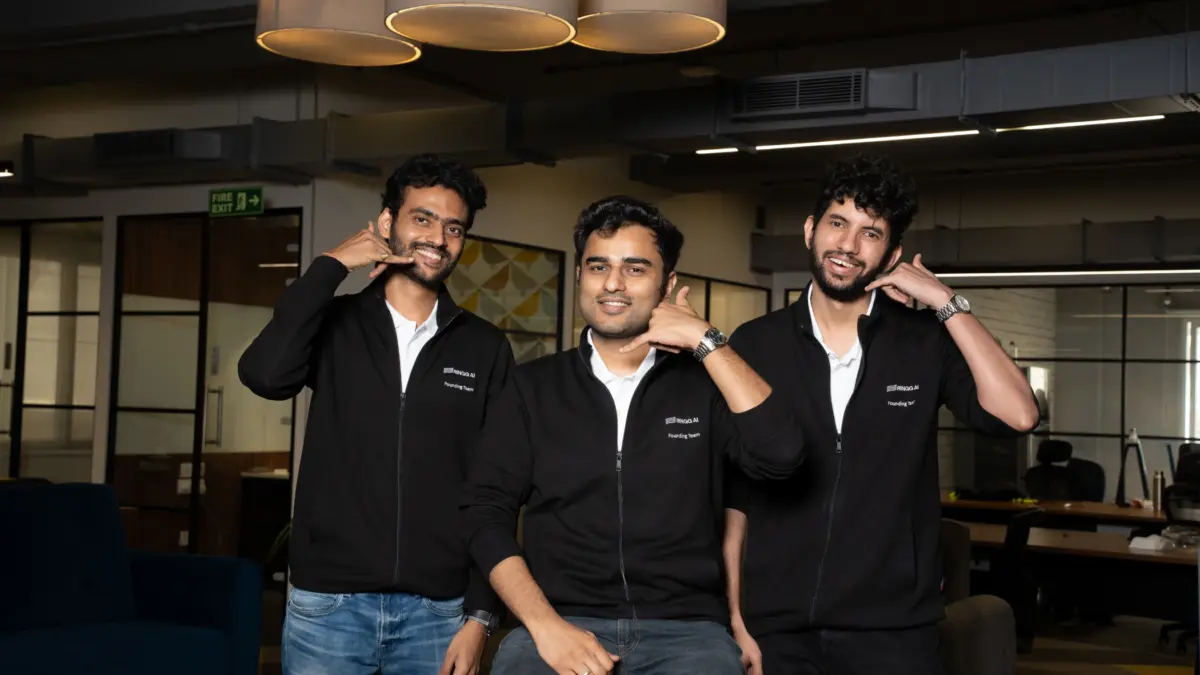
Capitalizing on this systemic shift, Bangalore-based enterprise voice AI startup Ringg has announced the completion of a $10 million Series A extension round led by venture capital firm Peak XV Partners (formerly Sequoia Capital India & SEA). This tranche supplements a $5.5 million Series A raised earlier this year, elevating the startup’s total Series A funding to $15.5 million. Ringg, which currently processes upwards of 20 million call attempts per month, intends to utilize the capital injection to advance its underlying technology stack, broaden its multi-channel automation suite, and aggressively scale its enterprise footprint.
Ringg’s trajectory reflects a broader maturation in the enterprise generative AI sector. Moving away from superficial automated dialers and high-churn outbound telemarketing tools, the company is positioning itself as an orchestration engine capable of completing complex, multi-step enterprise workflows—such as healthcare appointment booking, financial Know Your Customer (KYC) onboarding, and e-commerce cart recovery. By orchestrating bespoke speech recognition and generation models alongside third-party architectures, Ringg is attempting to solve one of the most stubborn bottlenecks in modern business process management: delivering high-touch, human-grade support at programmatic scale.
Detailed Chronology
The Research Origins: From DesiVocal to Enterprise Orchestration
The foundational architecture of Ringg was not originally designed for enterprise workflow automation. The company initially emerged as DesiVocal, a specialized deep-tech research initiative focused on building native text-to-speech (TTS) models tailored for Indian regional languages and accents. Recognizing early on that training, serving, and maintaining custom foundation speech models end-to-end was an extremely capital-intensive endeavor with uncertain software-like margins, the founding team executed a decisive strategic pivot.
Rather than remaining lower down the technology stack as a pure model-maker, the team moved upstream to construct full-stack voice AI agents tailored directly for enterprise application integration. This strategic pivot allowed the company—rebranded as Ringg—to directly control end-customer outcomes and build deep software integration locks within client operations.
       [ Early Genesis ]
          DesiVocal
   (Text-to-Speech Research)
               │
               ▼ (Strategic Pivot: High Model Costs)
  [ Enterprise Application Layer ]
            Ringg.ai
               │
               ├─► Initial Traction: Outbound Dialing (CRED)
               │
               ▼ (Evolution to Deep Workflow Integration)
   [ Advanced Workflows & Omni-channel ]
 (Practo, Flipkart, Shell, PolicyBazaar)
               │
               ▼
[ Series A Financing: $15.5M Total ]
 ($5.5M Initial + $10M Peak XV Extension)
Commercial Traction and Customer Onboarding
Ringg’s shift to application-layer automation paid immediate dividends in acquiring enterprise accounts across India’s technology and financial services sectors:
- Fintech Validation: Indian fintech firm CRED became Ringg’s inaugural flagship client, deploying early iterations of the voice AI agents to handle user engagements.
- Horizontal Market Expansion: Following its success with CRED, Ringg rapidly integrated its technology across leading digital platforms in India, signing companies such as Flipkart (e-commerce), Practo (digital healthcare), Groww (investment platform), and PolicyBazaar (insurance aggregator).
- From Outbound Telephony to Complex Workflows: Ringg originally deployed its AI dialers for straightforward, high-volume tasks such as basic outbound telemarketing, initial lead qualification, and payment reminders. However, executive leadership realized that basic outbound calls offered limited pricing power and high customer churn.
- Deep Operational Integration: In response, Ringg refocused its engine toward mission-critical, complex operational workflows. A prime example includes its deployment for healthcare platform Practo, where Ringg’s autonomous voice agents currently operate across 1,200 clinics to manage appointment schedules, confirm visit logistics, and execute post-consultation follow-ups.
- Multi-Channel Expansion: As enterprise needs evolved, Ringg broadened its feature set beyond voice telephony to encompass omni-channel support—integrating text chat, WhatsApp automation, and browser-based customer request handling for enterprise clients such as global energy firm Shell.
Capital Structure Timeline
| Funding Phase | Investor(s) | Capital Raised | Strategic Objective |
|---|---|---|---|
| Initial Series A Tranche | Early-stage VCs / Angels | $5.5 Million | Initial product-market fit, enterprise onboarding, voice stack testing |
| Series A Extension | Peak XV Partners | $10.0 Million | Deep technical orchestration, GCC channel partnerships, hiring expansion |
| Total Series A Raised | — | $15.5 Million | — |
Supporting Context & Metrics
The Indian Market Opportunity: Voice Preferences and Scale
The market dynamics driving voice AI adoption in India are rooted in consumer behavioral data and macroeconomic operational realities. The preference for voice over text-based interaction remains a defining characteristic of the Indian consumer landscape.
Consumer Communication Preferences in India (Source: Truecaller Study)
┌─────────────────────────────────────────────────────────┐
│ Voice Calls (76%+)                                      │
├─────────────────────────────────────────┬───────────────┘
│ Text / App / Other (24%-)               │
└─────────────────────────────────────────┘- 76%+ Consumer Preference: According to findings from Truecaller, more than three-quarters of Indian consumers prefer engaging with commercial entities through phone calls rather than text channels, driven by considerations of speed, clarity, and trust.
- Monthly Call Volume: Ringg is currently processing over 20 million call attempts per month, reflecting substantial underlying load and providing the data flywheels necessary to refine voice latency and speech-to-text accuracy in real-world conditions.
- Headcount Growth: To support this expanded operational scale, Ringg has grown its team to 40 employees, adding more than 15 technical and operational team members within the past quarter alone.
Competitive Mapping of the Voice AI Ecosystem
The generative voice AI sector has become a highly contested arena characterized by three distinct layers: lower-level foundation model developers, mid-level orchestration platforms, and vertically integrated application solutions.
               ┌─────────────────────────────────────────┐
               │    APPLICATION LAYER (Verticalized)     │
               │   • Gnani.ai    • Arrowhead               │
               └────────────────────┬────────────────────┘
                                    │
                                    ▼
               ┌─────────────────────────────────────────┐
               │   ORCHESTRATION LAYER (Outcome-Driven)  │
               │   • Ringg       • Bolna   • Blue Machines │
               └────────────────────┬────────────────────┘
                                    │
                                    ▼
               ┌─────────────────────────────────────────┐
               │  FOUNDATION MODEL LAYER (Speech/Audio)  │
               │   • Deepgram    • ElevenLabs  • Cartesia│
               │   • Sarvam.ai   • Smallest.ai           │
               └─────────────────────────────────────────┘
Ringg operates principally within the orchestration and enterprise delivery layer. While foundational speech model makers (e.g., ElevenLabs, Deepgram, Sarvam) compete primarily on raw latency, audio fidelity, and token economics, orchestration players build the connective tissue—integrating models with legacy enterprise resource planning (ERP) databases, customer relationship management (CRM) software, and real-time decisioning workflows.
Comparative Layer Dynamics
- Foundation Model Builders: Entities such as Deepgram (recently valued at $1.3B), ElevenLabs (valued at $11B), Cartesia, and Indian vernacular AI pioneers like Sarvam and Smallest.ai. These firms focus on pushing the boundaries of speech synthesis, low latency, and multi-lingual voice generation.
- Orchestration Layer Competitors: Entities including Ringg, Bolna, and Blue Machines. These startups design system software that routes prompts, manages conversation states, connects models to internal corporate databases, and fallback-routes tasks dynamically depending on cost and latency thresholds.
- Verticalized Application Specialists: Providers such as Gnani and Arrowhead, which build specialized, compliance-heavy solutions tailored explicitly for banking, financial services, and insurance (BFSI) environments.
Industry consensus suggests that long-term enterprise defensibility and margin capture rest not merely with model creators—who face ongoing commoditization and high inference costs—but with orchestration platforms that own the enterprise customer relationship, system integrations, and operational outcomes.
Official Statements
Executives from Ringg and lead investor Peak XV Partners highlighted the strategic logic behind moving away from low-complexity automated dialers toward outcome-oriented enterprise agents.
Siddharth Tripathi, Co-founder of Ringg, reflected on the startup’s evolution away from commoditized outbound calling towards high-value enterprise integrations:
"At the start, we were doing high-volume, low-complexity use cases like outbound calling, lead qualification, loan collection, and more. We quickly realized these are not sticky use cases, and so it’s always going to be a price game."
Addressing the company’s refined focus, Tripathi emphasized:
"We are trying to position ourselves as a platform for agents that bring outcomes or get things done rather than voice agents for enterprises."
From the investor perspective, Rishen Kapoor, Principal at Peak XV, emphasized that Ringg’s origin as a deep-tech research lab provides it with an engineering moat when tackling complex, multi-stage corporate operations:
"Because of the technical capabilities, they can actually do these hard-won enterprise workflows end to end. They can complete these higher-value tasks like merchant onboarding, like L1 and L2 support, with quality and with consistency."
Future Outlook
The Global Capability Center (GCC) Strategy
While India remains Ringg’s primary operating market alongside emerging engagements in the Middle East and North America, the company is avoiding traditional direct-sales models in Western markets. Instead, Ringg is executing a go-to-market strategy centered on partnering with Global Capability Centers (GCCs) located within India.
Multinational Corporation (US / EU)
        │
        ▼
Global Capability Center (GCC) in India
        │  (Back-Office Operations & Human Agents)
        ├──────────────────────────┐
        ▼                          ▼
  Human Agents             Ringg AI Platform
                           (Automated L1 / L2 Support)
        │                          │
        └─────────────┬────────────┘
                      ▼
        Hybrid Outcome-Based Delivery
Multinational corporations leverage GCCs as offshore hubs for enterprise operations, IT services, and back-office management. By integrating its voice AI orchestration engine directly into GCC workflows, Ringg can deploy automation capacity alongside existing human support infrastructures, scaling enterprise automation globally without incurring the overhead costs of overseas direct sales teams.
Technical Architecture and Cost Optimization Strategy
Ringg’s engineering roadmap centers on achieving an optimal balance between proprietary model ownership and dynamic model routing:
                      [ Client Request Input ]
                                  │
                                  ▼
                    ┌───────────────────────────┐
                    │  Ringg Orchestration Layer │
                    └─────────────┬─────────────┘
                                  │
                  (Dynamic Routing & Cost Check)
                  ───────────────┬───────────────
                 │                               │
                 ▼                               ▼
     ┌──────────────────────┐        ┌──────────────────────┐
     │  Proprietary In-House │        │ Third-Party External │
     │   Speech Models      │        │ Foundation Models    │
     │ (Cost-Optimized Task)│        │ (High-Complexity Task│
     └──────────────────────┘        └──────────────────────┘
                 │                               │
                 └───────────────┬───────────────┘
                                 │
                                 ▼
[ Automated Outcome / Action ]- Dynamic Orchestration Layer: Because serving proprietary end-to-end voice models remains cost-prohibitive across all customer tiers, Ringg functions primarily as an orchestration layer. The platform dynamically routes conversation tasks to different speech-to-text, large language, and text-to-speech models based on latency requirements, language nuances, and cost constraints.
- Long-Term In-House Aspirations: Over time, Ringg aims to increase the proportion of internal models running on its proprietary infrastructure to lower unit economics and inference expenses.
- Targeted Engineering Recruitment: Ringg is allocating a substantial portion of its $10 million Series A extension toward hiring specialized talent. The company is recruiting forward-deployed engineers—roles combining software development expertise with product management capabilities to integrate AI systems directly into client ecosystems—alongside AI researchers focused on optimizing inference efficiency and lowering compute costs.
As enterprise AI adoption transitions from passive text chatbots to active, voice-driven autonomous execution, Ringg’s capital expansion underscores a broader industry thesis: the ultimate winners in enterprise AI will be the platforms that successfully bridge the gap between model capabilities and enterprise workflow execution.