Executive Overview
In the rapidly evolving landscape of artificial intelligence, knowledge workers face an existential narrative: generative AI tools are commoditizing professional expertise, flattening unique perspectives, and reducing nuanced human labor into generic, automated outputs. The prevailing wisdom instructs professionals to work harder at describing themselves—typing detailed prompts, filling out questionnaires, and feeding stylistic preferences into chatbots in a futile attempt to make an AI model sound human.
According to AI strategist Max Bernstein, co-creator of a groundbreaking methodology featured on the AI Explored podcast alongside Michael Stelzner, this approach is fundamentally flawed. Standard AI personalization captures only a fraction of how an expert actually thinks because it relies entirely on what a person can consciously articulate in an artificial interview setting.
The antidote to algorithmic homogenization is not working harder to describe yourself; it is training AI on how you actually think through your unscripted, everyday work. By harvesting data from real-world meetings, coaching sessions, and voice notes, professionals can construct what Bernstein defines as a "cognitive fingerprint." This rich, portable context document maps out the decision logic, mental models, and reasoning patterns that make genuine human expertise truly unique.
This article explores the step-by-step framework for extracting your cognitive fingerprint, breaking down the four layers of human knowledge, identifying the right data sources, deploying advanced extraction prompts, and leveraging your finished profile to scale your expertise safely across the shifting AI landscape.
Detailed Chronology: The Evolution of Personalizing AI
To understand why the cognitive fingerprint methodology represents a paradigm shift, we must examine how professionals have historically attempted to bridge the gap between human cognition and artificial intelligence.
Phase 1: The Era of Prompt Engineering and Stylistic Mimicry (2022–2023)
When generative large language models (LLMs) first entered the mainstream, early adopters attempted to personalize them using superficial stylistic cues. Users fed algorithms samples of their writing, injected phrases like "write in a professional yet conversational tone," and provided brief biographical summaries.
- The Limitation: These techniques produced robotic, overly polished pastiches. While the vocabulary occasionally matched the user, the underlying logic remained generic. The AI could mimic a tone of voice, but it could not reason through a complex problem the way the user would.
Phase 2: The Self-Assessment Interview Model (2024–2025)
As AI platforms evolved to support custom instructions, system prompts, and specialized projects (such as custom GPTs, Claude Projects, and Gemini Gems), advice shifted toward interactive interviews. Users were instructed to have the AI interview them—answering dozens of targeted questions about their background, workflows, and communication philosophies.
- The Limitation: As Max Bernstein highlights, this approach hit a psychological ceiling. Humans suffer from the curse of knowledge and cognitive biases; we simply cannot consciously recall, categorize, or articulate the intricate decision trees we use unconsciously. Self-assessments capture only the idealized version of how a professional believes they operate, rather than the reality of how they solve problems in real-time.
Phase 3: The Cognitive Fingerprint Methodology (Present Day)
Recognizing the limitations of conscious self-reporting, Bernstein turned to cognitive science—specifically the decades-old theories of philosopher Michael Polanyi regarding tacit knowledge (the principle that experts know vastly more than they can explicitly say). By bypassing questionnaires and analyzing raw, unscripted transcript data from actual client calls, team brainstorms, and impromptu voice notes, modern AI practitioners can now capture the hidden architecture of human thought.
Supporting Context & Metrics: The Reality of Modern AI Adoption
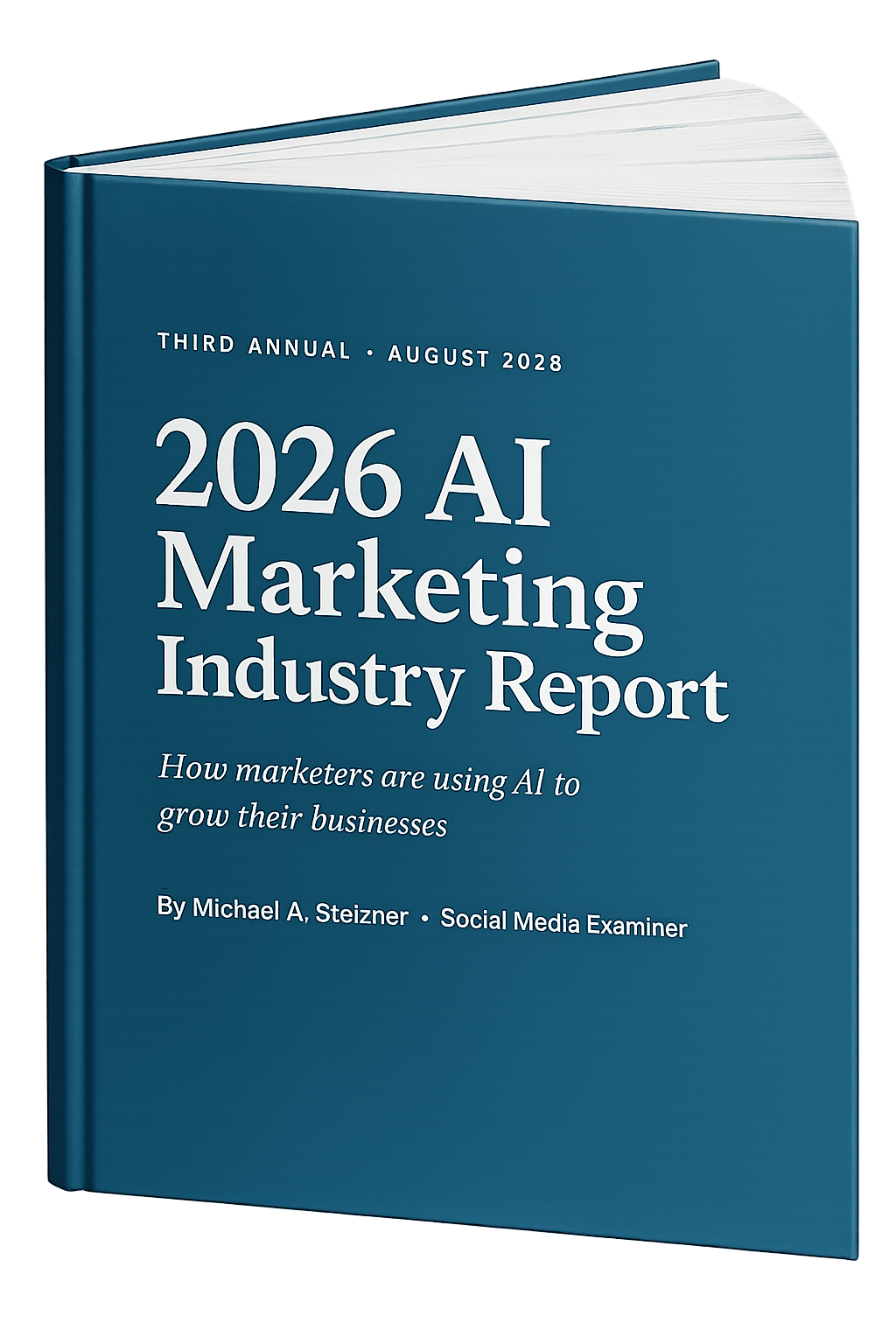
The urgency for authentic personalization is underscored by broader industry trends regarding how professionals are integrating AI into their daily routines. Recent data from the AI Marketing Industry Report—which surveyed 681 marketers—reveals striking insights into the current state of workplace AI adoption:
- The DIY Learning Curve: A staggering 85% of marketers learn AI entirely through independent experimentation, navigating the complex ecosystem of prompt engineering, custom workflows, and model updates without formal organizational guidance.
- Lack of Institutional Support: Only 7% of professionals receive formal company training on how to leverage generative AI effectively.
- Personal Financial Investment: More than 50% of practitioners spend their own personal funds on AI subscriptions and specialized tools to stay competitive in their fields.
These statistics paint a vivid picture: knowledge workers are overwhelmingly left to figure out advanced AI integration on their own. Without a structured framework like the cognitive fingerprint to ground these tools in genuine expertise, professionals risk drowning in generic, uninspired AI output that fails to differentiate them in a crowded marketplace.
Official Methodology: The Four Layers of Knowledge
Extracting a true cognitive fingerprint requires looking far beyond surface-level job descriptions. Bernstein developed a rigorous, four-layer framework to categorize the types of thinking embedded within everyday transcript data. Extracting all four layers is what separates a superficial AI persona from an authentic cognitive mirror.
+-----------------------------------------------------------------+
|                  THE FOUR LAYERS OF KNOWLEDGE                   |
+-----------------------------------------------------------------+
|  1. Declarative Knowledge (Surface / Job Description)           |
|     - What you do, LinkedIn bios, formal introductions          |
+-----------------------------------------------------------------+
|  2. Procedural Knowledge (Execution / SOPs)                     |
|     - Step-by-step sequences, operational workflows             |
+-----------------------------------------------------------------+
|  3. Conditional Knowledge (Decision DNA / If-Then Logic)        |
|     - Rules, triggers, and situational adaptations              |
+-----------------------------------------------------------------+
|  4. Metacognitive Knowledge (Mental Models / Thinking Styles)   |
|     - How you think about thinking; unstated assumptions        |
+-----------------------------------------------------------------+
1. Declarative Knowledge (The Surface Layer)
This represents what someone would explicitly state if asked to describe their profession. It is the job-description version of expertise—the polished answer that populates LinkedIn profiles, speaker bios, and introductory website copy. While necessary for basic context, most failed AI personalization attempts stop entirely at this layer, resulting in an AI that merely repeats your resume back to you.
2. Procedural Knowledge (The Execution Layer)
Moving deeper, procedural knowledge covers how you actually execute your work. It encompasses the step-by-step sequences, operational workflows, and standard operating procedures (SOPs) you follow to achieve an outcome. Where declarative knowledge names the destination, procedural knowledge maps out the vehicle and the route. This layer frequently surfaces when organizations extract SOPs from recorded operational meetings.
3. Conditional Knowledge (Decision DNA)
This is where AI training begins to yield deeply personalized results. Conditional knowledge governs the decision logic behind your actions—the intricate if-then reasoning that dictates how you adapt in real time.
- When a specific type of high-maintenance client presents a particular challenge, what instinctive response pattern kicks in?
- What project characteristics trigger distinct creative sequences?
These patterns feel entirely automatic from the inside, but they are born from years of accumulated professional judgment. Bernstein refers to this collection of triggers and responses as your Decision DNA.
4. Metacognitive Knowledge (The Core Mental Models)
The deepest and most valuable layer for advanced AI training is metacognition: how you think about thinking. This layer captures your overarching mental models, heuristic frameworks, and core philosophies.
Crucially, metacognitive knowledge is almost impossible to self-diagnose accurately. When clients are asked to describe their internal mental models before undergoing this extraction process, their self-assessments rarely match what their actual transcripts reveal. Unconscious biases, unstated assumptions, and deeply ingrained habits drive real behavior in ways we cannot perceive on command. This is why automated transcript analysis acts as a vital mirror, surfacing patterns that only an objective observer—or a properly prompted AI—can systematically decode.
Data Collection: Gathering Your Raw Material
Questionnaires, stylistic preferences, and multiple-choice prompts cannot build a cognitive fingerprint. The raw material must come from uncurated, unscripted moments where your expertise operates organically under real-world conditions.

High-Yield Data Sources
- Client Calls and Coaching Sessions: The natural friction of back-and-forth dialogue forces tacit knowledge to the surface as you untangle live problems for another person.
- Sales and Discovery Conversations: These interactions capture how you intuitively read a room, handle pushback, and adjust your messaging in real time.
- Brainstorming and Strategy Meetings: Collaborative team environments reveal how raw ideas are generated, evaluated, filtered, and refined.
- Solo Voice Recordings: Casual voice notes captured while walking, driving, or processing thoughts between tasks provide unfiltered streams of consciousness.
What to Avoid
Heavily scripted materials—such as a polished webinar presentation, a published book chapter, or a TED talk delivered multiple times—yield packaged knowledge rather than live thinking.
Recommended Collection Tools
- For Virtual Meetings: Platforms like Google Meet, Zoom, and Fathom automatically capture comprehensive transcripts. For deep customization, Max Bernstein recommends Granola, which operates as an audio-only background process without intrusive meeting bots, offering flexible output templates that integrate seamlessly with Notion and shared team workspaces.
- For In-Person Interactions: Wearable recording hardware such as Plaud clips securely to clothing or attaches to mobile devices to capture live discussions effortlessly.
- For Soliloquies and Brainstorms: Voice-to-text engines like Wispr Flow allow users to speak context and ideas directly into an AI session. Crucially, spoken prompts consistently generate richer, more natural context than typed keyboard inputs.
Pro Tip: Always prepend a brief context note at the top of each transcript file before uploading it to an AI project (e.g., “[Context: 45-minute coaching session with an enterprise software client addressing team burnout]”). This metadata helps the AI calibrate its extraction algorithms across vastly different conversational modes.
Future Outlook: Deploying and Scaling Your Cognitive Fingerprint
Once you have gathered three to five diverse transcripts and fed them into a persistent AI workspace (such as a ChatGPT Project, Claude Project, or Gemini Gem) using the four-layer extraction prompt, the resulting fingerprint document typically spans 20 to 30 pages of dense, highly structured insight.
The Portability Advantage
The true power of the cognitive fingerprint lies in its portability. The AI software landscape is in constant flux; new foundational models launch monthly, and power users frequently switch between competing platforms. Because your cognitive fingerprint exists as a standalone document, it travels with you. Whenever a superior AI model or tool emerges, you simply load your fingerprint file into the new environment, granting the model instant access to your mental models without missing a beat.
Organizational and Intellectual Property Benefits
- Unshakable Professional Confidence: Seeing your intuitive expertise reflected back to you in organized, articulate language eliminates imposter syndrome and makes differentiation effortless.
- IP Generation: The implicit logic captured in your fingerprint file can be systematically transformed into high-value intellectual property, including proprietary coaching frameworks, structured sales methodologies, comprehensive courses, and foundational agency SOPs.
- Team-Level Scaling: When organizations map the cognitive fingerprints of multiple team members, organizational blind spots become visible. Leaders can instantly discern who thinks analytically, who thrives on narrative frameworks, and who generates breakthroughs in unstructured brainstorms—fundamentally optimizing project assignments and collaborative team dynamics.
As artificial intelligence continues to mature, the professionals who thrive will not be those who try to sound like robots, but those who successfully teach robots to think like humans. By capturing your tacit knowledge through the cognitive fingerprint methodology, you transform AI from a generic writing assistant into a faithful cognitive extension of your truest professional self.