Executive Overview
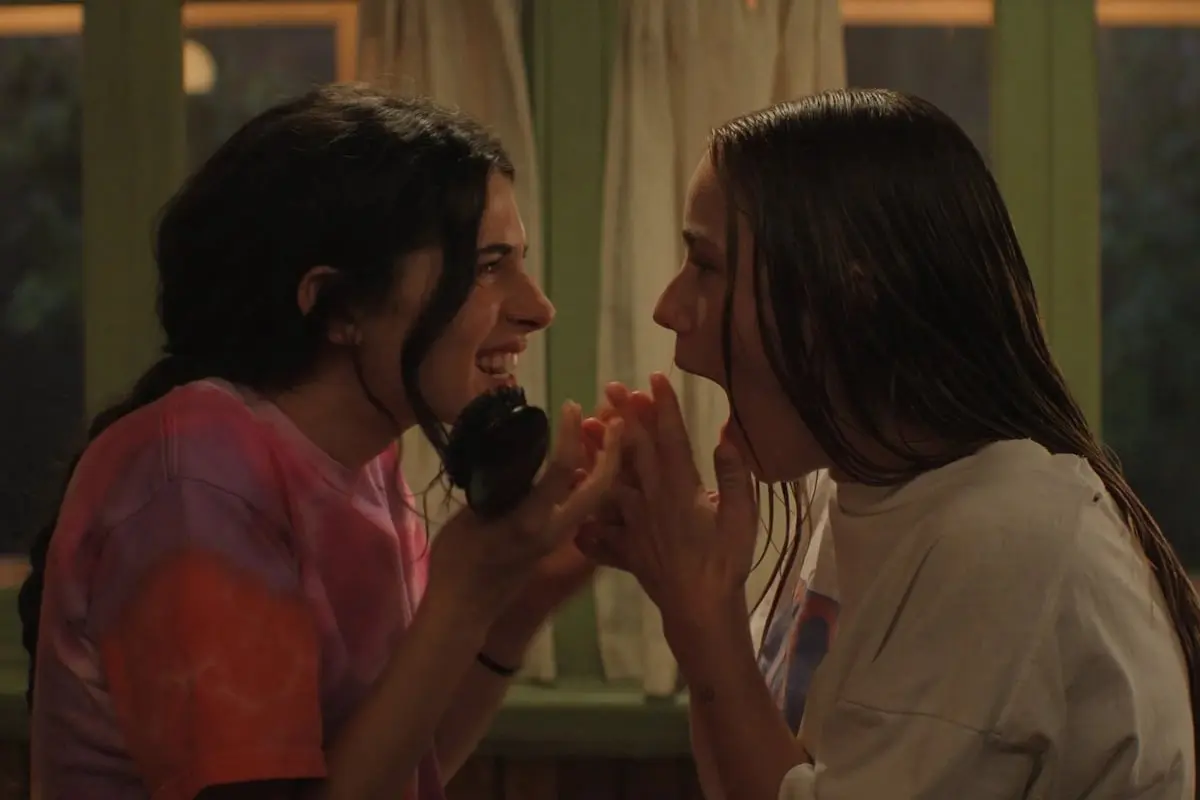
The modern landscape of young adult (YA) media is experiencing an unprecedented renaissance. Fueled by voracious digital fandoms across TikTok and Instagram, adaptations of popular romance, coming-of-age, and island-set dramas have transcended niche status to become dominant cultural phenomena. Industry metrics reflect this explosive momentum: on Netflix alone, YA media has generated more than 10 billion global views since 2023, prompting studios to construct dedicated content hubs and greenlight a dizzying slate of new projects.
Yet, amid this golden age of streaming—heralded for its inclusivity of queer romance and multicultural ensemble frameworks—a glaring omission persists. As contemporary hits like Sterling Point, The Summer I Turned Pretty, and Heated Rivalry capture the zeitgeist, Black girls and dark-skinned Black women remain largely invisible within these idyllic worlds.
This systemic oversight has sparked intense online discourse, shifting from sporadic critiques to organized digital investigations. Fans and creators alike are asking why an industry purportedly committed to progressive storytelling continues to sideline Black female protagonists. Through interviews with media scholars, authors, and industry reports, this investigation explores the commercial, institutional, and cultural mechanics driving the erasure of Black girls from modern YA media, and why their absence undermines the foundational purpose of coming-of-age storytelling.
Detailed Chronology: From the 1990s Boom to the Streaming Era
To understand the current drought of Black representation in contemporary YA programming, media historians emphasize the need to trace the cyclical nature of diversity in television.
The 1990s: The First Network Boom
The genesis of sustained Black youth and family programming traces back to the 1990s. In an aggressive bid to capture market share from traditional broadcast giants—ABC, NBC, and CBS—the nascent Fox network launched a wave of culturally specific Black programming, including In Living Color, Martin, and Living Single. This strategy was quickly replicated by upstart networks UPN and the WB (which later merged to form the CW).
For a brief window, Black teenagers and young adults saw themselves reflected in network schedules. However, this commercial alignment was precarious. As Cornell University cinema and media studies professor Samantha Noelle Sheppard notes, network executives frequently abandoned their foundational Black audiences the moment financial solvency was achieved. The pursuit of perceived "prestige" and mainstream "legitimacy" consistently resulted in the purging of diverse slates in favor of white-centric programming.
The 2010s: The Illusion of Streaming Democratization
The proliferation of subscription streaming services in the 2010s was initially hailed as a democratization of Hollywood. Platforms promised lower barriers to entry and niche audience targeting, resulting in critical successes like Insecure and Grown-ish. Yet, this momentum hit a wall following the racial reckoning of 2020.
While public commitments to racial equity spiked temporarily, the subsequent years have seen a systemic retreat. According to novelist Elizabeth Ese, whose upcoming YA novel A Drop of Color investigates Black girlhood, studios are increasingly abandoning diverse projects during development. "From 2020 to now, I think there has been a noticeable shift in public commitments to telling Black stories," Ese observes. Projects featuring Black protagonists are routinely optioned only to "die in development hell," a casualty of risk-averse studio boards and an increasingly hostile anti-DEI political landscape.
The Present Day: The Modern YA Void
By the mid-2020s, the whitewashing of YA adaptations has evolved from individual casting oversights into a systemic default. Viral social media audits—such as a widely shared 2024 thread by X user Jasmine Sinclair tracking upcoming YA slates—revealed that over a dozen major titles set for release over a two-year window featured zero Black actresses in their lead ensembles.
When modern shows do cast actors of color, they frequently rely on color-blind "any ethnicity" casting calls that, as comedian and actor Amanda Gordon points out, often default to scripts fundamentally written with white experiences in mind. The result is an industry that has normalized the total absence of Black girls from fantastical, romantic, and pastoral YA landscapes.
Supporting Context & Metrics: The Hard Data on Hollywood Exclusion
The qualitative experience of erasure reported by fans is corroborated by empirical data tracking employment, casting, and audience metrics across the entertainment sector.
The 2026 Hollywood Diversity Report
Data from the UCLA Hollywood Diversity Report underscores the stark disparities persisting behind and in front of the camera. In top-tier theatrical films and streaming equivalents analyzed through 2025 and 2026:
- Lead Roles: Black women secured approximately just 3.7 per cent of lead roles in major cinematic releases.
- Behind-the-Scenes Labor: Severe underrepresentation continues to plague writers’ rooms, executive suites, and director chairs, directly influencing which pitches receive greenlights and financial backing.
- Ensemble Tokenism: While multicultural ensembles are increasingly marketed as diverse, Black women are frequently relegated to the periphery—functioning as sidekicks or entirely omitted from the core narrative arc.
The Profitability Paradox
Industry gatekeepers have historically defended exclusionary casting under the guise of commercial viability—the persistent myth that stories centered on Black girls cannot achieve crossover appeal. Yet, empirical data continuously disproves this hypothesis.
Projects that center Black coming-of-age experiences routinely shatter viewership expectations. Mara Brock Akil’s series Forever, for instance, generated over 24 million views in 2025 alone, proving the immense appetite for culturally specific teenage narratives. Furthermore, Netflix’s upcoming reboot of A Different World has commanded massive digital engagement long before its premiere. The financial data demonstrates what marginalized audiences have long known: diverse content is not a commercial liability; it is an untapped goldmine.
Official Statements & Expert Perspectives
Industry leaders, academic researchers, and creative professionals offer critical insights into the ideological mechanisms powering this exclusion.
The Universalism Fallacy
Professor Samantha Noelle Sheppard points to a deeply entrenched double standard regarding whose experiences are deemed "universal" by Hollywood gatekeepers.
"Industry gatekeepers continue to narrate a version of media that says only white people can stand in as a universal experience," Sheppard explains. "Instead of thinking of cultural specificity as a way in which we get nuance and build critical empathy, we think of these things in divisive ways—as in, ‘If the character has to go to sleep in a bonnet, what will Sally in Michigan think? She won’t understand sleep!’"
This paternalistic anxiety assumes that non-white audiences are inherently equipped to consume white-centric narratives, while white audiences are incapable of empathizing with culturally specific Black realities.
The Structural Oversight of Adaptation
For audiences navigating these media landscapes, the exclusion feels increasingly intentional. Jill Ofodo, a 21-year-old college student based in Los Angeles, highlights how contemporary adaptations bypass obvious opportunities for inclusion. Citing Amazon Prime’s hit series Sterling Point—which features an adoption narrative involving twin siblings—Ofodo notes that the premise offered an open-door casting opportunity.
"It feels deliberate at this point," Ofodo says. "There’s always a contextual reason given for why people of colour—especially Black people—aren’t cast. But the context here seemed pretty open, and it was interesting that they didn’t take that opportunity to diversify the show or reach other audiences."
Future Outlook: Why Representation Matters in Adolescent Media
Young adult media is frequently dismissed by critics as unserious fluff—a genre defined by melodramatic love triangles, picturesque summer settings, and superficial high school angst. Yet, media psychologists and cultural critics argue that YA serves a vital developmental function. It is the primary artistic mirror through which adolescents learn to contextualize their identities, navigate emotional turbulence, and envision their place in the world.
When Black girls are systematically excised from these narratives, the psychological toll is profound. Erasure communicates a silent message: that their romantic lives, emotional messes, adolescent mistakes, and coming-of-age journeys are unworthy of documentation. This dynamic is uniquely damaging for Black girls, who are frequently subjected to adultification bias in real life, denied the grace of naivety, and pushed prematurely into hyper-visibility and burden.
Denying Black girls the right to be central, complex, and romantically idealized on screen limits the cultural imagination of entire generations. As Professor Sheppard eloquently summarizes:
"Black girls deserve to see themselves be cutely, complexly loved on screen, too."
As the streaming wars rage on and the YA boom continues to generate billions of views, the true test of the industry’s maturity will not be measured by the sheer volume of content produced, but by whether its creators possess the courage to make their fictional worlds reflect the actual diversity of human experience. Until Hollywood dismantles its insistence on whiteness as the default human experience, the modern streaming renaissance will remain an incomplete revolution.