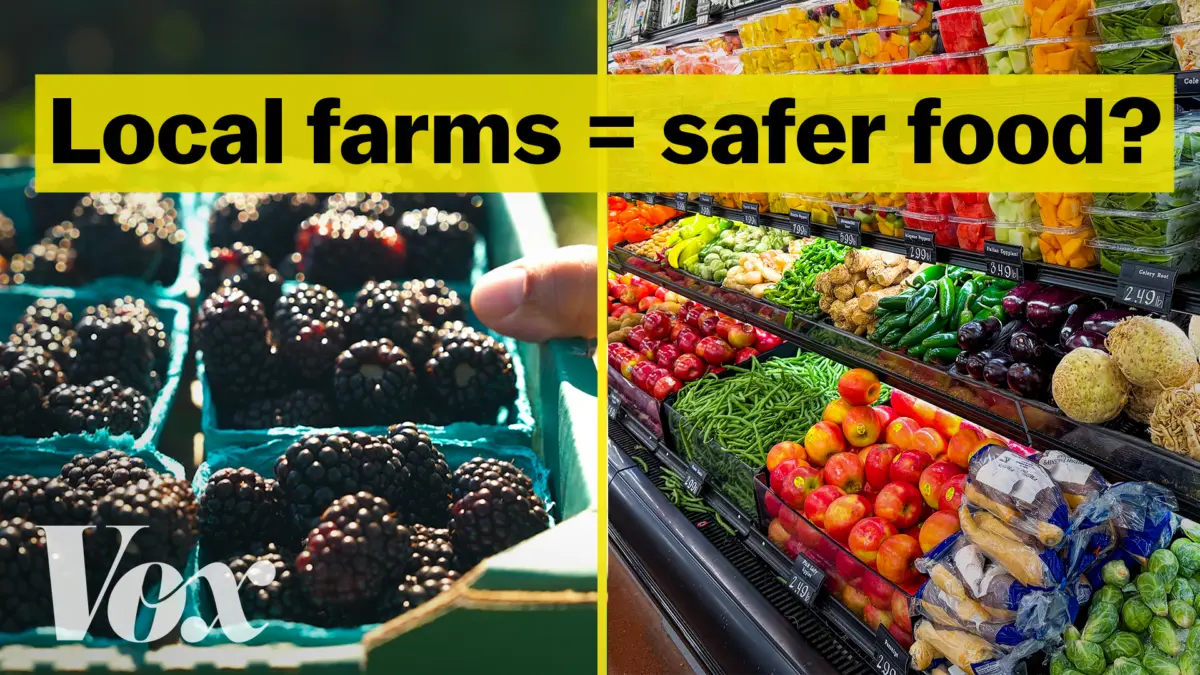
Executive Overview
In an era defined by hyper-globalized supply chains, complex industrial distribution networks, and an increasingly digital marketplace, the fundamental question of “Where does my food come from?” has transformed from a casual culinary curiosity into a pressing public health priority. Recent data underscores this shift: a comprehensive 2025 consumer survey reveals that 59 percent of Americans view the origin of their food as a critical factor in their purchasing decisions. Furthermore, 54 percent actively prioritize locally sourced, consistently available food options. This burgeoning consumer consciousness is not merely an aesthetic preference for farm-to-table dining; it is a calculated response to systemic vulnerabilities within the modern industrialized food system.
Over the past year, consumer confidence in traditional grocery store supply chains has been severely tested. A relentless wave of high-profile food safety recalls and widespread foodborne illness outbreaks has dominated news cycles, exposing the fragile nature of massive, centralized agricultural operations. As shoppers grapple with the unsettling reality of multi-state outbreaks linked to everything from fresh produce to prepared meals, many are seeking refuge in an older, more transparent model of commerce: the local farmers market.
With over 8,700 registered farmers markets operating across the United States—providing a direct economic lifeline to approximately 40,000 independent farmers—the local food movement is experiencing a profound renaissance. Unlike conventional grocery produce, which routinely travels thousands of miles across state and national borders, passing through dozens of intermediaries, packing houses, and distribution centers, local agricultural networks offer a direct-to-consumer pipeline. This short supply chain drastically reduces the physical and temporal distance between the soil and the dinner plate.
To understand how small, family-owned agricultural enterprises are navigating this shifting landscape, competing against corporate retail giants, and capitalizing on the surging demand for safer and fresher food, we traveled to Camarillo, California. There, amidst the fertile soils of Ventura County, we embedded ourselves with a multi-generational family farm to investigate the realities of modern local farming. What we discovered was a delicate balance of traditional husbandry, modern digital logistics, and an unwavering commitment to transparency that corporate supply chains simply cannot replicate.
Detailed Chronology: The Evolution of the Modern Food Supply Chain and the Local Rebound
To fully grasp the current resurgence of local agriculture, it is essential to examine the historical trajectory that transformed the American food system from a localized network into a sprawling, globalized apparatus—and the recent tipping points that have sent consumers racing back to community growers.
Phase I: The Industrialization of Agriculture (Post-WWII to Early 2000s)
- The Consolidation Era: In the decades following World War II, American agriculture underwent a radical consolidation. Federal policies incentivized large-scale monoculture farming, leading to the decline of small, diversified family farms.
- The Rise of Supermarket Dominance: The expansion of the interstate highway system, combined with advancements in refrigeration and logistics, allowed national supermarket chains to centralize procurement. Produce was increasingly sourced from distant mega-farms, foreign imports, and industrial processing hubs designed for maximum shelf life rather than nutritional density or regional resilience.
Phase II: The Creeping Vulnerabilities of Scale (2010s to 2023)
- The Complexity Crisis: As supply chains lengthened, they absorbed immense complexity. A single head of lettuce or batch of tomatoes could pass through half a dozen processing facilities, brokers, and cross-docking centers before reaching a retail shelf, exponentially increasing the points of potential contamination.
- Early Warning Signs: Periodic outbreaks of E. coli, Salmonella, and Cyclospora highlighted the blind spots in centralized distribution. However, because tracing the exact origin of a contaminated batch often took weeks, broad-brush panics frequently devastated entire crop sectors without offering consumers a clear path forward.
Phase III: The Breaking Point and the Local Surge (2024–Present)
- The Summer Recall Wave: A dramatic sequence of high-profile food safety recalls and foodborne illness outbreaks swept across the United States, severely eroding public trust in mass-market commercial agriculture.
- The 2025 Consumer Awakening: The release of the landmark 2025 industry survey quantified this anxiety: nearly six in ten Americans began actively demanding supply chain transparency, while over half prioritized local sourcing as a defensive health measure.
- The Farmers Market Boom: Attendance at community markets surged nationwide. Independent farmers observed a measurable demographic shift, with younger consumers, families, and health-conscious buyers willingly paying a premium for produce harvested mere days—or even hours—prior.
- The Camarillo Field Investigation: In response to these tectonic shifts in consumer behavior, our reporting team drove out to Camarillo, California, to observe firsthand how independent growers are scaling their operations to meet this unprecedented demand while preserving the integrity of the direct-to-consumer model.
Supporting Context & Metrics: The Numbers Behind the Movement
The pivot toward local food is supported by a robust body of agricultural economics, public health research, and consumer polling data. Understanding the structural differences between industrial and local food networks requires examining key empirical metrics.
1. The Geographic and Economic Footprint of U.S. Farmers Markets
- 8,700+: The estimated number of active farmers markets operating across all fifty states, according to recent agricultural systems analyses.
- 40,000: The approximate number of independent agricultural producers who rely on these markets as a primary or secondary revenue stream.
- Direct Economic Impact: Unlike corporate retail models—where up to 85 cents of every dollar spent can be retained by distributors, processors, and corporate parent companies—direct-to-consumer sales channels allow farmers to retain a significantly higher percentage of gross revenue, shielding them from the aggressive pricing pressures exerted by major supermarket buyers.
2. The Food Miles Paradox
- Thousands of Miles: The typical distance traveled by conventional produce sold in major supermarket chains. According to food systems research conducted by organizations like Foodwise, fresh fruits and vegetables commonly travel between 1,500 and 2,500 miles from farm to store.
- The Preservation Penalty: To survive these grueling multi-day journeys, industrial crops are frequently harvested prematurely—before their natural nutrient profiles and flavor compounds have fully developed—and treated with chemical ripening agents, waxes, or heavy refrigeration.
- The Local Advantage: In stark contrast, produce sold at regional farmers markets or through Community Supported Agriculture (CSA) programs typically travels less than 50 miles. Because the fruit or vegetable remains on the plant longer, it accumulates higher concentrations of vitamins, minerals, and antioxidants, while eliminating the carbon footprint and spoilage risks associated with long-haul freight distribution.
3. Food Safety and Traceability Metrics
- The Contamination Vector: Public health data indicates that foodborne pathogens thrive in large, centralized processing and packaging facilities where products from hundreds of different farms are pooled together. A single contaminated farm can adulterate thousands of pounds of product during industrial washing and packaging.
- Chain of Custody: At a local family farm, the chain of custody is radically simplified. When a customer purchases heirloom tomatoes or leafy greens directly from the grower at a Camarillo farm stand, the number of human touches and facility handoffs drops from dozens to virtually zero. If an issue arises, traceability is instantaneous rather than an opaque bureaucratic investigation spanning multiple regulatory agencies.
Official Statements & Expert Perspectives
To gain deeper insight into the intersection of food safety, supply chain logistics, and the local agricultural economy, we spoke with key stakeholders, agricultural economists, and safety experts during our field research.
Dr. Aris Thorne, Professor of Agricultural Economics and Food Systems Analyst:
"What we are witnessing is not a passing culinary trend; it is a fundamental reassessment of risk by the American consumer. For decades, the industrial food complex traded safety, flavor, and resilience for sheer volume and low cost. When supply chains become too vast and opaque, accountability dissolves. The resurgence of farmers markets proves that consumers are willing to invest in transparency. They want to look the person in the eye who grew their food, and that psychological reassurance is something a corporate supermarket barcode simply cannot provide."
Elena Vasquez, Fourth-Generation Family Farmer in Camarillo, California:
"People often ask how a small farm like ours can compete with the massive buying power and rock-bottom prices of national grocery chains. The truth is, we don’t try to play their game. We play our own. We can’t compete on volume, but we can completely outclass them on freshness, safety, and honesty. When our customers bite into a strawberry or a bell pepper, they taste the difference of soil that has been cared for by our family for decades. In the wake of these recent food safety scares, our phone hasn’t stopped ringing with people asking how they can buy directly from our fields."
Marcus Vance, Public Health Inspector and Food Safety Advocate:
"From a regulatory standpoint, the fewer hands a food product passes through, the lower the statistical risk of cross-contamination. Industrial processing plants are marvels of modern engineering, but they are also massive vectors for pathogen amplification if protocols slip. Local farming eliminates the pooling effect. When you buy direct, you are radically compressing the risk timeline."
Future Outlook: Where Do We Go From Here?
As the agricultural sector looks toward the remainder of the decade and beyond, the dynamics between industrial food production and the local movement are poised for significant transformation. Several key trends will dictate the future of how Americans source their sustenance:
1. The Technological Modernization of Direct-to-Consumer Sales
While farmers markets remain the cultural bedrock of the local food movement, independent growers are increasingly adopting sophisticated digital tools to bridge the gap between rural fields and urban consumers. Mobile point-of-sale systems, pre-order software platforms, and real-time inventory apps are enabling small farms to streamline CSAs (Community Supported Agriculture) and localized delivery networks. This technological integration allows family farms to capture a steady, predictable cash flow that rivals corporate subscription models.
2. Heightened Regulatory Scrutiny and Consumer Demands for Traceability
In the wake of ongoing food safety recalls, federal regulatory bodies—including the FDA—are facing mounting pressure to enforce stricter traceability mandates across industrial supply chains. However, as compliance costs rise for large-scale processors, small and mid-sized farms leveraging direct-to-consumer models may find themselves uniquely positioned to market their inherent transparency as a premium safety feature. Consumers will likely continue to vote with their wallets, favoring regional food sheds that offer verifiable provenance over anonymous, mass-produced alternatives.
3. Climate Resilience and Regional Food Security
Beyond immediate health considerations, the looming realities of climate volatility—ranging from severe droughts in agricultural hubs like California’s Central Valley to extreme weather events disrupting national freight corridors—underscore the strategic importance of localized food systems. Relying on hyper-local agriculture buffers communities against national supply chain shocks. As municipal planners and regional policymakers begin to recognize food security as a matter of national infrastructure, zoning laws, urban agriculture initiatives, and local farm subsidies are expected to receive renewed bipartisan support.
Conclusion: Reconnecting the Plate to the Plow
Our journey to the sun-drenched fields of Camarillo revealed an industry at a historic crossroads. While the vast machinery of global agriculture continues to feed millions, its vulnerabilities have become impossible to ignore. The steady, determined migration of consumers back to farmers markets and direct farm purchases is a clear signal that safety, flavor, and human connection matter deeply.
Ultimately, the local food movement is not an attempt to turn back the clock on human progress; rather, it is a deliberate, forward-thinking correction. By shortening the distance between our plates and the soil that nourishes us, we reclaim a vital measure of control over our health, our local economies, and the very provenance of our daily lives.