Executive Overview
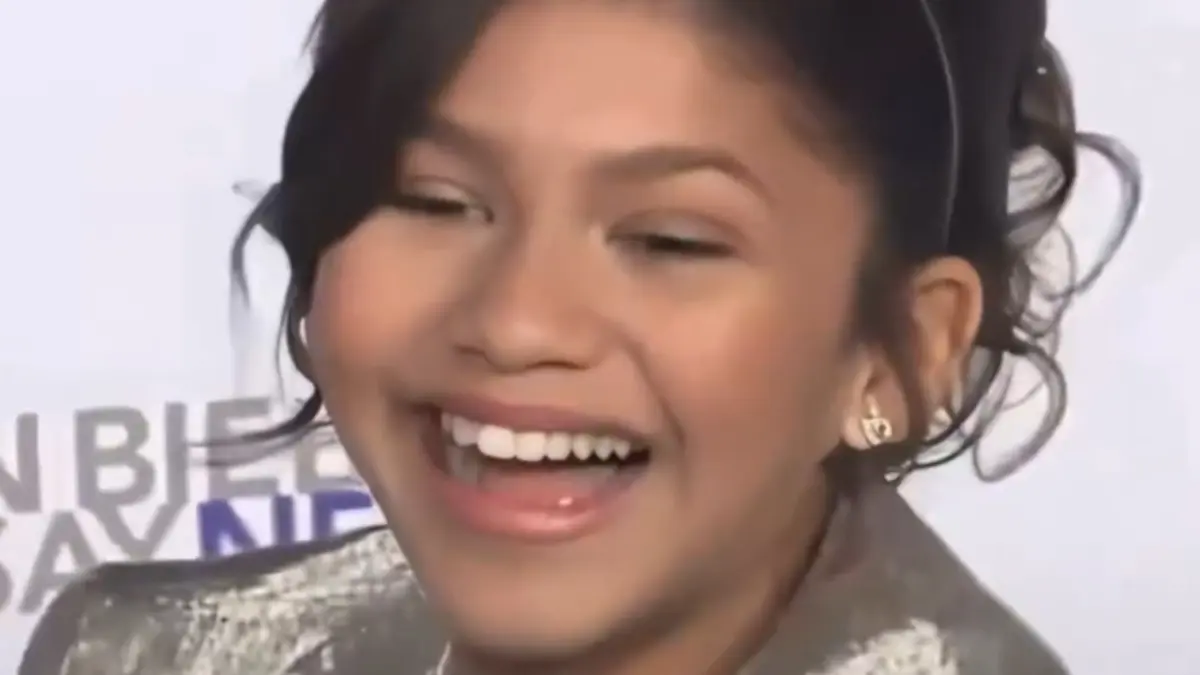
In the fast-paced ecosystem of internet culture, the lifespan of a viral meme can often be measured in days, if not hours. Yet, occasionally, the digital zeitgeist reaches backward, unearthing forgotten artifacts from decades past and recontextualizing them for modern social media consumption. This phenomenon struck the internet in August 2026, centering on a seemingly innocuous piece of pop culture history: a red carpet video clip of a young Zendaya smiling and laughing at the February 8, 2011, premiere of the Justin Bieber concert documentary Never Say Never.
Fifteen years after its initial recording, the clip experienced a meteoric resurrection on X (formerly Twitter). Transformed into a ubiquitous reaction video, the footage of Zendaya has been deployed by millions of users to encapsulate a very specific brand of awkward, resilient, or self-deprecating joy. Whether representing the nervous laugh of an accidental social faux pas, the surreal realization that payday has finally arrived, or the shell-shocked smile of someone staring at their own reflection after an emotional breakdown, the "Zendaya Laughing at Never Say Never Premiere" meme has firmly cemented itself in the annals of internet history.
This comprehensive report examines the trajectory of the meme, tracing its journey from a 2011 red carpet appearance to its explosive resurgence in August 2026. We will analyze the mechanics of its virality, examine real-world examples that captured public imagination, explore the psychological underpinnings of why internet users connect with the footage, and assess how archival digital media continues to shape contemporary online humor.
Detailed Chronology
Phase 1: The Genesis — February 8, 2011
To understand the current viral phenomenon, one must return to the winter of 2011. On February 8, 2011, the global entertainment industry converged for the red carpet premiere of Justin Bieber: Never Say Never, a 3D concert film chronicling the meteoric rise of the teenage pop sensation. Among the attendees was a young Zendaya, then a rising star on the Disney Channel known for her work on the television series Shake It Up.
Posing for flashing cameras on the red carpet, Zendaya offered a bright, disarming smile followed by an amused, candid laugh. At the time, the moment was entirely unremarkable—a standard press appearance captured by entertainment videographers and photographers. Days later, on February 14, 2011, the official Zendaya YouTube channel uploaded footage from the event. For the next fifteen years, the video sat quietly in the digital ether, accumulating modest view counts primarily driven by dedicated fans and nostalgia enthusiasts. Little did the internet know, this snippet of early-2010s pop culture was a sleeping giant.
Phase 2: The Resurgence — Mid-August 2026
The dormant clip was thrust back into the public consciousness in mid-August 2026, when resourceful X users identified the comedic potential of Zendaya’s expressive facial reactions. The archival footage offered a rare combination: high emotional clarity, universal relatability, and a vintage aesthetic that inherently added a layer of irony to contemporary captions.
The earliest documented catalyst of this second wave occurred on August 13, 2026. X user @itsKARY_ posted the video clip paired with a stark, highly relatable declaration: "Tomorrow is payday." The post struck a chord with an exhausted, inflation-weary digital populace, quickly racking up over 9,600 likes within two weeks. The floodgates were officially open.
Phase 3: Peak Virality and Mainstream Adoption — August 20–25, 2026
Following the initial spark, the meme experienced exponential growth between August 20 and August 25, 2026. Users across the globe began projecting their most vulnerable, awkward, and bizarre daily experiences onto Zendaya’s red carpet laughter.
On August 20, user @SometxmesYouCme paired the clip with the caption, "Me when I didn’t hear what you said," a universally understood social defense mechanism that earned over 100,000 likes in less than a week. The following day, user @2HNDSUM elevated the self-deprecating humor by applying the video to internal distress: "me in the mirror after having a breakdown," pulling in more than 163,000 likes.
By August 23, international audiences had joined the movement. User @isqxs adapted the meme for a Portuguese-speaking audience with the caption, "eu me olhando no vidro do carro sem saber que tem gente dentro" ("me looking at myself in the car window without knowing there are people inside"), accumulating nearly 300,000 views. The sheer volume of engagement caught the attention of digital culture publications, with outlets like Indy100 formally reporting on the meme’s widespread virality on August 24.
Supporting Context & Metrics
Quantitative Breakdown of Engagement
The viral trajectory of the Zendaya Never Say Never meme is characterized not just by its widespread adoption, but by the staggering velocity of user engagement it generated across social media platforms.
- Initial YouTube Archive Performance: The original video upload on Zendaya’s official YouTube channel hovered quietly at approximately 224,000 views over a 15-year span—a respectable number for legacy content, but a drop in the ocean compared to modern algorithmic reach.
- Velocity on X (Twitter): Within a 72-hour window from August 20 to August 23, 2026, individual iterations of the meme routinely shattered platform benchmarks. Key posts secured between 100,000 and 284,000 likes, accompanied by tens of thousands of reposts and quote-tweets.
- Cross-Cultural Reach: While initiated primarily within English-speaking digital circles, the visual nature of the reaction clip allowed for seamless translation into Spanish, Portuguese, and other languages, expanding its demographic footprint globally.
The Psychology of the "Resigned Laugh" Meme
Why did this specific clip resonate so deeply in August 2026? Media theorists and internet culture analysts point to the emotional archetype the clip represents: the "resigned laugh."
In contemporary internet culture, sincere displays of unbridled joy are frequently viewed with skepticism or seen as overly earnest. Conversely, the nervous, polite, or absurd chuckle—typified by Zendaya’s red carpet reaction—serves as a perfect vessel for modern irony. It represents the psychological state of "laughing to keep from crying." Whether dealing with financial stress, social misunderstandings, or internal psychological turbulence, users utilized Zendaya’s effortless charm to externalize moments where words fail and humor is the only remaining coping mechanism.
Official Statements and Public Reaction
While neither Zendaya nor her public relations representatives issued a formal statement regarding the sudden resurrection of her 2011 red carpet appearance, the broader entertainment and digital commentary landscape reacted with amusement.
Pop culture commentators noted the poetic irony of a major Hollywood heavyweight—now celebrated for her high-fashion red carpet appearances, critically acclaimed acting roles in Dune and Euphoria, and status as a global style icon—being playfully haunted by her early Disney Channel days. Rather than generating embarrassment, the meme served as a testament to her enduring cultural presence. Fans celebrated the footage as proof that Zendaya’s expressive, grounded charm has remained consistent across a decade and a half of intense public scrutiny.
Social media users flooded the replies of viral iterations with fond memories of the 2011 Disney Channel era, creating a secondary wave of millennial and Gen Z nostalgia. Comments ranged from lighthearted teasing about early-2010s fashion choices to genuine admiration for the actress’s lifelong poise under the glaring lights of flash photography.
Future Outlook: The Longevity of Archival Memes
The phenomenon of the Zendaya Never Say Never premiere meme offers a clear window into the future of internet humor. As digital archives grow deeper and more comprehensive, the barrier to entry for uncovering historical media has dropped to near zero. Platforms like X, TikTok, and Instagram increasingly rely on "archival mining"—the intentional excavation of celebrity childhood photos, early television appearances, and forgotten red carpet interviews—to fuel the meme economy.
Key Takeaways for Digital Culture
- The Infinite Backcatalogue: Celebrities and public figures can no longer assume that embarrassing or mundane moments from their early careers will fade into obscurity. The internet’s collective memory is permanent, and algorithms are increasingly optimized to unearth vintage content.
- Universal Reaction Templates: Visual media that captures nuanced, ambiguous facial expressions—such as polite smiles, nervous laughter, or forced composure—will always outperform static or verbally explicit formats because they allow users infinite room for projection.
- The Cycle of Nostalgia: The convergence of 2011 pop culture artifacts with 2026 sensibilities highlights a growing appetite for mid-2010s nostalgia. As the generation that grew up watching the Disney Channel enters adulthood, cultural touchstones from that era are increasingly ripe for satirical reinterpretation.
Ultimately, the Zendaya Never Say Never meme transcends a simple passing trend. It stands as a masterclass in internet recycling—taking a fleeting, two-second red carpet interaction from a Justin Bieber documentary premiere and transforming it into a universal mirror for the modern human condition. As long as people continue to experience awkward social encounters, unexpected financial strains, and existential dread, Zendaya will be there on their timelines, smiling and laughing right along with them.