Executive Overview
Just a few short years ago, the term "data center" conjured up images of anonymous, humdrum corporate server rooms tucked away in suburban office parks—boring logistical necessities of the early internet age. Today, however, mentioning these sprawling, power-hungry mega-warehouses is enough to ignite a firestorm of community activism, bitter political disputes, and intense environmental scrutiny.
As the artificial intelligence boom accelerates, the physical footprint required to train and run massive large language models has expanded at an unprecedented rate. These facilities are no longer merely technical backdrops; they are the high-voltage engines powering the generative AI revolution. Yet, this rapid expansion has collided head-on with local realities: strained electrical grids, surging carbon emissions, deafening noise pollution, and staggering water consumption.
Consequently, data centers have transformed from a niche real estate asset class into a central flashpoint in American politics, business, and environmentalism. With the 2026 midterm elections fast approaching, local and national politicians are finding that taking a stance on data center development is one of the most reliable ways to energize voters. This backlash transcends traditional partisan boundaries, uniting rural landowners, urban environmentalists, and fiscal conservatives in unexpected coalitions against Big Tech’s relentless physical expansion.
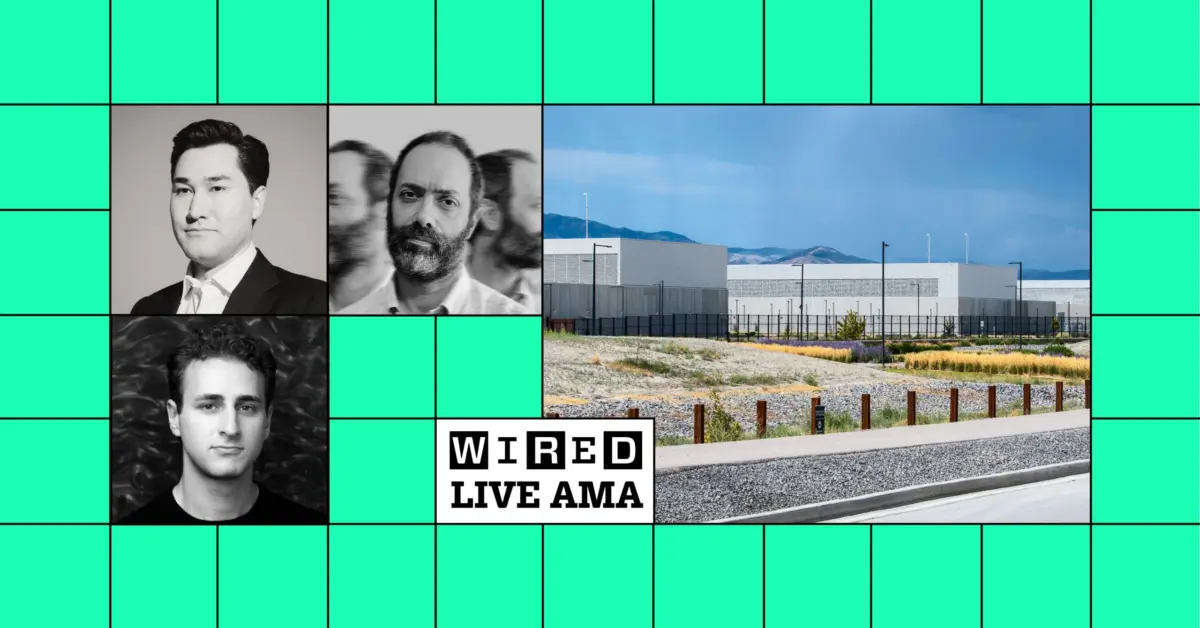
To help readers navigate this complex and high-stakes landscape, WIRED is hosting an exclusive livestream Ask Me Anything (AMA) event on September 10 at 12 pm ET / 9 am PT. A panel of industry experts, investigative journalists, and environmental analysts will break down the true costs and benefits of the AI infrastructure boom, field questions from the audience, and explore what comes next for communities caught in the crosshairs.
Detailed Chronology: From Obscurity to the Main Stage
To understand how data centers became political dynamite, it is necessary to retrace the timeline of the AI infrastructure gold rush and the cascading community responses that followed.
Phase One: The Quiet Acceleration (2020–2022)
Long before ChatGPT became a household name, cloud computing giants—Amazon, Microsoft, Google, and Meta—were quietly expanding their server footprints. During the COVID-19 pandemic, remote work, streaming, and cloud storage drove an initial wave of data center construction. For the most part, these facilities were welcomed by local municipalities desperate for the construction jobs and the long-term property tax revenue they promised. Local zoning boards routinely approved massive windowless warehouses with minimal public pushback, viewing them as quiet neighbors that produced no traffic and required few municipal services.
Phase Two: The Generative AI Explosion (2023)
The launch of OpenAI’s ChatGPT in late 2022 fundamentally altered the computing landscape. Tech companies realized that maintaining their market share required an immediate, massive pivot toward generative AI. Training and deploying these models demanded specialized graphic processing units (GPUs) packed tightly into server racks, drawing unprecedented amounts of electricity and generating extreme heat. The race for "compute" was officially on, and tech giants began snapping up cheap land near existing electrical substations and fiber-optic backbones across the United States.
Phase Three: Grid Shock and the Awakening (2024)
By early 2024, the sheer scale of the new proposals began to overwhelm local infrastructure. Communities in Northern Virginia (historically the data center capital of the world), rural Georgia, the deserts of Arizona, and the suburbs of Chicago woke up to proposals for campuses consuming hundreds of megawatts—equivalent to the power draw of medium-sized cities. Residents began noticing the relentless, low-frequency hum of cooling fans running 24/7. Utility companies revealed that power reserves were running dangerously thin, forcing them to consider delaying the retirement of coal- and gas-fired power plants or hiking residential electricity rates to fund grid upgrades.
Phase Four: The Political Flashpoint and 2026 Midterm Horizons (2025–Present)
By 2025, data center opposition had matured from localized NIMBYism (Not In My Back Yard) into a sophisticated political movement. Grassroots organizations formed alliances across state lines, sharing legal strategies and lobbying state legislatures for moratoriums, stricter noise ordinances, and mandatory disclosures on water and power usage. As the nation gears up for the 2026 midterm elections, candidates from both parties are discovering that opposition to unregulated tech expansion is a potent populist message. Whether framing the issue around environmental justice, grid reliability, or corporate accountability, politicians are finding that challenging Big Tech resonates deeply with an electorate already anxious about inflation, cost-of-living increases, and the rapid, unchecked advance of AI.
Supporting Context & Metrics: The Staggering Scale of AI Infrastructure
The political friction surrounding data centers is rooted in hard numbers. The physical realities of artificial intelligence expose a massive chasm between the ethereal, software-based promises of tech executives and the heavy industrial reality required to deliver them.
Power Demands and the Energy Crunch
Traditional data centers typically operated in the range of 10 to 30 megawatts. In contrast, modern AI data center campuses frequently target 100 to 1,000 megawatts (or 1 gigawatt) of continuous power.
- The Scale: A single 1-gigawatt facility consumes as much electricity as roughly 800,000 American homes.
- Grid Impact: According to recent utility filings, U.S. data center power consumption is projected to more than double by the end of the decade, accounting for up to 9% of total domestic electricity generation.
- The Carbon Dilemma: To meet these demands without violating corporate net-zero pledges, tech giants have turned to unorthodox solutions, including investing heavily in nuclear energy (such as Microsoft’s partnership to restart the Three Mile Island facility) and securing direct deals with renewable energy developers that pull green power away from the broader consumer grid.
Water Consumption and Environmental Strain
Beyond electricity, data centers require millions of gallons of water daily to cool high-density server racks through evaporative cooling towers.
- Usage: A mid-sized data center can consume between 1 million and 5 million gallons of water per day—roughly equivalent to the water usage of a town of 10,000 to 50,000 residents.
- Scarcity: In drought-prone regions like the American Southwest, municipal water districts are increasingly locked in tense negotiations with tech companies over dwindling aquifers and strained municipal water treatment plants.
Noise Pollution and Quality of Life
The human element is frequently overlooked in high-level tech debates. Modern AI servers generate immense heat, requiring industrial-grade cooling systems comprised of hundreds of massive commercial fans operating continuously.
- Acoustic Impact: Residents living miles away from new facilities report a persistent, low-frequency hum that disrupts sleep and lowers property values. Traditional zoning laws, designed for quiet warehouses or light manufacturing, are often ill-equipped to regulate the specific acoustic signatures of modern server farms.
Official Statements and Stakeholder Perspectives
The debate over data centers has created unusual political alliances and sharpened tensions between local communities and corporate titans.
The Tech Sector Perspective
Major cloud providers and AI developers defend their expansion as a matter of national security and economic competitiveness. Industry groups argue that winning the global AI race is vital for maintaining American technological hegemony against geopolitical rivals like China.
"The infrastructure we are building today is the foundation of the 21st-century economy," said a spokesperson for a leading cloud computing coalition. "We are working hand-in-hand with local utilities, investing billions in grid modernizations, and pioneering advanced liquid-cooling and closed-loop water systems to minimize our environmental footprint. We want to be long-term, constructive partners in the communities where we operate."
The Environmental and Community Backlash
Environmental advocates and local residents, however, accuse tech companies of greenwashing while aggressively locking up public resources for private gain.
"Big Tech is treating America’s rural and suburban communities as sacrifice zones," says Sarah Jenkins, coordinator of the National Data Center Accountability Coalition. "They promise jobs that never materialize after construction ends, while leaving local taxpayers holding the bag for grid upgrades, water scarcity, and ruined quality of life. The public is waking up to the fact that the generative AI boom has a very real, very heavy physical cost."
The Political Divide
Elected officials find themselves walking a tightrope. Governors and economic development boards are often tempted by the massive capital investments and property tax windfalls promised by data center developers. Simultaneously, state legislators and local county commissioners face fierce pressure from constituents demanding moratoriums and stricter zoning oversight. As the 2026 midterms approach, this tension is forcing both Democratic and Republican candidates to reevaluate their cozy relationships with the technology sector.
Future Outlook: Navigating the Crossroads of AI and Infrastructure
As the United States barrels toward 2026, the trajectory of the data center industry will likely be defined by a series of critical inflection points.
- Regulatory Retrenchment: Expect to see a wave of new state and federal legislation targeting data center transparency. Mandatory disclosures regarding water usage, carbon offsets, and energy sourcing will likely become standard, alongside stricter acoustic and zoning regulations.
- Technological Innovations in Efficiency: The pressure to reduce environmental footprints will accelerate R&D in chip efficiency, advanced liquid cooling, and direct-to-chip cooling technologies that reduce or eliminate the need for massive water evaporation towers.
- Decentralized and Off-Grid Power Solutions: As traditional grids reach a breaking point, tech companies will increasingly invest in microgrids, localized modular nuclear reactors (SMRs), and behind-the-meter renewable generation to power their facilities independently without drawing down local public supplies.
- The Ballot Box Test: The upcoming 2026 midterms will serve as a referendum on how local communities view tech-driven industrial development. Candidates who successfully channel voter anxieties into constructive policy reforms—or conversely, those who successfully court high-tech investments while protecting local resources—will set the tone for the next decade of American industrial policy.
Join the Conversation: WIRED Livestream AMA
The intersection of artificial intelligence, energy policy, and community activism is one of the most critical stories of our time. Where is this infrastructure heading, and how can communities protect their resources while participating in the digital economy?
We are excited to answer all your questions about data centers at WIRED’s next livestream AMA on September 10 at 12 pm ET / 9 am PT.
How to Participate
- Pose a Question: To leave questions for our panel of experts to answer during the live event, head to the comment section below and join the conversation.
- How to Join: The event will be streamed right here on WIRED. For subscribers who are not able to join live, a full replay will be available immediately following the event.
Not a subscriber yet? Subscribe now to get exclusive access to this livestream, plus full, unrestricted access to WIRED’s award-winning journalism.
In the meantime, explore our archive of past livestreams to catch up on critical tech discussions, including how AI is changing your job and what to do about it, the evolving landscape of the defense tech industry, and the hype, reality, and future of electric vehicles.